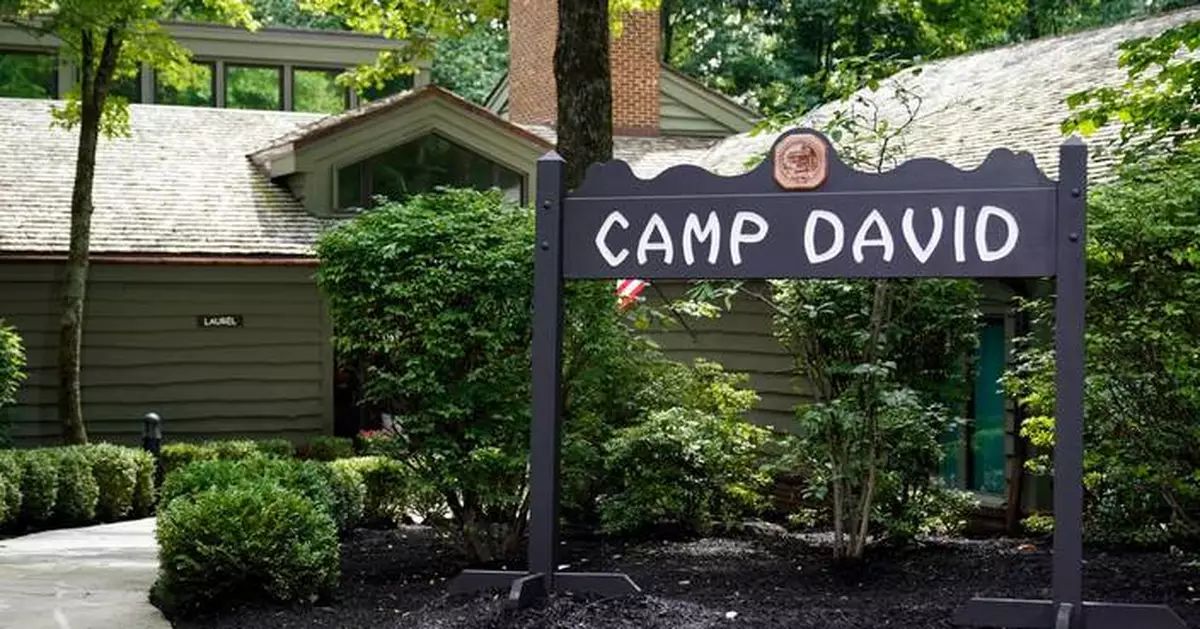
WASHINGTON (AP) — President Donald Trump is taking Friday's Cabinet meeting on the road — to the Camp David presidential retreat in Maryland, a rustic backdrop for sessions that have come to be known for being overly long and consumed by administration officials' endless praise for their boss.
White House press secretary Karoline Leavitt said the 13th such meeting of the Republican president's second term "will be a lot of fun and something different for the Cabinet to experience together.”
It will be the first Cabinet meeting at Camp David in Trump's second term after an earlier attempt in May was scuttled because of bad weather. During his first term, Trump held a Cabinet meeting at the retreat.
The public portion of Trump's Cabinet meetings has lasted as long as three hours, with the president letting everyone at the table update him on their departments or agencies — with added praise for him personally and his leadership thrown in. In a departure from other presidents, he allows the news media to stay for the duration of the meetings, a move that Leavitt has said proves his commitment to transparency.
More recently, however, Trump has commented on how lengthy the meetings have become. He has begun urging speakers to keep their comments brief, and he has limited the number of oral reports.
“Everybody around here has got a lot to say. But we did that once, and it lasted for like four or five hours. It was a little much,” Trump said at the May meeting.
Camp David was established in 1942 during Franklin Roosevelt's presidency and has been used by every president since.
Roosevelt had enjoyed relaxing aboard a presidential yacht, but the military and the U.S. Secret Service began to worry about his safety on open water during World War II. As a result, Roosevelt asked the National Park Service to find sites within 100 miles (160 kilometers) of the White House that he could use for rest.
He chose what is now known as Camp David. He gave it the original name of Shangri-La, from James Hilton’s novel “Lost Horizon.” President Dwight Eisenhower renamed it Camp David, after his grandson and father.
Trump spent more weekends at the retreat in his first term but has visited sparingly in his second, most recently in June for Father’s Day.
In 2019, during his first term, Trump announced on social media that he had canceled a secret weekend meeting at Camp David with Taliban and Afghanistan leaders — scheduled for just days before the anniversary of the Sept. 11, 2001, attacks — after a bombing in the capital of Kabul killed a dozen people, including a U.S. soldier.
Presidents throughout history have turned to Camp David when they needed security and privacy for sensitive diplomatic talks with foreign leaders. Jimmy Carter took the leaders of Egypt and Israel there in 1978 for talks that produced the Camp David Accords, a peace agreement between the two countries.
Camp David is also where Carter huddled in 1979 with representatives of a cross-section of American society. He later delivered a nationally televised speech on energy policy that became known as the “malaise” speech — even though he never said the word.
The camp's primary purpose is to provide presidents a place to rest, relax and recharge.
The 180-acre (73-hectare) retreat, which is run by the Navy and guarded by Marines, has a cabin named Aspen that’s reserved for the president, plus about a dozen other cabins for guests. A main lodge has conference rooms, a dining room and an office for the president.
Guests can take advantage of a range of indoor and outdoor amenities, including a fitness center, a bowling alley, a movie theater, a heated swimming pool and tennis and basketball courts. A chapel offers religious services.

FILE - President Donald Trump arrives on Air Force One at Hagerstown Regional Airport, in Hagerstown, Md., en route to Camp David, Md., June 8, 2025. (AP Photo/Manuel Balce Ceneta, File)
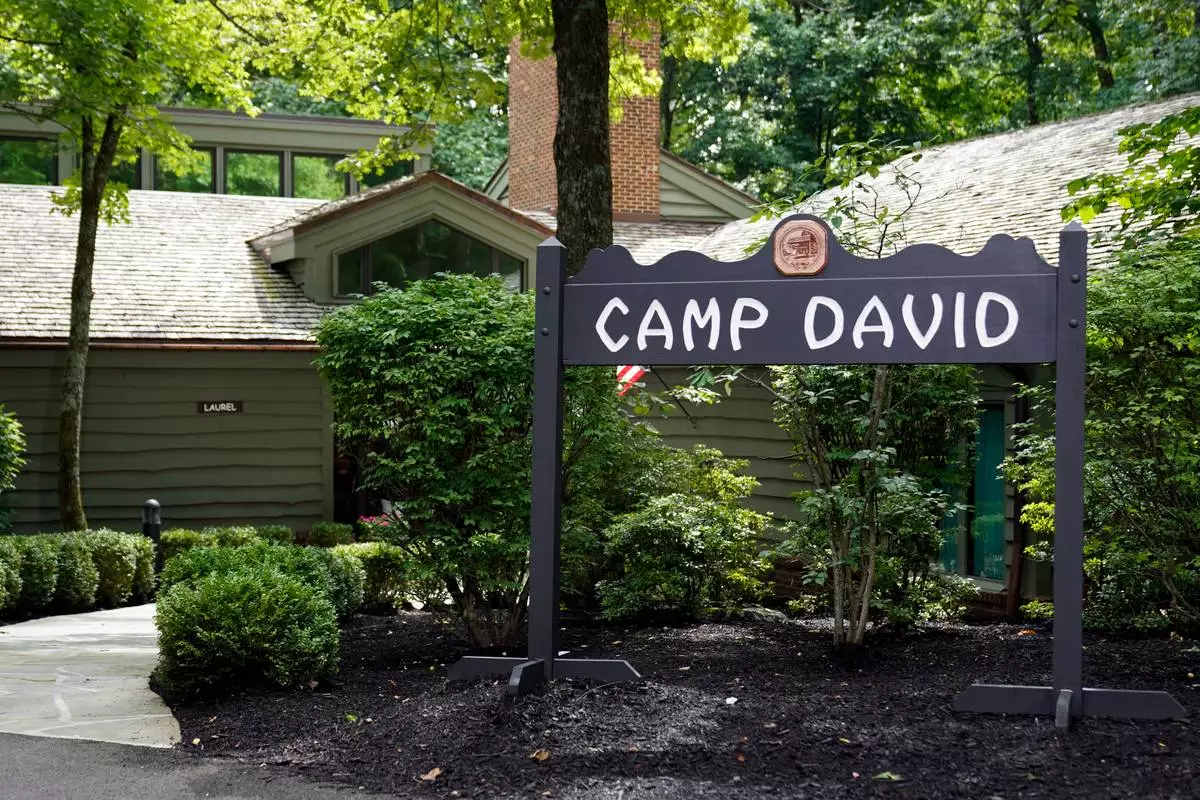
FILE - A sign for Camp David, the presidential retreat, is pictured near Thurmont, Md., Aug. 18, 2023. (AP Photo/Andrew Harnik, File)
New York officials sued prediction market platform Kalshi on Friday, calling it an “illegal, unlicensed gambling operation” as the state seeks to halt its operations and force the company to forfeit its profits.
New York joins a growing number of states filing lawsuits against Kalshi and other companies in a dispute with President Donald Trump's administration over who regulates the fast-growing prediction market. Kalshi and other platforms argue they are federally licensed and regulated, and states have no authority to govern them.
“It’s sad to see this type of political theater from the leadership in our own state,” Elisabeth Diana, a spokesperson for New York-based Kalshi, said in a statement. “States can’t just shut down a federally licensed exchange. This would also hurt New Yorkers, who would be driven offshore. We love New York, we love New Yorkers, and New Yorkers love our product.”
New York Gov. Kathy Hochul and Attorney General Letitia James, both Democrats, announced the lawsuit filed in state Supreme Court in Manhattan.
“New York’s gambling laws protect children from underage betting and help combat gambling addiction,” James said in a statement. “No matter what they call themselves, prediction markets like Kalshi are gambling platforms, plain and simple. By ignoring our laws, Kalshi is running an illegal operation and harming New Yorkers in the process.”
James' office is requesting that Kalshi be ordered to forfeit all illegal gains, pay restitution to consumers who were harmed and pay fines equal to three times the company's gains.
Kalshi had been in negotiations with New York officials in recent weeks over tax and consumer protection issues.
In April, New York filed a similar lawsuit against prediction market platforms Coinbase and Gemini on illegal gambling operation allegations.
State officials say the prediction markets meet the legal definition of gambling “because the outcomes of the events on which its users are betting are uncertain and outside the control of the bettor or hinge on a game of chance.”
New York claims Kalshi has failed to obtain a license from the state Gaming Commission and skirted its obligation to pay taxes like licensed casinos and mobile sports gambling platforms do. The lawsuit also says prediction markets allow users ages 18 to 20, while New York requires mobile sports betting users to be at least 21.
Prediction market platforms say they operate differently than gambling operations, because consumers are trading against other consumers — much like how stock markets work. Prices are based on trading, and the platforms only take a fee from the trading, they say.
The platforms also argue federal law gives the U.S. Commodity Futures Trading Commission exclusive jurisdiction to regulate transactions offered in the prediction market. In February, Trump’s appointee atop the federal commission declared that the agency “will no longer sit idly by” while states aim to regulate or ban prediction markets and “undermine the agency’s exclusive jurisdiction.”
States counter that the vast majority of the business on prediction market platforms is sports betting, which they are empowered to regulate, and that is completely different from the commodities and futures contracts that the commission regulates.
On Monday, a federal judge temporarily blocked Minnesota’s first-in-the-nation law banning prediction markets just days before it was to take effect — dealing a setback for states trying to outlaw or regulate the platforms.
A tangle of lawsuits is growing, as states try to use their gambling laws to shut down Kalshi, Polymarket and other prediction market operators. In April alone, the federal government sued Connecticut, Arizona and Illinois, challenging their efforts to regulate the industry.
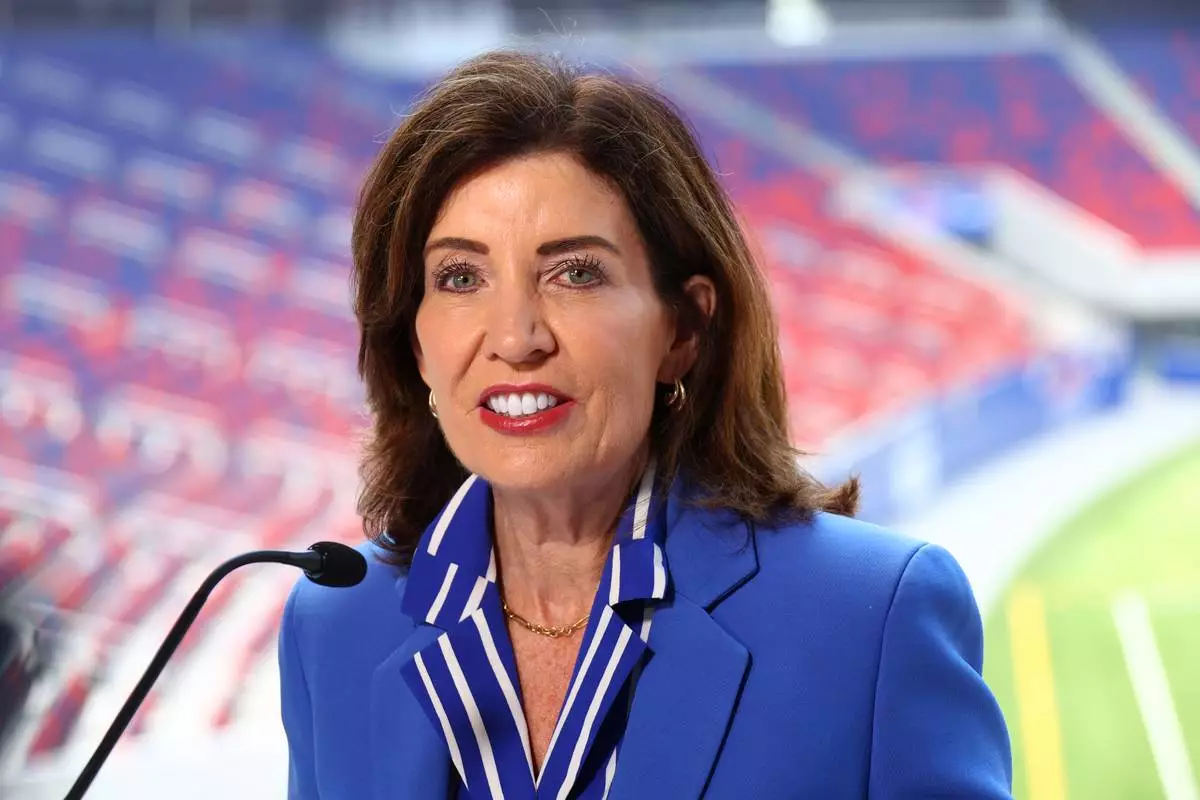
FILE - New York Gov. Kathy Hochul speaks following a ribbon cutting ceremony at the new Bills Highmark Stadium in Orchard Park, N.Y., Tuesday, June 23, 2026. (AP Photo/Jeffrey T. Barnes, file)
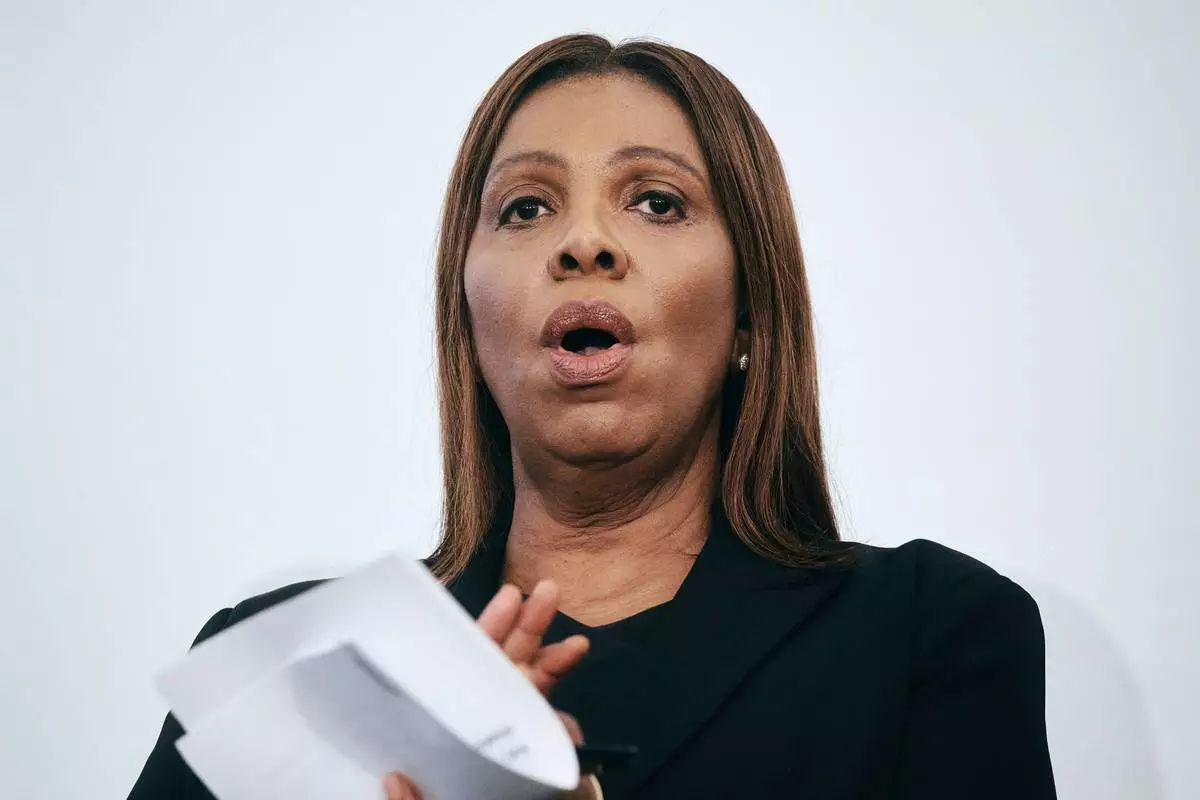
FILE - Attorney General of New York Letitia James reacts during a Rental Ripoff Hearing at Fordham University on Wednesday, March 11, 2026, in New York. (AP Photo/Andres Kudacki, file)

FILE - An ad for the prediction market app Kalshi is displayed on a mobile phone Thursday, April 16, 2026, in Chicago. (AP Photo/Erin Hooley, file)