CFS announces food safety report for June
The Centre for Food Safety (CFS) of the Food and Environmental Hygiene Department today (July 31) released the findings of its food safety report for last month. The results of about 7 200 food samples tested (including food items purchased online) were found to be satisfactory except for nine unsatisfactory samples that were announced earlier. The overall satisfactory rate was 99.9 per cent.
A spokesman for the CFS said that about 2 200 food samples were collected for microbiological tests, and about 5 000 samples were taken for chemical and radiation level tests.
The microbiological tests covered pathogens and hygiene indicators; the chemical tests included testing for pesticides, preservatives, metallic contaminants, colouring matters, veterinary drug residues and others; and the radiation-level tests included testing for radioactive caesium and iodine in samples collected from imported food from different regions.
The samples comprised about 1 900 samples of vegetables and fruit and their products; about 500 samples of cereals, grains and their products; about 700 samples of meat and poultry and their products; about 1 200 samples of milk, milk products and frozen confections; about 1 300 samples of aquatic and related products; and about 1 600 samples of other food commodities (including beverages, bakery products and snacks).
The nine unsatisfactory samples were a tomato sample detected with a pesticide residue exceeding the legal limit; four beef samples and a beef congee sample found to contain sulphur dioxide; a prepackaged frozen sardine sample found to contain histamine; an imported crab sample detected with cadmium, a metallic contaminant, at a level exceeding the legal limit; and a soft ice-cream sample detected with a coliform bacteria count exceeding the legal limit.
The CFS has taken follow-up actions on the above-mentioned unsatisfactory samples, including informing the vendors concerned of the test results, instructing them to stop selling the affected food items, and tracing the sources of the food items in question.
The spokesman reminded the food trade to ensure that food is fit for human consumption and meets legal requirements. Consumers should patronise reliable shops when buying food and maintain a balanced diet to minimise food risks.
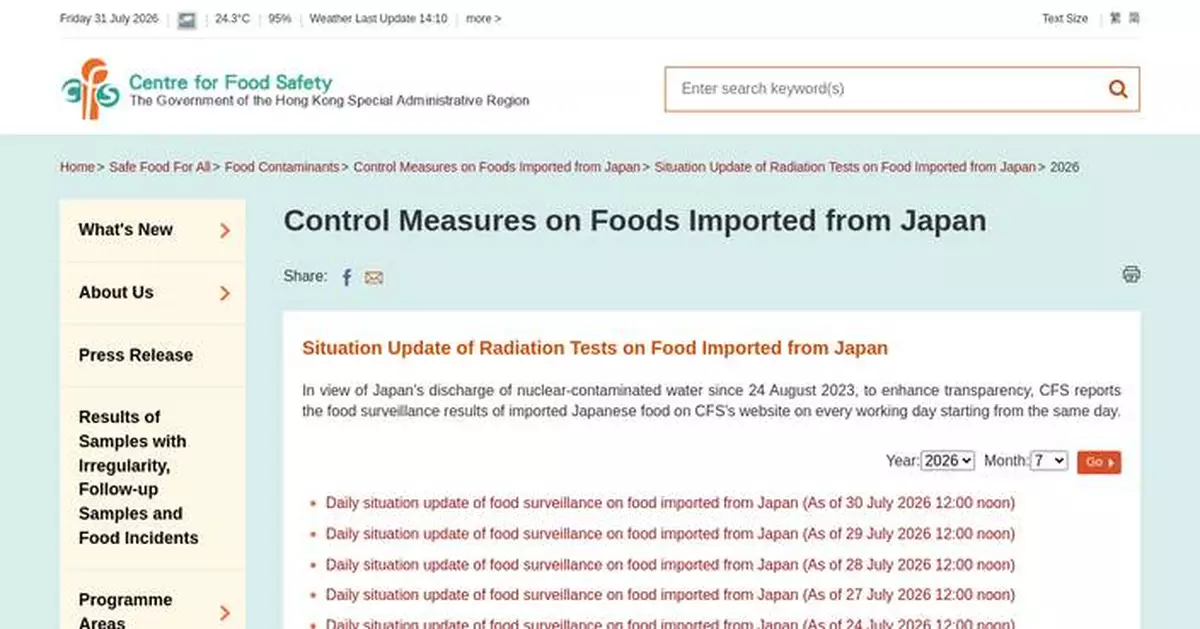
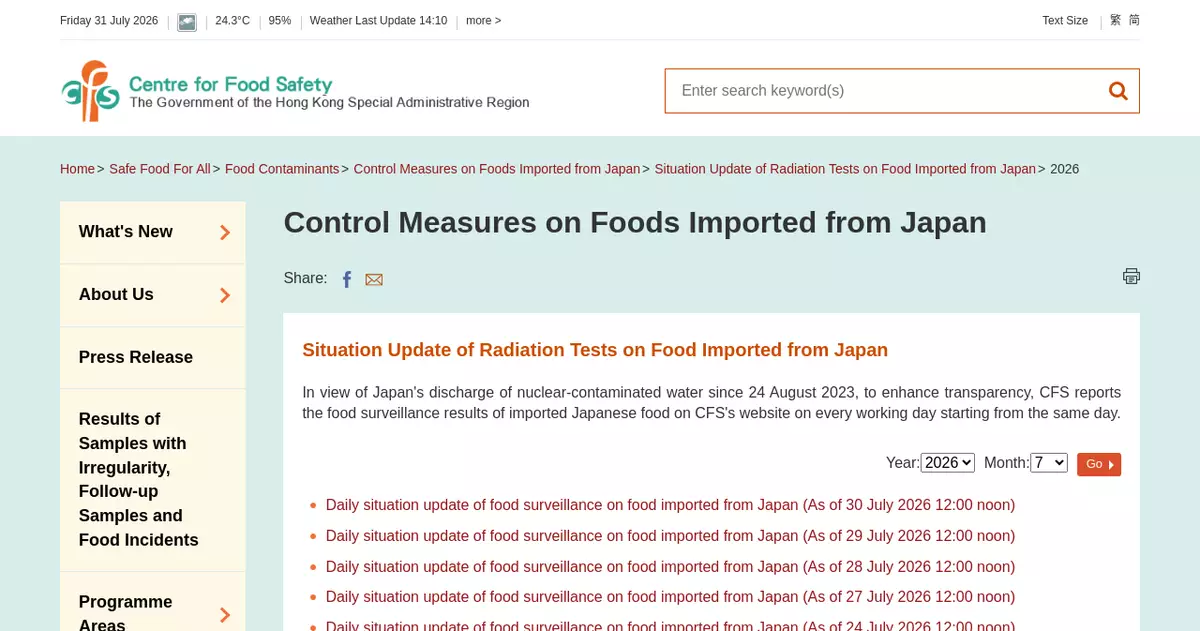
Separately, in response to the Japanese Government's discharge of nuclear-contaminated water at the Fukushima Nuclear Power Station, the CFS will continue enhancing the testing on imported Japanese food, and make reference to the risk assessment results to adjust relevant surveillance work in a timely manner. The CFS will announce every working day on its dedicated webpage (www.cfs.gov.hk/english/programme/programme_rafs/daily_japan_nuclear_incidents.html) the radiological test results of the samples of food imported from Japan, with a view to enabling the trade and members of the public to have a better grasp of the latest safety information.
Source: AI-found images