China's "Six Networks" strategic initiative will help boost effective investment and drive the country's economic growth in the second half of the year, said officials on Thursday.
The solid advancement of the initiative was emphasized during a meeting held on Thursday in Beijing where the Political Bureau of the Communist Party of China (CPC) Central Committee analyzed and studied the current economic situation and made arrangements for economic work in the coming six months.
China is mulling multi-trillion-yuan investment through the "Six Networks" initiative in 2026, as the country works to expand domestic demand and stabilize economic growth. The "Six Networks" are water networks, new-type power grids, computing power networks, next-generation communication networks, urban underground pipeline networks, and logistics networks.
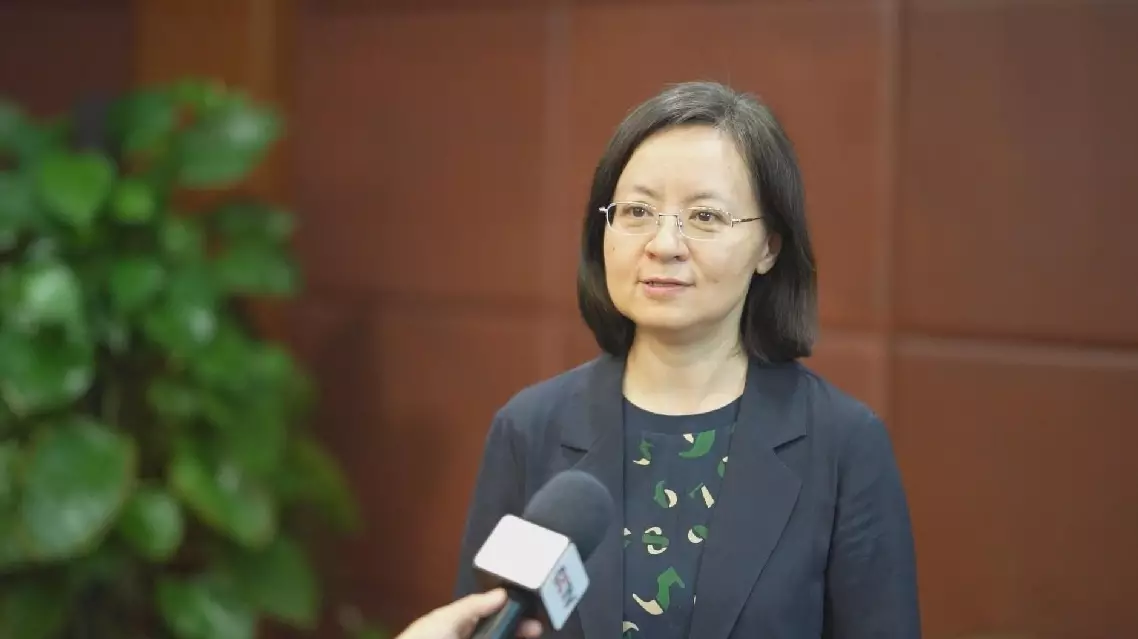
"The 'Six Networks' will be built by deeply integrating digital, intelligent and green technologies. They are expected to achieve a fundamental shift from scale expansion to an improvement in both quality and efficiency. It serves to fix existing structural shortcomings, while fostering new opportunities," said Sheng Lei, deputy director of the State Information Center at the National Development and Reform Commission.
Financially, these projects will be massive and serve as an anchor for the national economy.
"The 'Six Networks', together with some infrastructure and public service facilities, will bring the total investment this year to approximately 7 trillion yuan (about 1.04 trillion U.S. dollars). Our solidly implementation of these projects would provide excellent support for the overall investment growth throughout the year," said Sun Xuegong, director of the Decision Advisory Department of the Academy of Macroeconomic Research at the National Development and Reform Commission.
China's 'Six Networks' infrastructure projects expected to bolster investment: officials

Exploring the Chinese capital by bike and on foot, American vlogger Cooley Gavin Andrew embraced Beijing's unique daily rhythm, uncovering a city where timekeeping tradition and modern living melt into one another seamlessly.
The young man started his morning near the Drum and Bell Towers, a historical landmark that once served as the city's official timekeeping center some eight centuries ago. Near the site, he enjoyed a traditional local breakfast at Yaoji Chaogan, which specializes in chaogan -- a popular Beijing stew of pork liver and intestines -- to mark the true start of a Beijing day.
"This is the chaogan. As many things that I've had in Beijing, I've actually never had this before, so I'm pretty excited. The consistency looks a little bit interesting, you know, very gooey and like slimy looking. But I'm interested to try it, so let's see. It's really good. Very garlicky, but still meaty. Very rich in flavor, too," Andrew said, tasting the meal.
Throughout the morning, he listened to the ancient drums and gazed down at the Beijing Central Axis. Recognized as a UNESCO World Heritage Site in 2024, the 7.8-kilometer north-south axis comprises 15 heritage elements and has anchored Beijing's center for over 700 years.
"From up here, you can see that Beijing didn't grow randomly. The Drum Tower is located at the north end of old Beijing. And the central axis line that runs all along here goes from south to north, connecting the city's layout and order," Andrew said.
He then had coffee on a terrace overlooking the hutongs and Shichahai, gaining a glimpse into the traditional Beijing way of life. He also sampled delicate, imperial-style pastries at Fuhuazhai, a restaurant founded by Wang Xifu, the grandson of a Qing Dynasty (1644–1911) imperial chef.
In his taste test at Fuhuazhai, Andrew sampled two traditional Chinese snacks. The first item, despite its name "ox tongue," contains no meat but consists of crushed peanuts and sesame seeds shaped to resemble the organ. He noted the pastry delivered an unexpectedly savory and salty flavor profile with a notably flaky texture, rather than the anticipated sweetness. He expressed even greater surprise at the second item, "watermelon cheese," which the vlogger described as a refreshing watermelon-flavored jelly.
In the afternoon, the tour moved to Longfusi, a nearly 600-year-old temple in Beijing's Dongcheng District that once hosted one of the city's most important temple fairs. Today, its ceiling features a striking 3D-printed design.
Andrew then sampled a range of classic Beijing bakery offerings, including traditional souvenir pastries from the renowned Daoxiangcun.
He wrapped up the day-long journey at the Drum Tower's courtyard, where he enjoyed an outdoor movie in the evening.
"So if you come to Beijing, don't just rush around landmark to landmark. Take it slow, ride a bike. You never know what you'll find," Andrew said.
American vlogger explores Beijing's unique rhythm in one day