Skip to Content Facebook Feature Image

A World Cup banner turns the Malvinas into a cultural obsession for a new generation in Argentina

ENT

A World Cup banner turns the Malvinas into a cultural obsession for a new generation in Argentina
ENT

ENT

A World Cup banner turns the Malvinas into a cultural obsession for a new generation in Argentina

2026-07-31 15:18 Last Updated At:15:31

BUENOS AIRES, Argentina (AP) — It took a World Cup to transform a remote cluster of islands that’s home to more sheep than people into a cultural juggernaut.

A decision by Argentina’s players to unfurl a banner about the disputed Falkland Islands after defeating England in the World Cup semifinals carried a historical cause onto the T-shirts, bedroom walls and Instagram feeds of a new generation. In the weeks since, the image that has endured from the tournament in soccer-crazed Argentina hasn't been of Lionel Messi. It’s been the crudely painted sign reading: “The Malvinas are Argentine.”

More Images
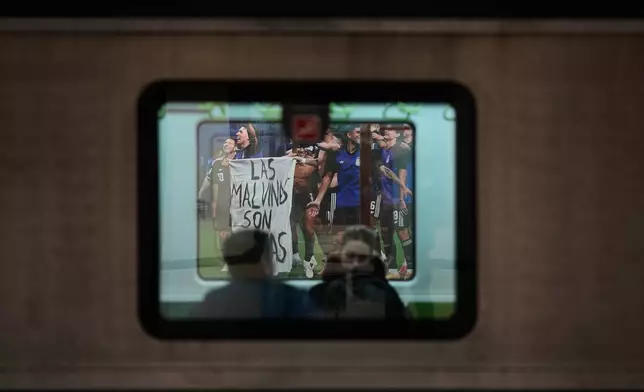
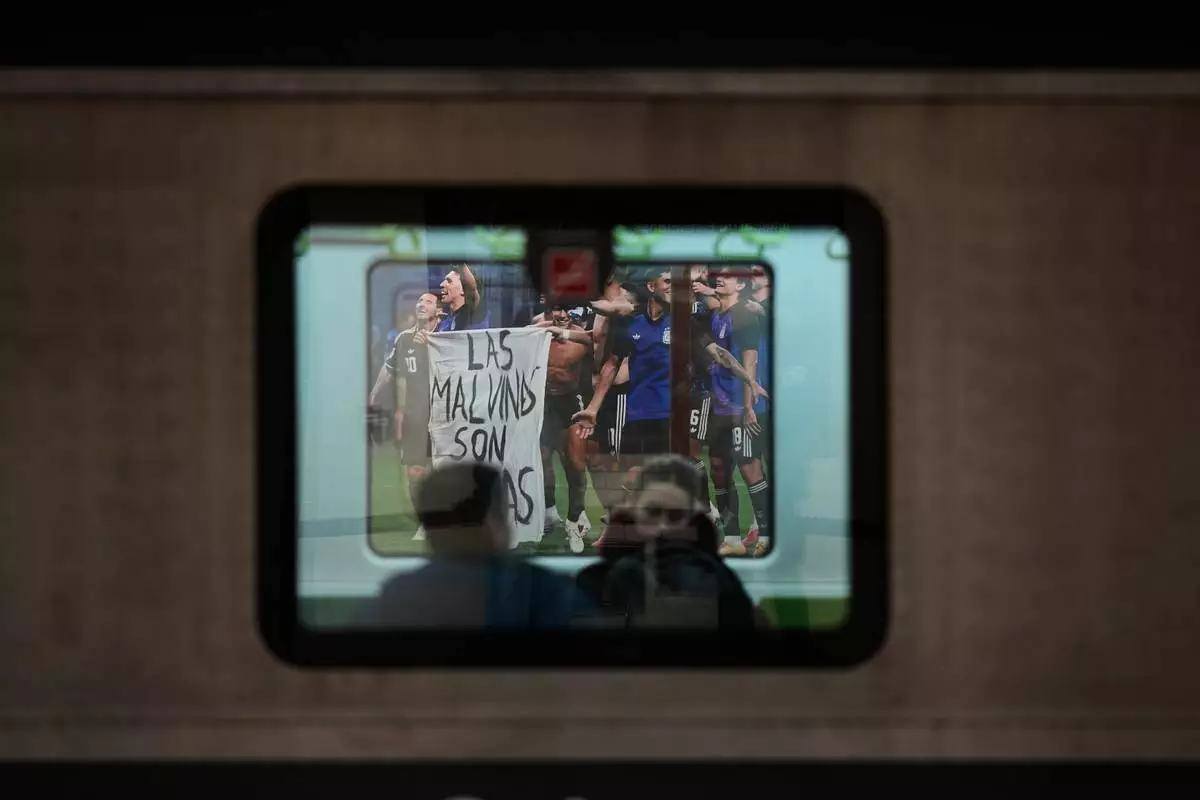
People ride a subway train stopped at a station displaying a photo of Argentina's soccer players holding a banner reading "The Malvinas are Argentine," referring to the Falkland Islands also known as Malvinas, taken after the team's World Cup semifinal soccer match between Argentina and England, in Buenos Aires, Argentina, Monday, July 27, 2026. (AP Photo/Natacha Pisarenko)
People ride a subway train stopped at a station displaying a photo of Argentina's soccer players holding a banner reading "The Malvinas are Argentine," referring to the Falkland Islands also known as Malvinas, taken after the team's World Cup semifinal soccer match between Argentina and England, in Buenos Aires, Argentina, Monday, July 27, 2026. (AP Photo/Natacha Pisarenko)

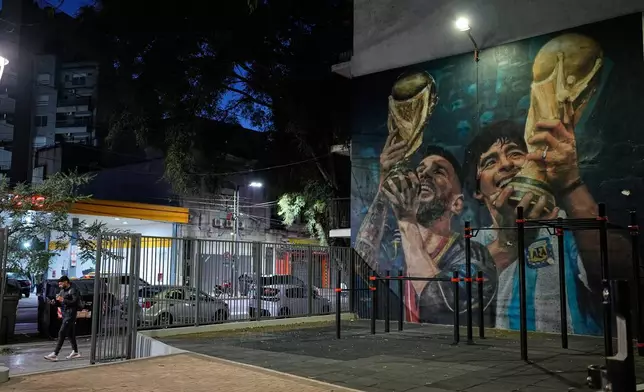
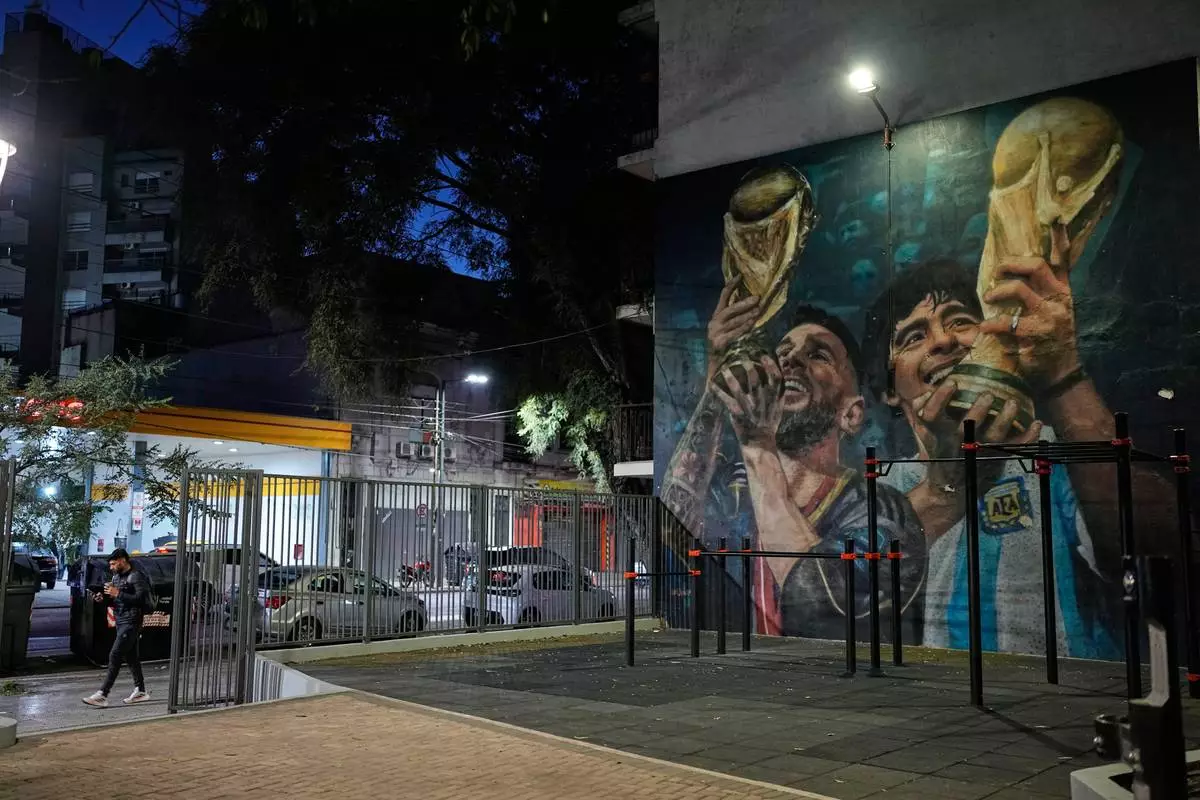
A mural of Argentine soccer players Lionel Messi and Diego Maradona decorate a wall in Buenos Aires, Argentina, early Thursday, July 30, 2026. (AP Photo/Natacha Pisarenko)
A mural of Argentine soccer players Lionel Messi and Diego Maradona decorate a wall in Buenos Aires, Argentina, early Thursday, July 30, 2026. (AP Photo/Natacha Pisarenko)

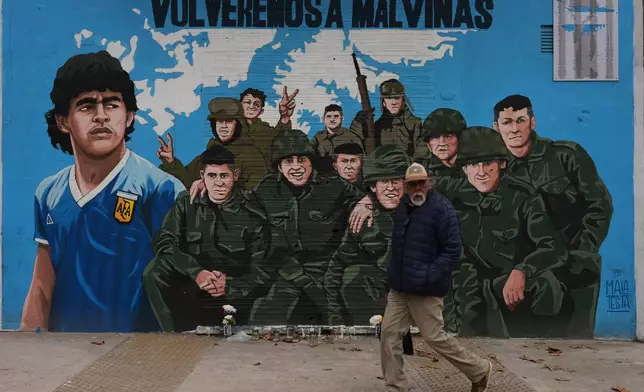
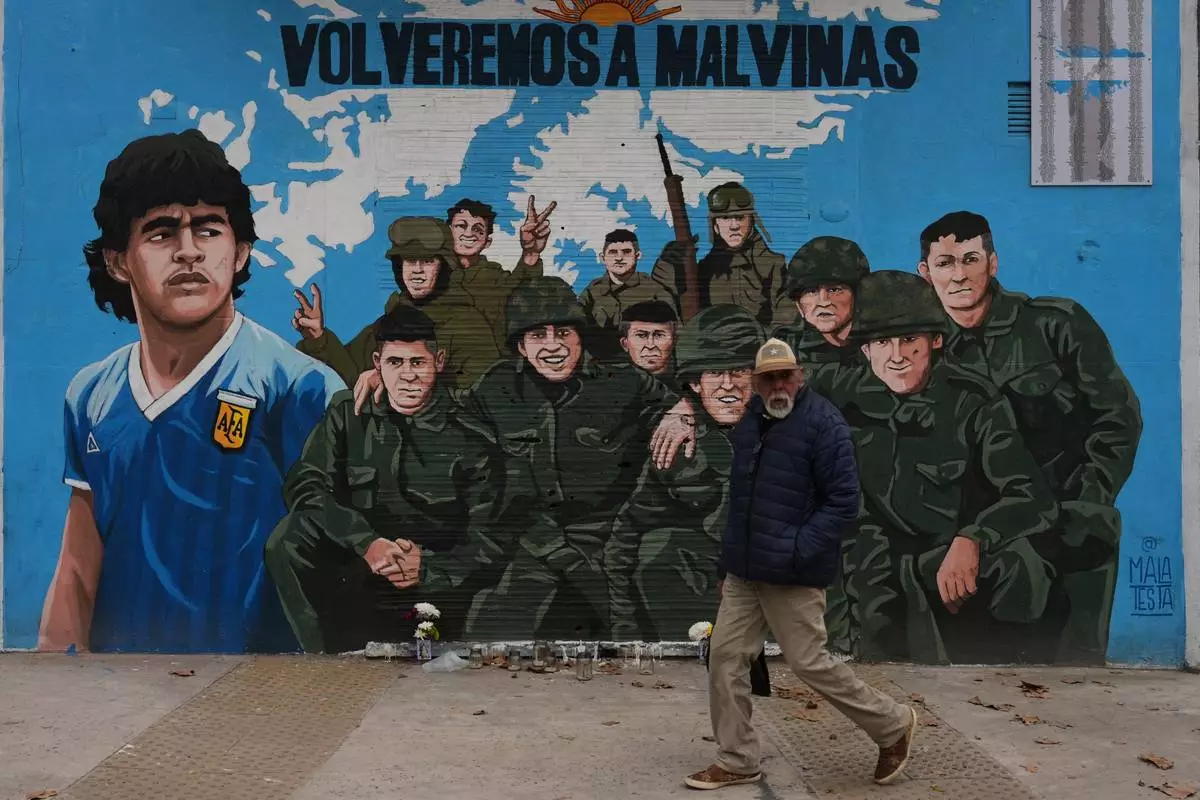
A man walks past a street mural depicting the late soccer star Diego Maradona and veterans of the 1982 war between Argentina and Britain over the Falkland Islands, known in Argentina as the Malvinas, in Buenos Aires, Argentina, Wednesday, July 15, 2026. (AP Photo/Rodrigo Abd)
A man walks past a street mural depicting the late soccer star Diego Maradona and veterans of the 1982 war between Argentina and Britain over the Falkland Islands, known in Argentina as the Malvinas, in Buenos Aires, Argentina, Wednesday, July 15, 2026. (AP Photo/Rodrigo Abd)

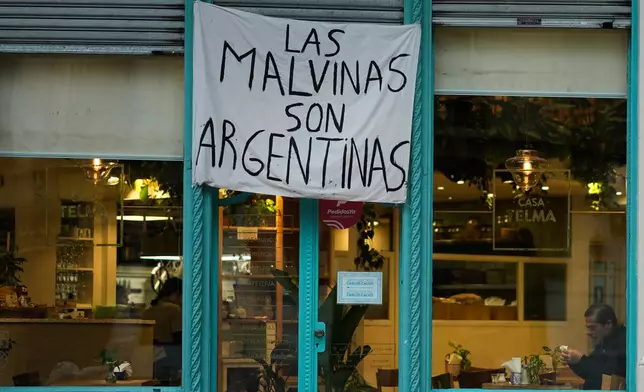
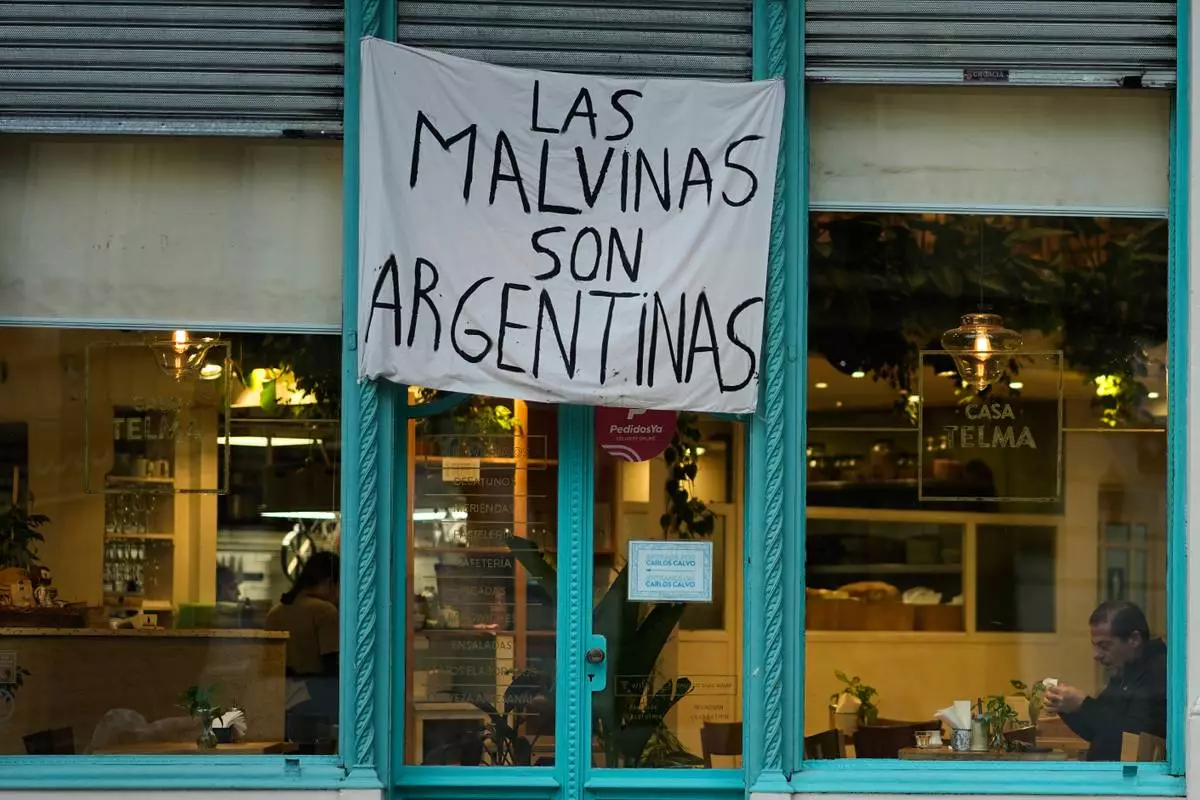
A man sits at a restaurant displaying a banner reading "The Malvinas are Argentine," referring to the Falkland Islands, also known as Malvinas, in Buenos Aires, Argentina, Monday, July 27, 2026. (AP Photo/Natacha Pisarenko)

A man sits at a restaurant displaying a banner reading "The Malvinas are Argentine," referring to the Falkland Islands, also known as Malvinas, in Buenos Aires, Argentina, Monday, July 27, 2026. (AP Photo/Natacha Pisarenko)

The South Atlantic archipelago, known in Argentina as the Malvinas, is claimed by both Argentina and Britain, which fought a 10-week war over the territory in 1982.

The banner spawned a marketing bonanza in Argentina, appearing on stickers, tote bags, sneakers, artwork and soccer jerseys. It was draped over bars, painted onto subway walls and tattooed onto calves and forearms. Thousands of Argentines downloaded “Malvinas Sans,” a typeface modeled on the banner’s hand-painted lettering. Colorful murals of the islands and of war veterans popped up across the country.

“The World Cup is now over, and yet people are still talking about the Malvinas because the Malvinas somehow became part of the World Cup,” said Edgardo Esteban, an author and veteran of the war. “Kids in schools are asking me, ‘What’s this Malvinas thing?’ Now there’s a passing of the torch.”

None of Argentina’s players had been born when the country’s military dictatorship invaded the Malvinas in 1982, holding the islands for 73 days before British forces recaptured them in a war that killed 649 Argentine and 255 British troops.

But they grew up in a country haunted by the humiliation of that ill-fated invasion, widely seen as a desperate bid for popularity by the weakened junta that fell a year later. As Argentina emerged from the trauma of the brutal dictatorship, many veterans and families of conscripts killed in the war felt their sacrifices had been sidelined by a nascent democracy that sought to distance itself from the disaster.

“As veterans, we spent a long time feeling silenced, forgotten, pushed aside,” Esteban said.

It took a different World Cup to break that silence. When Argentina played England in the quarterfinals in Mexico City in 1986, Argentine soccer great Diego Maradona scored two goals — including his notorious handball known as the “Hand of God,” which he dedicated to those killed in the war and said was revenge for the Malvinas.

Over the decades, Argentina’s claim on the islands became enshrined in its constitution. The Malvinas appeared on road signs. Each year, the country's leaders honor the war dead with wreath-laying ceremonies.

The islands, which lie 480 kilometers (300 miles) off Argentina’s coast, are home to some 3,600 people, roughly 450,000 sheep and over 1 million penguins, according to government figures.

Ahead of this year's semifinal against England, Argentine Security Minister Alejandra Monteoliva warned fans that Malvinas-themed signs would not be allowed inside the stadium due to FIFA’s ban on political messages.

As Argentine players ran onto the field to celebrate their victory, supporters tossed what appeared to be a white bed sheet onto the pitch. Midfielder Giovani Lo Celso pulled it open to reveal the message hand-painted in bold black letters: “Las Malvinas son Argentinas,” or “The Malvinas are Argentine.” Teammates Cristian Romero and Lisandro Martínez helped spread the banner wide before TV cameras and cheering fans.

After the match, British politicians and fans took to social media to vent their anger, helping amplify a wave of online posts criticizing both Argentina and its national team, digital researchers said.

On Wednesday, FIFA charged Argentina’s soccer federation for players parading the banner.

In Argentina, the banner became a sensation, eclipsing for many both the disappointment of the team's defeat to Spain in the final and the flood of hostile commentary.

“Despite not having won the tournament or brought home the trophy, every single player was welcomed back as a popular hero,” said Juan Rattenbach, an Argentine political expert on the Malvinas.

Iván Marcasiano, 36, owns a Buenos Aires print shop that has struggled to keep up with explosive demand for T-shirts printed with players holding the banner.

“The players had the courage to display a flag on the field that fans had been banned from bringing into the stadium. That gesture, showing that it’s up to ordinary Argentines to carry our demands forward, really resonated with young people,” Marcasiano said.

“They reached an audience that might never have participated in this kind of activism or historical remembrance before.”

When Marcasiano offered on Instagram to screen-print the image onto fans’ Argentina jerseys free of charge, 3,500 people — from teenagers to war veterans — showed up at his shop in a single day, he said.

It remains unclear if the Malvinas frenzy is a flash-in-the-pan obsession or evidence of a lasting resurgence of the political cause.

Activists have scrambled to harness the momentum. They are invoking national sovereignty to rally opposition to libertarian President Javier Milei's free-market agenda, including legislation that would loosen restrictions on foreign land ownership in Argentina.

But experts said the real political impact may lie beyond Argentina: introducing tens of millions of viewers worldwide to a dispute over a chain of islands few could have found on a map. Global Google searches for the Malvinas jumped 2,400% after Argentina’s semifinal against England, according to Google Trends, the largest increase in search interest since the platform began tracking data.

“Britain’s strategy since 1982 has been to keep the issue of the Malvinas out of the spotlight,” Rattenbach said. “Now, no one can deny its visibility.”
People ride a subway train stopped at a station displaying a photo of Argentina's soccer players holding a banner reading "The Malvinas are Argentine," referring to the Falkland Islands also known as Malvinas, taken after the team's World Cup semifinal soccer match between Argentina and England, in Buenos Aires, Argentina, Monday, July 27, 2026. (AP Photo/Natacha Pisarenko)
People ride a subway train stopped at a station displaying a photo of Argentina's soccer players holding a banner reading "The Malvinas are Argentine," referring to the Falkland Islands also known as Malvinas, taken after the team's World Cup semifinal soccer match between Argentina and England, in Buenos Aires, Argentina, Monday, July 27, 2026. (AP Photo/Natacha Pisarenko)

A mural of Argentine soccer players Lionel Messi and Diego Maradona decorate a wall in Buenos Aires, Argentina, early Thursday, July 30, 2026. (AP Photo/Natacha Pisarenko)
A mural of Argentine soccer players Lionel Messi and Diego Maradona decorate a wall in Buenos Aires, Argentina, early Thursday, July 30, 2026. (AP Photo/Natacha Pisarenko)

A man walks past a street mural depicting the late soccer star Diego Maradona and veterans of the 1982 war between Argentina and Britain over the Falkland Islands, known in Argentina as the Malvinas, in Buenos Aires, Argentina, Wednesday, July 15, 2026. (AP Photo/Rodrigo Abd)
A man walks past a street mural depicting the late soccer star Diego Maradona and veterans of the 1982 war between Argentina and Britain over the Falkland Islands, known in Argentina as the Malvinas, in Buenos Aires, Argentina, Wednesday, July 15, 2026. (AP Photo/Rodrigo Abd)

A man sits at a restaurant displaying a banner reading "The Malvinas are Argentine," referring to the Falkland Islands, also known as Malvinas, in Buenos Aires, Argentina, Monday, July 27, 2026. (AP Photo/Natacha Pisarenko)

A man sits at a restaurant displaying a banner reading "The Malvinas are Argentine," referring to the Falkland Islands, also known as Malvinas, in Buenos Aires, Argentina, Monday, July 27, 2026. (AP Photo/Natacha Pisarenko)
NAIROBI, Kenya (AP) — Landmark fundraising deals by two of Africa’s largest off-grid solar companies are raising hopes that private capital markets could become a major source of funding to help bring electricity to millions of homes lacking access to reliable power.

A $50 million green bond issued by affordable energy company D.light in June, and $286 million in securitized debt by rival Sun King mid-2025 are testing whether institutional investors will back a pay-as-you-go business model on a commercial scale.

Such strategies are fueling debate over whether Africa’s off-grid solar sector has reached a financial turning point, attracting mainstream investors beyond its traditional base of donor agencies and development finance institutions.

Both d.light and Sun King sell solar home systems and appliances to households that lack electricity using a pay-as-you-go (PAYGo) model. Customers pay in small instalments, often through mobile apps, instead of putting up the full price upfront. The remaining future payments, known as receivables, are bundled together and used as collateral for bonds or other securities that can be sold to investors, allowing the two companies to raise fresh capital immediately.

Sun King’s global chief financial officer, Krishna Swaroop, called the transactions “pathbreaking” for the industry.

“They demonstrate the entry of a serious scale of commercial capital, investors and instruments not seen before in this sector,” Swaroop said.

But he cautioned that the deals reflect years of operational experience that many smaller companies lack. Investors typically expect to see five to seven years of repayment data before considering similar financing structures.

Securitization allows solar firms to bundle future payments such as Pay-go receivables and sell them to investors to raise capital. While it can lower financing costs for larger firms, the process requires costly legal, regulatory and credit guarantees. Those fixed expenses make securitization uneconomical for smaller firms.

“The biggest risk that still deters mainstream investors is the portfolio quality risk,” Swaroop said, referring to the possibility of loans not performing as expected. “Many off-grid companies struggle to quantify and explain the portfolio quality data to investors in terms they understand.”

The financial tools the companies are using are unfamiliar outside capital markets.

A green bond works like a conventional bond, purchased by investors who earn interest payments. The proceeds finance environmentally beneficial projects. In d.light’s case, the bond is backed by a special-purpose firm holding thousands of PAYGo customer account receivables.

Sun King’s transactions use securitization, a financing technique widely used in mortgage and auto-loan markets. Instead of mortgages, the underlying assets are future customer payments for solar systems. That allows the company to convert years of future repayments into immediate capital.

Industry leaders say the deals show the market for climate financing has matured.

Years of improvements in product quality, certification and repayment records have made customer receivables increasingly attractive to investors, said Sarah Malm, executive director of the off-grid solar industry association GOGLA.

“These deals are proof that the model works,” Malm said. “Today, PAYGo receivables are rated, listed and bought by institutional investors in London and New York.”

GOGLA’s 2025 Investment Data Report found Africa’s off-grid companies are increasingly attracting sophisticated financing, with local-currency investment reaching a record 47.2% of funding. The rest was U.S. dollar-denominated. It said 18 new investors were participating, including commercial banks in Nigeria, Kenya, Tanzania and Madagascar.

Wangari Muchiri, founder and chief executive of Africa-based clean energy transition firm RE.Think Energy, said the transactions represent “an important tipping point” rather than isolated successes.

“Every successful transaction reduces perceived risk and makes the next one easier to finance,” Muchiri said, adding that wider adoption will require more investment-ready companies, standardized financing structures, stronger performance data and supportive regulation.

Analysts caution that the transactions still rely on significant credit enhancements, such as a full guarantee from the Green Guarantee Co., which mobilizes private capital for climate investment in emerging markets.

It backed d.light's green bond, substantially reducing the risk for investors, said Penny Herbst, senior energy adviser at the Rabia Transition Initiative, a nonprofit energy transition research firm.

“While it may be a first of its kind, it is significantly de-risked,” Herbst said. She noted that because the bond was privately placed, key pricing and guarantee details remain confidential.

Supporters argue that if such financing becomes more common, it could reshape Africa’s electrification efforts.

Improved technology is helping. Lithium-ion batteries now last up to 10 years, and battery prices have fallen by more than 90% since 2010, Malm noted. Independent product certification, warranties and repair networks have further reduced investor risk.

“All of this matters to an investor because it is what turns a stream of household payments into a predictable, well-performing financial asset,” she said.

Swaroop said one remaining challenge is ensuring that commercial returns don't deter investors from helping the poorest households.

“Theoretically, capital markets and institutional investors can provide cheaper and longer-tenured capital,” he said. “But we also need to ask whether chasing capital-market-level returns leads companies toward larger, more creditworthy customers and away from the hardest-to-reach, lowest-income segment.”

The Associated Press’ climate and environmental coverage receives financial support from multiple private foundations. AP is solely responsible for all content. Find AP’s standards for working with philanthropies, a list of supporters and funded coverage areas at AP.org.

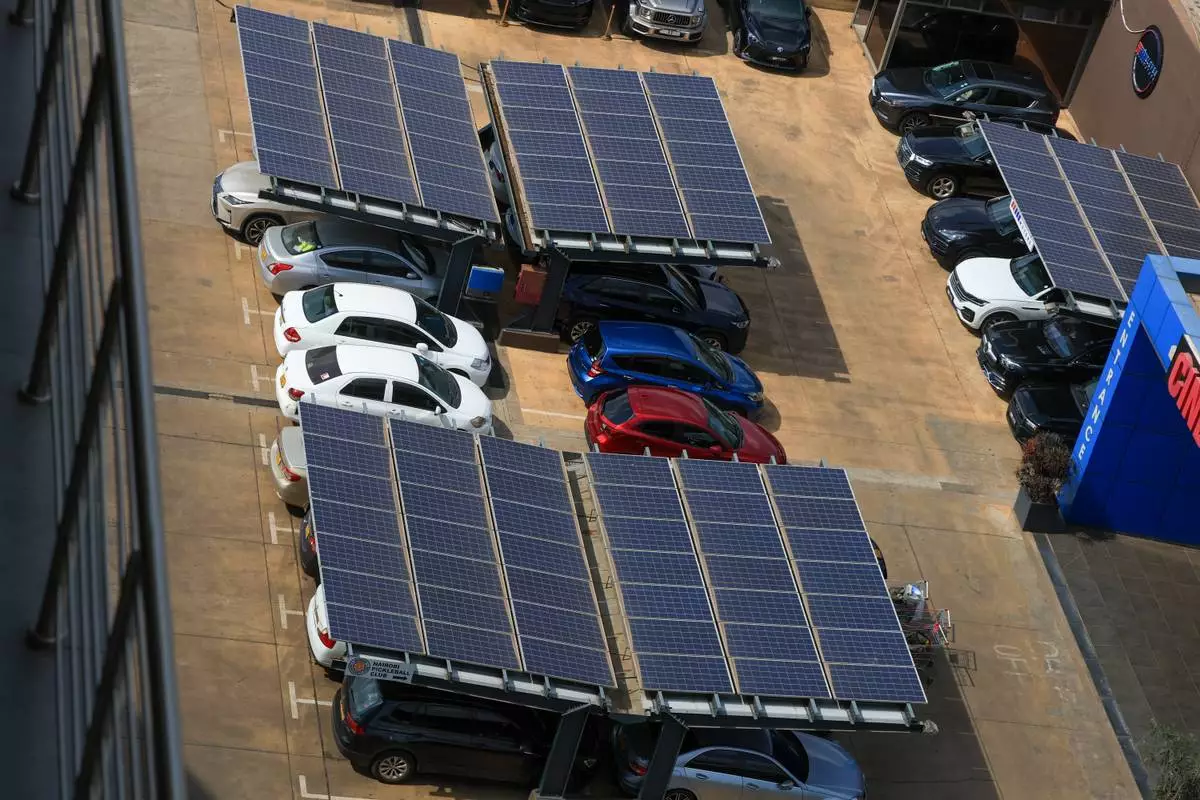
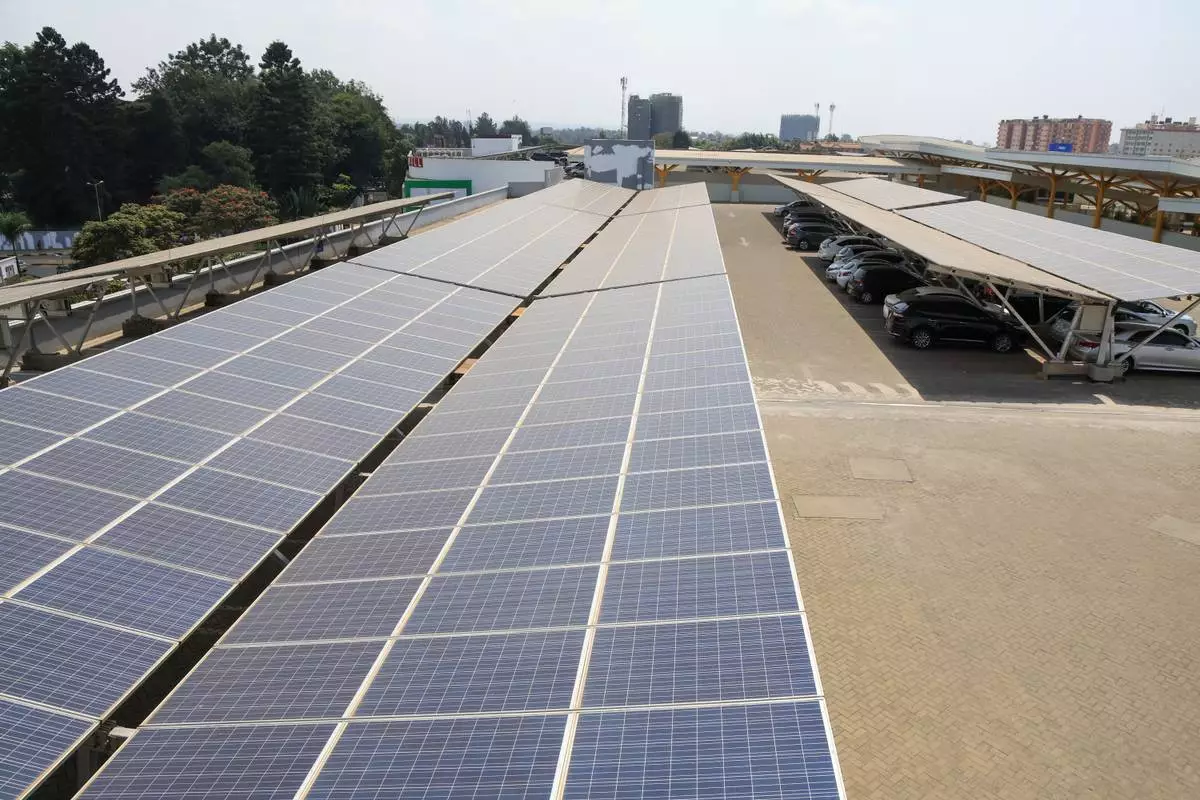
Solar panels cover the parking lot of Garden City Mall in Nairobi, Kenya, Tuesday, July 16, 2026. (AP Photo/Andrew Kasuku)

Solar panels cover the parking lot of Garden City Mall in Nairobi, Kenya, Tuesday, July 16, 2026. (AP Photo/Andrew Kasuku)

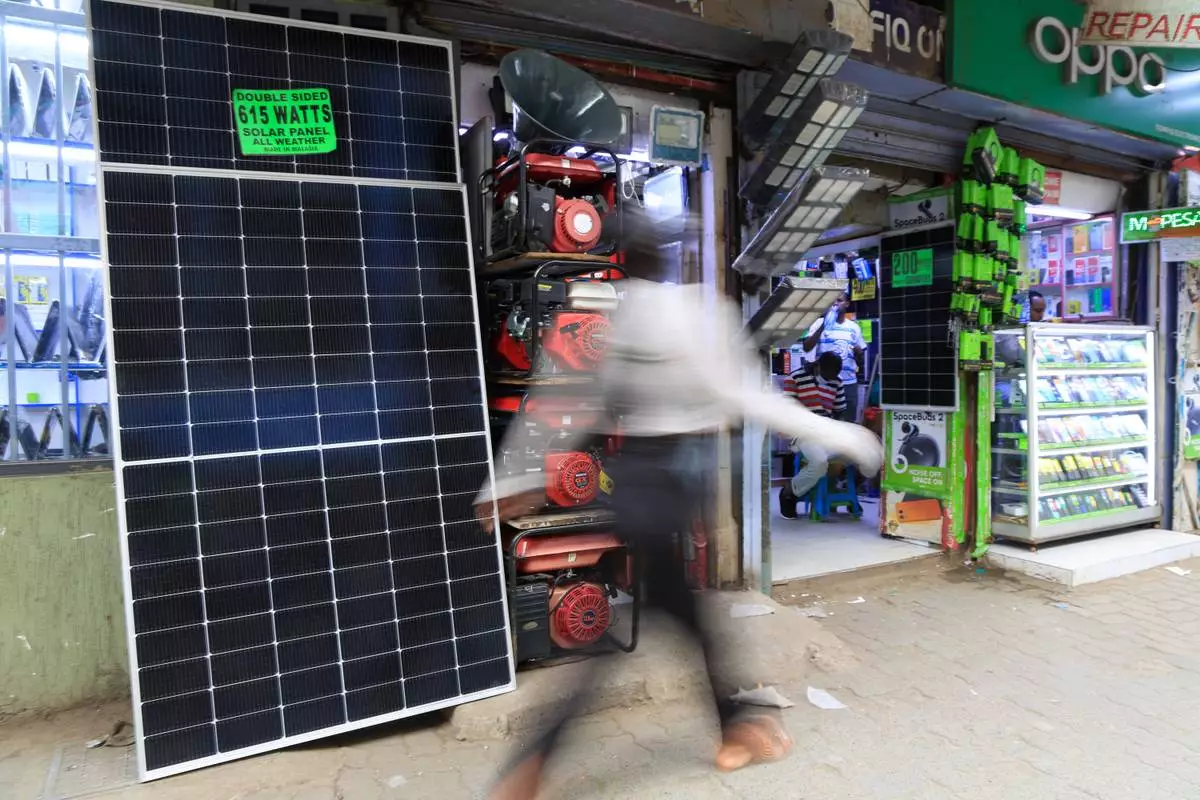
A man walks past solar panels displayed for sale in Nairobi, Kenya, Tuesday, July 16, 2026. (AP Photo/Andrew Kasuku)

A man walks past solar panels displayed for sale in Nairobi, Kenya, Tuesday, July 16, 2026. (AP Photo/Andrew Kasuku)

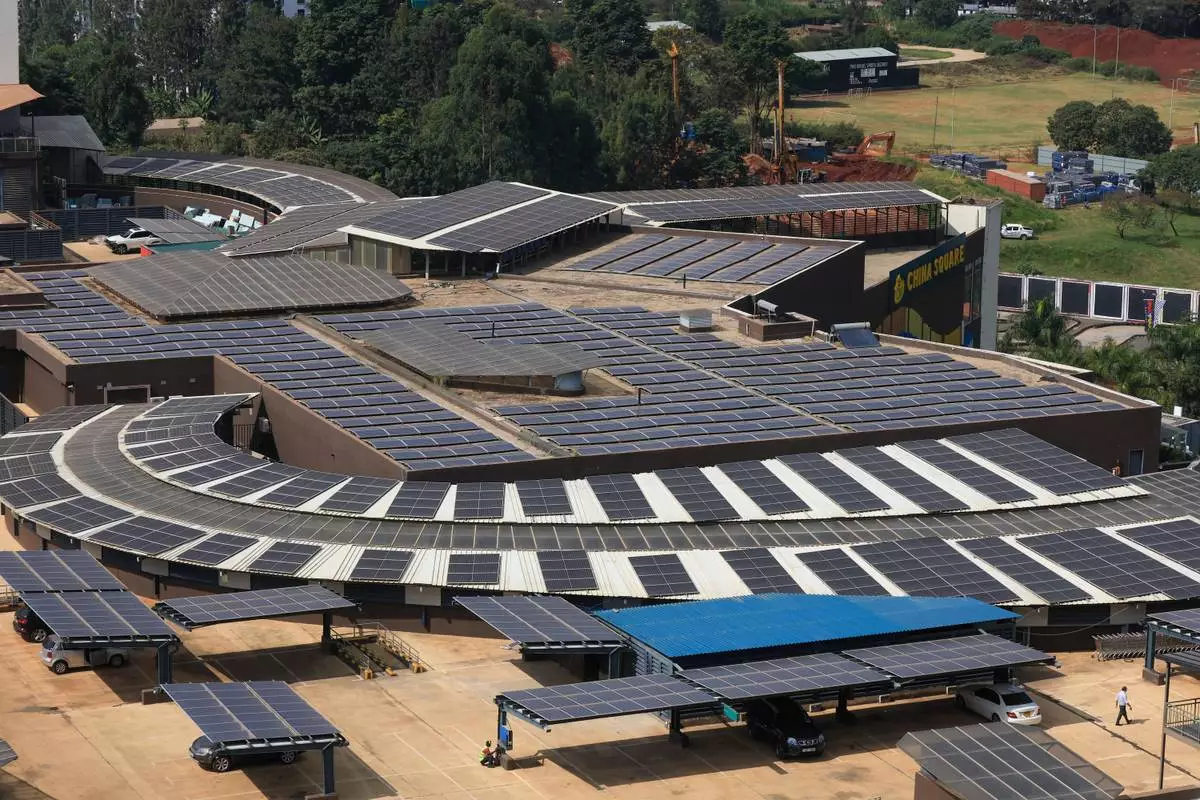
A solar power plant is seen at the car park of Two Rivers Complex in Nairobi, Kenya, Tuesday, July 16, 2026. (AP Photo/Andrew Kasuku)

A solar power plant is seen at the car park of Two Rivers Complex in Nairobi, Kenya, Tuesday, July 16, 2026. (AP Photo/Andrew Kasuku)

A solar power plant is seen at the car park of Two Rivers Complex in Nairobi, Kenya, Tuesday, July 16, 2026. (AP Photo/Andrew Kasuku)

A solar power plant is seen at the car park of Two Rivers Complex in Nairobi, Kenya, Tuesday, July 16, 2026. (AP Photo/Andrew Kasuku)

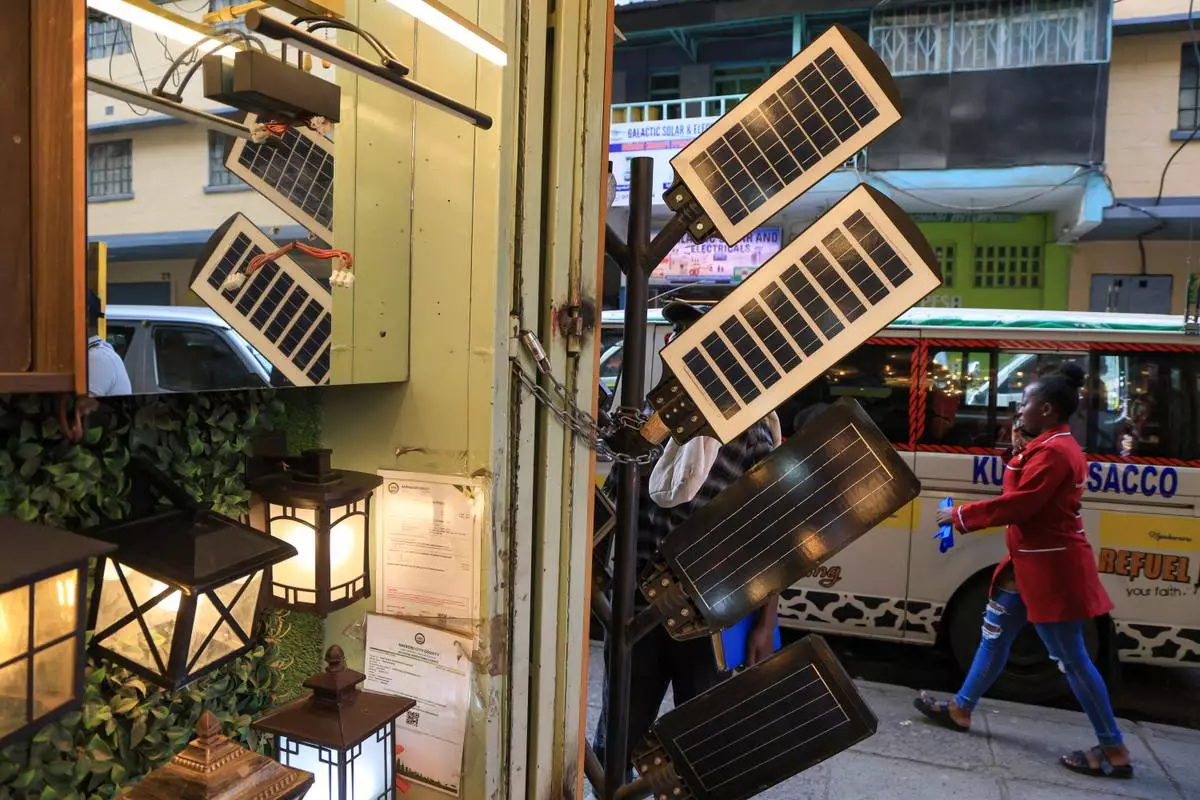
Solar-powered street lights are displayed for sale in Nairobi, Kenya, Tuesday, July 16, 2026. (AP Photo/Andrew Kasuku)

Solar-powered street lights are displayed for sale in Nairobi, Kenya, Tuesday, July 16, 2026. (AP Photo/Andrew Kasuku)

Recommended Articles