More than 434,000 hectares have already burned across Europe this year, according to the latest available data, said the United Nations Economic Commission for Europe (UNECE) on Thursday.
Devastating fires in the Gironde region of France destroyed around 42,000 hectares of pine forest, and forced the evacuation of tens of thousands of residents and tourists.
Spain has experienced one of its worst wildfire seasons in decades, with more than 200,000 hectares burned, twice its historical annual average, according to a press release of UNECE.
The European Union warned on Wednesday that the wildfire crisis is moving eastwards, with Greece and Italy expected to face increasing danger as the heatwave, drought and strong winds will continue into early August.
As wildfires continue to rage across Europe and North America, destroying forests, threatening communities and releasing vast amounts of carbon into the atmosphere, the 2026 fire season is once again demonstrating that while many fires cannot be stopped once they reach full intensity, much more can be done to prevent future disasters, said the UNECE.
Wildfires threaten lives, destroy homes, infrastructure and livelihoods, and force entire communities to evacuate. Their impacts extend far beyond the fire perimeter. Smoke can travel hundreds or even thousands of kilometers, degrading air quality and increasing respiratory and cardiovascular illnesses far from the flames.
Climate change drives more frequent and intense wildfires, while the massive carbon emissions from these fires further accelerate global warming, creating a dangerous feedback loop that worsens both problems.
The economic consequences are equally significant. In the European Union alone, wildfires are estimated to cost around 2.5 billion euros every year, through damage to infrastructure, loss of tourism revenue and disruption of economic activity. Yet these estimates capture only part of the picture.
About nine out of ten wildfires are caused by human activity, the UN organization headquartered in Geneva warned, making prevention through public awareness, regulations, and sustainable forest management --encompassing risk assessment, early detection, and post-fire restoration--essential to reducing fire risk.
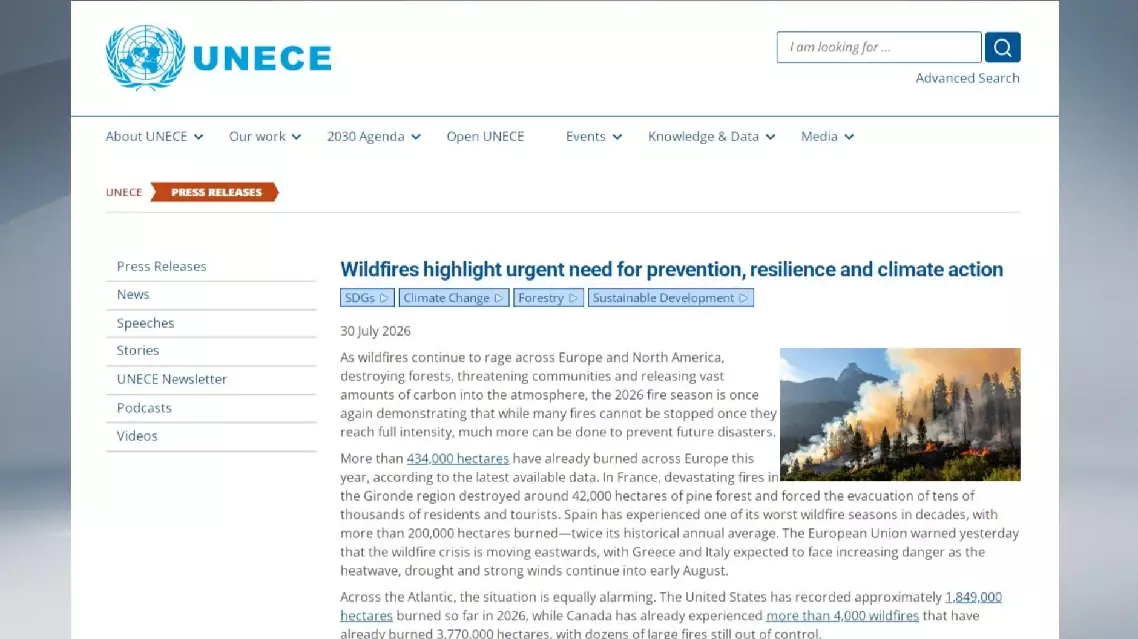
UNECE says over 434,000 hectares burned in Europe this year
A number of university students in the U.S. capital have shared their views on China's initiative to invite 100,000 young Americans to visit the country for exchanges and study over the next five years.
The program was announced by Chinese President Xi Jinping when addressing a welcome ceremony at the White House during his visit to the United States from Wednesday to Friday.
Many of the students interviewed expressed their hope to visit some well-known places in China like Beijing, Shanghai and Guangdong.
"My dad's been to China for work, and he really loves it, so I'd love to go sometime. Maybe Shanghai. That's where my dad went, and he really liked it there," said a student.
"I've heard of Guangdong. I've heard of the basketball team," another student said.
Many of the students agreed that allowing more young Americans to experience Chinese culture in person would be beneficial for both countries.
"I think that's really cool to have the opportunity to connect with those cultures. And I really do like that idea. I think it's a great idea to invite us to China. It's great," said a student.
"I feel like the culture. I feel like getting the opportunity to immerse yourself in different cultures is really important," said another student.
"There's definitely value in traveling to other places and learning other cultures. So I think that it can be beneficial," said another one.
Even beyond cultural exchange, the students expressed their beliefs that American youth could learn a lot from Chinese society.
"I think, for me personally, it's the scale, with how many people live in China. I would definitely be interested in seeing how that functions, especially in those larger cities," said a student.
"I think I would like to know what their people are like. What are their thoughts on the world? On what the world should be like?" one student said.
"I think China's amazing. They're so far ahead. We're supposed to be the Western world, but I feel like they're so much more advanced than us in so many ways. I know AI and medicine are big things right now, and I think China has made huge advancements in that. So probably that," said a student.
The students also hope that the program will help strengthen China-U.S. relationship, promote educational exchanges, and broaden the horizons of those who take part.
"It's better for both countries to be connected and to build a better relationship over the coming years. And I think that's important to global peace and prosperity," said a student.
"I think it's really a great thing. I think different cultures, combining different cultures, and education is such a global thing, and having different students come all over the place and take classes here and there," said another student.
"There's a lot more to this world than what's right in front of us. And there's a lot to learn from different ways of seeing things around the world. So I think it could be valuable from that standpoint," a student said.
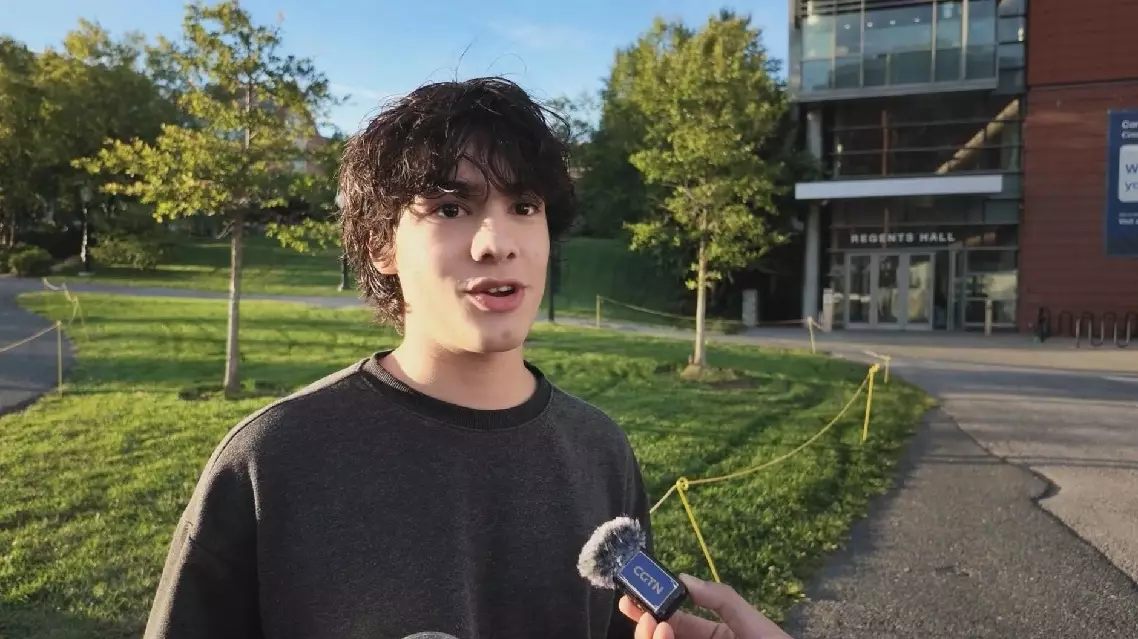
US students share views on China's plan to invite 100,000 young people for study, exchange