SANTA CLARA, Calif.--(BUSINESS WIRE)--Jul 31, 2026--
XCENA, providing memory-centric computing solutions for AI infrastructure, today introduced MX1, its production memory lineup built to break through the capacity, utilization and data-movement now limiting AI inference at scale. The company is showcasing MX1 at FMS 2026: The Future of Memory and Storage, being held Aug. 4–6 at the Santa Clara Convention Center.
This press release features multimedia. View the full release here: https://www.businesswire.com/news/home/20260731455701/en/
As generative AI drives larger models, longer context windows and rapidly growing KV cache footprints, memory is emerging as the defining constraint on AI infrastructure. High-bandwidth memory remains costly and capacity-limited, and scaling out with additional servers creates stranded DRAM and rising total cost of ownership. XCENA developed the CXL-based MX1 lineup to give operators a different path - scaling memory as efficiently as they scale compute. Together with Intel Xeon 6 platforms, MX1 solutions showcase how CXL-based memory can help address memory-intensive AI workloads.
"AI performance is no longer limited by compute, it's limited by memory, and MX1 is our answer," said Jin Kim, CEO of XCENA. "By bringing compute to data instead of the other way around, we're giving operators a way to cut the cost, power and complexity of inference at exactly the moment those pressures are peaking. This is the logical evolution of memory for the AI era."
MX1 builds on MX1P, the prototype platform XCENA introduced last year that is currently deployed in proof-of-concept engagements and technical collaborations globally with customers. With this added to the production lineup, XCENA aims to advance current engagements toward production-level evaluation and commercialization discussions with hyperscalers, cloud service providers and enterprise AI infrastructure customers.
The lineup comprises two complementary products:
FMS 2026
At its booth #834, XCENA is showcasing MX1 Compute and MX1 Expand and demonstrating a CXL memory pool of up to 20 TB using memory pooling systems. The company is also presenting a KV cache sharing demonstration showing how AI inference infrastructure can use shared memory resources more efficiently.
At the Intel booth (#820), XCENA is demonstrating a CXL-based memory architecture on the Intel Xeon 6 platform. The demonstration shows how MX1 addresses the growing KV cache requirements of AI inference by offloading KV cache to CXL-attached memory, improving memory scalability and utilization efficiency for AI servers.
“As AI inference scales, efficiently expanding and utilizing memory is becoming increasingly important for hyperscale infrastructure,” said Debendra Das Sharma, Senior Fellow and Chief I/O Architect at Intel. “XCENA’s MX1 demonstrates how CXL-based memory expansion can support KV cache offloading on Intel Xeon 6 platforms to help address memory-intensive AI workloads.”
Technical Sessions
XCENA is presenting two sessions during FMS 2026:
XCENA was named Most Innovative Startup at FMS 2024 and received the Most Innovative Memory Technology award at FMS 2025, earning recognition at the industry’s flagship event for two consecutive years. Building on that momentum, XCENA is expanding proof-of-concept engagements with global customers, advancing commercialization discussions and accelerating its entry into the AI infrastructure memory market.
ABOUT XCENA
XCENA is a memory-centric AI computing company redefining the role of memory in AI infrastructure. Built on the open Compute Express Link (CXL) standard, XCENA develops products that enable memory to be expanded and utilized more efficiently, helping customers improve AI infrastructure performance while reducing latency, power consumption, and total cost of ownership (TCO).
Founded by semiconductor veterans from Samsung Electronics and SK hynix, XCENA combines expertise in semiconductor design with a full-stack software development kit (SDK) to help hyperscalers, cloud providers, and enterprises deploy and optimize AI infrastructure at scale. Headquartered in Seongnam, South Korea, with a U.S. office in Sunnyvale, California, XCENA has raised US$185 million to date, including a US$135 million Series B financing. Learn more at www.xcena.com.

XCENA Unveils MX1 Production Lineup to Accelerate Push Into Hyperscale AI Infrastructure
CEUTA, Spain (AP) — About 60,000 migrants have entered Spain’s Ceuta from Morocco in the past 24 hours, Ceuta's president said on Friday. That is equivalent to 70% of the city's regular population.
At least 34 migrants have died attempting the crossing.
“The situation that Ceuta is going through is absolutely unsustainable,” Juan Jesús Vivas told journalists.
Spain's Prime Minister Pedro Sánchez visited Ceuta on Friday and condemned the border breach which he described as “a violation of Spain's territorial integrity.”
Sánchez blamed human smugglers for the crisis, saying they “deceive so many young people, and ultimately lead many of them to their deaths — whether in the ocean or, as in this case, at Spain’s border in the autonomous city of Ceuta.”
Spain’s interior ministry, which had initially refused to share estimates from the border, released its own figures shortly after Vivas’ spoke, estimating that some 50,000 people had crossed from Morocco since Thursday. It added that half had already returned to Morocco, and shared footage of migrants walking back through a border fence door.
The border crisis boiled over with security forces clashing with migrants on the Moroccan side of the border.
Video footage of the border early on Friday showed hundreds of migrants gathered on a hill overlooking Ceuta being dispersed with tear gas by Moroccan forces, while others continued to swim to the Spanish territory.
Rachid Sbihi, who leads a local workers association representing Civil Guard officers, described the situation as a “serious humanitarian crisis,” saying thousands of migrants, including unaccompanied children, were left sleeping in parks and on sidewalks, while others roamed the streets aimlessly. “It’s chaotic.”
Morocco’s Interior Ministry did not immediately respond to a request for comment on the migrant figures released by the Spanish authorities.
European Commission President Ursula von der Leyen said the “images coming from Ceuta are unacceptable.”
“We cannot allow anyone to come to our Union without abiding by our rules,” she said in an online statement on Friday. “Dangerous crossings must stop immediately. Smuggling networks must be dismantled. And returns must be swift, as our rules allow.”
Some of the 34 people who died had drowned, Sbihi said, but some were also killed in a stampede to cross the breakwater fence at Tarajal beach, an urban beach near a border checkpoint with Morocco. The waters near the border fence were littered with buoys, shoes and other belongings left behind.
Ahmed Karim, a 33-year old Moroccan, said he had crossed into Ceuta because of the lack of jobs in his country.
“Many people want to go to Europe, America, but they don’t have the opportunity,” Karim said.
Moroccan police deployed additional personnel, used water cannons and fired warning shots into the air to prevent migrants from crossing into Ceuta, according to rights groups in Morocco.
“Despite the heavy police presence, people crossed through the waterway, while the land border remained closed,” said Achraf Maimouni, a human-rights activist in Fnideq, the Moroccan city bordering Ceuta.
Migrants arrested at the border were taken farther into Morocco, away from Ceuta, “but people are still coming,” he said.
Morocco’s ambassador to Spain expressed hope that those who crossed from Morocco into the Spanish exclave would return. Karima Benyaich described the situation in Ceuta as difficult, saying it had unfolded against Morocco’s wishes.
“We have always prioritized legal, orderly and safe migration for all,” she said. Benyaich did not comment on what prompted the migrants to cross into Ceuta.
To reach Ceuta, located on the northern African coast, migrants often swim from the Moroccan town of Fnideq, covering about 3 miles (5 kilometers) to reach Spanish territory. Others attempt the crossing from the nearby town of Belyounech, where the distance is shorter.
The authorities in Ceuta and Madrid have linked the border surge to a recent decision by Spain's Supreme Court that ruled migrants arriving by sea could not be summarily deported, unlike those who cross by land or climb the border fence.
Sánchez said migrant smugglers misinterpreted the ruling.
“It appears that this interpretation of the Supreme Court’s ruling spread like wildfire over the past few hours through the networks of human trafficking organizations, triggering the kind of mass surge we witnessed yesterday,” Sánchez said.
Some activists in Morocco expressed doubt that the ruling was behind the surge, arguing most migrants would have been unaware of such legal decisions.
Sánchez has bucked the anti-migration trend that has gained ground across Europe and in the U.S.
Earlier this year, his government moved to give residency and work permits to hundreds of thousands of migrants already living in the country without permission.
Sánchez, a Socialist, argued that it would be good for the economy and the demographics of an aging Spain. Migrants who entered irregularly after Jan. 1 this year were not included.
But his critics have jumped the opportunity to attack his policy, saying it encouraged more migrants to come.
“Sánchez allows Spain to be invaded through Ceuta,” Spanish conservative politician Isabel Díaz Ayuso wrote on X.
Sánchez on Friday defended his migration policy and distanced it from the events unfolding in Ceuta.
The chaos had ripple effects abroad. Premier Giorgia Meloni threatened to suspend Italy’s open-border Schengen agreement with Spain “to defend our borders and ensure the safety of our citizens,” even though Italy doesn’t share a border with Spain and is also an entry point for tens of thousands of migrants crossing the Mediterranean each year.
French Interior Minister Laurent Nunez said France would also strengthen border checks with Spain.
“This crisis in Ceuta has nothing to do with the regularization of migrants adopted by the Government of Spain, as is being falsely claimed by some,” the Spanish government said in a statement late Thursday after Meloni's announcement.
Migrants from Morocco also attempted to cross into Melilla, Spain’s other territory at the tip of North Africa.
There was widespread chaos in Bni Nsar, the Moroccan town bordering the Spanish territory, where migrants clashed with police, throwing rocks and setting police vehicles ablaze, according to local media and rights groups. They reported injuries among security forces and the arrest of dozens of people attempting to cross.
Like Ceuta, Melilla is a Spanish autonomous city on the North African coast. Many Moroccans consider both cities to be occupied territory.
Ceuta has been a Spanish possession since 1580. Its mixed population of Christians and Muslims, Spanish and Moroccan residents and day workers, lives in relative harmony.
——
Naishadham reported from Madrid, Brito from Barcelona, Spain. AP journalists Joseph Wilson in Barcelona, Spain, Akram Oubachir in Casablanca, Morocco, and Antonio Sempere in Ceuta, Spain, contributed.
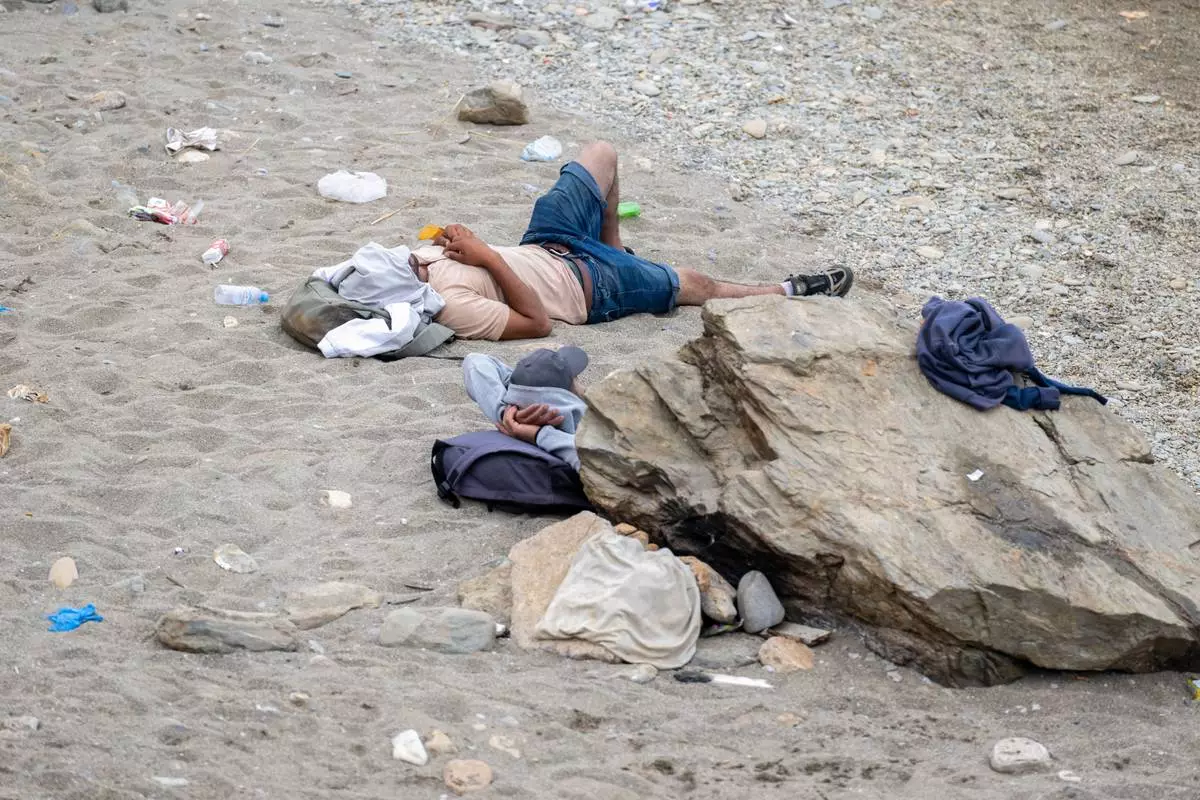
People sleep on a beach as others attempt to cross from the Moroccan northern town of Fnideq to the Spanish enclave of Ceuta, Friday, July 31, 2026. (AP Photo)
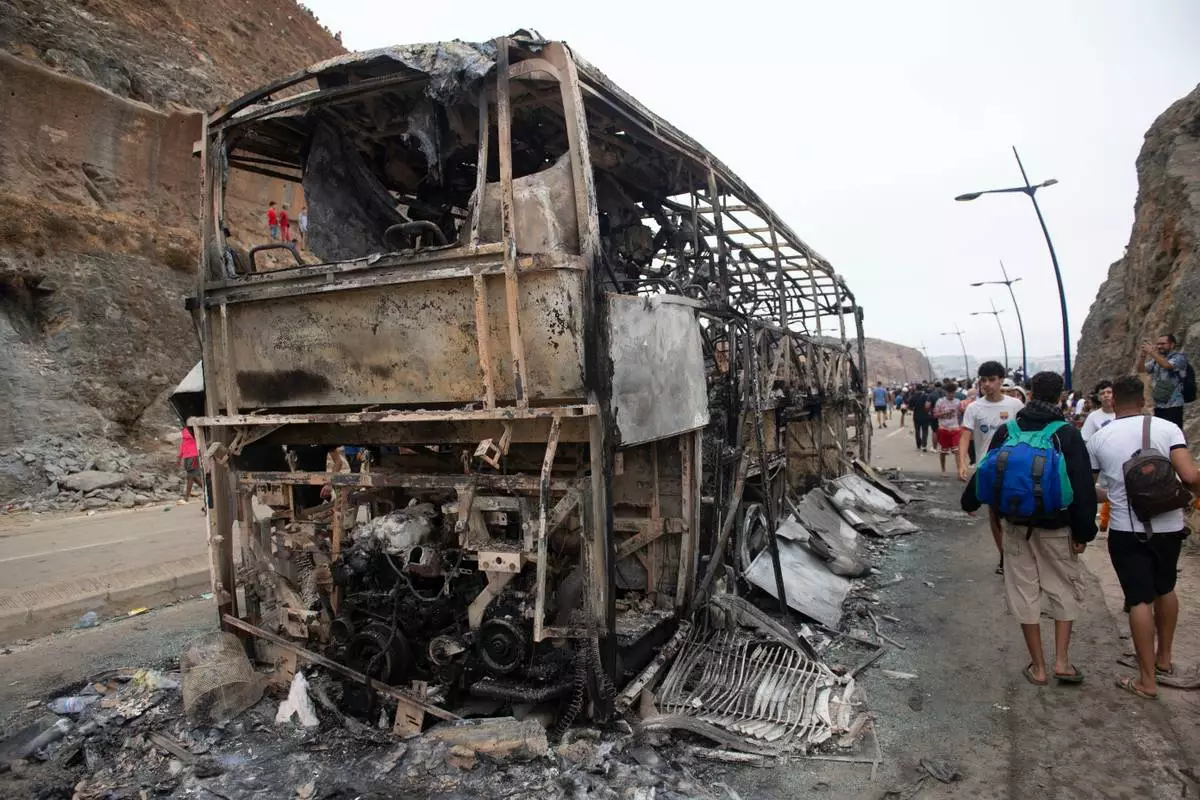
People walk past a bus which was burned during clashes between police and people attempting to cross from the Moroccan northern town of Fnideq to the Spanish enclave of Ceuta, Friday, July 31, 2026. (AP Photo)
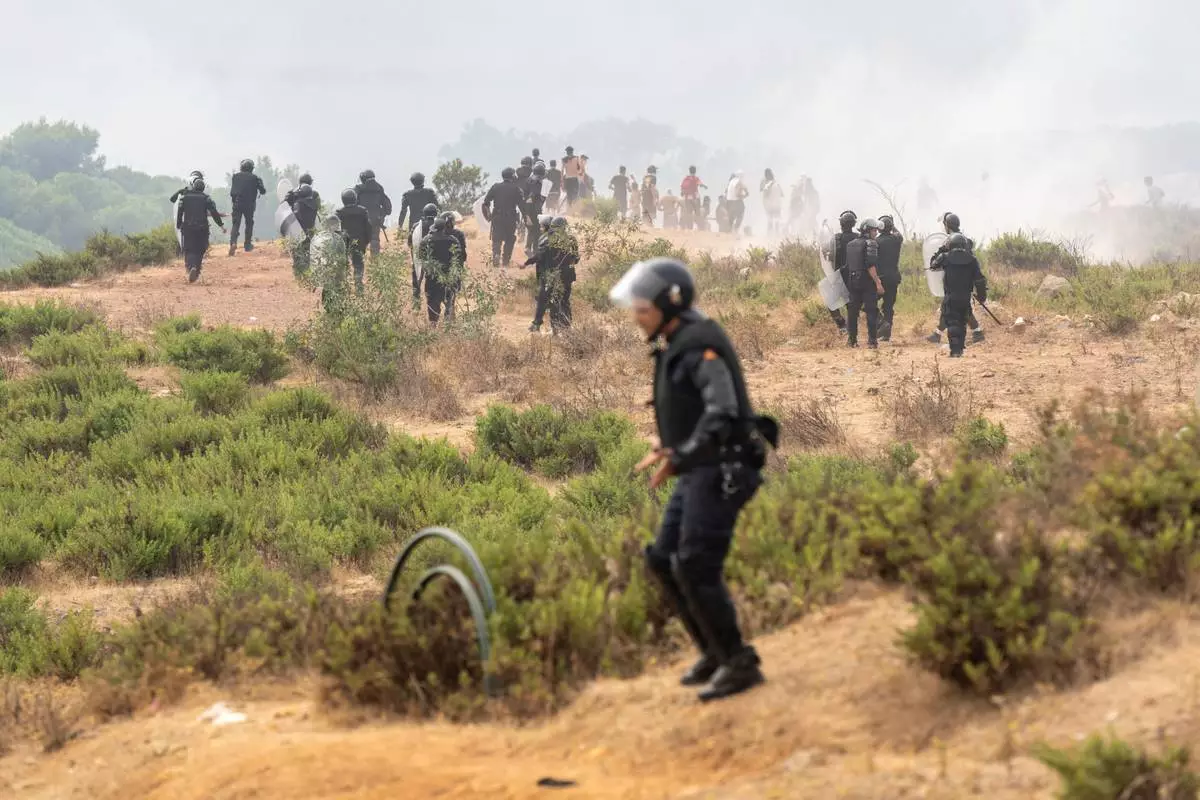
Members of Moroccan security forces disperse people attempting to cross from the Moroccan northern town of Fnideq to the Spanish enclave of Ceuta, Friday, July 31, 2026. (AP Photo)
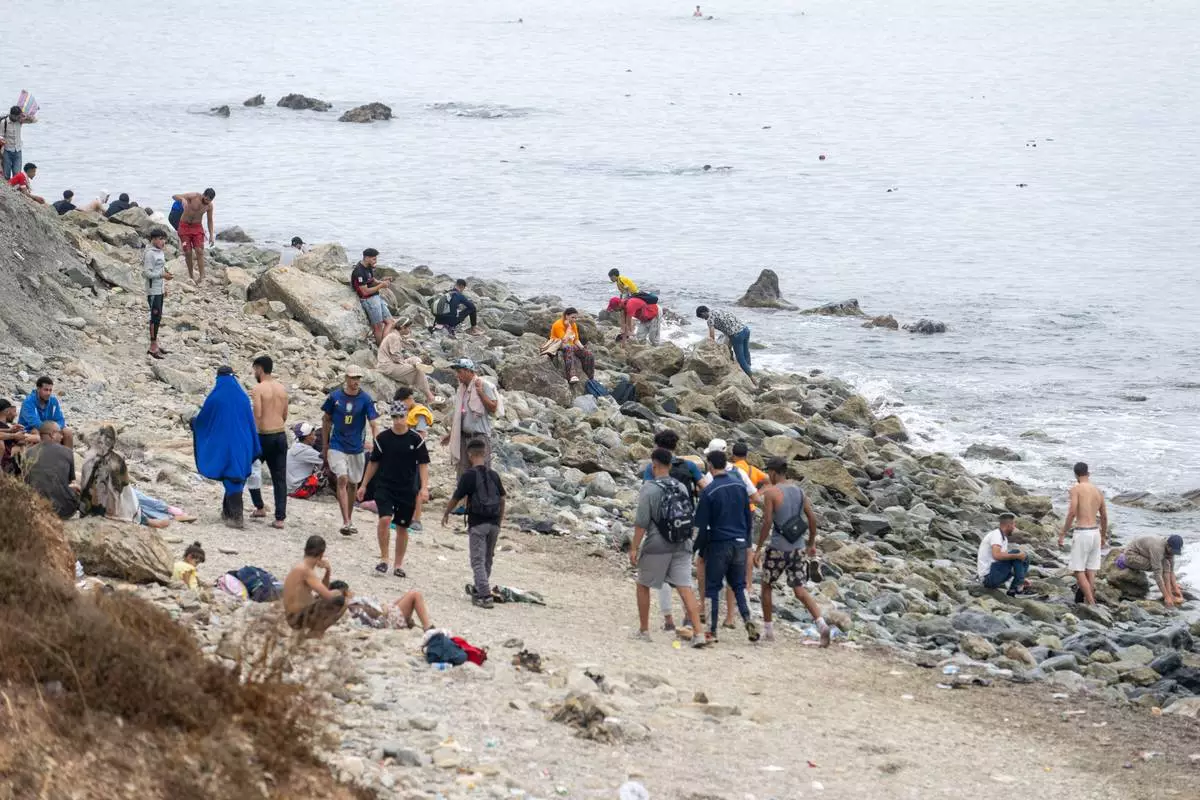
People walk on the beach as they attempt to cross from the Moroccan northern town of Fnideq to the Spanish enclave of Ceuta, Friday, July 31, 2026. (AP Photo)
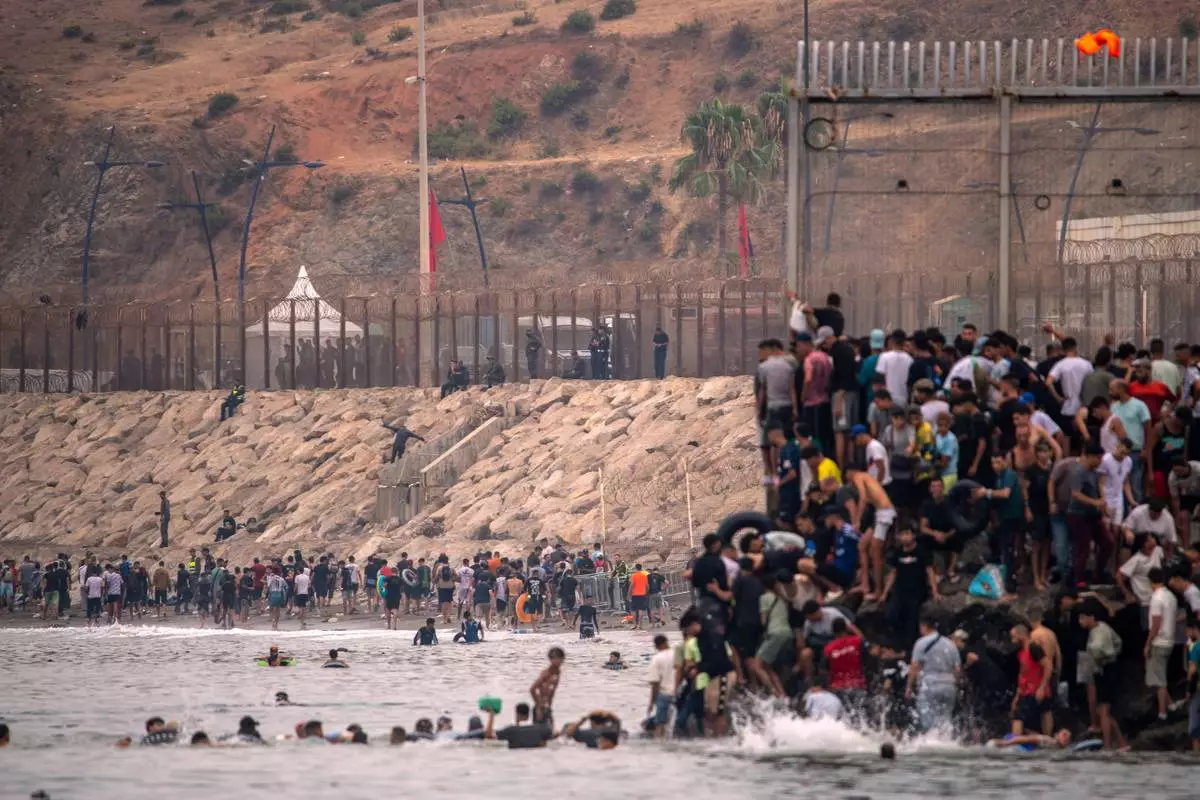
Migrants return to Morocco from the Spanish enclave of Ceuta, Friday, July 31, 2026. (AP Photo/Antonio Sempere)
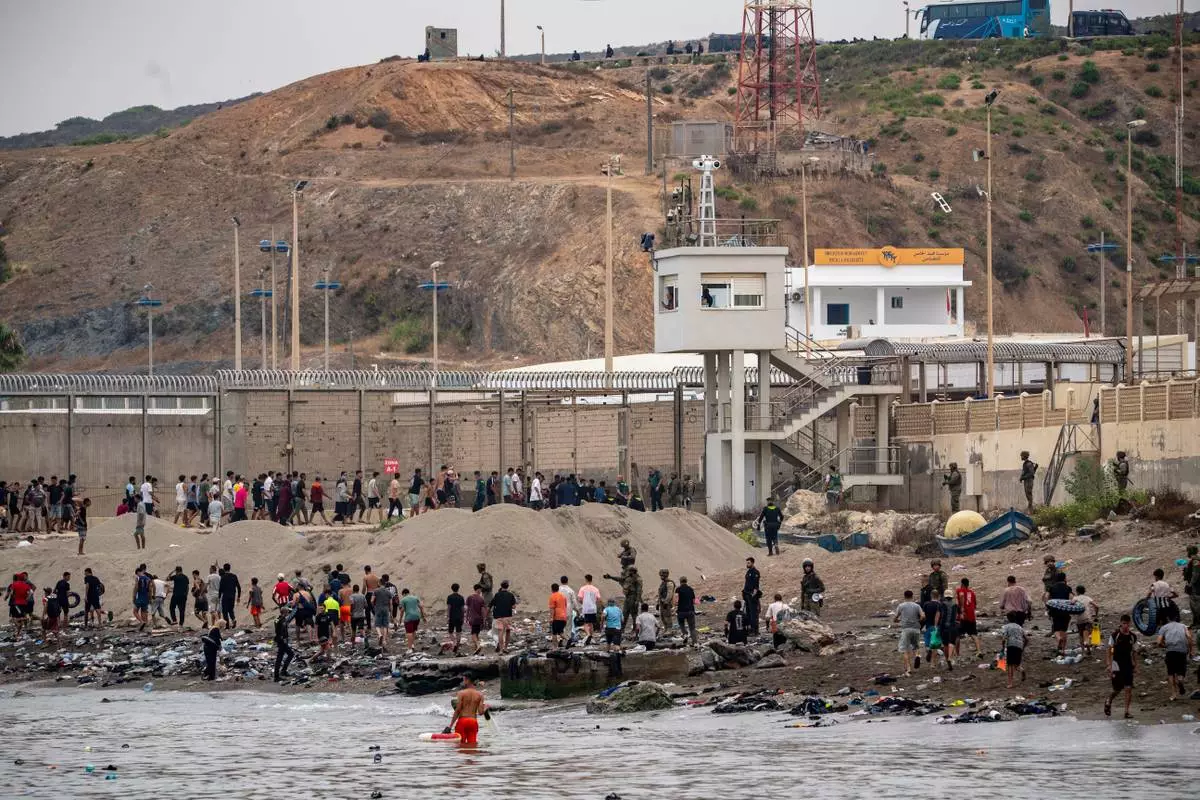
Migrants return to Morocco from the Spanish enclave of Ceuta, Friday, July 31, 2026. (AP Photo/Antonio Sempere)

Unaccompanied minors who crossed into Spain from Morocco spend the night on the streets in the Spanish enclave of Ceuta, Friday, July 31, 2026. (AP Photo/Antonio Sempere)
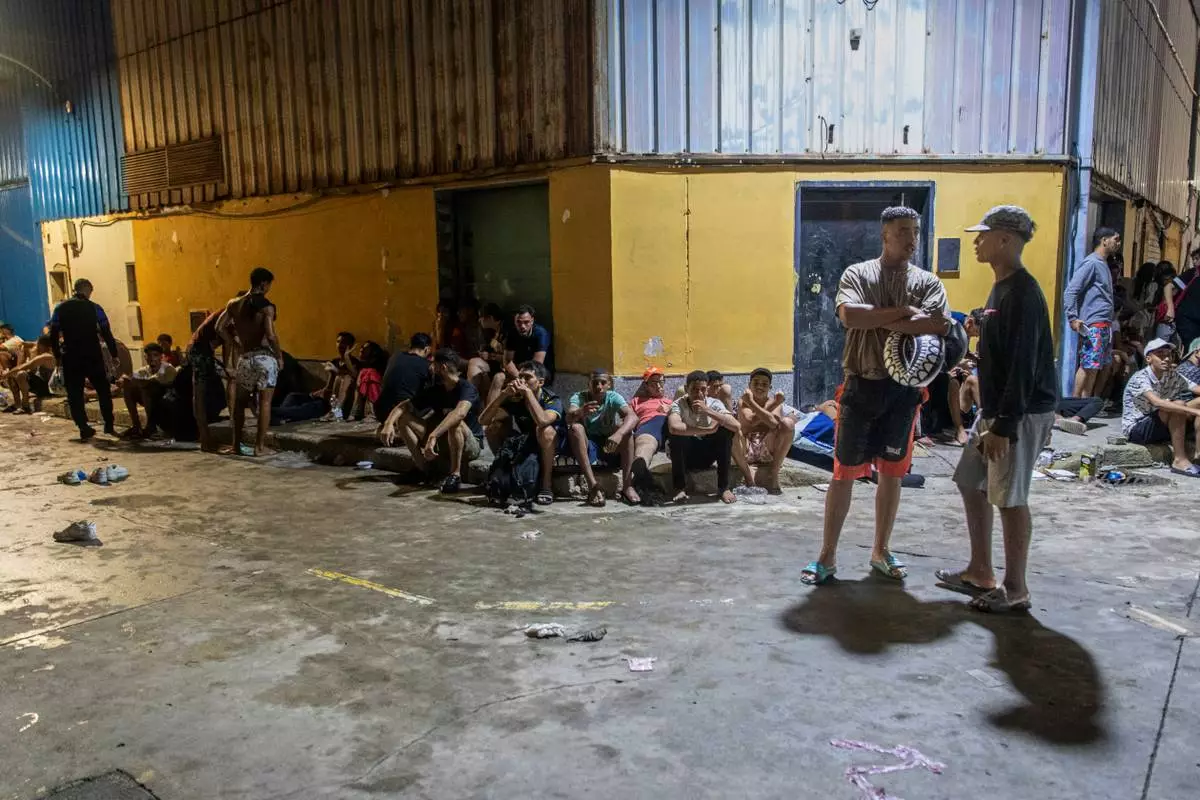
Migrants spend the night on the streets after crossing from Morocco into the Spanish enclave of Ceuta, Friday, July 31, 2026. (AP Photo/Antonio Sempere)
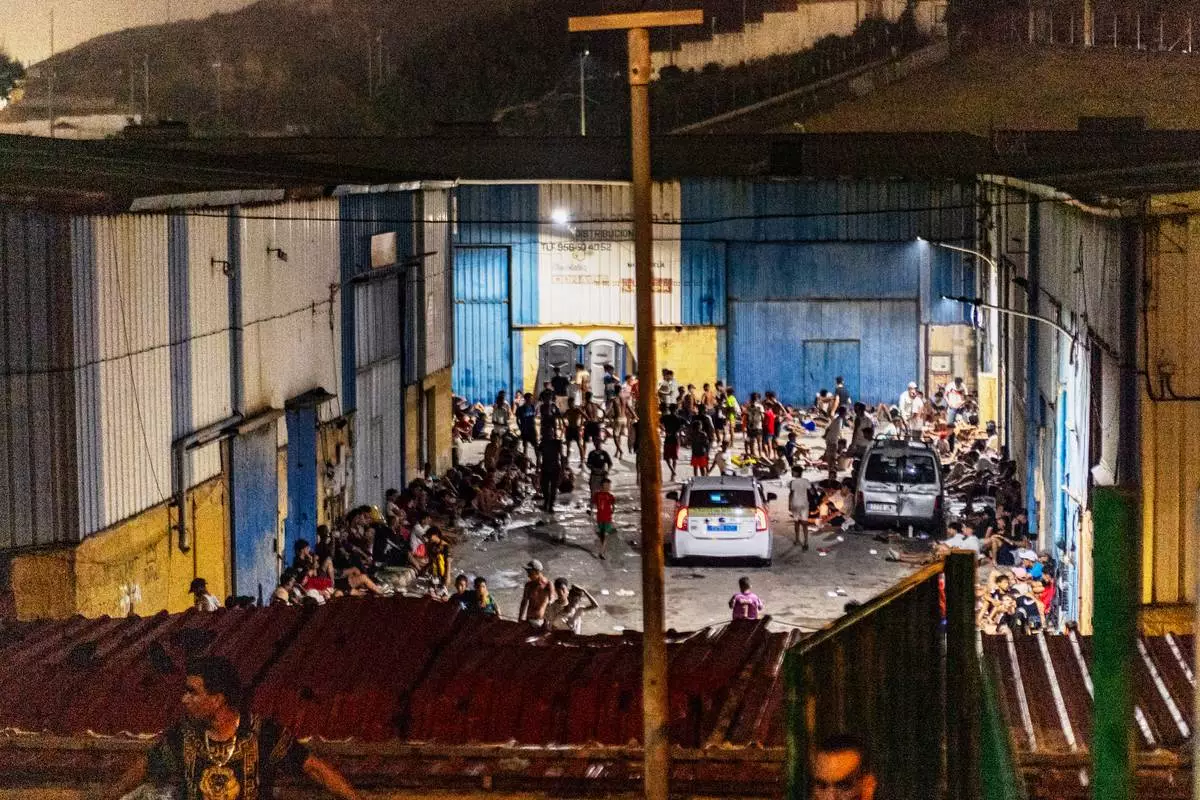
Migrants spend the night on the streets after crossing from Morocco into the Spanish enclave of Ceuta, Friday, July 31, 2026. (AP Photo/Antonio Sempere)
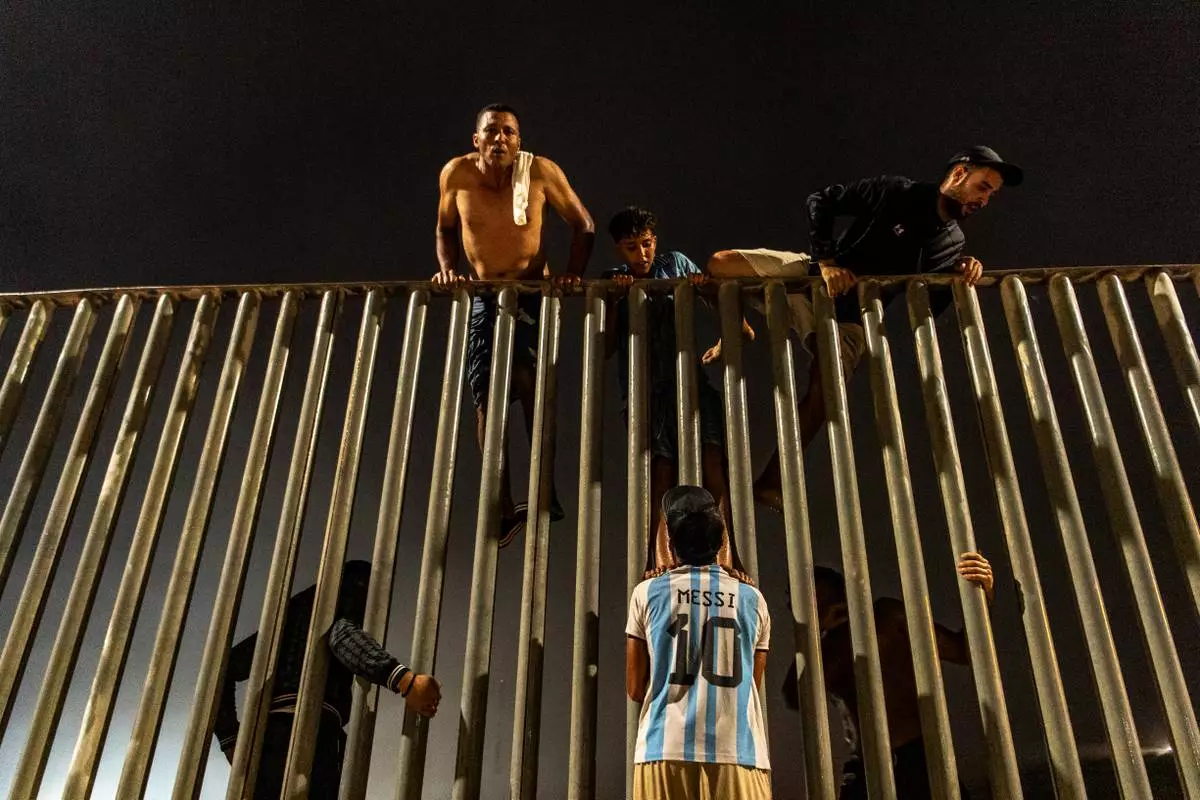
Migrants try to cross from Morocco into the Spanish enclave of Ceuta, Friday, July 31, 2026. (AP Photo/Antonio Sempere)