PUERTO MORELOS, Mexico (AP) — Swaths of seaweed are blanketing the beaches and coastlines of the Caribbean and Gulf of Mexico, suffocating shorelines and snuffing out marine life while spooking visitors in areas that depend heavily on tourism.
Some 27 million metric tons of self-sustaining sargassum have been recorded in the Atlantic, Caribbean and Gulf of Mexico in July, according to a report released Friday by the University of South Florida’s Optical Oceanography Lab.
Click to Gallery

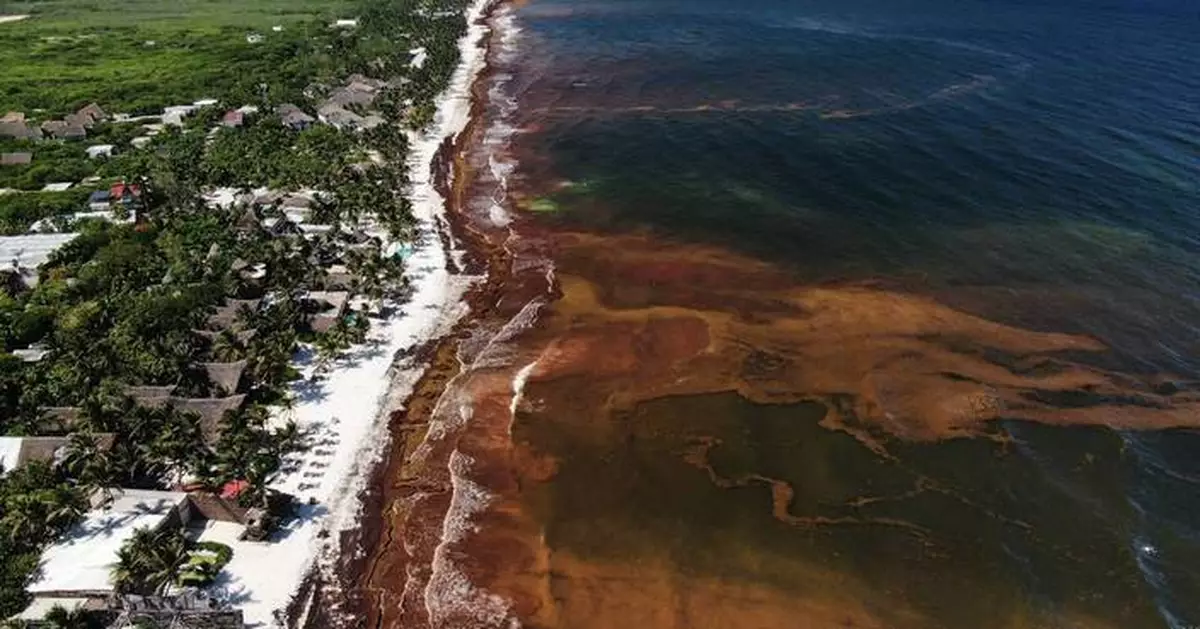
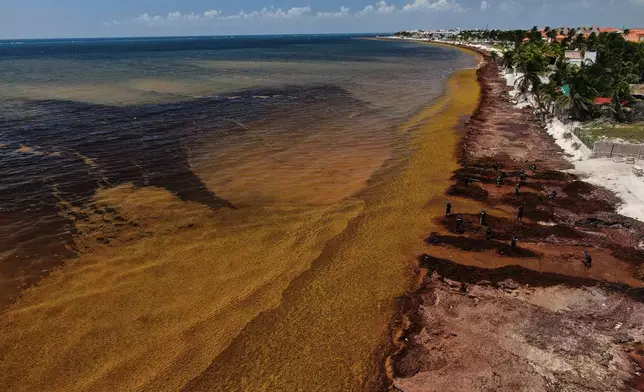
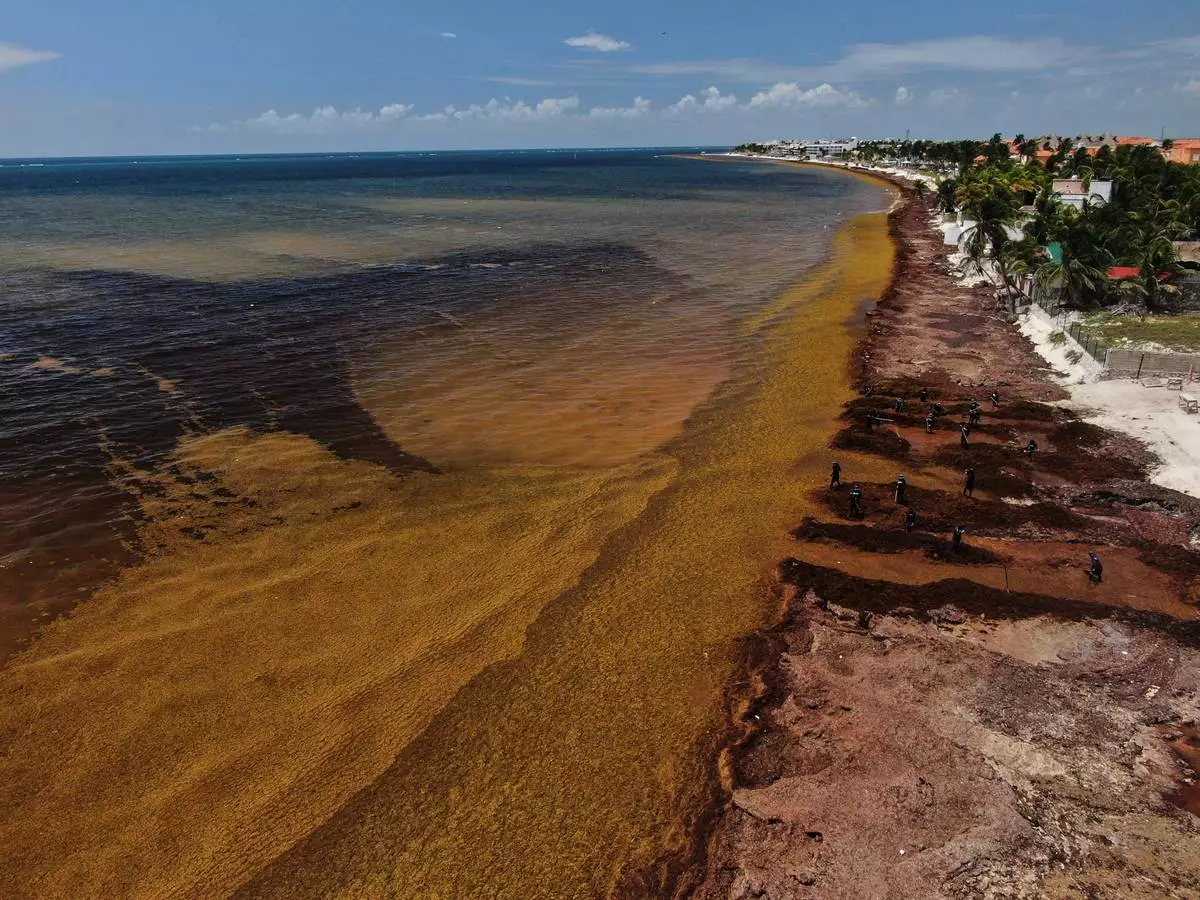
Sargassum covers the coast of Tulum, Mexico, Thursday, July 30, 2026. (AP Photo/Fernando Llano)
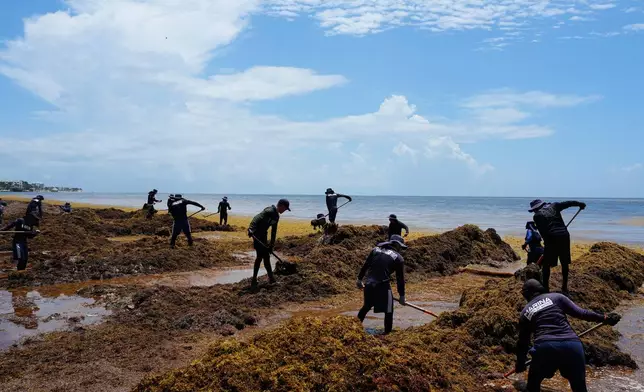
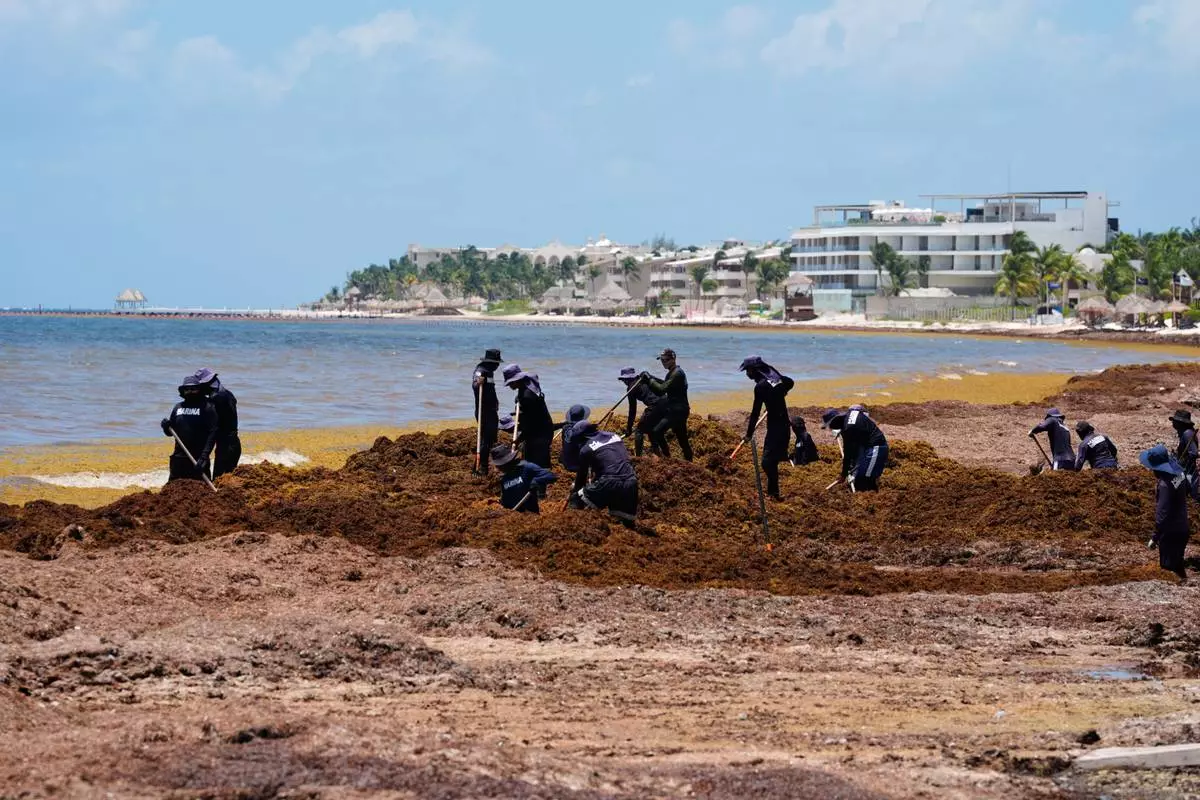
Members of Mexican Navy remove sargassum along the shore of Puerto Morelos, Mexico, Thursday, July 30, 2026. (AP Photo/Fernando Llano)
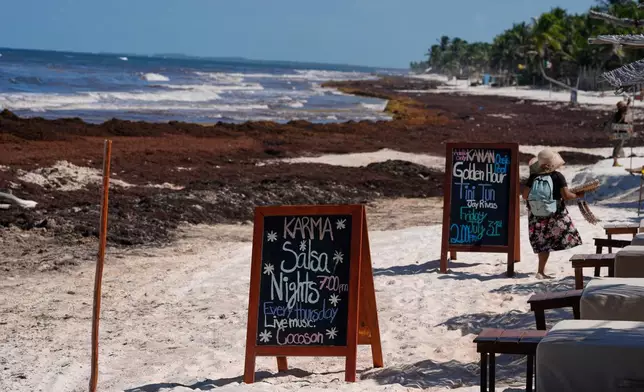
Promotional boards are displayed near to a beach covered with sargassum in Tulum, Mexico, Thursday, July 30, 2026. (AP Photo/Fernando Llano)
Members of the Mexican Navy remove sargassum that accumulated along the shore of Puerto Morelos, Mexico, Thursday, July 30, 2026. (AP Photo/Fernando Llano)
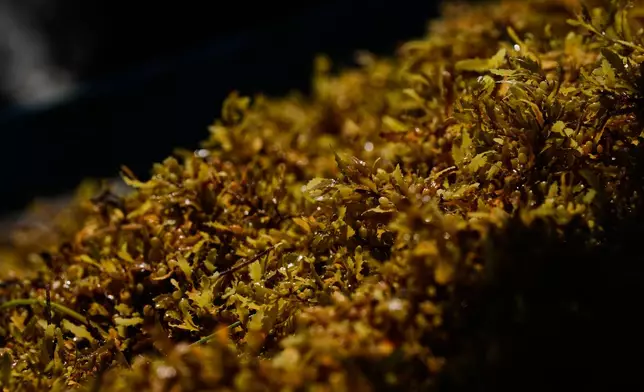
Sargassum gathers in the water off the coast of Tulum, Mexico, Thursday, July 30, 2026. (AP Photo/Fernando Llano)
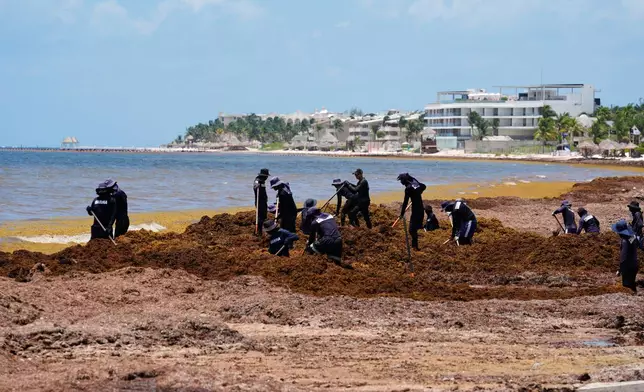
Members of Mexican Navy remove sargassum along the shore of Puerto Morelos, Mexico, Thursday, July 30, 2026. (AP Photo/Fernando Llano)
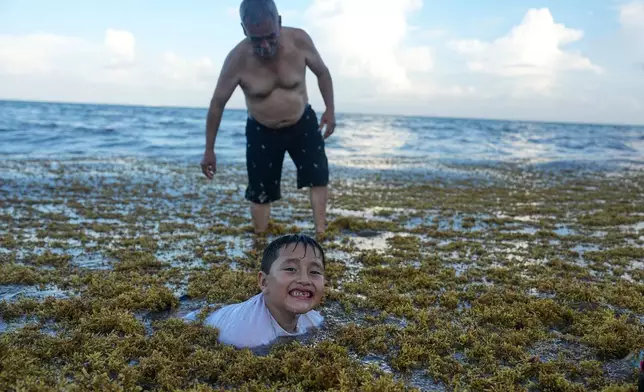
Antonio Garcia watches over his grandson along a shore blanketed with sargassum at Pelicanos beach in Playa del Carmen, Mexico, Wednesday, July 29, 2026. (AP Photo/Fernando Llano)
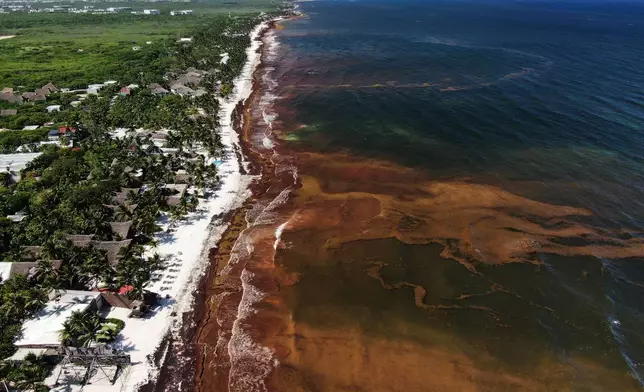
Sargassum gathers in the water off the coast of Tulum, Mexico, Thursday, July 30, 2026. (AP Photo/Fernando Llano)
The prickly seaweed covers miles of coastline, releasing a foul smell as it rots onshore.
This year marks the first time that scientists have observed sargassum growing in large quantities in areas including the Caribbean and Gulf of Mexico, instead of being swept into those areas by ocean currents.
The algae usually reproduces asexually as it travels from Western Africa, said Brian Barnes, a marine scientist and research assistant professor at the University of South Florida. “None of this is normal,” he said. “Every year is a little bit of a new story.”
The Great Atlantic Sargassum Belt has been growing since 2011, dumping an increasing amount of seaweed along coastlines in the Caribbean and Gulf of Mexico. Experts have said that agricultural runoff, warming waters and changes in wind, current and rain could be factors.
The sargassum that began reproducing in the region earlier than usual this year stems from a record 40 million metric tons reported last year.
“The 2025 bloom was so big it never really left,” Barnes said. “It was enough to start a new bloom locally.”
Sargassum levels in the Caribbean reached record levels in June, while the amount present in the Gulf hit 5 million metric tons in June, nearly double last year’s record, according to the University of South Florida.
Scientists expect 2026 to be the second largest amount of sargassum recorded in the Atlantic, Caribbean and Gulf of Mexico, noting that June alone saw 34 million metric tons, which was only 10% lower than the year-earlier period.
Mexico said Thursday it plans to invest $115 million to tackle the blooming algae, which poses an environmental and economic threat. The government estimates that up to 9,000 tons reach its Caribbean coastline on the worst days. Given current resources, Mexico says it can only gather 1,200 tons of sargassum a day.
On a recent evening, Alan Vázquez closed the restaurant where he works as a waiter in the popular tourist town of Playa del Carmen because there were no customers. He had resisted closing for several hours, hoping he would receive a tip and salvage the day, but vast quantities of decomposing sargassum are turning the famed turquoise waters black, driving away tourists.
“It’s sad that such a beautiful and lively place...has ended up like this,” Vázquez said.
He fears suffering the same fate as four of his colleagues who were laid off two months ago due to a drop in tourism that has devastated hotels and businesses in the state of Quintana Roo, one of Mexico’s tourism gems, where sales fell 30% in the first half of the year, according to estimates from local businesses.
In Puerto Rico, sargassum blankets the waters around popular tourist areas, including La Parguera.
“I don’t recall ever having that much concentration in so many places at once,” said Waldemar Quiles, the U.S. territory’s natural resources secretary.
Much of the record sargassum reported last year ended up along Puerto Rico’s coastline, prompting the governor to declare a state of emergency.
It surpassed the previous record set in 2022 with a peak of some 22 million metric tons.
“It’s not a one-off event anymore,” said Emmanuel Maldonado González, an environmental sociologist at East Carolina University. “It’s becoming a growing hazard.”
Patches of sargassum in open waters provide a healthy breeding ground for wildlife, including turtles, fish and seabirds, and can be “a bit of an oasis of life in the middle of the ocean,” Barnes said.
But once it’s closer to shore, it reduces oxygen in the water, smothers mangrove roots and blocks sunlight from reaching coral and sea grass.
Once it washes ashore it can prevent newly hatched sea turtles from reaching the ocean, while the heavy machinery used to remove it from beaches risk destroying fragile turtle nests, scientists say.
“The coastlines are not built for this,” Barnes said.
In the U.S. Virgin Islands, people are walking up to 25 feet (seven meters) on mats of seaweed before even reaching the water, according to Amy Dempsey, an environmental consultant.
“This is by far the worst I’ve seen it in the last five years,” she said. “We are getting slammed in the Virgin Islands.”
The smell of rotten eggs permeates communities where large piles of decaying sargassum emit ammonia and hydrogen sulfide.
“The effects of these gases on people can be severe,” warns the U.S. Environmental Protection Agency, noting it can cause nausea, headaches and lung irritation.
Officials on the French Caribbean island of Martinique recently opened a shelter to temporarily house those affected by the toxic gases after residents protested.
So far this year, crews in Martinique have collected more than 11,500 tons of sargassum — including 638 tons in four days alone this month — according to government data. Sea barriers catch some of the seaweed, while crews on shore collect the remainder by hand, storing and processing it for composting and bioenergy production.
Researchers at the University of South Florida and the U.S. National Oceanic and Atmospheric Administration used artificial intelligence and found that from 2003 to 2022, macroalgae blooms increased by more than 13% per year in the tropical Atlantic and Western Pacific.
Overall, the blooms reached 16.9 million square miles (43.8 million square kilometers), according to a study published earlier this year.
Associated Press reporter María Verza in Mexico City contributed.
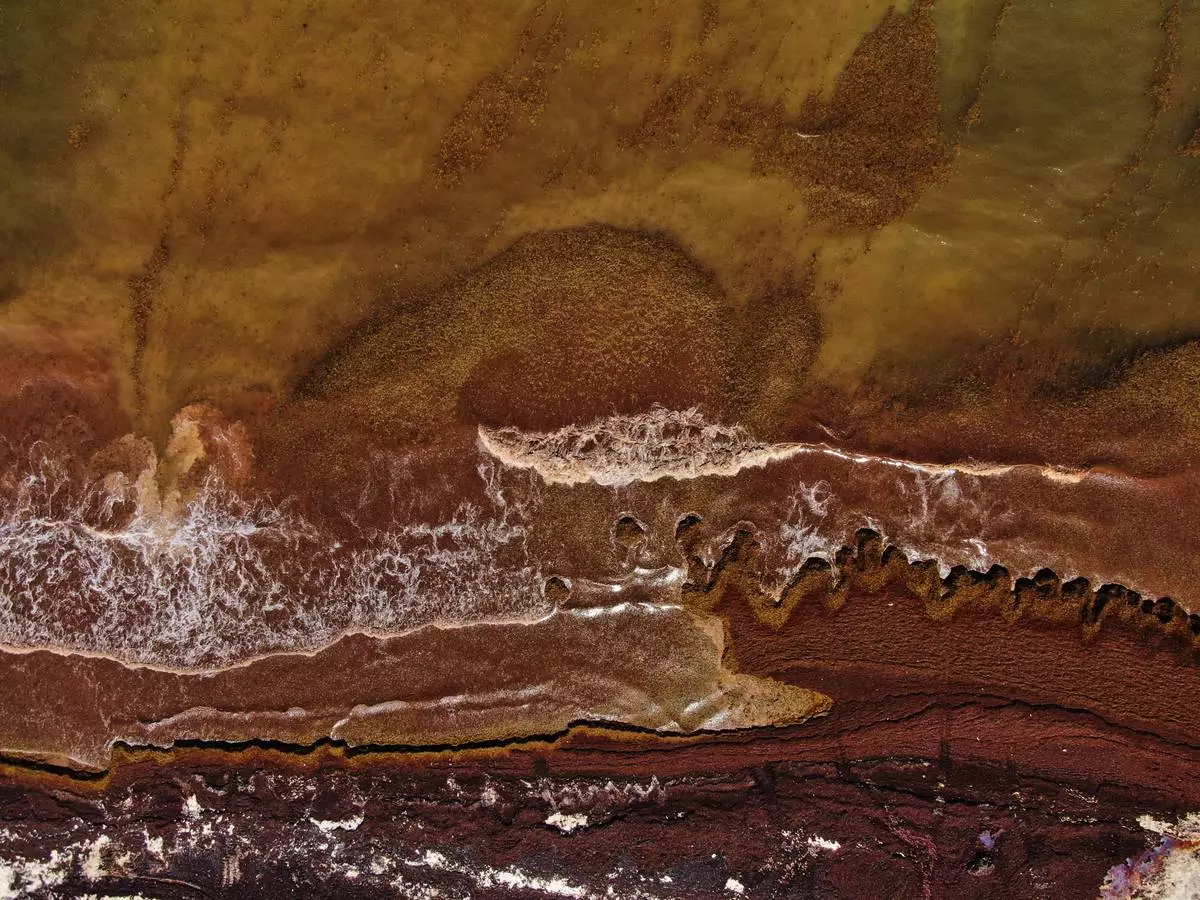
Sargassum covers the coast of Tulum, Mexico, Thursday, July 30, 2026. (AP Photo/Fernando Llano)
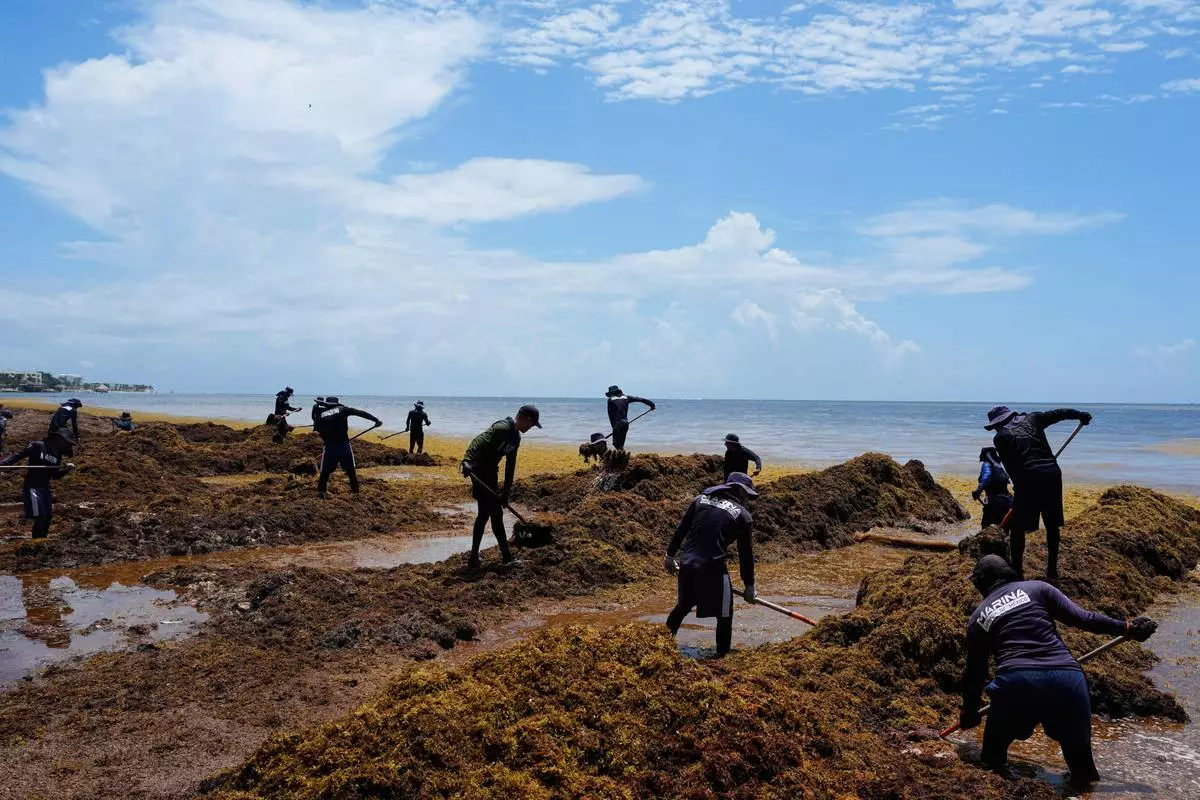
Members of Mexican Navy remove sargassum along the shore of Puerto Morelos, Mexico, Thursday, July 30, 2026. (AP Photo/Fernando Llano)
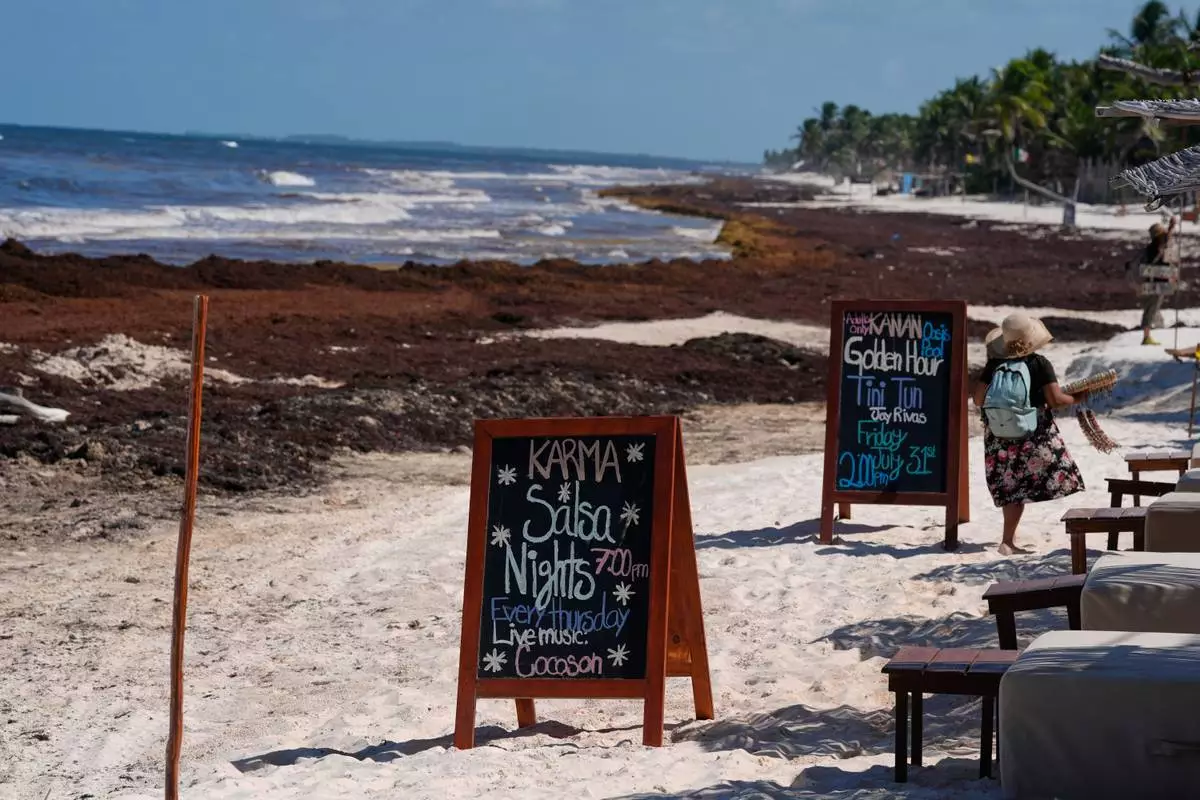
Promotional boards are displayed near to a beach covered with sargassum in Tulum, Mexico, Thursday, July 30, 2026. (AP Photo/Fernando Llano)
Members of the Mexican Navy remove sargassum that accumulated along the shore of Puerto Morelos, Mexico, Thursday, July 30, 2026. (AP Photo/Fernando Llano)
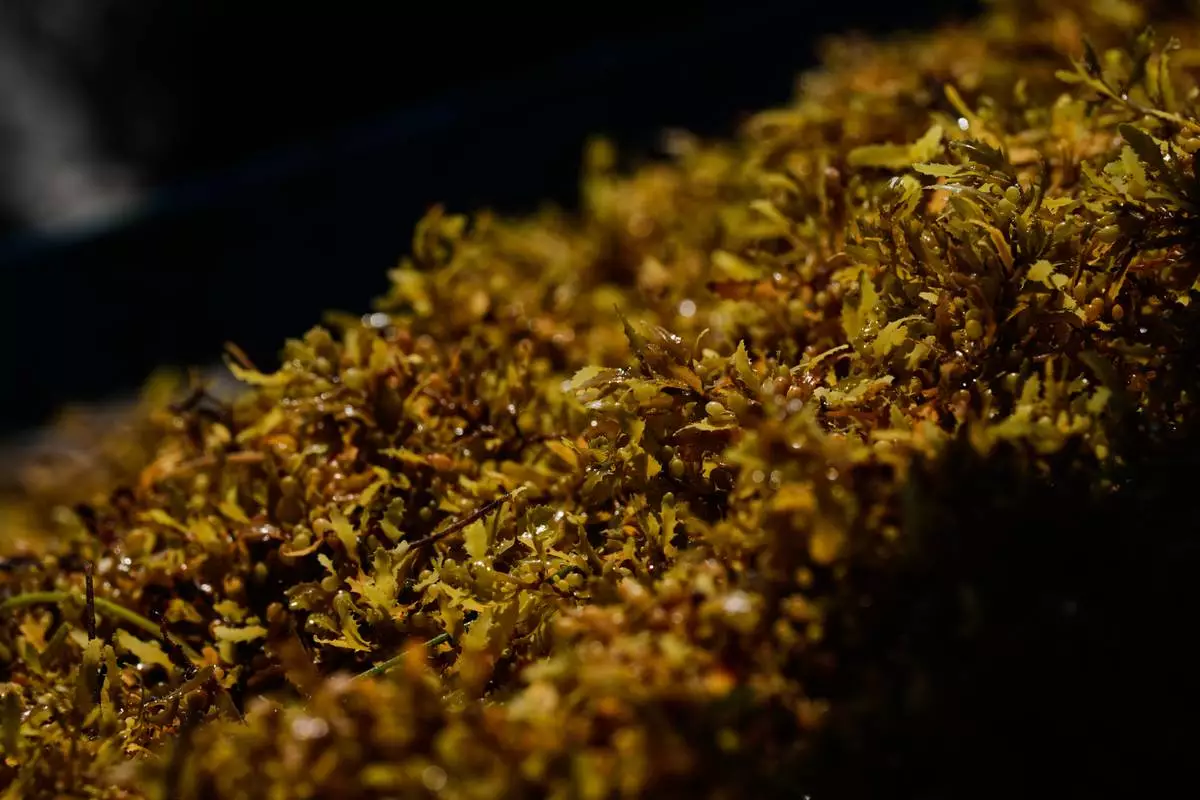
Sargassum gathers in the water off the coast of Tulum, Mexico, Thursday, July 30, 2026. (AP Photo/Fernando Llano)
Members of Mexican Navy remove sargassum along the shore of Puerto Morelos, Mexico, Thursday, July 30, 2026. (AP Photo/Fernando Llano)

Antonio Garcia watches over his grandson along a shore blanketed with sargassum at Pelicanos beach in Playa del Carmen, Mexico, Wednesday, July 29, 2026. (AP Photo/Fernando Llano)
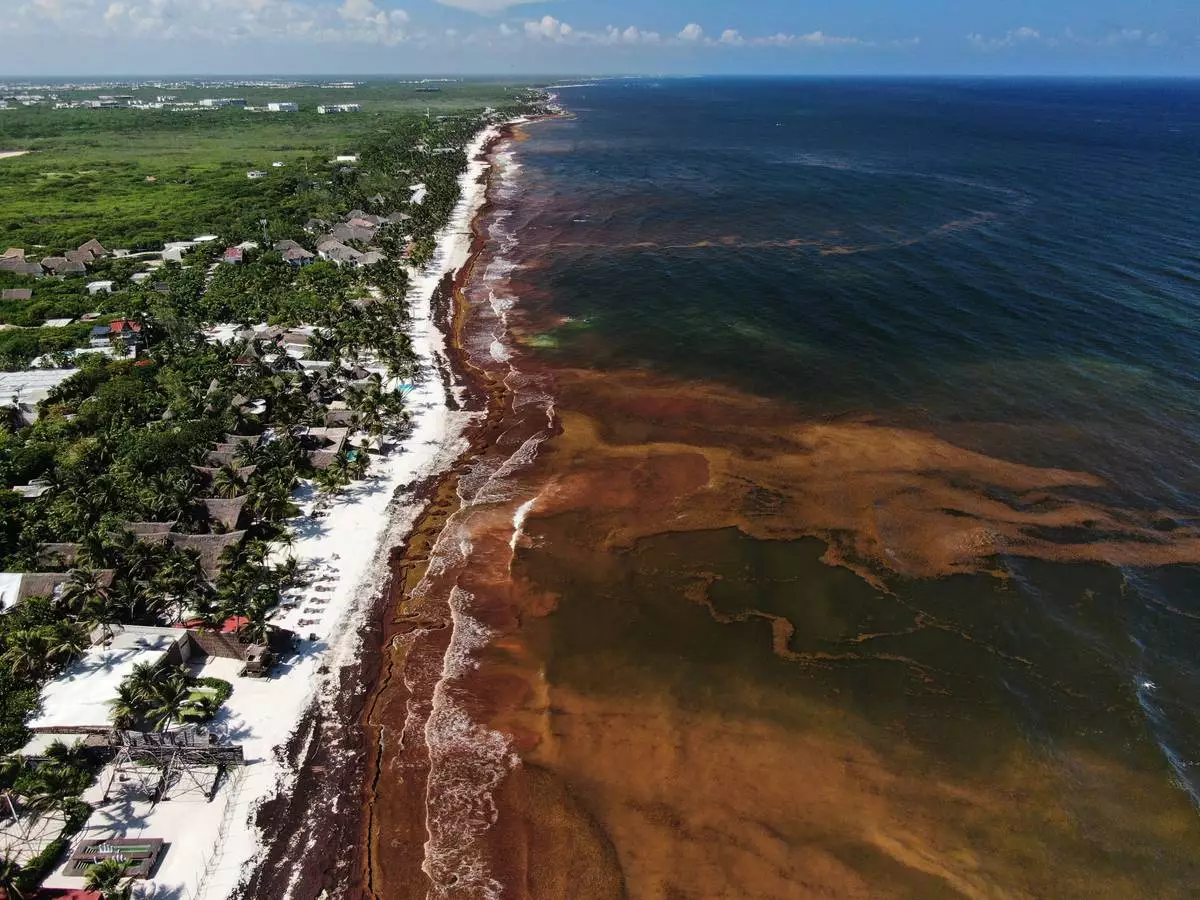
Sargassum gathers in the water off the coast of Tulum, Mexico, Thursday, July 30, 2026. (AP Photo/Fernando Llano)

CEUTA, Spain (AP) — About 60,000 migrants crossed from Morocco into Spain’s tiny Ceuta territory in the past 24 hours, Ceuta's president said Friday, a figure that is equivalent to 70% of the population of the city in North Africa. At least 57 migrants died on the journey.
But most of the people who made the crossing soon returned voluntarily, the Spanish government said, after the sudden arrival of so many migrants triggered chaos and a humanitarian crisis.
Some migrants swam several miles through the sea and faced down authorities who tried to turn them back with water cannons, tear gas and warning shots. Those who died included some who drowned or were killed in a stampede to cross a breakwater barrier near a border checkpoint.
Spain deployed its armed forces and additional police to restore order in Ceuta, which sits on the Strait of Gibraltar at the entrance to the Mediterranean Sea and has been a Spanish possession since 1580. On the Moroccan side of the border, security forces clashed with migrants. The chaos also had ripple effects abroad, with Italy and France pledging to tighten their controls on people arriving from Spain.
“The situation that Ceuta is going through is absolutely unsustainable,” Ceuta President Juan Jesús Vivas told journalists.
Meanwhile, migrants from Morocco also attempted to cross into Melilla, Spain’s other territory at the tip of North Africa, where they clashed with police.
Spanish Prime Minister Pedro Sánchez visited Ceuta on Friday and condemned the border breach, which he described as “a violation of Spain's territorial integrity.”
Sánchez blamed human smugglers for the crisis, saying they “deceive so many young people and ultimately lead many of them to their deaths," whether in the ocean or in the city.
The Spanish Interior Ministry released its own figures shortly after Vivas spoke, estimating that some 50,000 people had crossed from Morocco since Thursday. It added that 48,300 had already returned to Morocco by Friday evening, with hundreds more going back by the hour.
Rachid Sbihi, who leads a local workers association representing Civil Guard officers, described the situation as a “serious humanitarian crisis,” saying thousands of migrants, including unaccompanied children, were left sleeping in parks and on sidewalks, while others roamed the streets aimlessly.
“It’s chaotic,” Sbihi said.
The Moroccan Interior Ministry did not immediately respond to a request for comment on the migrant figures released by the Spanish authorities.
European Commission President Ursula von der Leyen said the images from Ceuta "are unacceptable.”
“We cannot allow anyone to come to our Union without abiding by our rules,” she said Friday in an online statement. “Dangerous crossings must stop immediately. Smuggling networks must be dismantled. And returns must be swift, as our rules allow.”
Some of the 57 people who died had drowned, Sbihi said, but some were also killed in a stampede to cross the breakwater fence at Tarajal Beach, an urban beach near a border checkpoint with Morocco. The waters near the border fence were littered with buoys, shoes and other abandoned belongings.
Many young Moroccans who crossed into Ceuta told The Associated Press that they had hoped to find better work opportunities in Spain but were returning given the mayhem in Ceuta.
“There’s nothing at home. I’d have to work 12-hour shifts for a meager wage. That’s why I came here,” said 21-year-old Abdulah Buji, who hails from the city of Tetouan. “But I haven’t found any opportunities here either, so I have to go back.”
Moroccan police used water cannons and fired warning shots into the air to prevent migrants from crossing into Ceuta, according to rights groups in Morocco.
Morocco’s ambassador to Spain said the situation in Ceuta had unfolded against Morocco’s wishes.
“We have always prioritized legal, orderly and safe migration for all,” Karima Benyaich said. She did not comment on what prompted the migrants to cross into Ceuta.
To reach Ceuta, on the northern African coast, migrants often swim from the Moroccan town of Fnideq, covering about 3 miles (5 kilometers) to reach Spanish territory. Others attempt the crossing from the nearby town of Belyounech, where the distance is shorter.
The authorities in Ceuta and Madrid have linked the border surge to a recent decision by the Spanish Supreme Court, which ruled that migrants arriving by sea could not be summarily deported, unlike those who cross by land or climb the border fence.
Sánchez said migrant smugglers misinterpreted the ruling.
The interpretation of the Supreme Court’s ruling “spread like wildfire over the past few hours through the networks of human trafficking organizations,” triggering the surge, Sánchez said.
Sánchez has bucked the anti-migration trend that has gained ground across Europe and in the U.S.
Earlier this year, his government moved to give residency and work permits to hundreds of thousands of migrants already living in the country without permission.
Sánchez, a Socialist, argued that it would be good for the economy and the demographics of an aging Spain. Migrants who entered irregularly after Jan. 1 this year were not included.
His critics have jumped at the opportunity to attack his policy, saying it encouraged more migrants to come.
“Sánchez allows Spain to be invaded through Ceuta,” Spanish conservative politician Isabel Díaz Ayuso wrote on X.
The U.S. expressed its support for “the people of Spain, and all Europeans, against this egregious violation of their sovereignty and human rights.”
In a post on X, the State Department added that “this unacceptable incident is the direct result of the Spanish Government’s deliberate efforts to enable and facilitate mass illegal migration into Europe.”
Sánchez on Friday defended his migration policy and distanced it from the events in Ceuta.
In the tumult, Italy temporarily suspended its open-border Schengen agreement with Spain, re-imposing border controls for air and sea. The Interior Ministry said the decision amounted to a “closure” of the borders, but experts said it was merely a resumption of border controls. The agreement allows travelers to fly between the two countries without presenting passports.
French Interior Minister Laurent Nunez said France would also strengthen border checks with Spain.
The crisis in Ceuta "has nothing to do with the regularization of migrants adopted by the Government of Spain, as is being falsely claimed by some,” the Spanish government said in a statement late Thursday after Meloni's announcement.
Migrants from Morocco also attempted to cross into Melilla, the other Spanish territory at the tip of North Africa.
There was widespread chaos in Bni Nsar, the Moroccan town bordering the Spanish territory, where migrants clashed with police, throwing rocks and setting police vehicles ablaze, according to local media and rights groups. They reported injuries among security forces and the arrest of dozens of people attempting to cross.
Like Ceuta, Melilla is a self-governing Spanish city. Many Moroccans consider both cities to be occupied territory.
Naishadham reported from Madrid. Brito reported from Barcelona, Spain. Associated Press journalists Joseph Wilson in Barcelona, Spain; Akram Oubachir in Casablanca, Morocco; and Antonio Sempere in Ceuta, Spain, contributed.
Belongings left behind by migrants float in the sea after they crossed from Morocco into the Spanish enclave of Ceuta, Friday, July 31, 2026. (AP Photo/Antonio Sempere)
A migrant runs from Spanish police officers as they cordon off access to the beach for people crossing from Morocco into the Spanish enclave of Ceuta, Friday, July 31, 2026. (AP Photo/Antonio Sempere)
Migrants rest outside the Temporary Center for Immigrants (CETI) after crossing from Morocco into the Spanish enclave of Ceuta, Friday, July 31, 2026. CETI is the Spanish acronym for the migrant reception center. (AP Photo/Antonio Sempere)
Migrants return to Morocco from the Spanish enclave of Ceuta, Friday, July 31, 2026. (AP Photo/Antonio Sempere)
People sleep on a beach as others attempt to cross from the Moroccan northern town of Fnideq to the Spanish enclave of Ceuta, Friday, July 31, 2026. (AP Photo)
People walk past a bus which was burned during clashes between police and people attempting to cross from the Moroccan northern town of Fnideq to the Spanish enclave of Ceuta, Friday, July 31, 2026. (AP Photo)
Members of Moroccan security forces disperse people attempting to cross from the Moroccan northern town of Fnideq to the Spanish enclave of Ceuta, Friday, July 31, 2026. (AP Photo)
People walk on the beach as they attempt to cross from the Moroccan northern town of Fnideq to the Spanish enclave of Ceuta, Friday, July 31, 2026. (AP Photo)
Migrants return to Morocco from the Spanish enclave of Ceuta, Friday, July 31, 2026. (AP Photo/Antonio Sempere)
Unaccompanied minors who crossed into Spain from Morocco spend the night on the streets in the Spanish enclave of Ceuta, Friday, July 31, 2026. (AP Photo/Antonio Sempere)
Migrants spend the night on the streets after crossing from Morocco into the Spanish enclave of Ceuta, Friday, July 31, 2026. (AP Photo/Antonio Sempere)
Migrants try to cross from Morocco into the Spanish enclave of Ceuta, Friday, July 31, 2026. (AP Photo/Antonio Sempere)