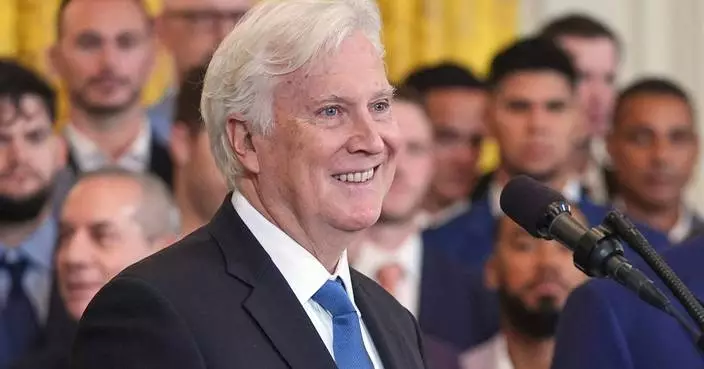
LA PAZ, Bolivia (AP) — Bolivian lawmakers approved a $1.9 billion loan agreement with the International Monetary Fund on Friday, delivering the conservative government a key victory in its efforts to ease the country's deep economic crisis as unions threatened renewed protests.
The Senate ratified the IMF agreement a day after the lower house approved it, clearing the final legislative hurdle for the three-year financing program aimed at replenishing dwindling foreign reserves and stabilizing the ailing economy marked by high inflation and weak growth. The IMF first announced the staff-level agreement in July after months of negotiations with Paz's market-friendly government, which took power last year after nearly two decades of socialist rule. The program still requires approval from the IMF’s executive board before funds can be disbursed.
President Rodrigo Paz, part of a wave of new Latin American leaders allied with the Trump administration, welcomed the vote as a “historic step” and “resounding signal of political maturity, unity and economic certainty.”
Economy Minister Christian Morales told senators that the deal would give other lenders, including the World Bank and the Inter-American Development Bank, greater confidence in the government and help it secure about $5 billion in additional financing.
But the conditions attached to the agreement, including the elimination of fuel subsidies, threaten to reignite unrest in Bolivia, where weeks of road blockades in June and July paralyzed much of the South American nation as demonstrators demanded Paz’s resignation. Congress on Thursday extended for another 90 days a state of emergency that Paz had declared to clear roads during the protests. It allows for military intervention and the suspension of some civil liberties.
The Bolivian Workers’ Central, the country’s main labor federation, and other unions have voiced fierce opposition to the IMF loan, warning that the government spending cuts required under the deal would drive up living costs and deepen hardship for struggling families. In recent months, Paz has eased Bolivia's long-generous fuel subsidies and announced plans to eliminate the benefits entirely by January.
Although Paz’s Christian Democratic Party lacks a majority in Congress, the centrist and right-wing lawmakers that dominate both chambers rallied behind the deal. The Movement Toward Socialism, the party that dominated Bolivian politics after the former coca growers’ union leader Evo Morales won the presidency in 2005, now holds just two of the 130 seats in the lower house and none in the 36-member Senate.
Declining natural gas exports have deprived Bolivia of dollars needed to import gasoline and diesel, contributing to chronic fuel shortages since 2023 that have persisted under Paz. Selling that imported fuel at subsidized prices has further strained public finances. Paz vowed to redirect subsidy spending toward oil and gas exploration and production.
“We are finalizing crucial agreements for Bolivia,” Paz said Friday, warning that difficult decisions lay ahead as the Iran war pushes up global fuel costs. “International prices are forcing us to make complex choices.”
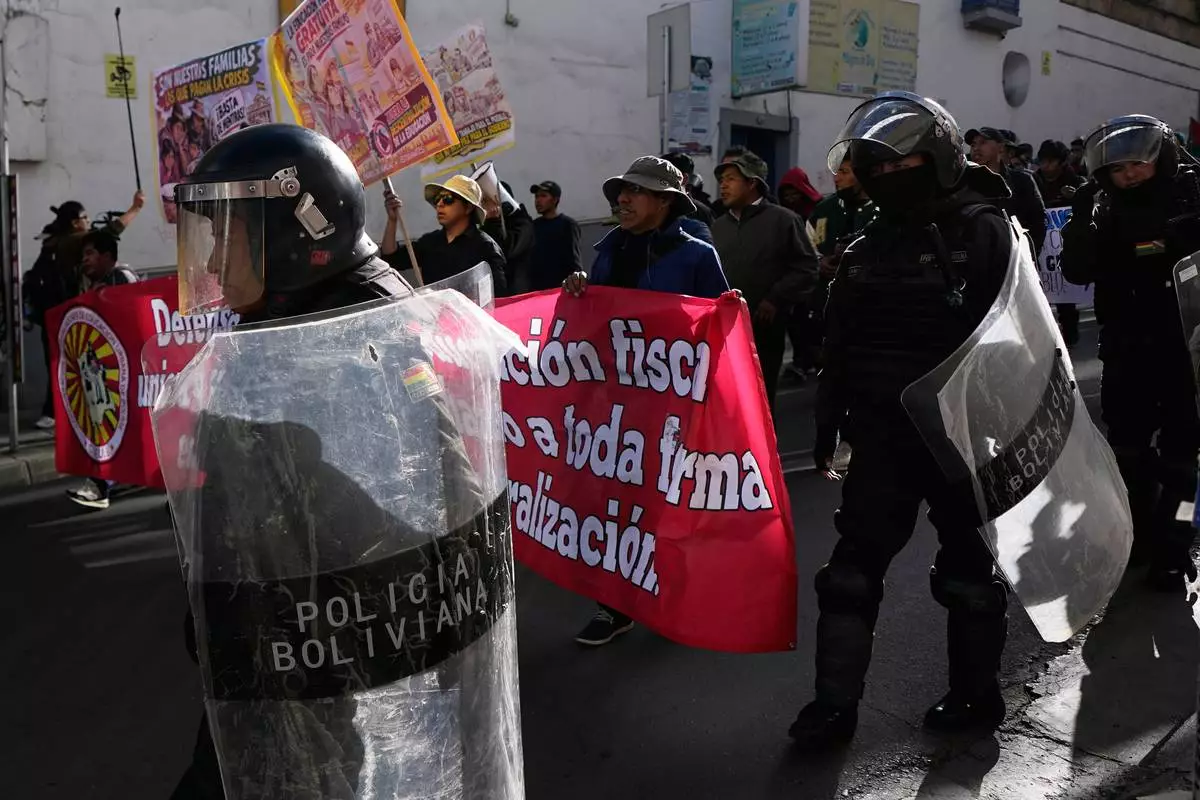
Police escort teachers during an anti-government protest in La Paz, Bolivia, Tuesday, Sept. 15, 2026. (AP Photo/Juan Karita)
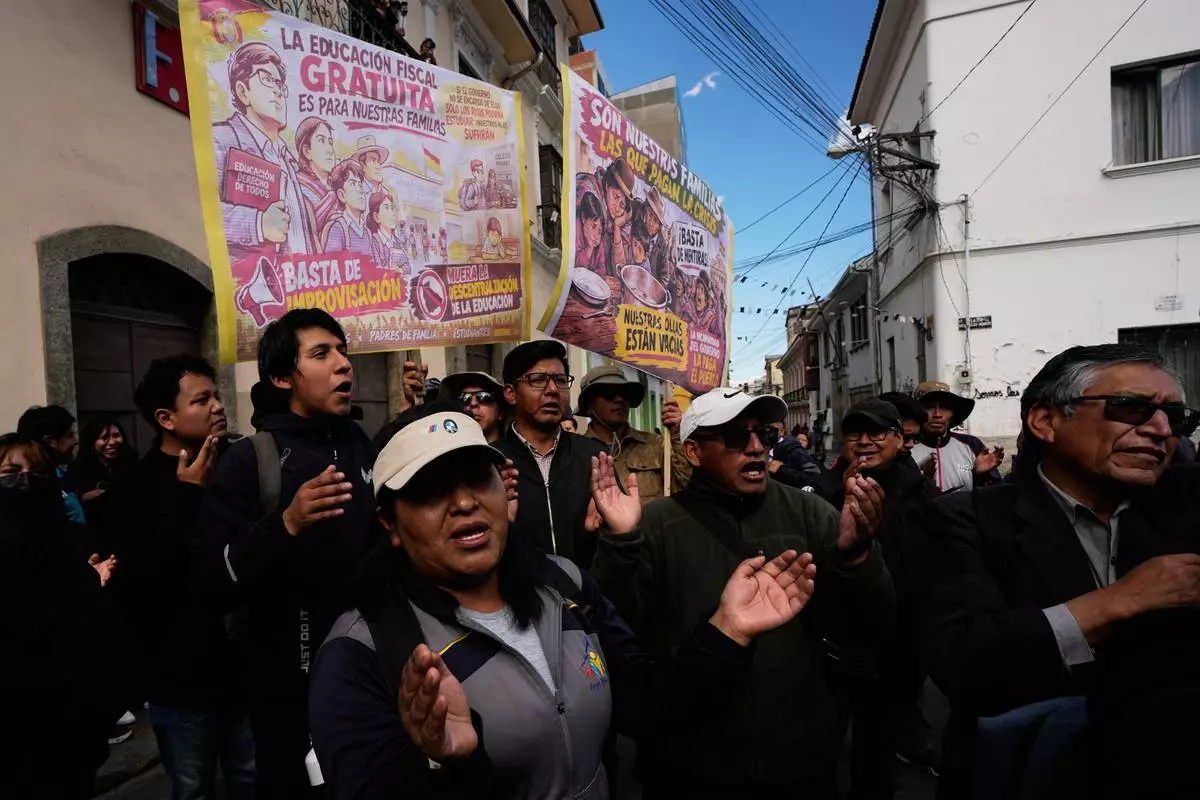
Teachers shout slogans during an anti-government protest in La Paz, Bolivia, Tuesday, Sept. 15, 2026. (AP Photo/Juan Karita)
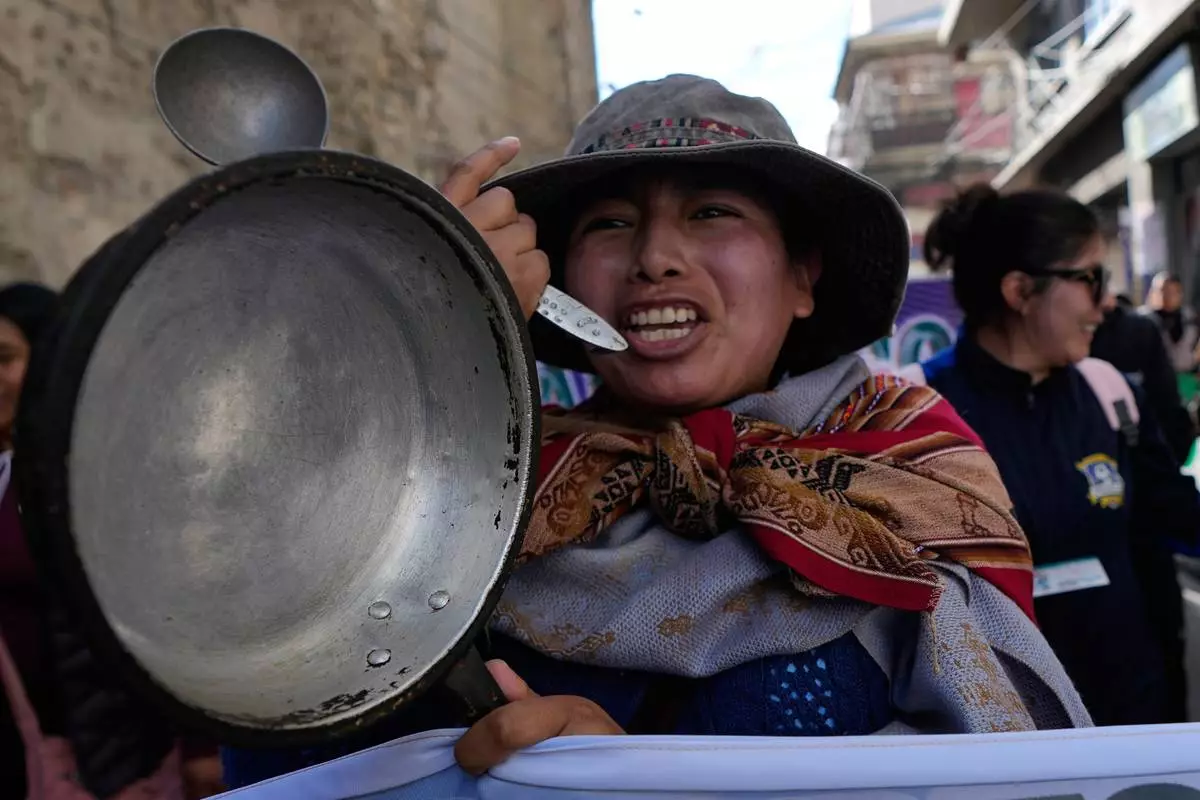
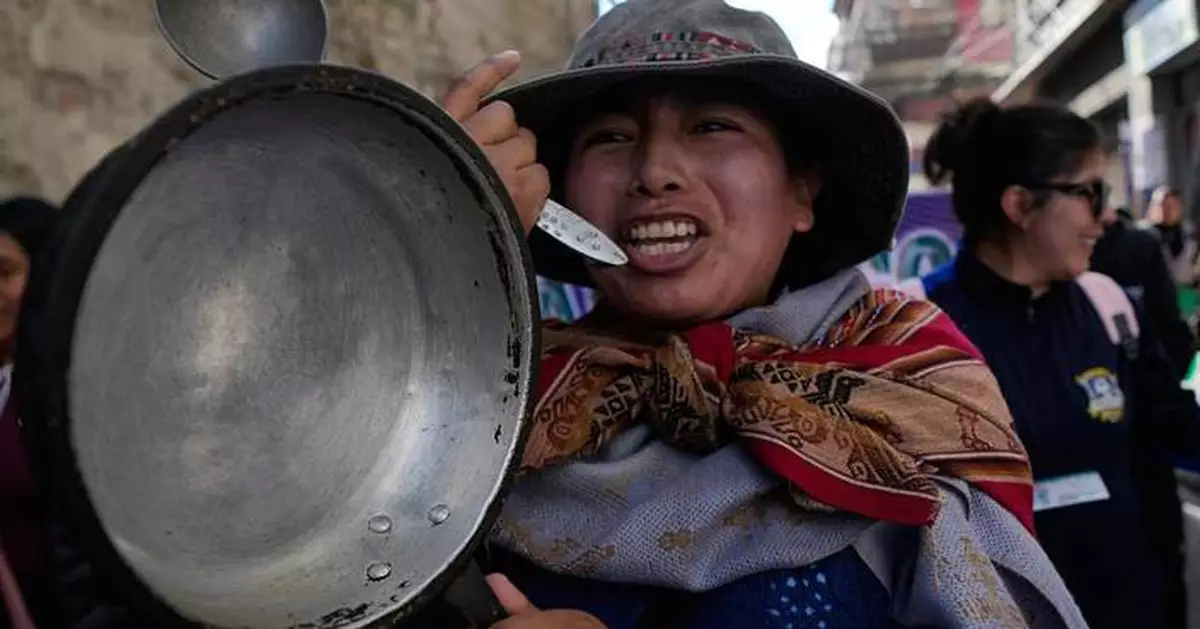
A teacher holds an empty pot during an anti-government protest in La Paz, Bolivia, Tuesday, Sept. 15, 2026. (AP Photo/Juan Karita)
COMSTOCK, Texas (AP) — The Trump administration has started building the border wall through a west Texas section of the Big Bend region, marking the first major construction in an area of the U.S.-Mexico border where the administration's plans have met heavy opposition.
The start of construction marks an important milestone in the administration's $46 billion plan to line the border with walls, barriers, roads and technology as it seeks to make good on a key campaign promise by President Donald Trump to finish the wall. And it comes as Customs and Border Protection says it has doubled the pace at which it is building the wall across the U.S.-Mexico border.
Customs and Border Protection said in a statement to The Associated Press that “border wall panel installation is underway” in a 47-mile stretch of Hudspeth County in west Texas known as Big Bend 1. There are a total of five project areas that make up the roughly 500-mile Big Bend region stretching from an area of Hudspeth County south of El Paso to Lake Amistad.
CBP said the first panels were erected on September 15. On a map on the agency’s website where the agency posts updates of wall construction across the entire southern border, a photo showed a crane lifting one of the 30-foot-tall steel wall panels into place while construction workers looked on.
The new activity was separate from a border infrastructure project in the nearby Big Bend National Park, where the administration has temporarily suspended construction in an attempt to reach out to opponents.
In the broader Big Bend region of Texas, CBP has run up against concerted opposition from landowners, environmental groups, business owners and ranchers who say the remote region isn't a high-traffic area for illegal immigration.
Activists said Friday they would continue opposing the border infrastructure projects in the rest of the Big Bend region, even as the panels were being installed.
Clara Benson, one of the founders of the No Big Bend Wall Coalition which has been fighting against CBP’s plans, said in an interview Friday that the organization had been receiving reports of trucks moving supplies into the remote area along the Rio Grande and that contractors had been clearing yards to stage supplies.
But speaking from Washington, D.C. where she and others in the coalition were meeting with lawmakers, she said that the organization and others would continue to fight the wall-building plans across the region.
“We will continue to fight for this land no matter what the outcome is. We will continue fighting to the end,” said Benson. “You talk to people in west Texas and they say even if they put it up, we’ll fight for them to take it down. So this fight is not over.”
The news comes as the administration is speeding forward with a plan to line the entire border with a combination of 30-foot-tall steel bollard walls, barriers designed to stop vehicles from crossing the border, new patrol roads, and various technologies to deter and detect migrants or smugglers from crossing the border.
Customs and Border Protection said it is building an average of 12 miles of barriers per week along the 2,000-mile border with Mexico and recently reached a milestone of 200 miles of new barriers built since the second Trump administration took office.
The 12-miles-a-week average is double the pace that the agency's head, Rodney Scott, cited earlier this year.
The agency has faced opposition from environmental groups, a small town that worries the wall will cause flooding in its area, Native Americans who say the construction is disturbing sacred sites and landowners who say the construction will infringe on their land.
In Texas, much of the opposition has centered on the agency's plans for Big Bend National Park, in the state's southwest on the Rio Grande that is a draw for tourists from around the world. But up and downriver outside the park, much of the land is owned by private landowners, many of whom have pushed back against the government's efforts.
Earlier this week, landowners, ranchers and business owners in the Big Bend region along with a nonprofit organization dedicated to protecting the region’s landscape and heritage sued to stop the administration’s plans.
Activists and landowners have also shown up at county meetings to push their elected officials not to cooperate with contractors hired by CBP to build the wall, and many landowners have refused to allow government officials or contractors onto their land to survey it.
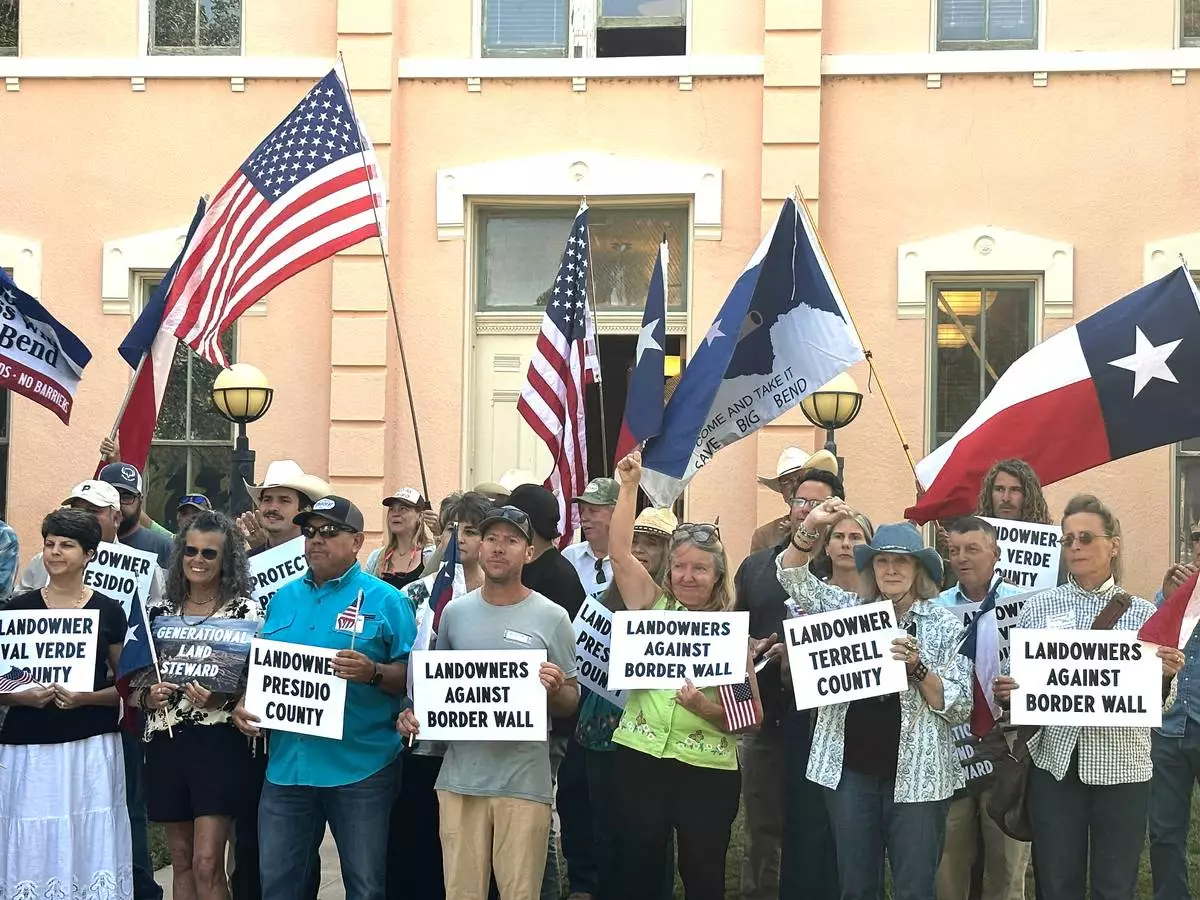
Landowners and other supporters hold signs against the Trump administration's plans to build a border wall and other infrastructure in Texas' remote Big Bend region, Monday, Sept. 14, 2026, in Marfa, Texas. (AP Photo/Rebecca Santana)