ESBJERG, Denmark (AP) — Germany blanked Austria 2-0 in its opening game at the women’s ice hockey world championship on Saturday.
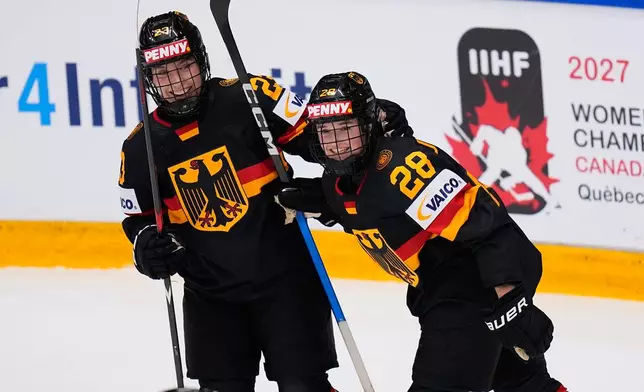
Katarina Jobst-Smith broke the deadlock 7:34 into the second period in the Group A game in Esbjerg.
Click to Gallery
Denmark's goalkeeper Emma-Sofie Nordstroem, right, and Japan's Wakana Kurosu, left, challenge for the puck during a Group B match between Japan and Denmark at the Women's Ice Hockey World Championship in Herning, Denmark, Saturday, Nov. 7, 2026. (Bo Amstrup/Ritzau Scanpix via AP)
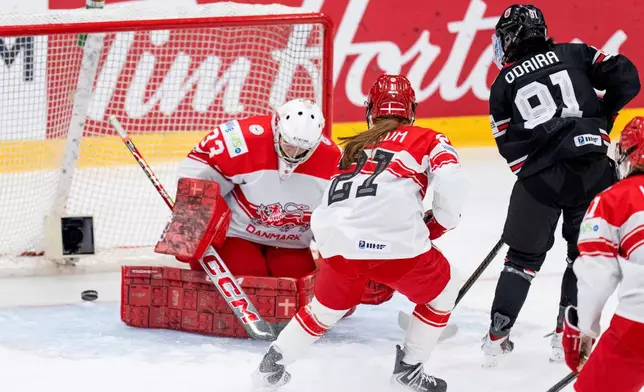
Japan's Umeka Odaira, top right, scores to 2-0 during a Group B match between Japan and Denmark at the Women's Ice Hockey World Championship in Herning, Denmark, Saturday, Nov. 7, 2026.(Bo Amstrup/Ritzau Scanpix via AP)
Japan's goalkeeper Riko Kawaguchi warms up for a Group B match between Japan and Denmark at the Women's Ice Hockey World Championship in Herning, Denmark, Saturday, Nov. 7, 2026.(Bo Amstrup/Ritzau Scanpix via AP)
Germany's Katarina Jobst-Smith, right, celebrates with Germany's Lilli Welcke after scoring her side's first goal during a Group A match between Germany and Austria at the Women's Ice Hockey World Championship in Esbjerg, Denmark, Saturday, Nov. 7, 2026. (AP Photo/Petr David Josek)
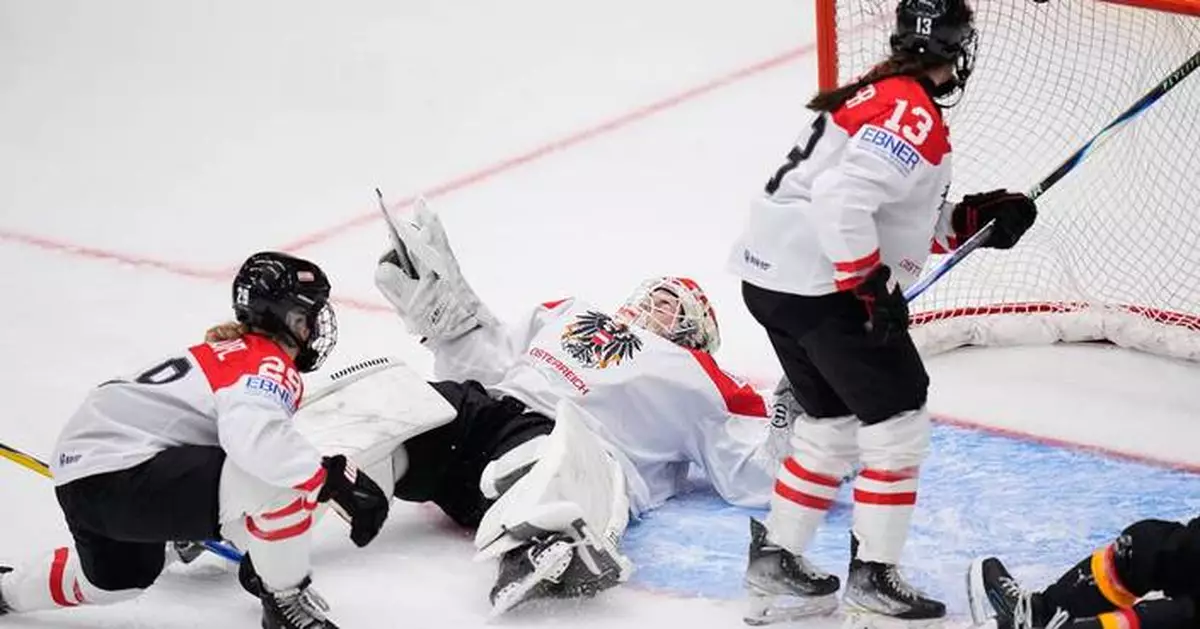
Austria's goaltender Selma Luggin fails to make a save during a Group A match between Germany and Austria at the Women's Ice Hockey World Championship in Esbjerg, Denmark, Saturday, Nov. 7, 2026. (AP Photo/Petr David Josek)
Austria, playing in the top division for the first time, pulled goalie Selma Luggin with 1:39 remaining in the final period before Jobst-Smith scored her second into an empty net.
The Austrians were beaten by the Czech Republic 4-1 in their opener on Friday.
Germany will face defending champion the United States on Sunday.
In Group B in Herning, Denmark came back from two goals down to beat Japan 3-2 after a penalty shootout.
Japan, playing its opening game, led 2-0 through goals from Umeka Odaira in the first period.
Nikita Bergmann reduced the deficit in the second and Teresa Christensen tied it at 2 with 2:56 to go to force overtime which didn't decide the match.
Frederikke Foss scored the decider in the shootout for the host, which rebounded from a 4-1 defeat to Finland on Friday.
Japan will play Canada on Sunday.
See AP’s full women’s hockey coverage here
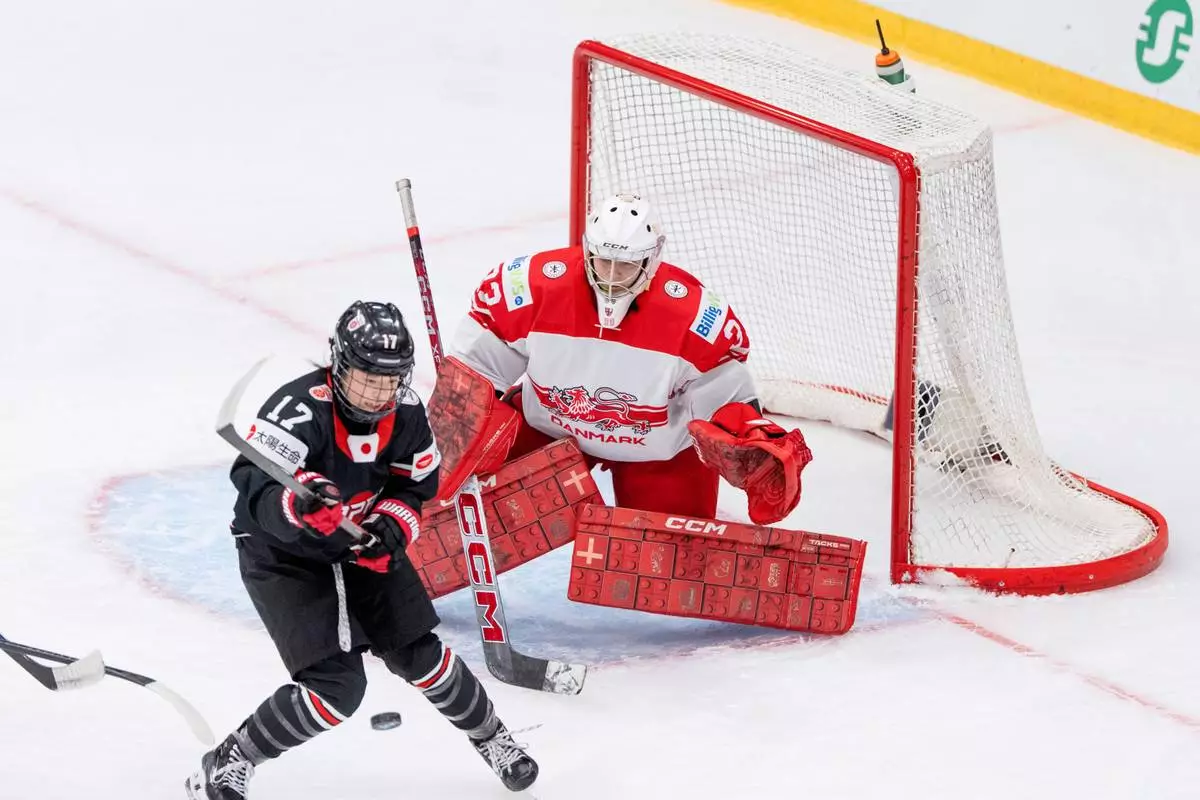
Denmark's goalkeeper Emma-Sofie Nordstroem, right, and Japan's Wakana Kurosu, left, challenge for the puck during a Group B match between Japan and Denmark at the Women's Ice Hockey World Championship in Herning, Denmark, Saturday, Nov. 7, 2026. (Bo Amstrup/Ritzau Scanpix via AP)

Japan's Umeka Odaira, top right, scores to 2-0 during a Group B match between Japan and Denmark at the Women's Ice Hockey World Championship in Herning, Denmark, Saturday, Nov. 7, 2026.(Bo Amstrup/Ritzau Scanpix via AP)

Japan's goalkeeper Riko Kawaguchi warms up for a Group B match between Japan and Denmark at the Women's Ice Hockey World Championship in Herning, Denmark, Saturday, Nov. 7, 2026.(Bo Amstrup/Ritzau Scanpix via AP)

Germany's Katarina Jobst-Smith, right, celebrates with Germany's Lilli Welcke after scoring her side's first goal during a Group A match between Germany and Austria at the Women's Ice Hockey World Championship in Esbjerg, Denmark, Saturday, Nov. 7, 2026. (AP Photo/Petr David Josek)

Austria's goaltender Selma Luggin fails to make a save during a Group A match between Germany and Austria at the Women's Ice Hockey World Championship in Esbjerg, Denmark, Saturday, Nov. 7, 2026. (AP Photo/Petr David Josek)
MONTEVIDEO, Uruguay (AP) — Pope Leo XIV urged Uruguayans on Saturday to build bridges of fraternity and faith, as he delivered an ode to the region's beloved mate tea and raised the profile of the Catholic Church in Latin America's most secular country.
Leo spent his first full day in Uruguay pointing to the church’s historic roots in the country and the work it’s doing today. He drew an estimated 100,000 people at a prayer vigil and visited a violence-ravaged neighborhood of Montevideo where church groups have built homes, provided job opportunities and run drug rehabilitation programs.
The aim, on the first stop of his three-nation South American tour, is to propose the Catholic faith as a response to today's challenges and the church a willing helper in a country where even Catholic holidays have secular names and God cannot be mentioned in oaths of office.
Leo traveled first to Paysandú, in western Uruguay on the border with Argentina, for his first Mass in South America. The Vatican said 40,000 people -- many from Uruguay but also from neighboring Argentina and Brazil – came out, despite the morning rain and blustery gray skies.
The crowd erupted in the stadium chant of “Olé, olé, olé, olé, pope, pope!” when Leo’s plane landed in Paysandú, around 375 kilometers (230 miles) from the capital, Montevideo. They cheered again, blew horns and waved yellow handkerchiefs when he arrived in his open-sided popemobile at the Mass site in a park.
Speaking to the crowd in Spanish, Leo reminded them that the Catholic faith had been “part of the life of the Uruguayan people since their earliest days, and it must be passed on to future generations with creative courage!”
Because of its accessible location on the Uruguay River, the city was chosen to host Leo’s first Mass at the start of his 12-day South American tour that was in doubt after he underwent lung cancer surgery on Oct. 13.
“He’s the representative of Christ but he’s human. And we weren’t sure if he could make it, but he pushed through for us,” said Soledad Sánchez, 73, who had driven to Paysandú from northern Uruguay, her eyes filling with tears. “He made it here to give us a message of peace because he knows our world needs it right now.”
Leo asked the faithful to build bridges of fraternity, recalling the nearby bridge over the Uruguay River that connects Uruguay and Argentina and over which many pilgrims crossed to attend the Mass.
He also pointed to the ritual of drinking mate, the bitter herbal tea that Uruguayans and their neighbors carry everywhere, as a poignant symbol of unity and encounter that he suggested should be applied to spreading the faith.
“It teaches us to share and to be together, strengthening the bonds that unite us as brothers and sisters,” he said. “It is a sign of welcome, integration and shared values.”
Mate, a cherished national symbol in Paraguay, Argentina and Uruguay, is above all a sharing ritual. The leaves are steeped in a hollowed gourd and the drink is sipped through a metal straw called a bombilla, and the gourd passes from hand to hand among friends, family and sometimes strangers, refilled for hours.
Everyone drinks from the same straw, and Uruguayans drink more mate per person than people anywhere else, roughly 9 kilograms (about 20 pounds) of the dried leaf a year, according to industry estimates.
“We must reflect on these symbols that we share, which give us identity and a sense of belonging, which speak to us of our origins and point us toward the future,” Leo said.
The message landed.
“I’m not religious. I’d never go to Mass if it weren’t the pope, but he surprised me. He made it appealing, the way he talked about things we all have in common, like mate,” said Jorge Monzón, 64, from Paysandú. “I personally felt a sense of communion.”
Leo pressed the message of the church's commitment to helping Uruguayans later Saturday by visiting Casavalle, a Montevideo area of small neighborhood s beset by drug trafficking and gang violence. In Borro, the Our Lady of Guadalupe Parish builds homes and supports addicts in their recovery, with donations including from The Papal Foundation, the U.S.-based group of wealthy Catholics who fund special papal projects.
Leo toured some of the new homes and praised the work church groups were doing, all while the crowd chanted “León, amigo, el barrio está contigo!" (Leon, my friend, the neighborhood is with you!")
He said Christians must commit themselves to the charity and closeness shown by the biblical figure of the good Samaritan, “who did not remain indifferent upon seeing misfortune, but took responsibility for his brother’s life.”
“We cannot turn a blind eye to the fact that there are children in Uruguay who do not go to school for fear of never returning home,” he said.
Uruguay has universal access to primary school and enrolls nearly all its children, but only about half of Uruguayans finish high school, one of the lowest rates in Latin America, according to the National Institute for Educational Evaluation. The graduation rate is even worse for children from the poorest households, where only one in four graduate compared to nearly nine out of 10 from the wealthiest families.
Jonathan Tropiano, 28, is one of the many in the area whose lives were transformed by the church.
He dreamed of becoming a rapper but was arrested after falling into crime and violence. Once out of the prison, at the age of 20, Tropiano became closer and closer to the local church.
“My life was horrible, with so much suffering. But then I found God and that was when I started to be a better person,” he said.
Late Saturday Leo presided over an evening prayer vigil at Montevideo’s Centenario Stadium, which hosted Pope John Paul II during the last papal visit to Uruguay in 1988. The Vatican said some 70,000 people were inside and another 30,000 outside watching on TV screens.
Leo told them that the relatively small number of Catholics in Uruguay wasn't a calculous the church considers important, recalling that Jesus was born in a small stable in Bethlehem.
“God chose Bethlehem, and that choice alone is enough to prevent us from equating smallness with insignificance,” Leo said.
Saturday was Leo's only full day in Uruguay before heading Sunday afternoon to Argentina for the second leg of his trip, which was to end next week in his second homeland of Peru.
Many Argentines, though, took advantage of the Paysandú Mass to see him since it was located just across a bridge from the eastern Argentine city of Colón and was closer than any of his Argentine stops in Buenos Aires, Luján and Córdoba.
“Argentina is a much more religious country than Uruguay, and there’s this desire to be here to witness something historic,” said Luciana Lobato, 20, an Argentine tour agent who organized buses for 180 pilgrims from across the border.
Ramiro Barreiro in Montevideo contributed.
Associated Press religion coverage receives support through the AP’s collaboration with The Conversation US, with funding from Lilly Endowment Inc. The AP is solely responsible for this content.
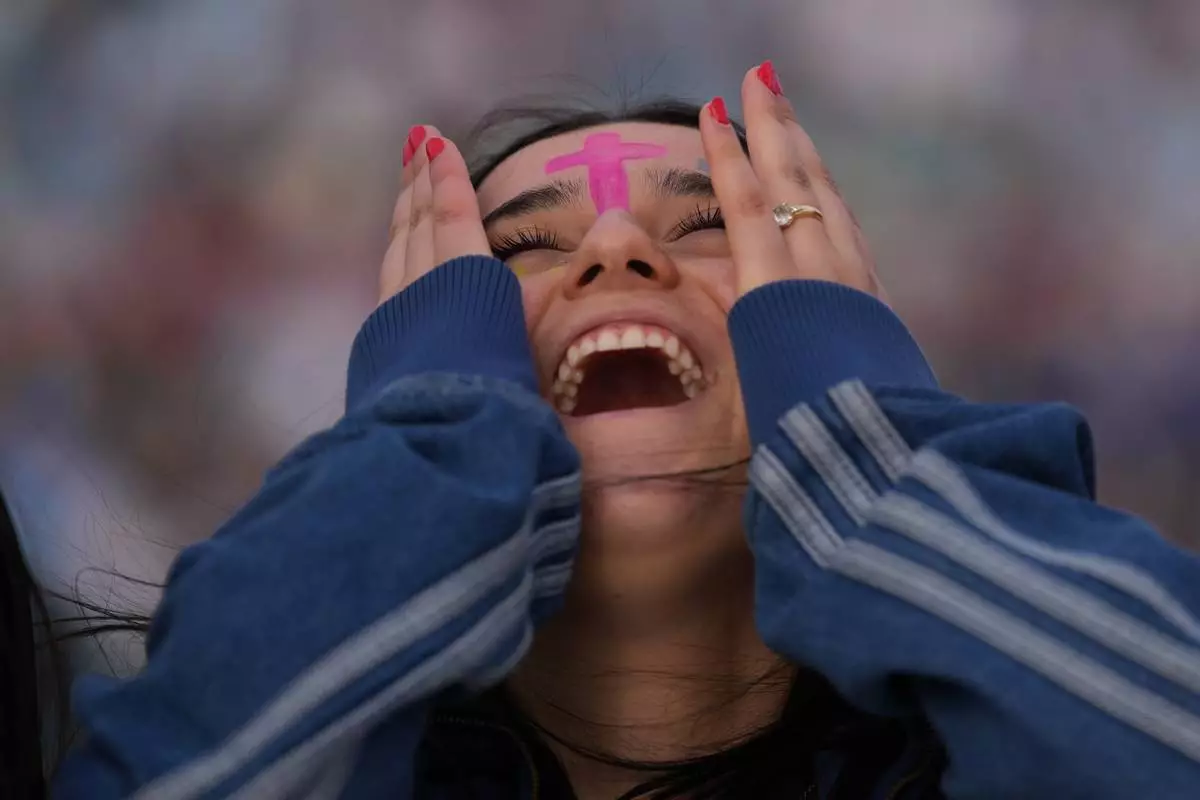
Worshippers cheer ahead of a prayer vigil led by Pope Leo XIV at Centenario Stadium in Montevideo, Uruguay, Saturday, Nov. 7, 2026. (AP Photo/Natacha Pisarenko)
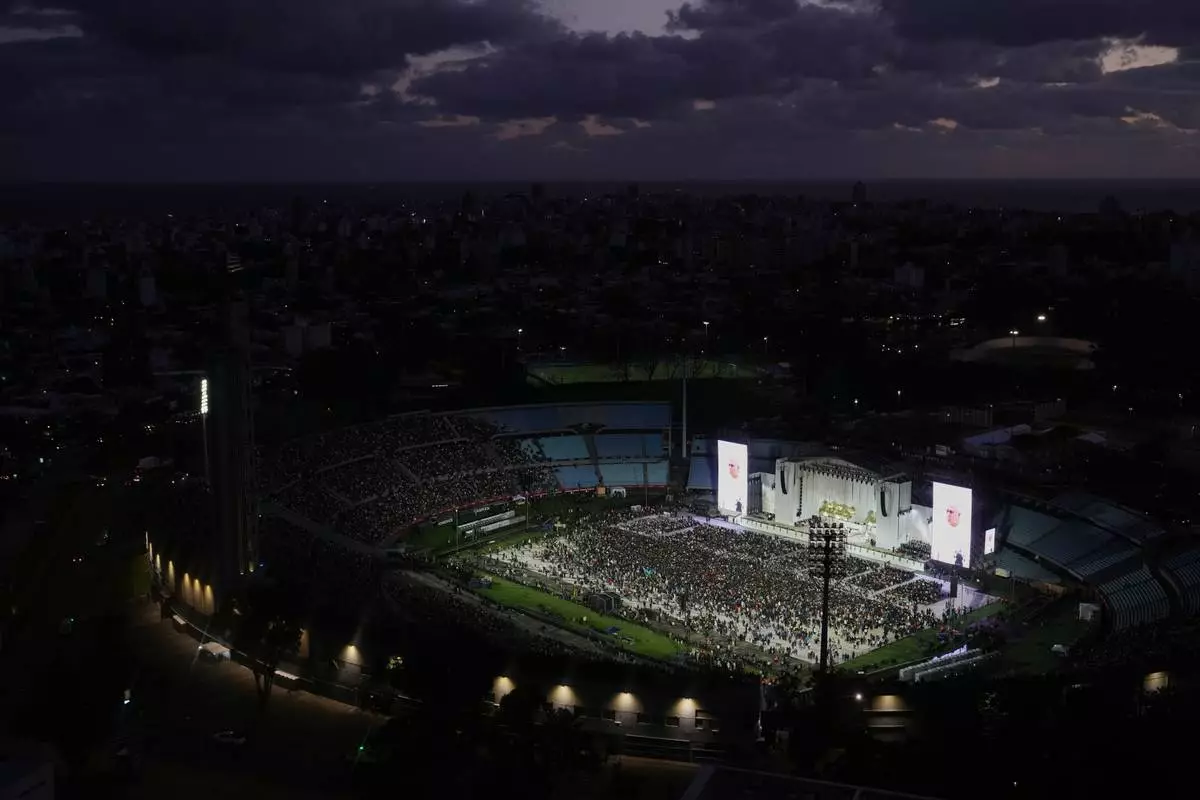
Pope Leo XIV leads a vigil prayer at Centenario Stadium in Montevideo, Uruguay, Saturday, Nov. 7, 2026. (AP Photo/Matilde Campodonico)
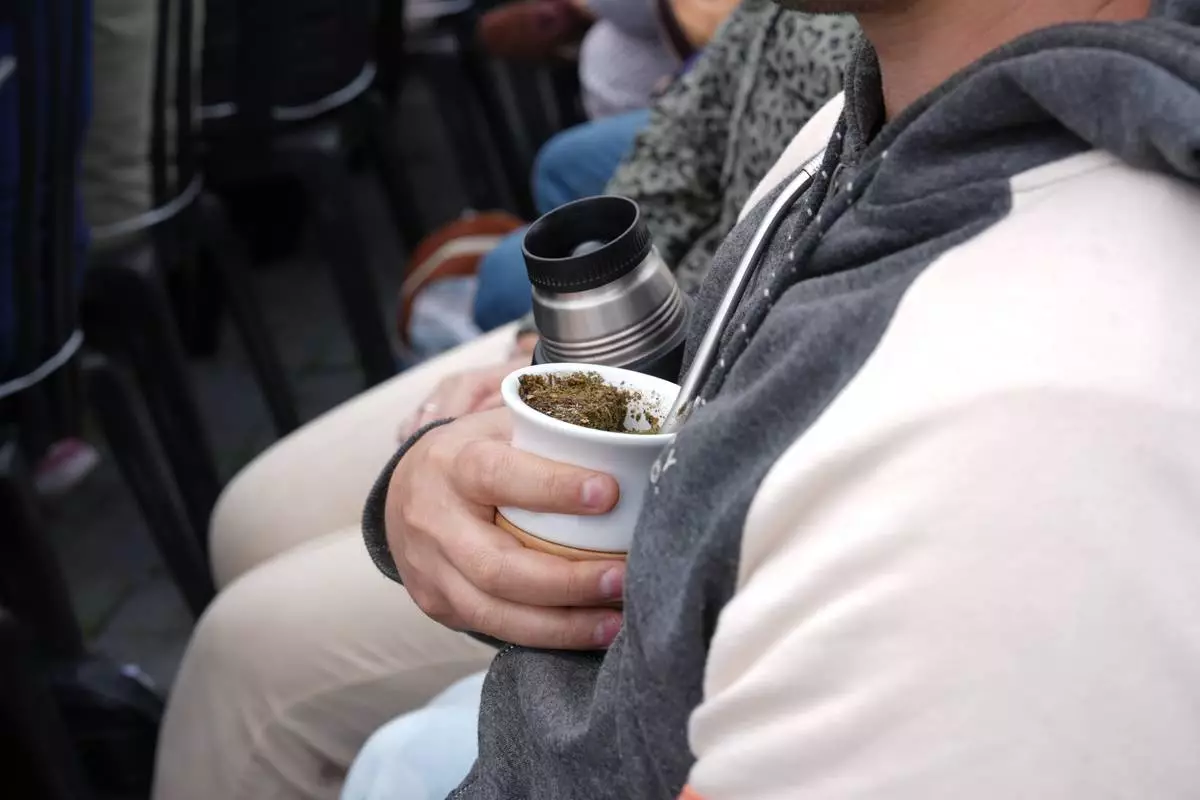
Faithful drink mate, a traditional South American herbal infusion, as they follow Pope Leo XIV presiding over Mass at Parque París Londres in Paysandú, Uruguay, Saturday, Nov. 7, 2026, on the second day of his twelve-day apostolic journey to South America. (AP Photo/Andrew Medichini)
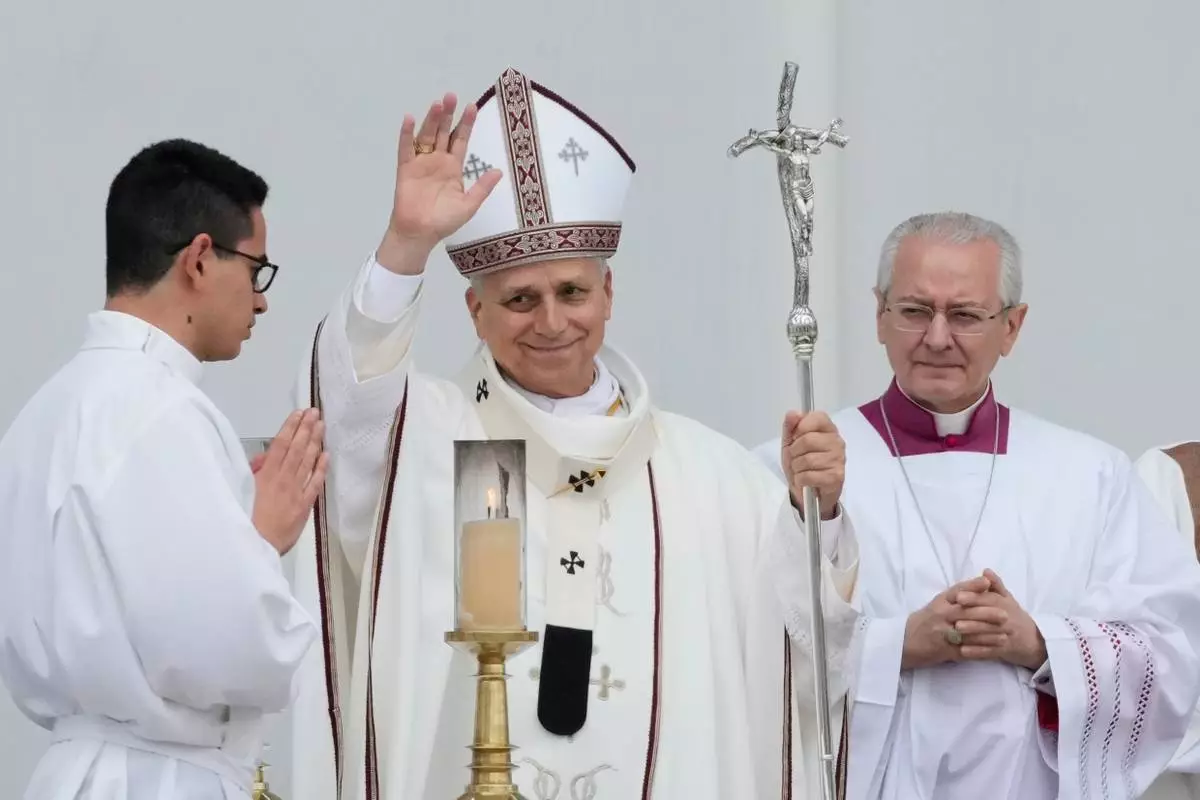
Pope Leo XIV greets the faithful during Mass at Parque Paris Londres in Paysandu, Uruguay, Saturday, Nov. 7, 2026. (AP Photo/Gustavo Garello)
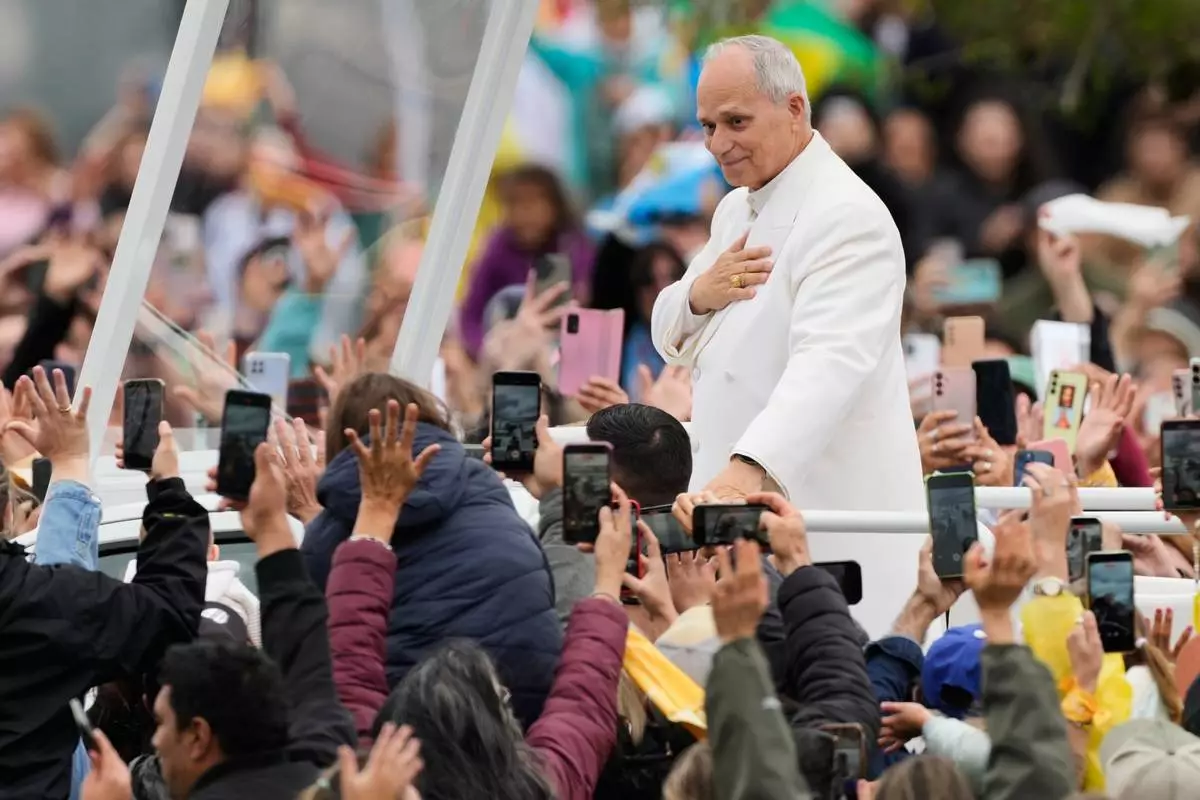
Pope Leo XIV greets the faithful as he arrives to celebrate Mass at Parque Paris Londres in Paysandu, Uruguay, Saturday, Nov. 7, 2026. (AP Photo/Gustavo Garello)
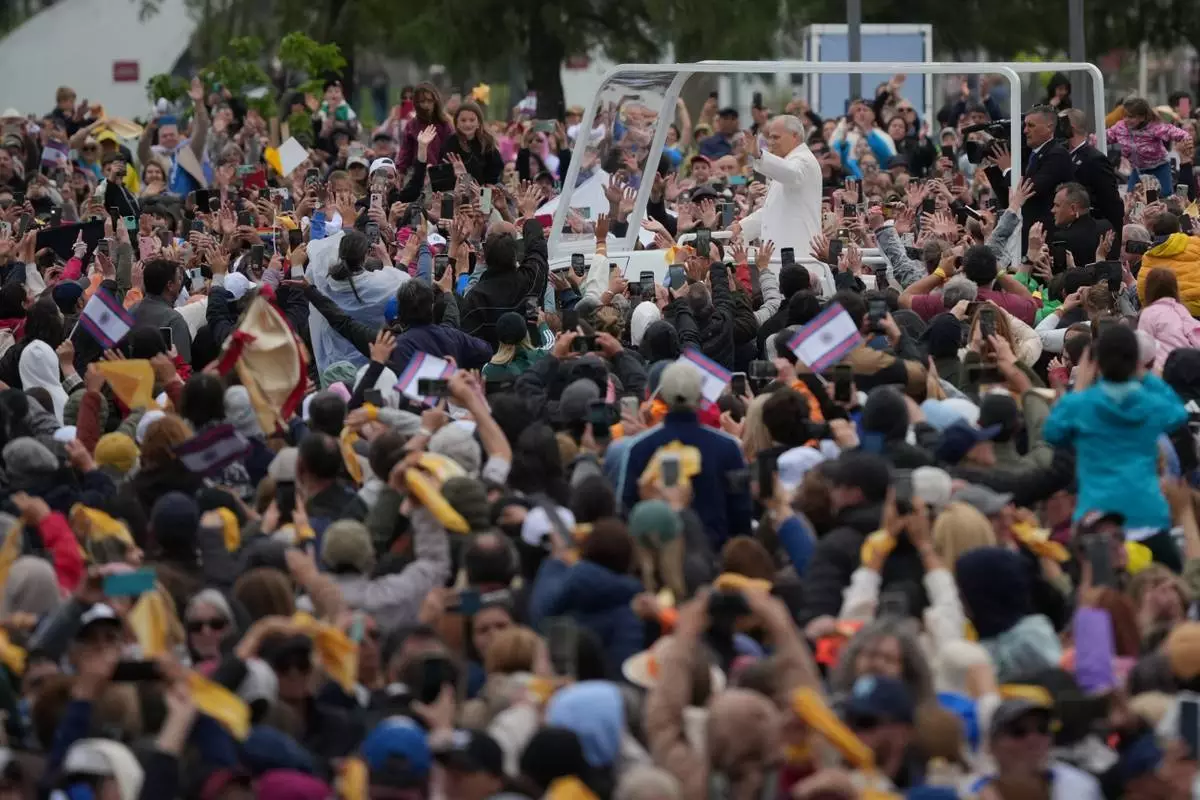
Pope Leo XIV arrives to preside over Mass at Parque París Londres in Paysandú, Uruguay, on the second day of his twelve-day apostolic journey to South America, Saturday, Nov. 7, 2026. (AP Photo/Andrew Medichini)
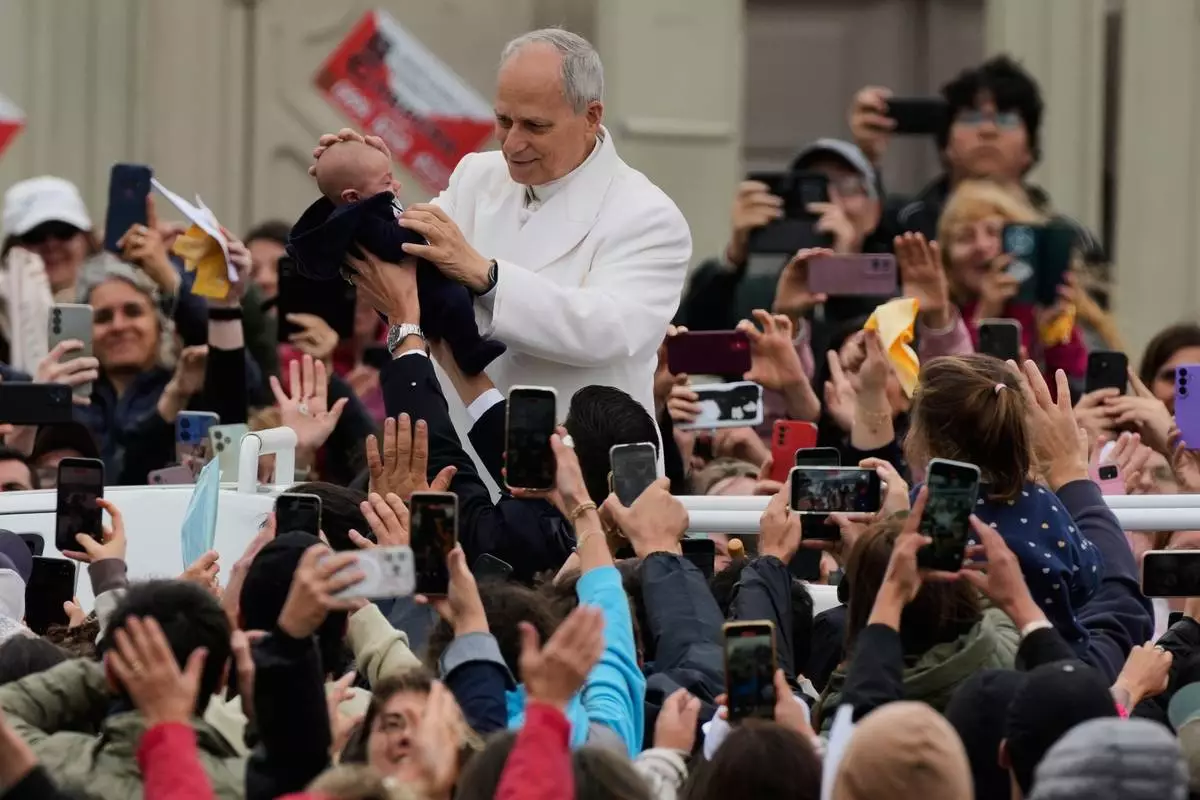
Pope Leo XIV blesses a child as he arrives to celebrate Mass at Parque Paris Londres in Paysandu, Uruguay, Saturday, Nov. 7, 2026. (AP Photo/Gustavo Garello)
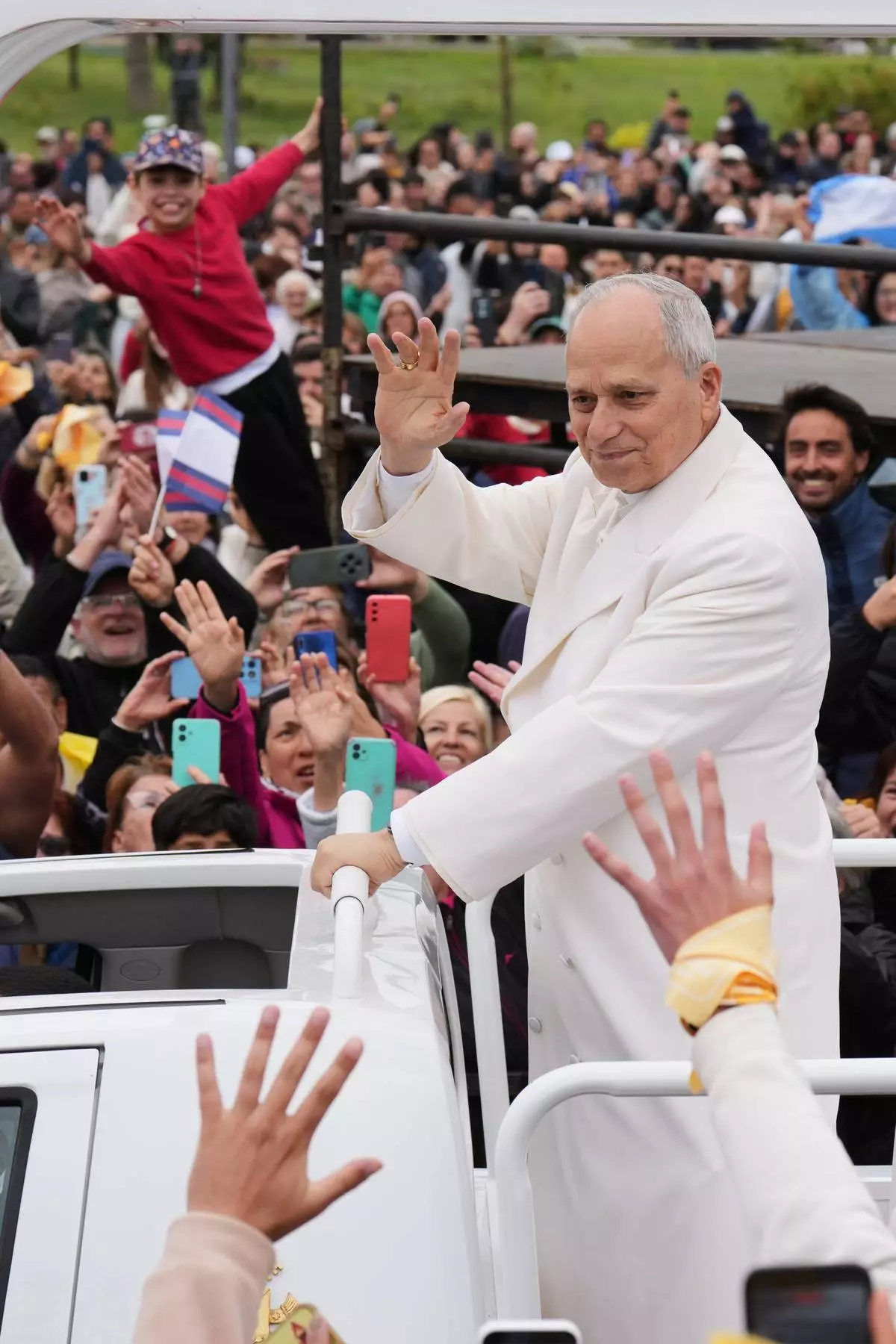
Pope Leo XIV greets the faithful as he arrives to celebrate Mass at Parque Paris Londres in Paysandu, Uruguay, Saturday, Nov. 7, 2026. (AP Photo/Gustavo Garello)
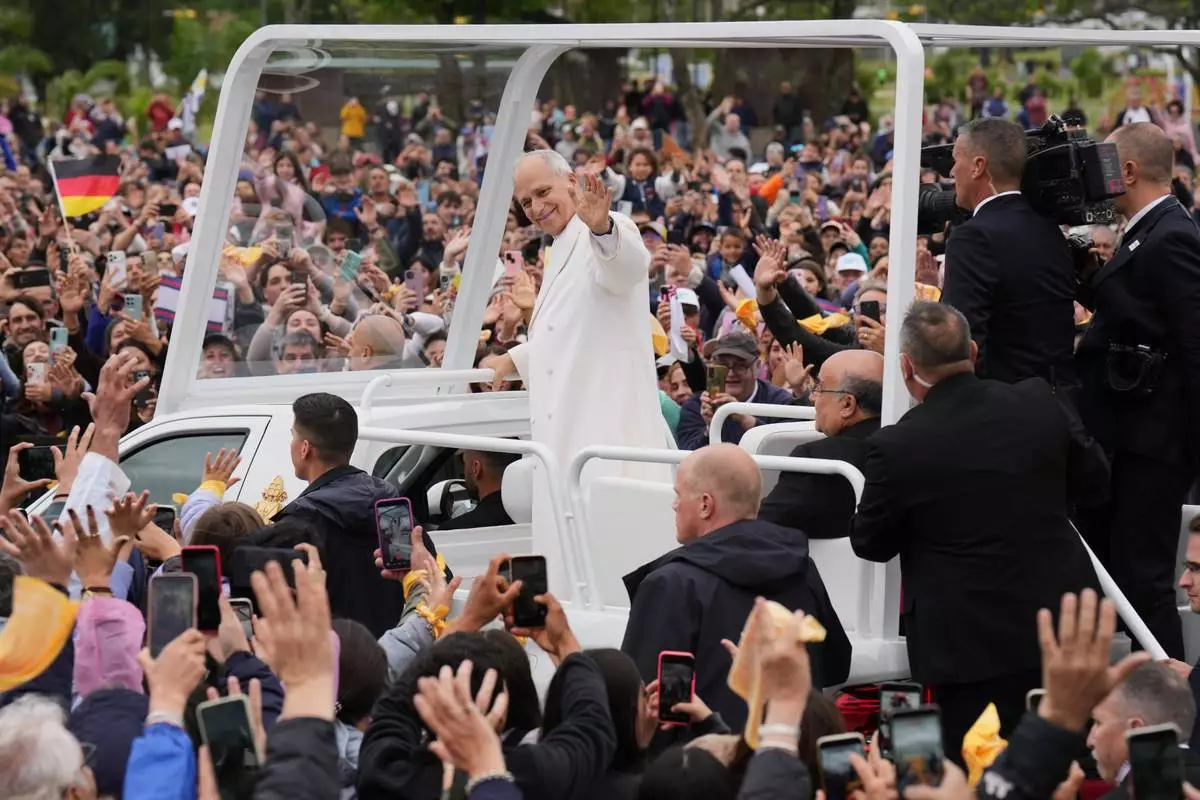
Pope Leo XIV greets the faithful as he arrives to celebrate Mass at Parque Paris Londres in Paysandu, Uruguay, Saturday, Nov. 7, 2026. (AP Photo/Gustavo Garello
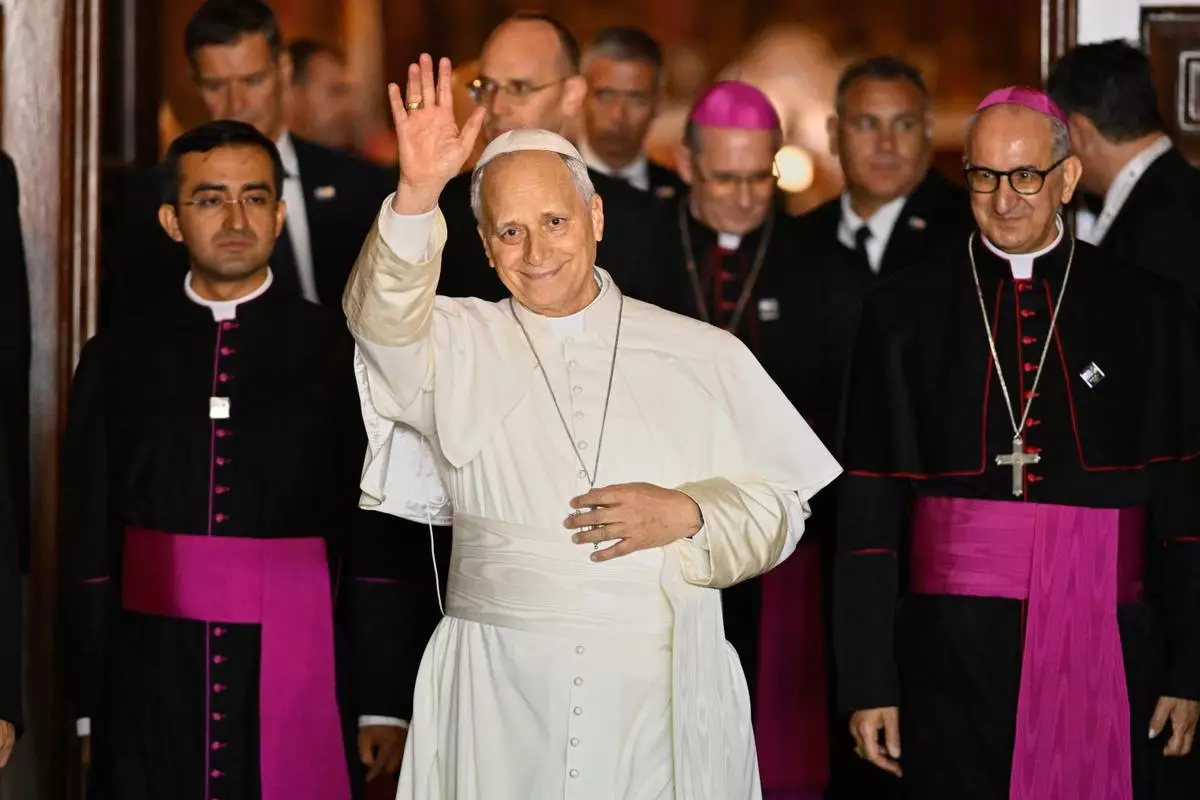
Pope Leo XIV waves after celebrating vespers at the Cathedral in Montevideo, Uruguay, Friday, Nov. 6, 2026. (AP Photo/Santiago Mazzarovich)
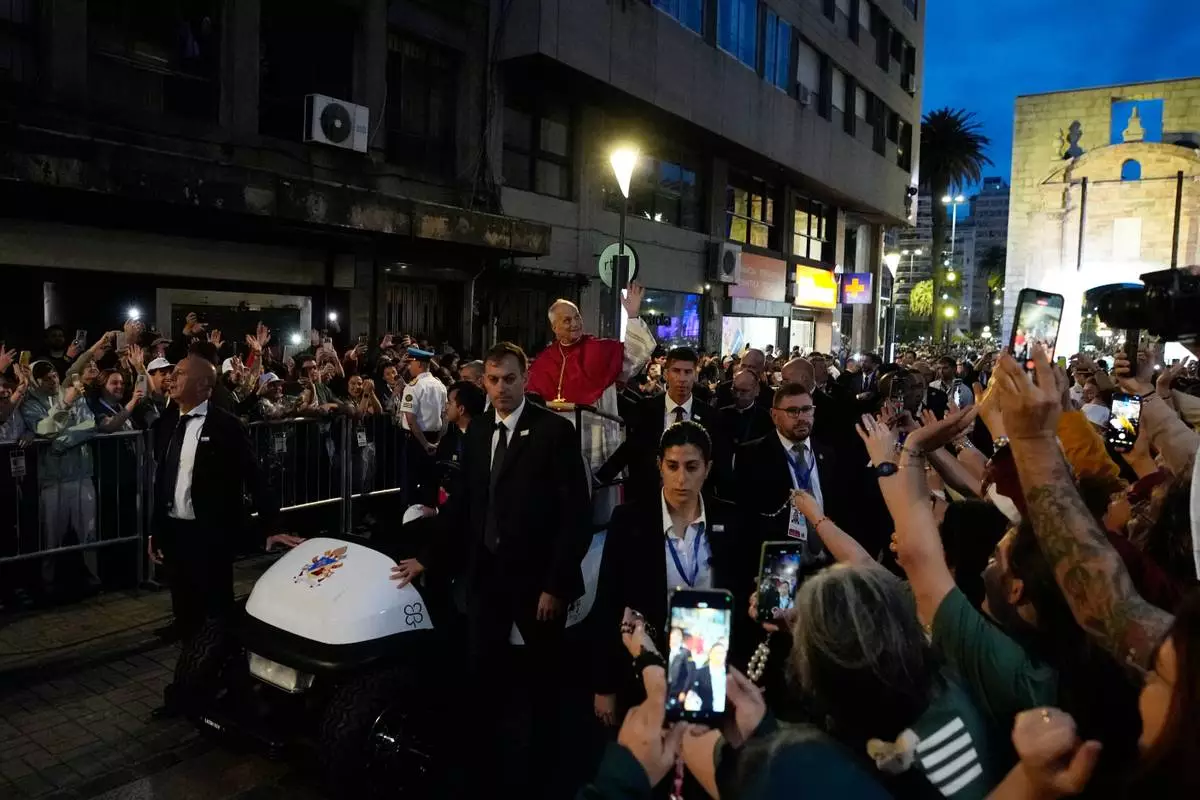
Pope Leo XIV is transported to the Cathedral in Montevideo, Uruguay, Friday, Nov. 6, 2026. (AP Photo/Natacha Pisarenko)
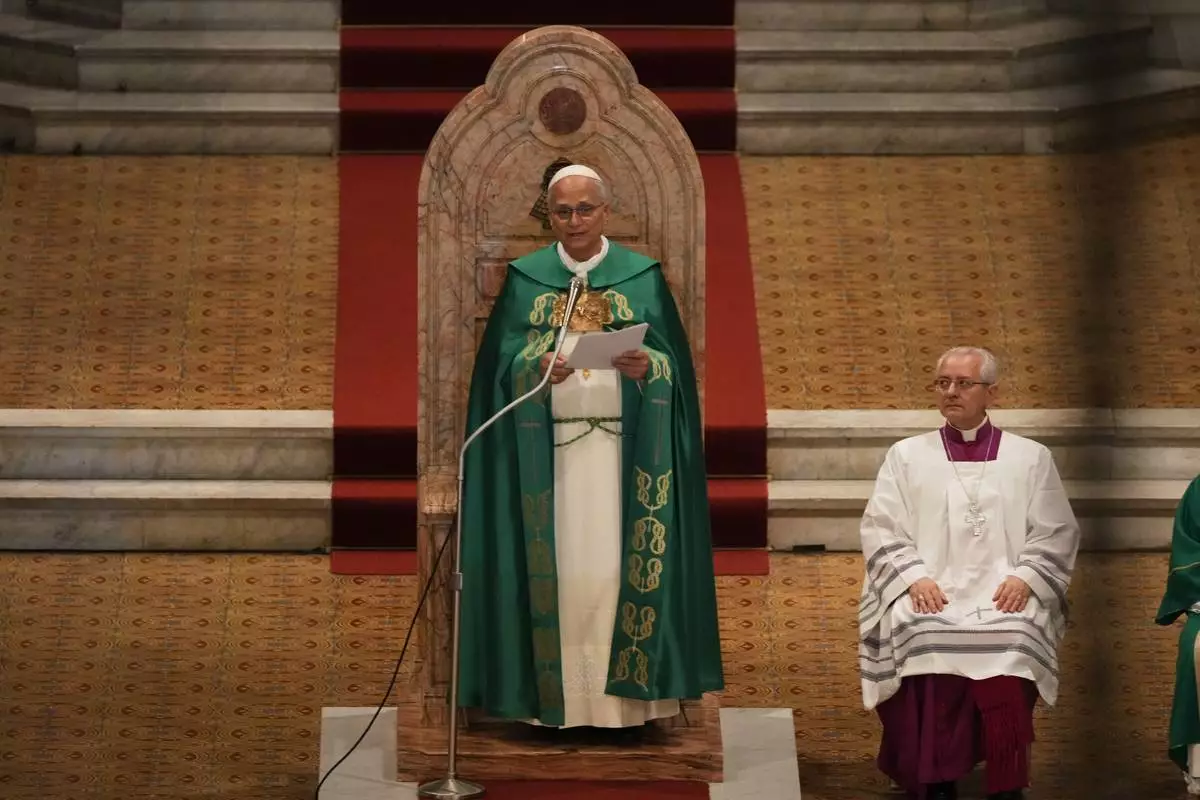
Pope Leo XIV celebrates vespers with bishops, priests, deacons, consecrated men and women, and seminarians at the Metropolitan Cathedral, in Montevideo, Uruguay, on the first day of his twelve-day apostolic journey to South America, Friday, Nov. 6, 2026. (AP Photo/Andrew Medichini)
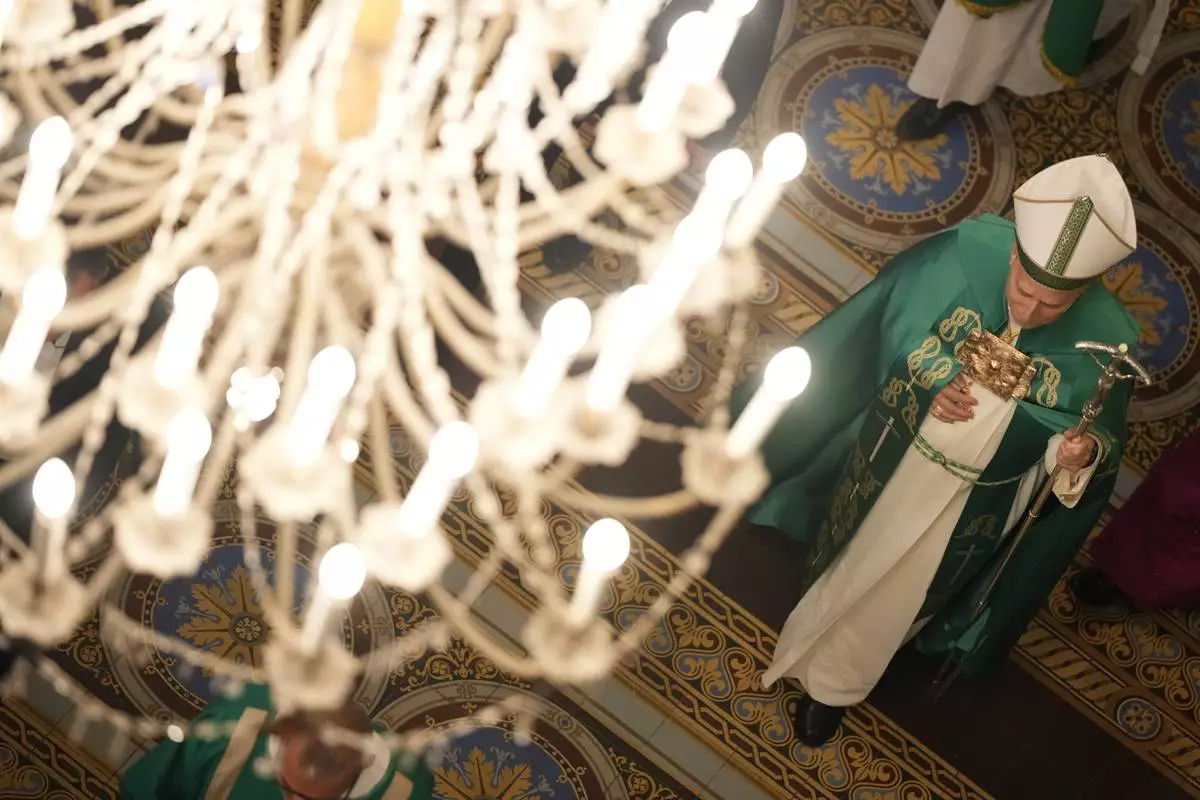
Pope Leo XIV arrives to celebrate vespers with bishops, priests, deacons, consecrated men and women, and seminarians at the Metropolitan Cathedral, in Montevideo, Uruguay, on the first day of his twelve-day apostolic journey to South America, Friday, Nov. 6, 2026. (AP Photo/Andrew Medichini)
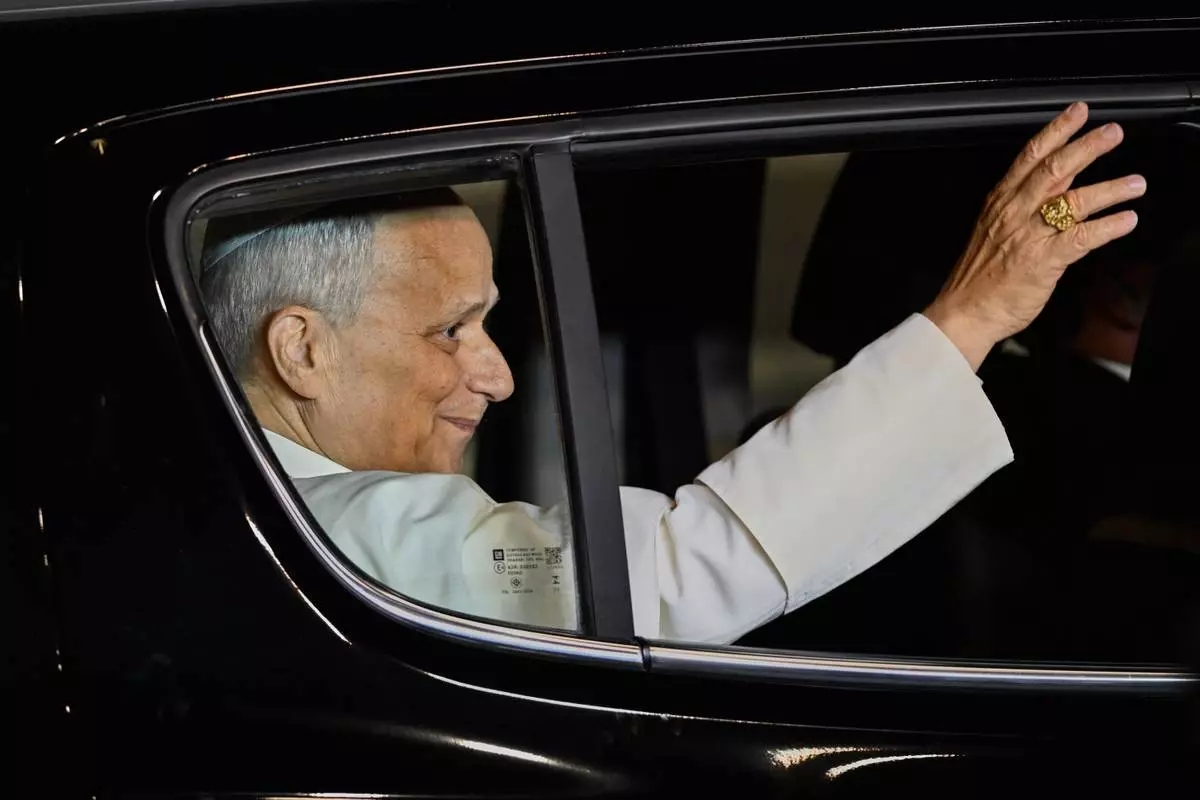
Pope Leo XIV waves after celebrating vespers at the Cathedral in Montevideo, Uruguay, Friday, Nov. 6, 2026. (AP Photo/Santiago Mazzarovich)
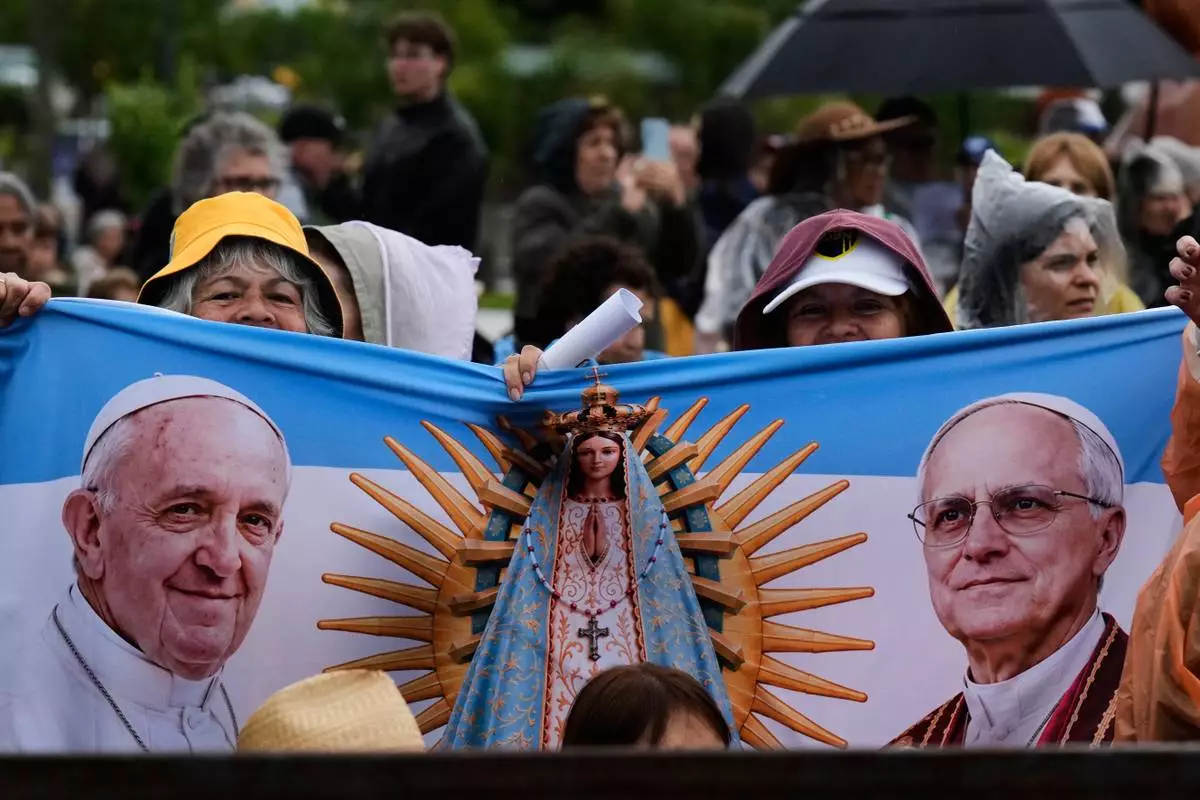
Catholic faithful hold an Argentine flag bearing images of the late Pope Francis and Pope Leo XIV as they wait for Pope Leo XIV to arrive to celebrate Mass at Parque Paris Londres in Paysandu, Uruguay, Saturday, Nov. 7, 2026. (AP Photo/Gustavo Garello)