The Trump administration wants to make sure that the Mexican train crews who haul freight over the border can understand key safety safety information in English and that the common practice of using foreign crews to cross into America doesn't threaten U.S. jobs.
Two major rail unions praised the proposed rule announced Friday that would also strengthen the standards for certifying that crews can safely operate a train.
The government had concerns after inspecting two Texas railyards near the border last fall on the two railroads directly affected by these restrictions on Mexican crews — Union Pacific and CPKC. UP didn’t immediately respond but CPKC and the Association of American Railroads trade group declined to comment while they study the rule.
The Federal Railroad Administration sent letters to both CPKC and UP in December after those inspections found several instances of train crews having trouble understanding English. The government urged those railroads to reexamine their practices and make sure that Mexican crews can speak English and don’t operate a train more than 10 miles (16 kilometers) inside America.
The Federal Railroad Administration said at the time the concern was that these Mexican crews bringing trains into Union Pacific’s Eagle Pass rail yard and CPKC’s facility in Laredo were having a hard time understanding operating bulletins and U.S. regulations that require information about hazardous materials and emergency responses to be maintained in English.
Both UP and CPKC have pledged to make sure they were following the existing rules, including that the Mexican crews do not travel more than 10 miles into the United States. But now the federal government wants to strengthen the rules “because railroad crews must be able to communicate fully and accurately when crossing into the United States, most notably with dispatchers and emergency responders during a crisis, as a safety-critical function.”
This rail safety effort aligns closely with the Transportation Department's efforts to ensure that truck drivers can understand English, so they can read road signs and warnings and communicate with first responders after an accident or during an inspection. The government has tried to withhold millions of dollars in highway funding from New York and California because it isn’t satisfied with the steps those states have taken to make sure the commercial driver’s licenses they issue are valid.
Mark Wallace, the national president of the Brotherhood of Locomotive Engineers and Trainmen union, has been raising concerns about this practice of using Mexican train crews for several years because of safety, security and job concerns.
The union has said that the handoffs used to happen right at the border, but now Union Pacific and CPKC routinely ask Mexican crews to bring trains several miles over the border to one of their railyards where the crew switches can be done more safely. But the firm 10-mile (16-kilometer) restriction in this rule will prevent the railroads from expanding this practice to railyards further into America like the union said UP was considering in New Mexico.
“Trains originating from Mexico, operated by foreign crews were unable to communicate with dispatchers in English and the language barrier posed a hazard in the event of a derailment or other incident,” Wallace said.
But the railroads have said that this practice of using Mexican train crews to bring the trains into railyards in America was developed in 2018 with the approval of the first Trump administration to address smuggling concerns. When trains are stopped at the border smugglers often try to conceal drugs or other contraband aboard them and immigrants might jump aboard to get into the United States.
It is also routine for Canadian crews to bring trains a few miles over the northern border with the United States before handing off to American crews.
The SMART-TD union that represents conductors and other rail workers also said the provisions of the rule that will prohibit train crews from using a system that's similar to cruise control for freight trains when they take their certification tests will help ensure they can operate a train safely.
“Railroad certifications should represent proven ability, not simply possession of a certificate,” said Jared Cassity, who is SMART-TD’s top safety expert. “When lives are on the line, the FRA must know that an engineer can safely operate a train, not just supervise a computer doing it.”
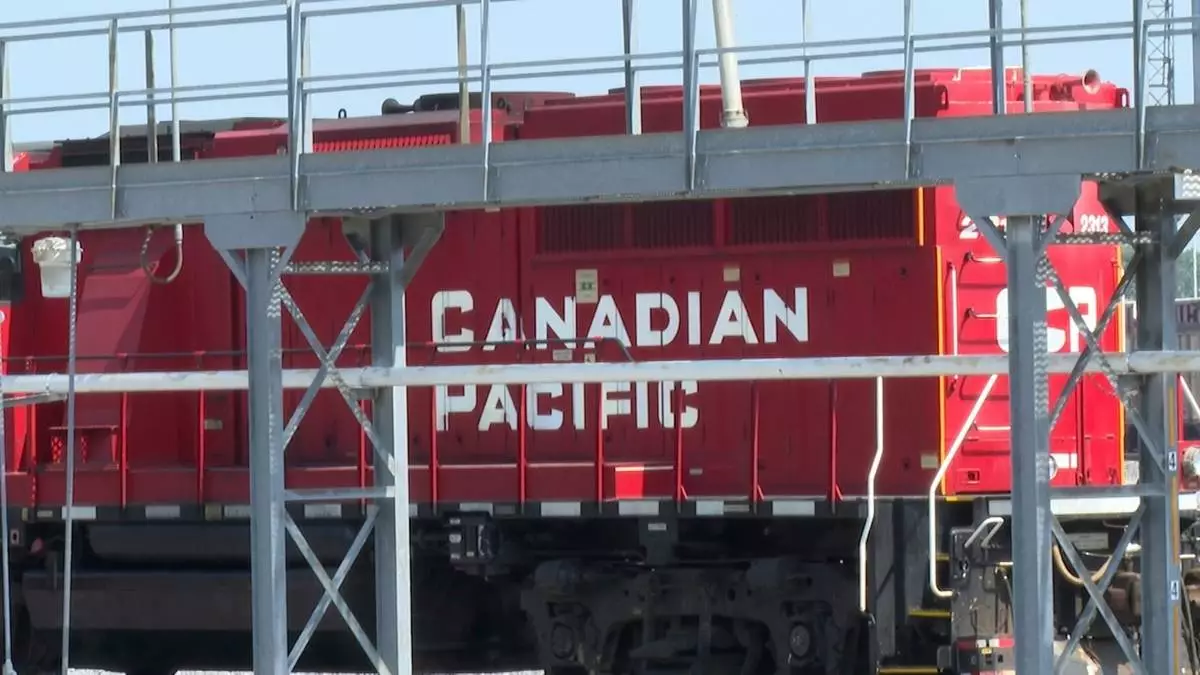
FILE - A Canada Pacific (CPKC) train stopped in a railyard near the CPKC offices located in Kansas City, Mo., Aug. 19, 2024. (AP Photo/Nick Ingram, File)
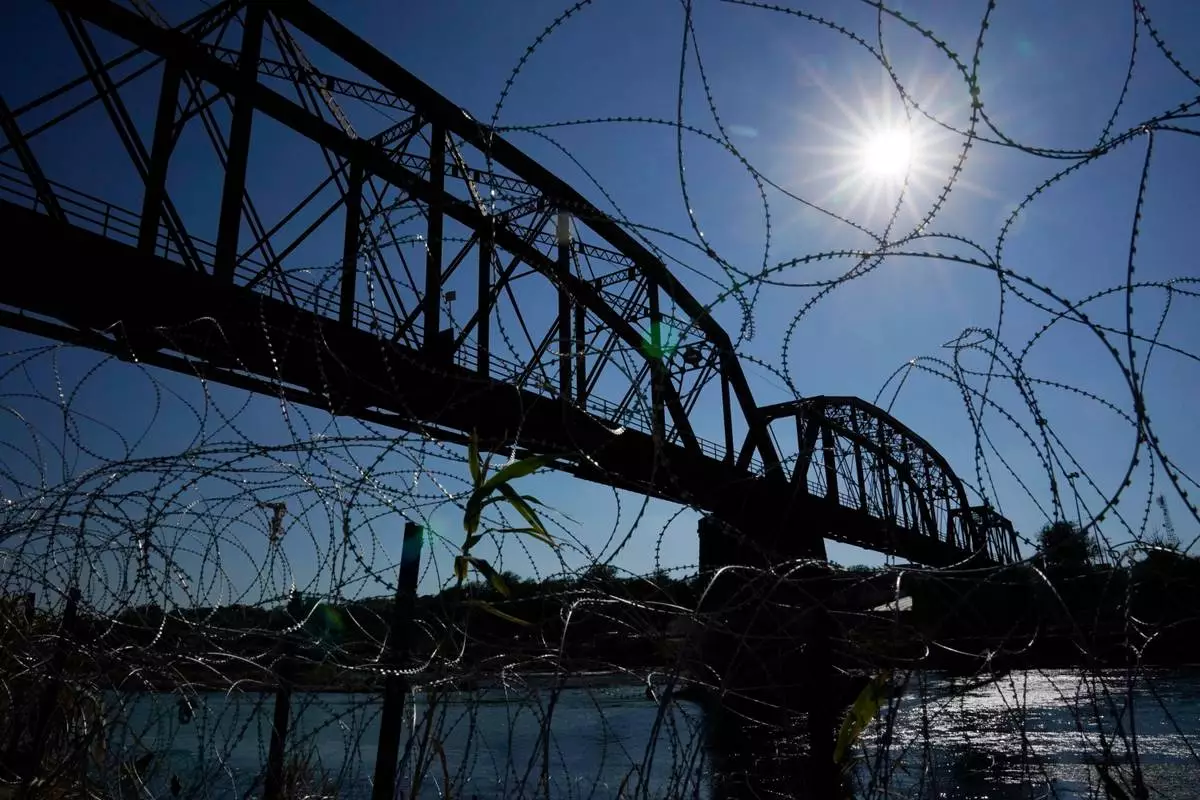
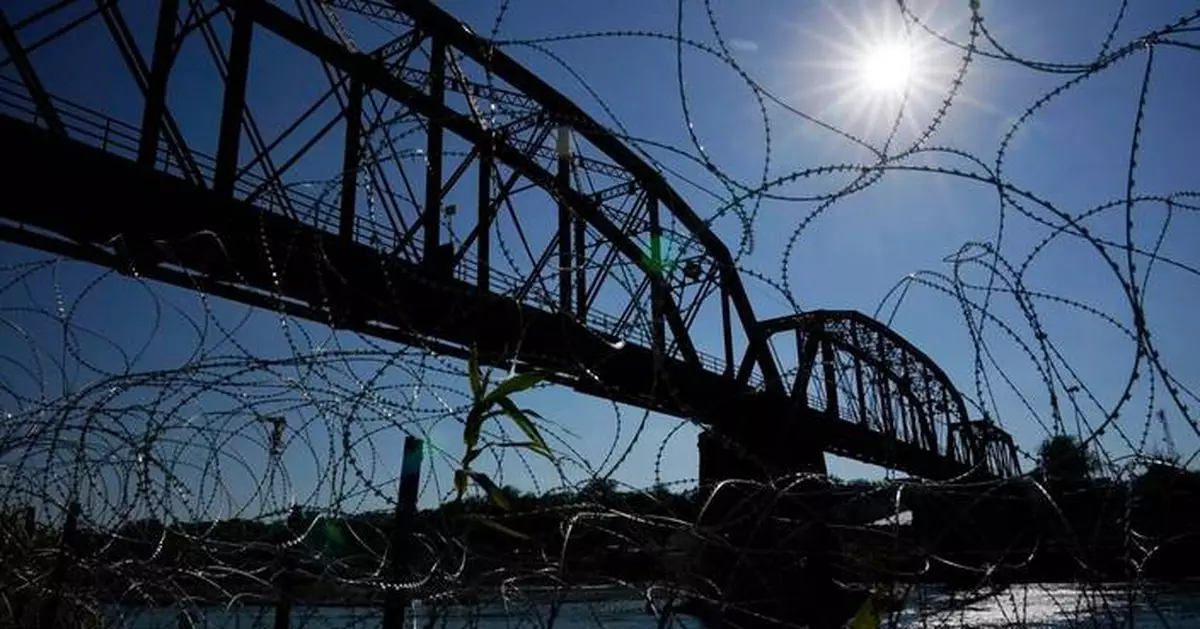
FILE - The Union Pacific International Railroad Bridge is seen behind concertina wire, Sept. 22, 2023, in Eagle Pass, Texas. (AP Photo/Eric Gay, File)
NEW YORK (AP) — U.S. stocks rallied to the finish of a wild July as Amazon leaped, Apple sank and rising oil prices worsened worries about inflation. The S&P 500 climbed 0.7% Friday after veering between gains and losses through the day. The Dow Jones Industrial Average added 0.5%, and the Nasdaq composite jumped 1%. Amazon soared after delivering a stronger profit for the spring than analysts expected, suggesting its big AI investments may be paying off. Apple dropped after giving a lackluster forecast for upcoming revenue growth. Treasury yields climbed as worries built in the bond market about inflation potentially remaining high.
THIS IS A BREAKING NEWS UPDATE. AP’s earlier story follows below.
NEW YORK (AP) — Wall Street's wildJuly is ending with more swings on Friday as Amazon 's stock leaps, Apple sinks and rising oil prices worsen worries about inflation already squeezing the bond market.
The S&P 500 rose 0.7% after veering between gains and losses through the day. The Dow Jones Industrial Average was up 324 points, or 0.6%, with an hour remaining in trading, and the Nasdaq composite was 0.9% higher after briefly losing all of an early 1.3% jump.
It's a fitting finish to July for the U.S. stock market, which lurched up and down as oil prices shot higher because of the war with Iran and worries grew about whether Big Tech's massive investments in artificial-intelligence technology will translate into profits and whether chipmaker stocks soared too high in the euphoria around AI.
Amazon led the market with a leap of 15.3% after reporting much stronger profit for the latest quarter than analysts expected. Its profit more than tripled from a year earlier, thanks in part to an acceleration of growth in its cloud computing business.
Analysts said that could be a signal Amazon’s huge AI investments are paying off, and Amazon increased its forecast for how much it will spend on investments this year.
The stock reaction was similar to what Microsoft got a day before, when it soared to its best day in nearly 18 years on signals that its AI investments may also be yielding higher profits.
Chip companies selling the processors and computer memory that such “hyperscalers” are scrambling to buy swung sharply again on Friday. Micron Technology, for example, went from an early jump of 6.4% to a loss of 6.5% before paring its drop to 4%.
More firmly on the losing end of Wall Street was Apple, which dropped 9.1% despite reporting stronger profit for the latest quarter than expected. Its forecast for growth in the current quarter fell short of expectations, which executives pinned on a supply crunch in components getting vacuumed up in the AI boom.
Also pressuring stocks was another rise in oil prices as uncertainty continues about when the war with Iran will allow crude to flow freely again from the Middle East.
The price for a barrel of Brent crude rose 1.2% to settle at $87.93 after careening between $72 and $102 earlier in July.
Higher oil prices have pushed the cost for a gallon of regular gasoline to an average of nearly $4.11 across the United States, up from $3.85 a month ago, according to AAA. More expensive oil also puts upward pressure on prices for virtually every product that rides on a ship, plane or truck before getting to a customer.
The worries about inflation sent yields in the bond market even higher.
The yield on the 10-year Treasury jumped to 4.74% from 4.68% late Thursday and from just 3.97% before the war with Iran sent oil prices shooting higher. That's a notable move for the yield, which moves higher when investors' expectations for inflation, economic growth and other factors in upcoming years are rising.
The leap has already sent the average long-term U.S. mortgage rate to its highest level in a year.
Longer-term yields jumped on Wednesday after the Federal Reserve's chairman, Kevin Warsh, promised again to get inflation back down to 2% but refused to say how he plans to get it there. The Fed voted again to keep its main interest rate steady on Wednesday, even though inflation remains well above 2%.
Hikes to rates by the Fed could restrain inflation, but they could also slow the economy and undercut prices for stocks and other investments. President Donald Trump, who nominated Warsh to lead the Fed, has lobbied for lower interest rates instead of higher.
Warsh has clearly told financial markets that he does not want to give hints about what the Fed will do with interest rates, saying he wants to get direct, “unfiltered” messages from them rather than echoes back of what the Fed has suggested.
But “without clarifying why action was or wasn’t taken already, it’s hard to see how statements about being committed to hitting its inflation target aren’t just a bluff,” according to Brian Jacobsen, chief economic strategist at Annex Wealth Management.
“The Fed is facing a growing credibility problem,” economists at Bank of America wrote in a report. Unless data comes in showing less pressure on inflation in the interim, “it is imperative for the Fed to pass the September test by hiking rates and delivering an internally consistent narrative.”
In stock markets abroad, the swings were even wilder for chip stocks.
Seoul’s Kospi index soared 17.9% for its best day in history. The index is dominated by two tech giants, Samsung Electronics and SK Hynix, which both surged at least 26.8% on Friday.
The Kospi, though, still lost 22% in July despite Friday’s historic move. That’s after it more than doubled in the first six months of the year.
AP Business Writers Chan Ho-him and Elaine Kurtenbach contributed to this report.
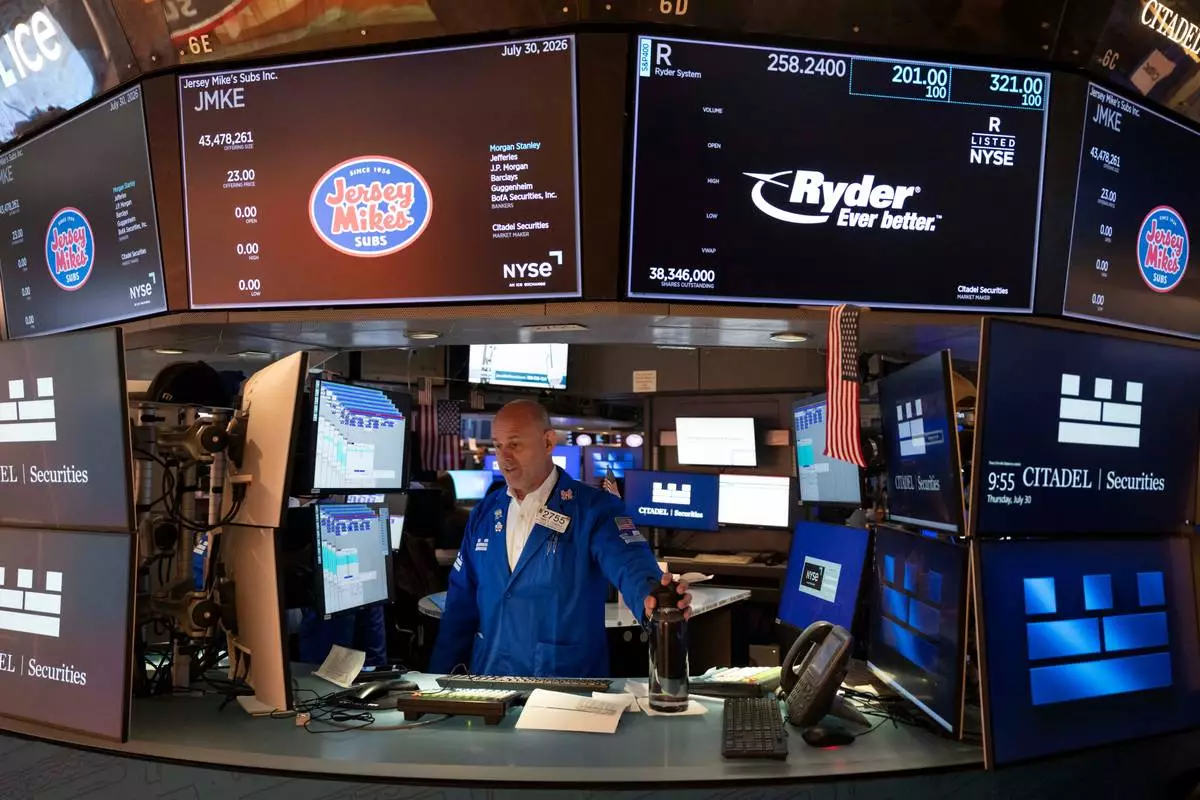
Specialist Mark Fitzgerald works on the floor of the New York Stock Exchange, Thursday, July 30, 2026, in New York. (AP Photo/Yuki Iwamura)

An employee walks past near the screen showing the SK Hynix stock price at a dealing room of Hana Bank in Seoul, South Korea, Friday, July 31, 2026. (AP Photo/Lee Jin-man)

A dealer walks past near the screen showing the Korea Composite Stock Price Index (KOSPI) at a dealing room of Hana Bank in Seoul, South Korea, Friday, July 31, 2026. (AP Photo/Lee Jin-man)
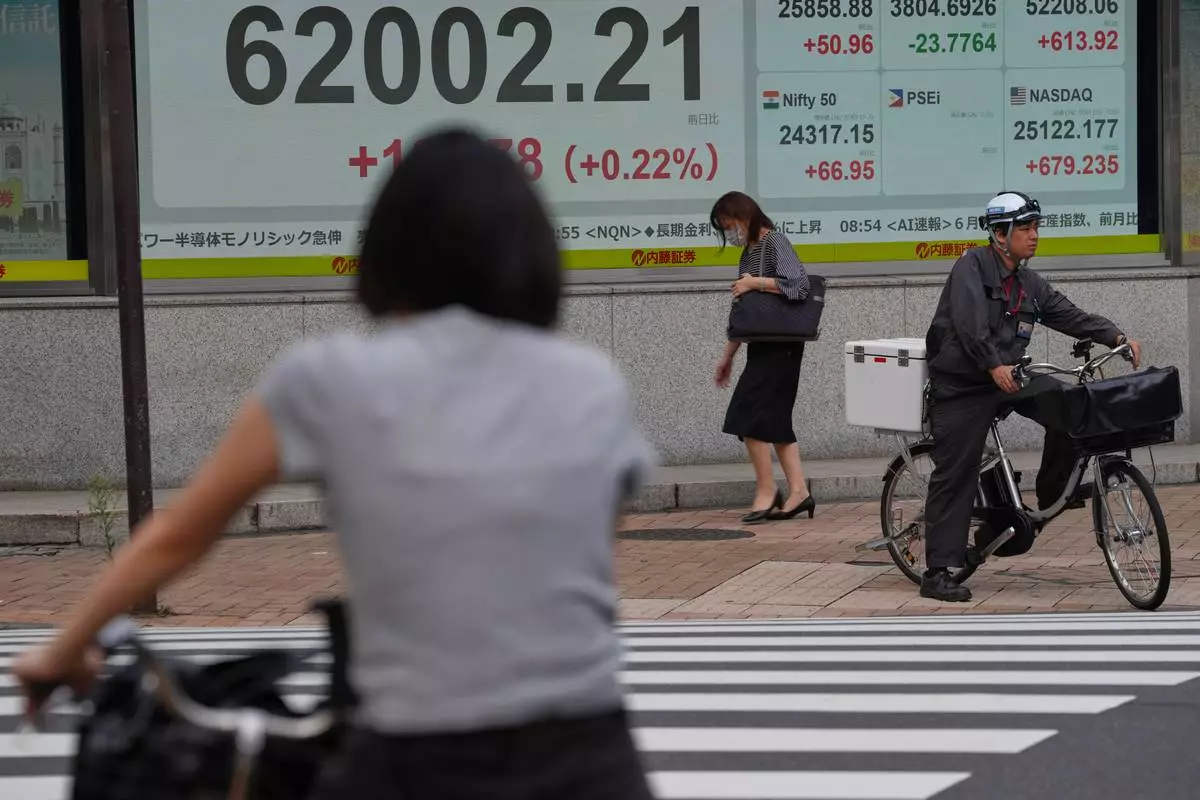
People wait to cross a street near an electronic board showing Japan's Nikkei index at a securities firm Friday, July 31, 2026. (AP Photo/Eugene Hoshiko)
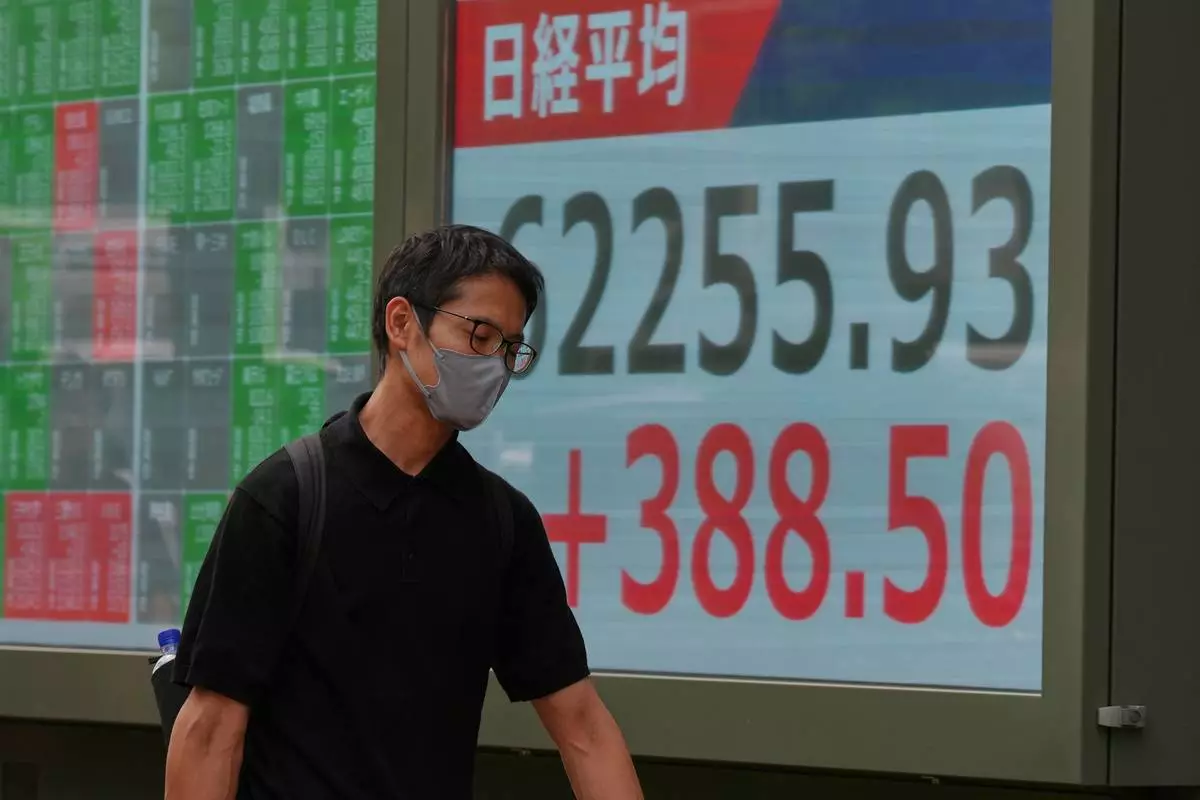
A person walks past an electronic board showing Japan's Nikkei index at a securities firm Friday, July 31, 2026. (AP Photo/Eugene Hoshiko)
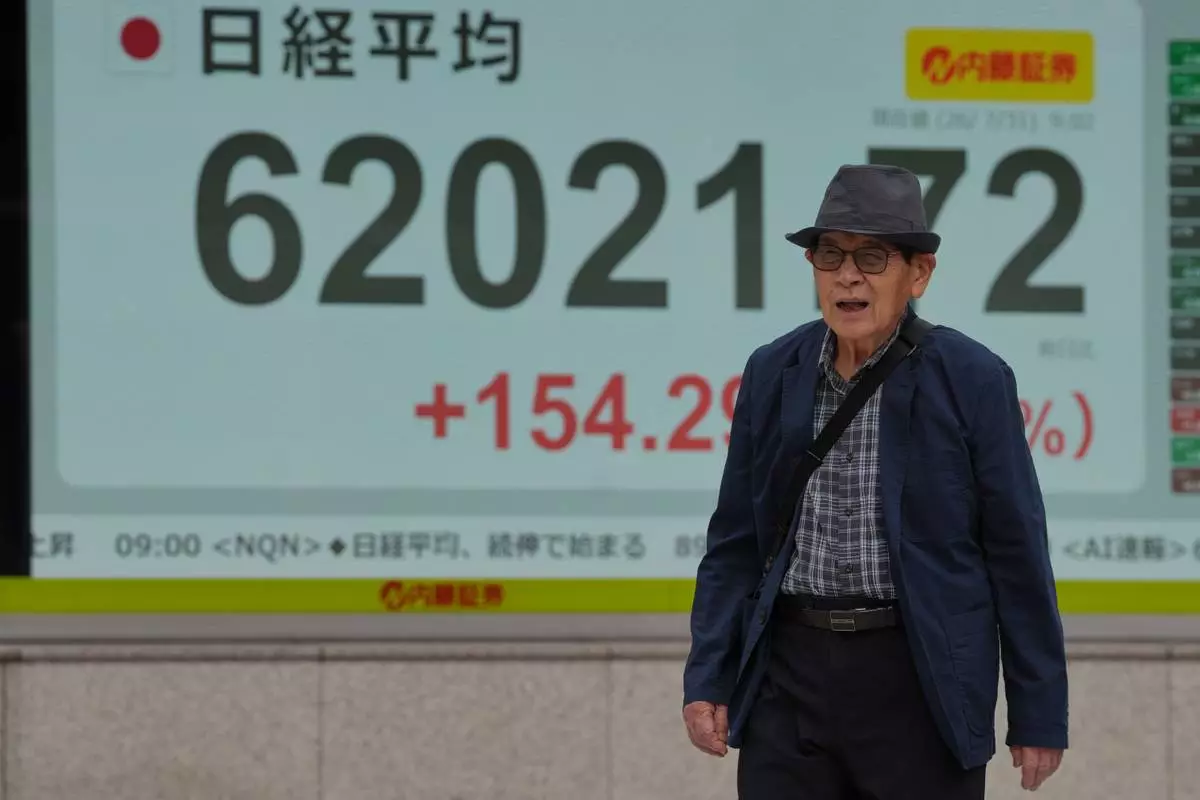
A person walks past an electronic board showing Japan's Nikkei index at a securities firm Friday, July 31, 2026. (AP Photo/Eugene Hoshiko)
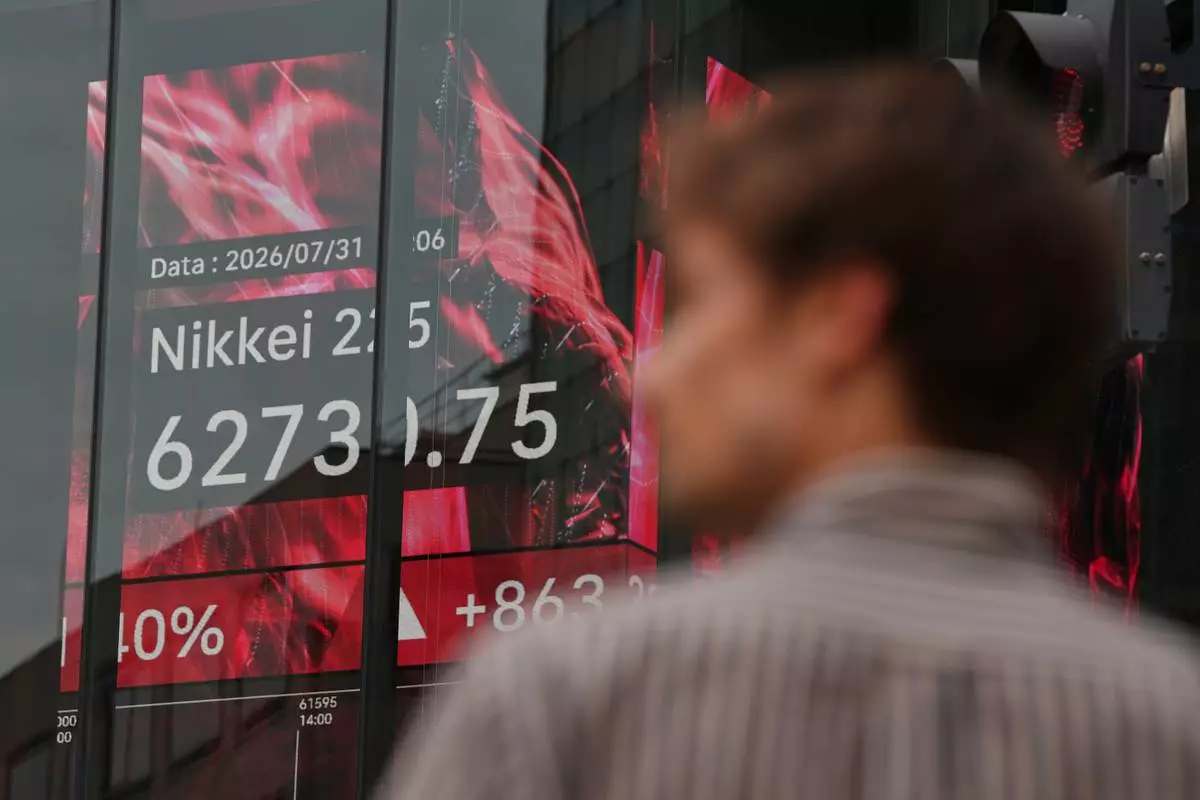
A person stands near an electronic board showing Japan's Nikkei index at a securities firm Friday, July 31, 2026. (AP Photo/Eugene Hoshiko)
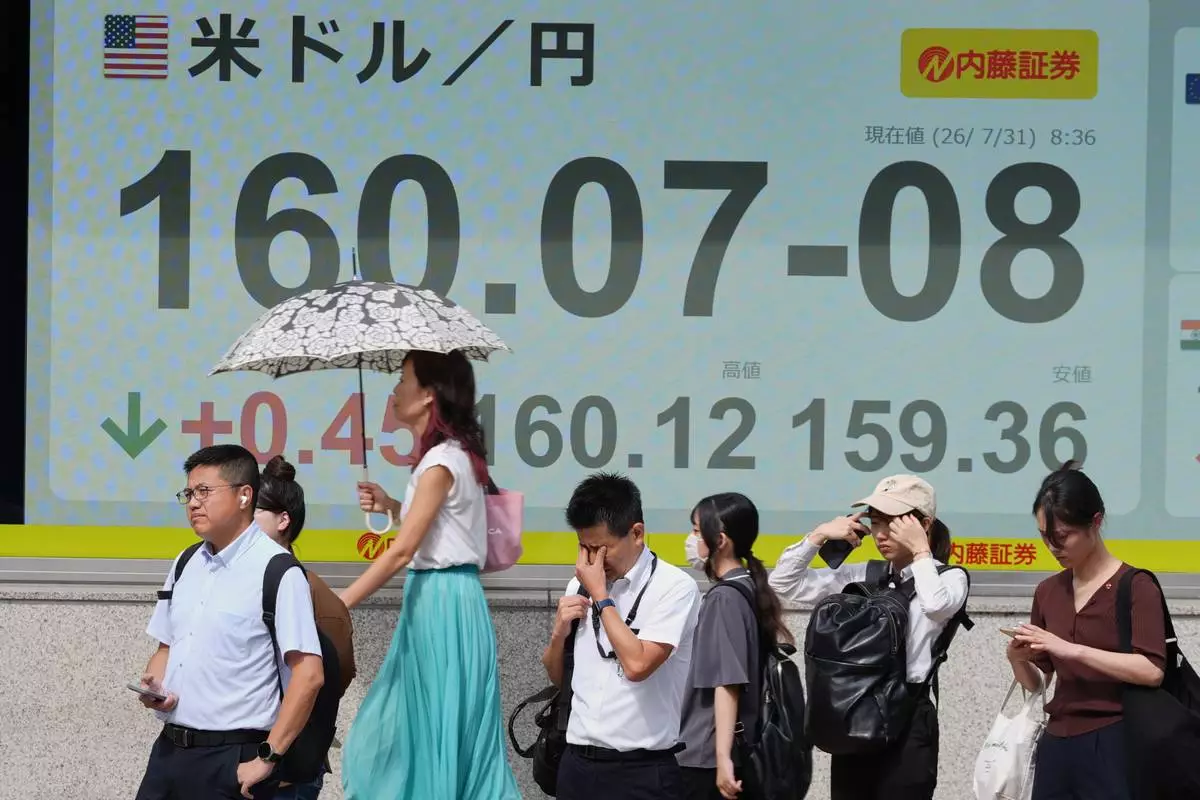
People stand in front of the electronic board showing Japanese Yen and U.S. Dollar exchange rate at a securities firm Friday, July 31, 2026. (AP Photo/Eugene Hoshiko)
FILE - A Microsoft logo is seen on a screen as people listen at an event at Microsoft headquarters, May 20, 2024, in Redmond, Wash. (AP Photo/Lindsey Wasson, File)
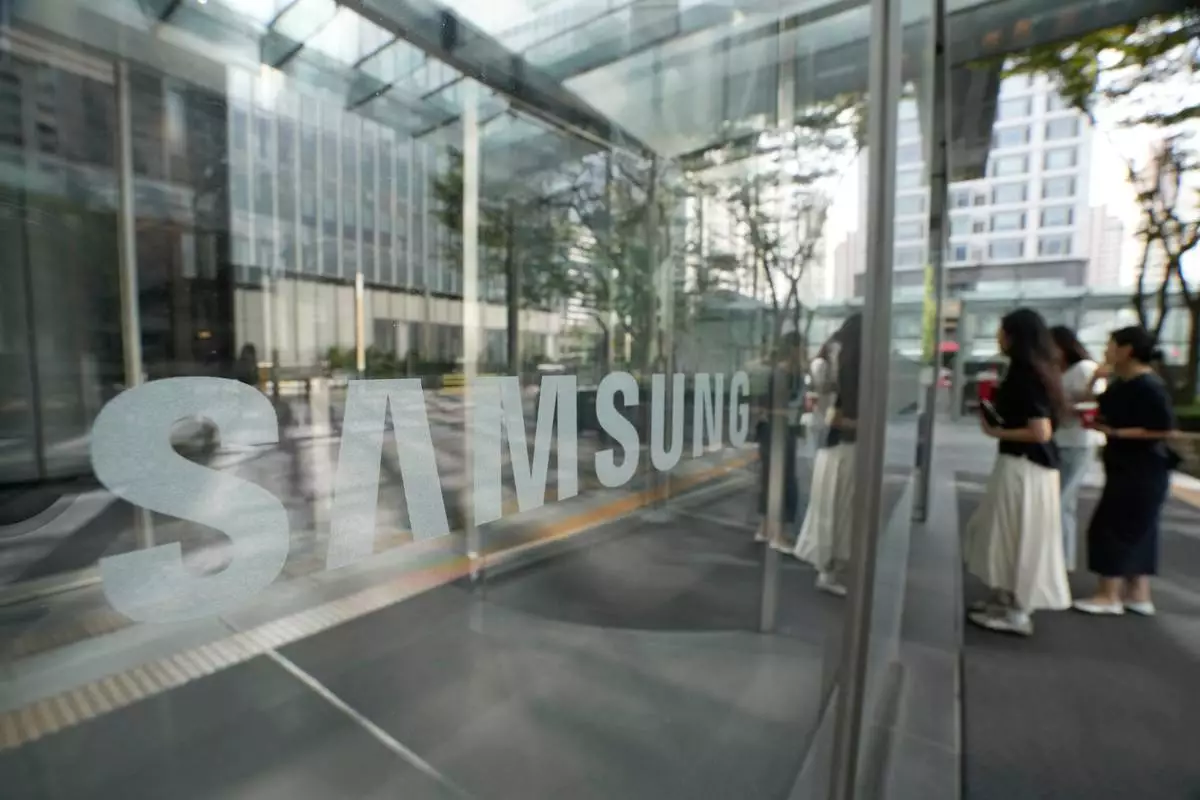
The logo of the Samsung Electronics Co. is seen at its office in Seoul, South Korea, Thursday, July 30, 2026. (AP Photo/Ahn Young-joon)

A currency trader talks on the phone at the foreign exchange dealing room of the Hana Bank headquarters in Seoul, South Korea, Thursday, July 30, 2026. (AP Photo/Ahn Young-joon)