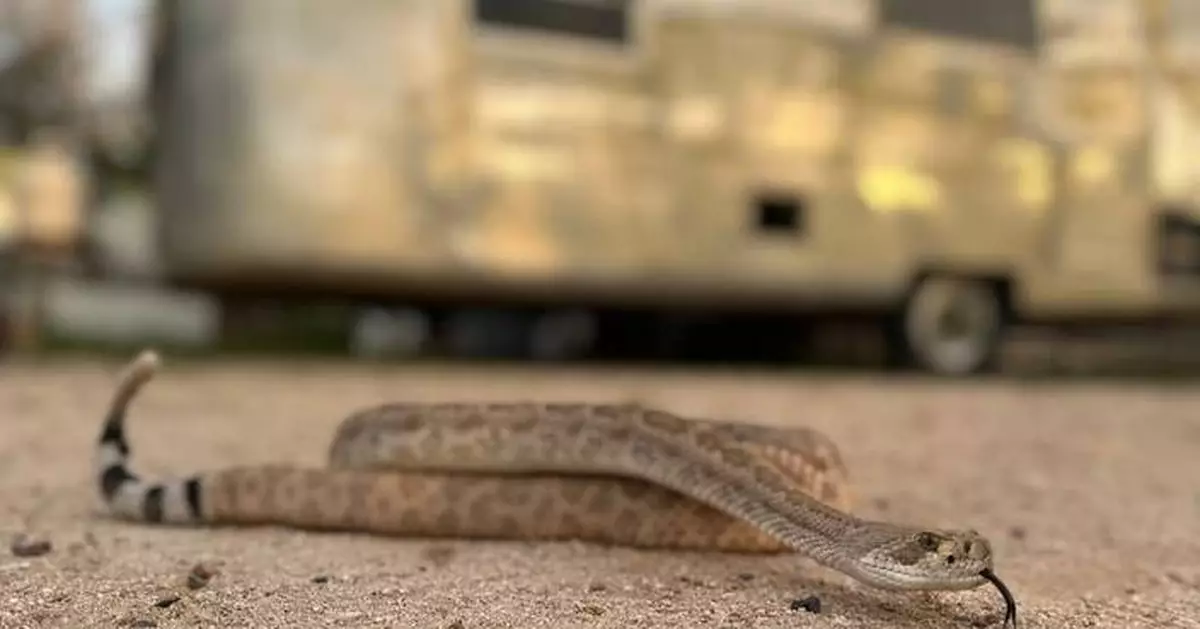
TUCSON, Ariz. (AP) — Ripley, a medium-sized dog with a strong prey drive, curiously approached Brian, a large western diamondback rattlesnake, until she got a quick zap on the neck meant to simulate a venomous viper’s bite.
Suddenly, the 2-year-old blue heeler mix wanted nothing to do with Brian’s textured brown skin or furiously rattling tail. Ripley was never in danger because Brian had his venom glands removed years ago.
Dog trainer J.J. Belcher of Sublime Canine in Tucson, Arizona, said the single shock delivered one recent morning from an electronic training collar should be sufficient to keep Ripley away from venomous snakes that can sicken or even kill a dog. Belcher said Ripley can come back in a year for a free training session to make sure the lesson stuck.
Ripley’s owners, Amber Schneider and Wendy Timm, said they opted for the training because the dog regularly hunts small animals.
“We have an acre of natural desert and respect all the snakes, but she’s very curious about wildlife,” said Timm. “We are doing this because we want to keep our dog safe.”
The American Society for the Prevention of Cruelty to Animals says as many as 150,000 dogs are bitten by venomous snakes each year in the United States. In the rattlesnake hot spot of Arizona, emergency veterinarian Dr. Sarah Carotenuto says the Veterinary Specialty Center of Tucson treats four to six dogs daily for rattlesnake bites, along with an occasional cat.
Training programs to protect canines from poisonous snakes are offered around the U.S., especially in the Western deserts, woods and grasslands that are home to western diamondbacks. The snakes can reach over 5 feet long (1.5 meters) and strike in less than a second when they feel threatened.
There are also classes from Illinois to Florida to guard animals against eastern diamondbacks, timber rattlers and other venomous snakes.
Carotenuto said the snakebite survival rate for pets is 94% with quick treatment, which can cost thousands of dollars depending on how much antivenom and hospitalization is needed.
“Do bring us your dog quickly, but please don’t bring us the snake!” emphasized Carotenuto. Some people have brought in the guilty snake, but it’s unnecessary to identify the exact species before administering antivenom effective against all kinds of rattlers.
Carotenuto, who teaches at the University of Arizona’s College of Veterinary Medicine, said she’s participating in a research study there into whether rattlesnake-aversion training works, and which method is most effective.
Like Belcher, most trainers insist that the use of the electronic collar is necessary to ensure a dog will avoid poisonous snakes.
“It’s a very fast and effective form of training,” said Belcher, who has traveled around the Western U.S. for more than two decades teaching rattlesnake avoidance to thousands of pet and working dogs, including search-and-rescue animals and the occasional police dog.
He acknowledged the growing debate about the use of electronic training collars, a method that the American Humane Society has opposed as cruel.
The ASPCA doesn’t explicitly oppose electronic collars, but insists they be used correctly.
“This type of training can be highly effective — however, we recommend that such training be conducted only under the guidance of a trainer knowledgeable in the principles of avoidance learning,” said Pamela Reid, vice president of ASPCA's behavioral sciences team.
“It is imperative to weigh the dog’s risk of a snakebite against the potential fallout from using an electronic collar,” she said.
Training a dog to come reliably when it’s called and to “leave it” when it is interested in something dangerous “can go a long way toward keeping a dog safe,” she said.
Belcher said he has developed an alternative positive-reinforcement program for clients who are squeamish about electronic collars, but nobody has wanted to pay the $2,500 he would charge for the multiple sessions. A single visit with the collar costs $125.
Another trainer, Mike Parmley in Salt Lake City, teaches as many as 500 dogs every year, usually in small classes of four to six. He uses an electronic collar set on a low level, emphasizing, “You don’t have to shock the hell out of the dog.”
He aims to help dogs steer clear of the Salt Lake area's Great Basin rattlesnakes.
“They are a pretty big problem up here in the foothills,” said Parmley, who owns Barley’s Canine Recreation Center. “They came out a lot earlier this year because of a trend of warmer weather, and we had more than 100 dogs signed up by early June.”
Here are some tips from trainers and veterinarians for protecting your dog:
— Learn about snakes in your area. Venomous snakes exist across the U.S., with various rattler species not only in the West but as far east as New York and North Carolina.
— Clear your yard of long grass and other foliage or debris that can attract small rodents hunted by snakes. Trimming back growth can eliminate hiding places.
— Stay on well-worn trails while hiking and keep your dog on a leash.
— Don’t let your guard down even if your dog has had avoidance training. A viper can surprise and attack a person or pet without warning.
— Seek emergency care immediately if your dog is bitten because the venom will move quickly through its body, destroying tissue.
For more AP pet stories, go to https://apnews.com/hub/pets
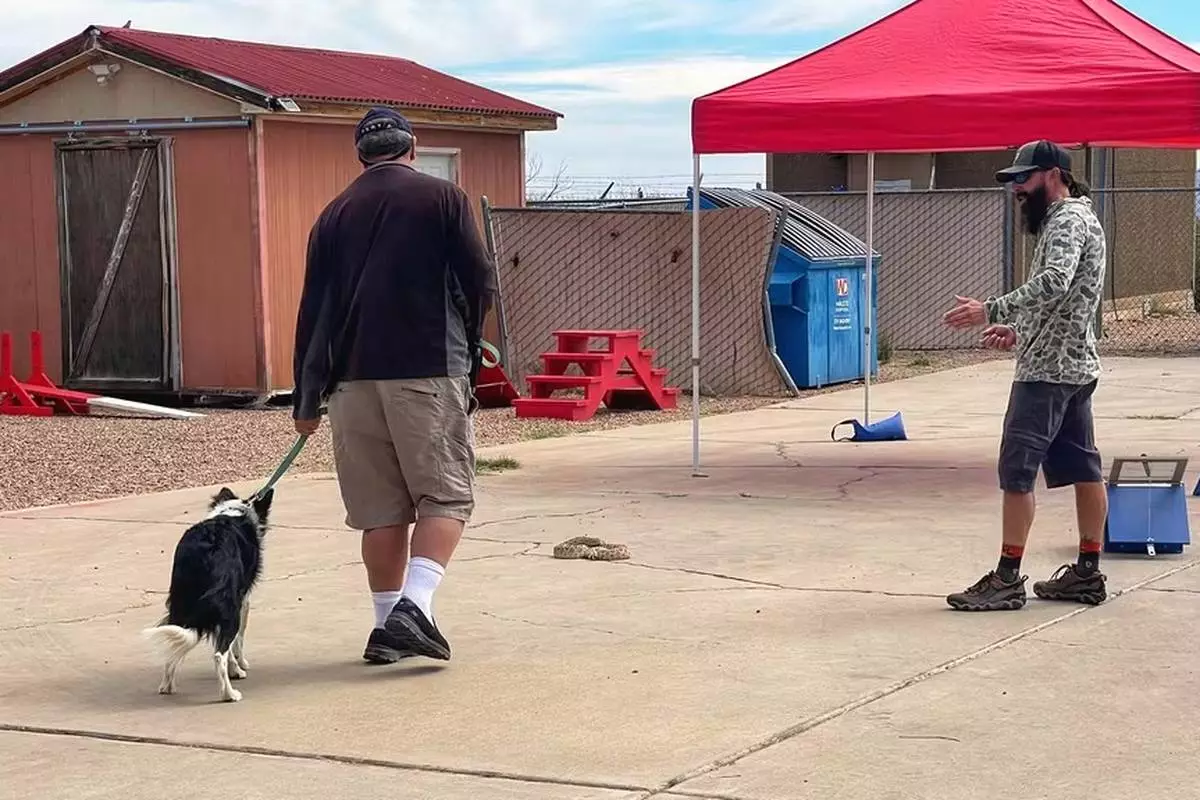
This undated photo shows trainer J.J. Belcher, right, using his western diamondback rattler Brian to teach a dog to avoid poisonous snakes in Tucson, Ariz. (J.J. Belcher via AP)
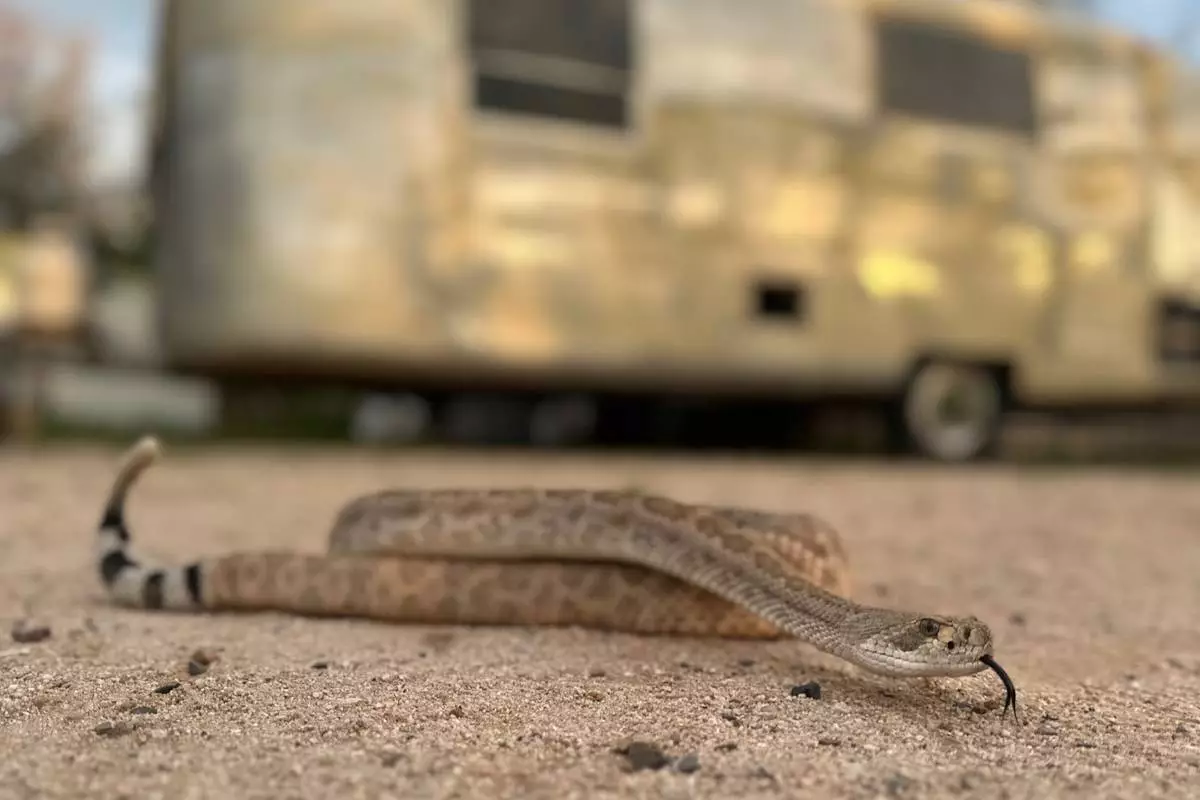
In this undated photo shows Brian the rattlesnake, which is used to train dogs to avoid dangerous vipers, in Tucson, Ariz. (J.J. Belcher via AP)