AMSTERDAM (AP) — Hundreds of thousands of people lined Amsterdam's canals on Saturday to watch the city's canal boat parade, the highlight of an annual Pride festival that this year comes just a week after a deadly attack on a Pride event in Berlin.
Openly gay Dutch Prime Minister Rob Jetten, dressed in a white shirt, black life vest and gold necklace, waved to crowds as he sailed in a small boat through the colorfully decorated parade of 80 vessels, waving to participants and spectators as techno music pumped from speakers along the route.
Click to Gallery
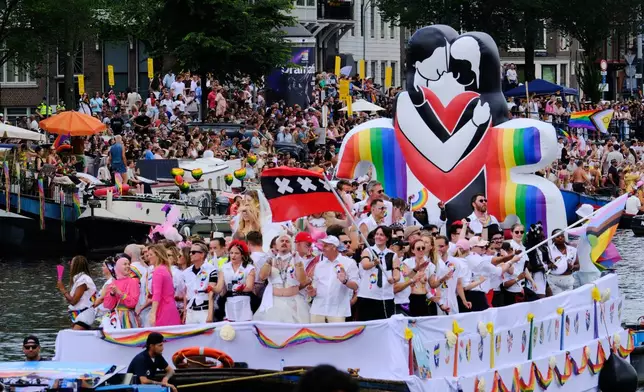
Two inflatable caricature balloons depicting U.S. President Donald Trump, center, and Russian President Vladimir Putin, left, as people line the Dutch capital's historic canals Saturday, Aug. 1, 2026, to watch the Amsterdam Pride Canal Parade. (AP Photo/Patrick Post)
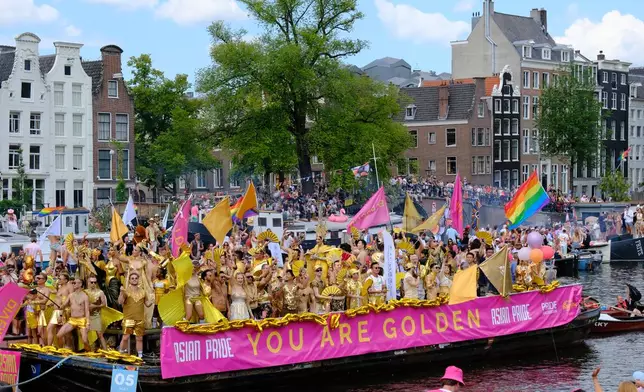
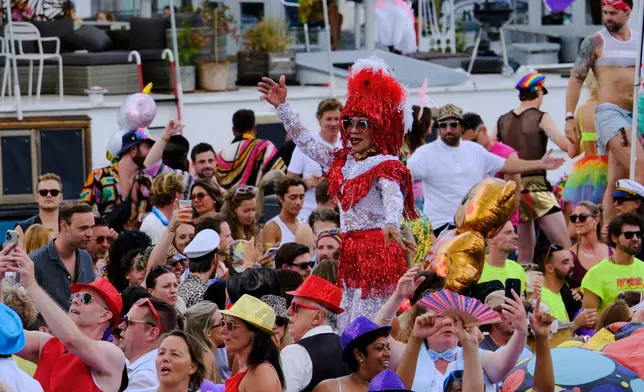
People celebrate atop a boat on one of the Dutch capital's historic canals, Saturday, Aug. 1, 2026, during the Canal Parade, the most popular event of the Pride Amsterdam festival. (AP Photo/Patrick Post)
Netherland's Prime Minister Rob Jetten, center, waves as he rides on a boat, Saturday, Aug. 1, 2026, during the Canal Parade, the most popular event of the Pride Amsterdam festival that attracts tens of thousands of visitors to the city. (AP Photo/Patrick Post)
People celebrate atop a boat on one of the Dutch capital's historic canals, Saturday, Aug. 1, 2026, during the Canal Parade, the most popular event of the Pride Amsterdam festival. (AP Photo/Patrick Post)
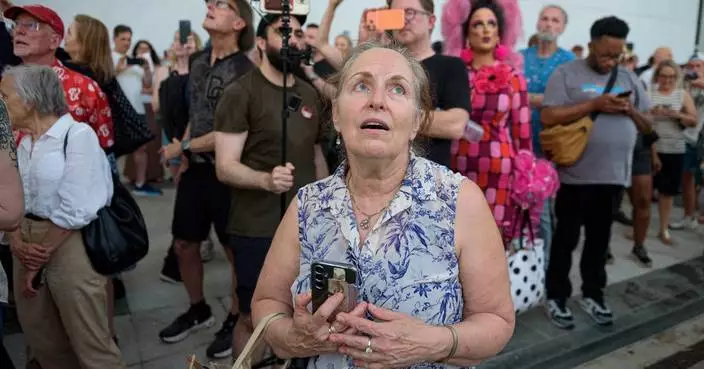
People line the Dutch capital's historic canals Saturday, Aug. 1, 2026, to watch the Canal Parade, the most popular event of the Pride Amsterdam festival that attracts tens of thousands of visitors to the city. (AP Photo/Patrick Post)
People celebrate atop a boat on one of the Dutch capital's historic canals, Saturday, Aug. 1, 2026, during the Canal Parade, the most popular event of the Pride Amsterdam festival. (AP Photo/Patrick Post)
The colorful floating parade came a week after the Berlin attack left one person dead and 29 injured. A suspect, Abdul Ballout, was suspected of driving a van into a crowd near the festival Saturday night before apparently stabbing others with a machete in what authorities believe was an Islamic extremist attack. Ballout was shot and killed by police during a confrontation on Sunday in a suburb of the city, authorities said.
Jetten, the first Dutch prime minister to ever take part in the boat parade, said in a video posted on X that the event was more important than ever because worldwide the freedom and security of the LGBTQ+ community "is under pressure with new discriminatory legislation, lack of safety on the street or last week's terrible attack in Berlin.”
Amsterdam Mayor Femke Halsema said in the aftermath of the German attack that authorities in the city would “where necessary take extra measures that visitors will hopefully notice as little as possible.”
Motorboats carrying police officers cruised the canals and a helicopter hovered overhead as Saturday’s parade got underway.
The Berlin attack also cast a shadow Saturday over Hamburg’s Pride parade, one of Germany’s biggest, where increased security was noticeable as dozens of trucks made their way through Germany’s second-biggest city.
Police and organizers said about 300,000 attended, compared with about 260,000 people last year, German news agency dpa reported. Hamburg’s police chief said earlier this week that roughly twice as many officers as last year would protect the event.
The boat parade is the traditional highlight of Amsterdam's Pride. This year it coincides with a World Pride celebration that also is being hosted by the Dutch capital.
Rod Lugtenburg, 55, from Toronto, said he came to Amsterdam for World Pride. He stood on the city's famous Skinny Bridge wearing a T-shirt emblazoned with a rainbow maple leaf as the boats passed.
“For me, it's about acceptance, being able to be who you are,” he said.
“I have Dutch heritage and I have always loved the fact that the Dutch have been leading the way” in acceptance and rights for the LGBTQ+ community. “And Canada is right behind them, so I'm very proud.”
The joyful event happened against a backdrop of rising reports of verbal and physical assaults on members of the LGBTQ+ community in the Netherlands, that has long been considered a haven of tolerance. On Friday, a court in Amsterdam convicted a man of using discriminatory language at a Pride event in the city earlier in the week. He was ordered to do 40 hours of community service.
Boats taking part in the parade included vessels representing the Dutch government ministries, the military and police as well as LGBTQ+ organizations and clubs.
The Netherlands LGBTQ+ rights group COC, which is celebrating its 80th anniversary this year, had a boat in the parade carrying a manifesto calling for progress in the fight for human rights for LGBTQ+ people in the Netherlands. It also carried a portrait of activist Marsha P. Johnson, who took part in the Stonewall rebellion when patrons at the New York inn of that name resisted a police raid on June 28, 1969. The raid helped usher in a new, militant phase of the movement for gay rights.
Another boat carried two giant inflatable likenesses of U.S. President Donald Trump and his Russian counterpart Vladimir Putin. The two figures, dressed in Delft blue and white costumes and each clutching a tulip, leaned toward one another for a kiss, in the style of pottery figurines that are a staple of tourist souvenir stores throughout the Netherlands.
The group that created the boat said on its website said they re-imagined the symbol of love and unity “not to provoke, but to pause power for a moment and highlight something human.”
Associated Press writer Geir Moulson in Berlin contributed.

Two inflatable caricature balloons depicting U.S. President Donald Trump, center, and Russian President Vladimir Putin, left, as people line the Dutch capital's historic canals Saturday, Aug. 1, 2026, to watch the Amsterdam Pride Canal Parade. (AP Photo/Patrick Post)
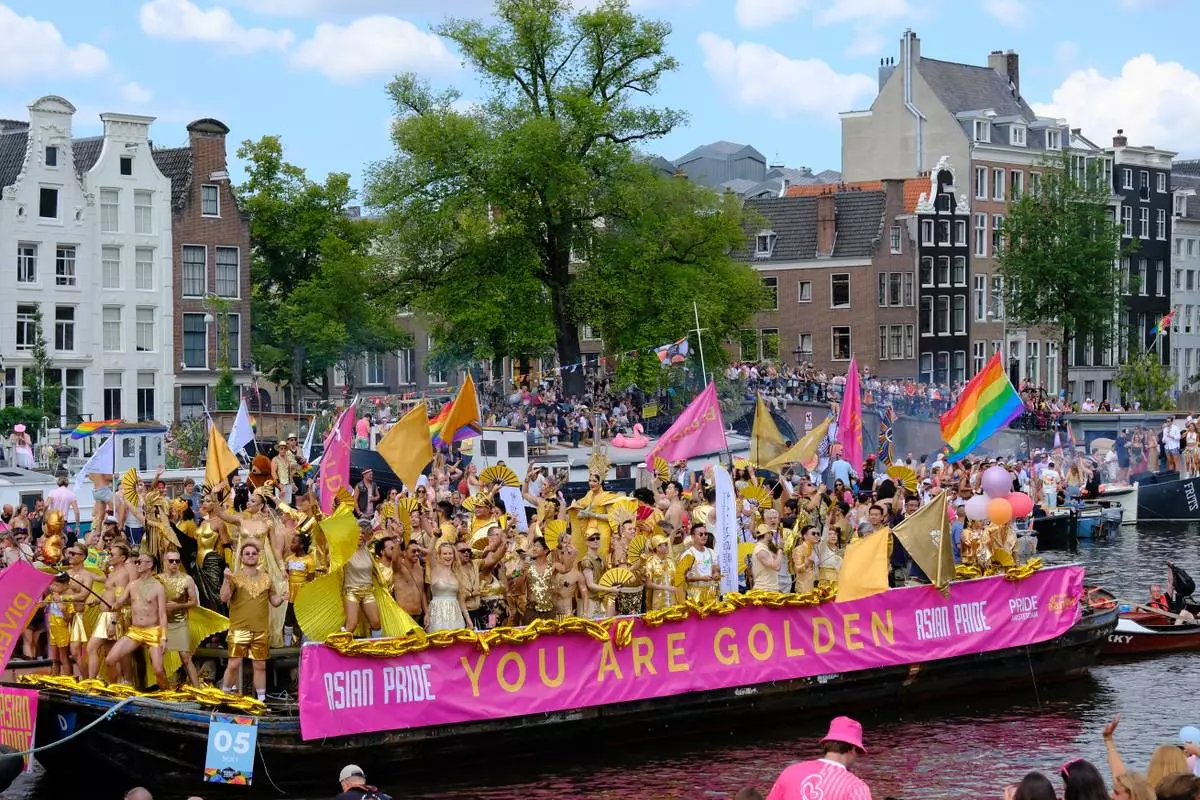
People celebrate atop a boat on one of the Dutch capital's historic canals, Saturday, Aug. 1, 2026, during the Canal Parade, the most popular event of the Pride Amsterdam festival. (AP Photo/Patrick Post)

Netherland's Prime Minister Rob Jetten, center, waves as he rides on a boat, Saturday, Aug. 1, 2026, during the Canal Parade, the most popular event of the Pride Amsterdam festival that attracts tens of thousands of visitors to the city. (AP Photo/Patrick Post)

People celebrate atop a boat on one of the Dutch capital's historic canals, Saturday, Aug. 1, 2026, during the Canal Parade, the most popular event of the Pride Amsterdam festival. (AP Photo/Patrick Post)
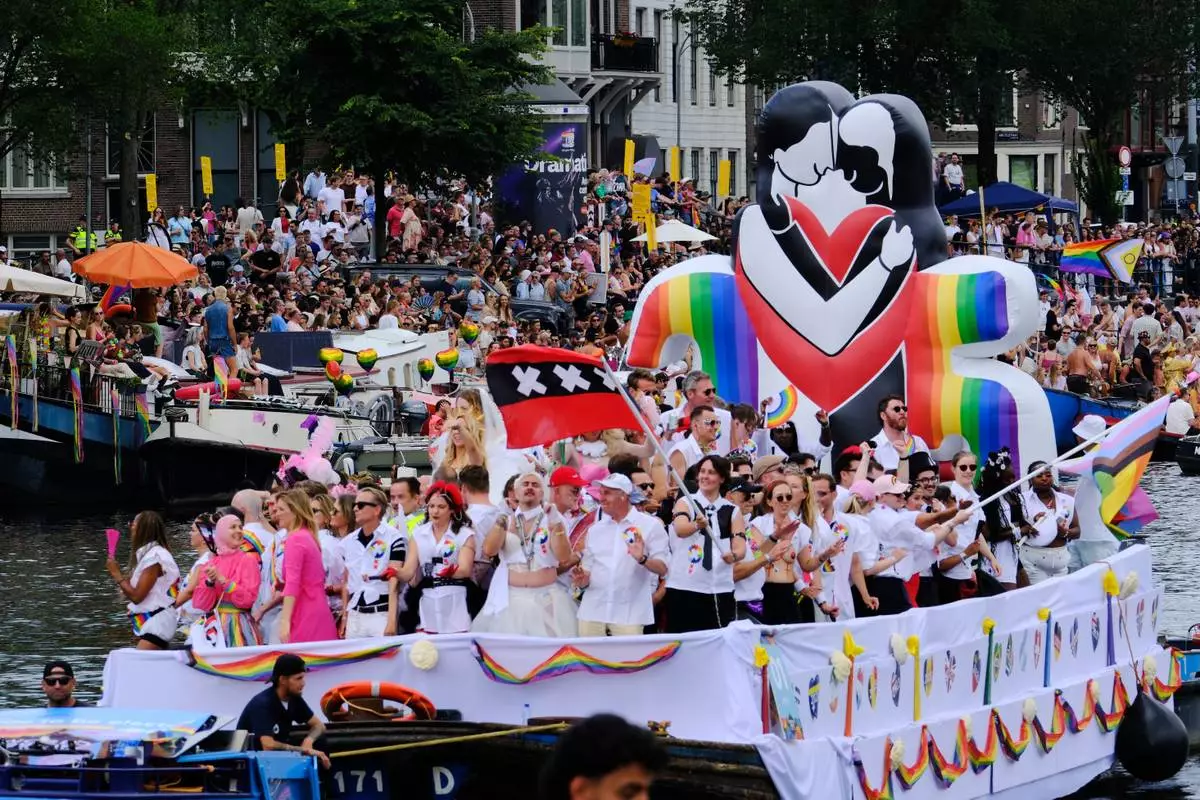
People line the Dutch capital's historic canals Saturday, Aug. 1, 2026, to watch the Canal Parade, the most popular event of the Pride Amsterdam festival that attracts tens of thousands of visitors to the city. (AP Photo/Patrick Post)
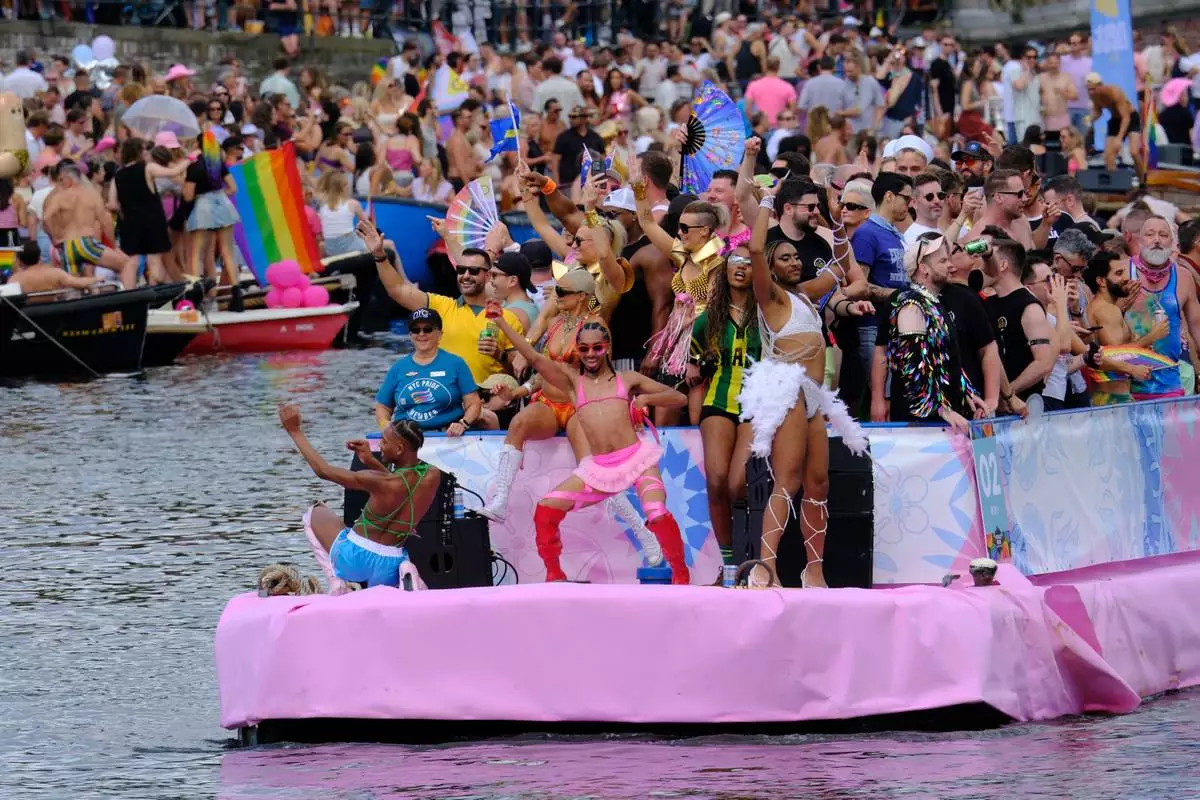
People celebrate atop a boat on one of the Dutch capital's historic canals, Saturday, Aug. 1, 2026, during the Canal Parade, the most popular event of the Pride Amsterdam festival. (AP Photo/Patrick Post)
LACANAU, France (AP) — Europe’s wildfire crisis fractured along starkly different fronts Sunday: gale-force winds drove flames deeper into the Athens region and forced fresh evacuations, France guarded a still-burning scar four times the size of Paris against renewed spread, and Spain’s major fires finally stopped advancing.
The center of immediate danger was Greece. Flames spread through western Attica, the capital's surrounding region, threatening villages and an industrial district outside Megara as violent gusts prevented firefighting aircraft from collecting water from the sea.
Earlier this week, two firefighters died battling a blaze on Crete, while a third was killed in a separate fire in the Peloponnese.
But the easing emergency farther west offered little sense of an ending. France’s largest wildfire remained contained after 224,000 people were forced to flee in what may have been the largest civilian evacuation outside wartime. Active pockets still burned across 420 square kilometers (162 square miles) of devastated forest, thousands remained unable to return home, and nearly 3,000 firefighters were deployed against that blaze and a second, still-uncontained fire in Provence.
Fires in France and Spain alone have driven roughly a third of a million people from homes and vacation sites, emptied communities at the height of the European summer and stretched firefighters, aircraft and emergency services across simultaneous disasters.
Europe entered 2026 after its worst wildfire year on record, when more than 10,000 square kilometers (3,860 square miles) burned. Wildfires cause estimated economic losses of about 2 billion euros in a typical year, according to the European Commission’s Joint Research Centre.
The crisis is unfolding on the world’s fastest-warming continent. Europe has warmed at more than twice the global average since the 1980s, according to the European Union’s Copernicus Climate Change Service.
Human-caused climate change doubled the likelihood of the extreme fire conditions that fueled the French blazes this year, scientists at World Weather Attribution calculated in a rapid analysis while the fires were still burning.
Nearly 500 firefighters and 23 aircraft were deployed, but gale-force winds fanned the fire while crippling the response. The winds drove flames through dry forest and made it impossible for some aircraft to descend to the sea for water.
Smoke rose over the mountains as evacuation orders were issued for the communities of Kandili, Agia Skepi and Toutouli. Prime Minister Kyriakos Mitsotakis was briefed on the operation, with authorities particularly concerned about Porto Germeno, a seaside community on the Gulf of Corinth.
Elsewhere, flames burned dangerously close to homes on Kefalonia, forcing evacuations from inland villages as aircraft made water drops over the Ionian tourist island. On the mainland, nearly 50 firefighters, a specialist wildfire unit, 16 engines and a helicopter battled another blaze near Nea Tenedos in Halkidiki.
The fire began Friday near Agios Vasileios before sweeping toward Porto Germeno and into the forested mountains west of Athens.
Firefighters evacuated 254 people by sea from Agios Vasileios on Friday and another 12 from Porto Germeno on Saturday — an escape route of last resort in coastal communities where fire and smoke can cut the few roads out.
Wildfire meteorologist Theodore Giannaros estimated Saturday that the blaze had affected 40 to 50 square kilometers (15 to 19 square miles), though authorities had not issued an official figure.
“A pristine forest, a paradise, was surrendered to the hands of the fire,” local farmer Minas Tzortzanis said Saturday. “There are no words to explain what has happened. Destruction. Total destruction.”
The danger carried grim resonance in Greece. In 2018, a wind-driven wildfire trapped residents in the seaside community of Mati, east of Athens, killing 104 people in Europe’s deadliest wildfire this century.
In southwestern France, the Gironde megafire remained contained Sunday but was still burning after scorching 420 square kilometers (162 square miles) of forest in just 10 days.
“The fire is now fixed, which does not mean that the fire is extinguished,” the Gironde prefecture said Sunday, using the French firefighting term for a blaze whose advance has been stopped and whose perimeter has been contained.
The region remained under France’s highest red forest-fire alert. Dry conditions and soaring temperatures around Bordeaux, combined with afternoon winds, created a continued risk of renewed flames.
In Le Porge, one of the communities hardest hit, local officials said about 150 homes were destroyed.
Mechanic Matthieu Plessis returned Saturday to the ruins of a home that had been in his family for seven generations.
“There are places I don’t even recognize anymore,” he said. “You don’t even know what was here anymore, or who lived where.”
Additional firefighters from Ukraine, Lithuania and French Polynesia were expected Sunday and Monday to reinforce the operation.
Hundreds of kilometers away, nearly 1,500 firefighters were battling a separate fire in the southeastern Var department that tore through roughly 18 square kilometers (7 square miles) in little more than a day.
Authorities said the fire in the Gros Bessillon hills was stabilized Sunday morning, meaning its perimeter had not expanded overnight. But unlike the Gironde fire, it had not yet been declared contained.
Firefighting aircraft supported crews working to keep the flames away from villages among the vineyards, olive groves and wooded hills of the region known as Green Provence.
About 2,500 people were evacuated as the fire threatened communities.
The blaze was the fourth major fire to strike the central Var since July 19. A separate, smaller fire near Brignoles earlier in the week forced Hollywood actor George Clooney and his family, along with about 700 other residents, to evacuate before it was brought under control.
Prime Minister Sébastien Lecornu said France’s wildfires were generally under control but cautioned that conditions remained highly changeable.
He also announced that a national coordinator attached to the prime minister’s office would oversee reconstruction in fire-ravaged areas.
More than 1,170 square kilometers (452 square miles) have burned across France since the beginning of the year.
Spain’s major fires — part of a season that has killed at least 13 people, produced the country’s largest recorded wildfire and prompted a national emergency — were no longer advancing Sunday.
In Zamora province near the Portuguese border, more than 20 ground and aerial units remained deployed around the Fermoselle fire, maintaining its perimeter and guarding against flare-ups in the rugged Arribes del Duero landscape. Most evacuees had returned home, according to local media.
Prime Minister Pedro Sánchez has called for a national pact to confront wildfires, warning that climate change is making them more destructive.
—
Adamson reported from Paris. Michael Varaklas in Megara, Greece contributed to this report
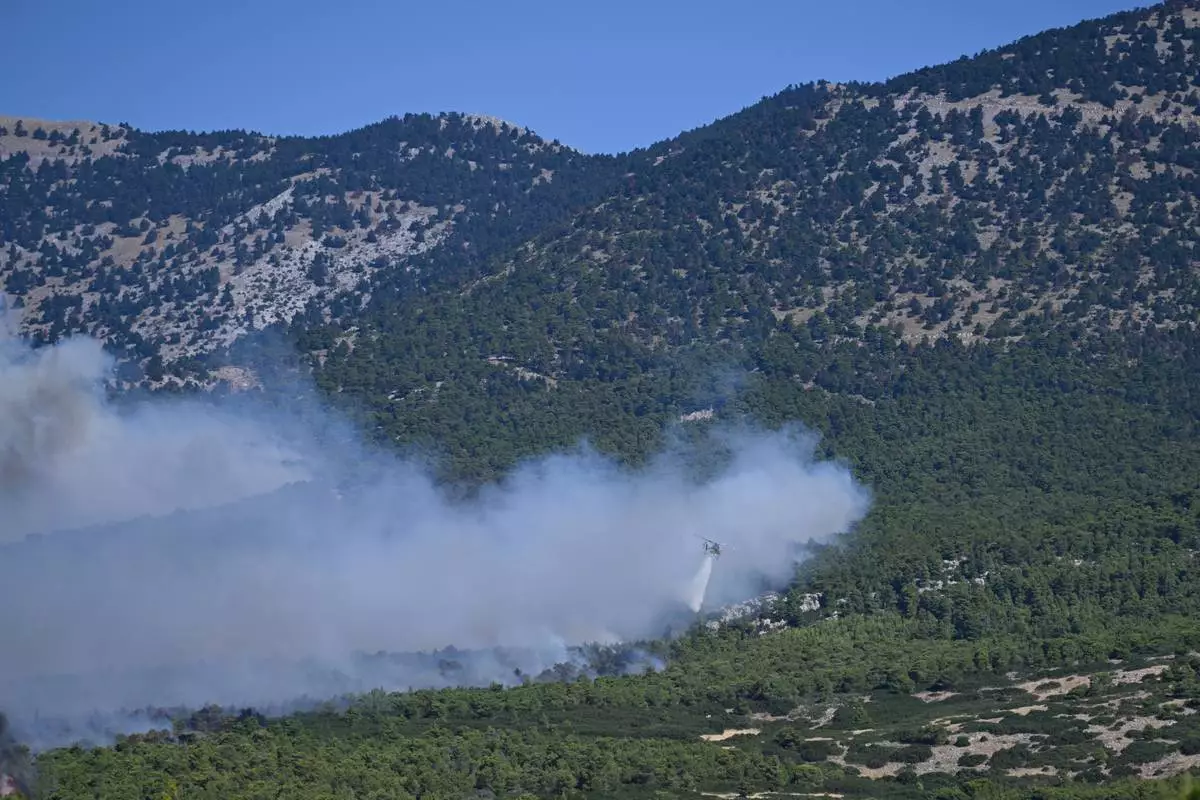
A firefighting helicopter drops water over a smoke-filled forest during a wildfire near Porto Germeno, northwest of Athens, Greece, Sunday, Aug. 2, 2026. (AP Photo/Michael Varaklas)
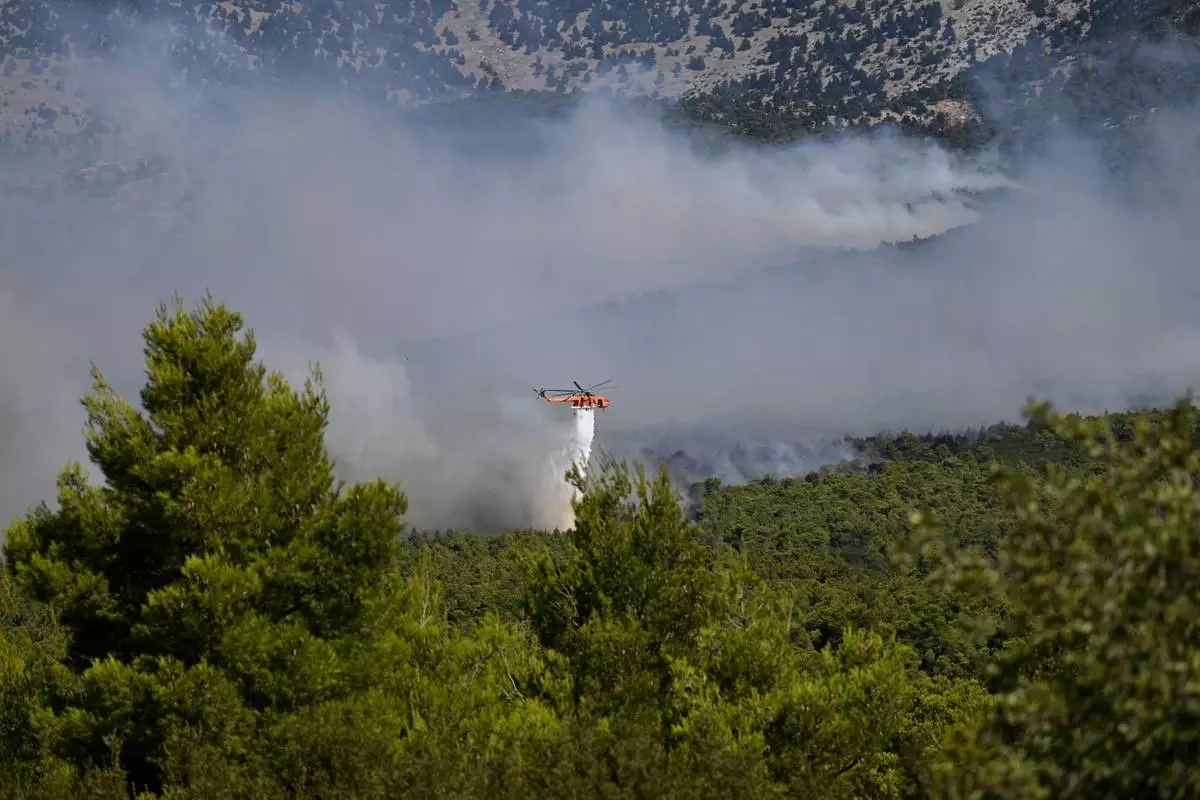
A firefighting helicopter drops water over a smoke-filled forest during a wildfire near Porto Germeno, northwest of Athens, Greece, Sunday, Aug. 2, 2026. (AP Photo/Michael Varaklas)
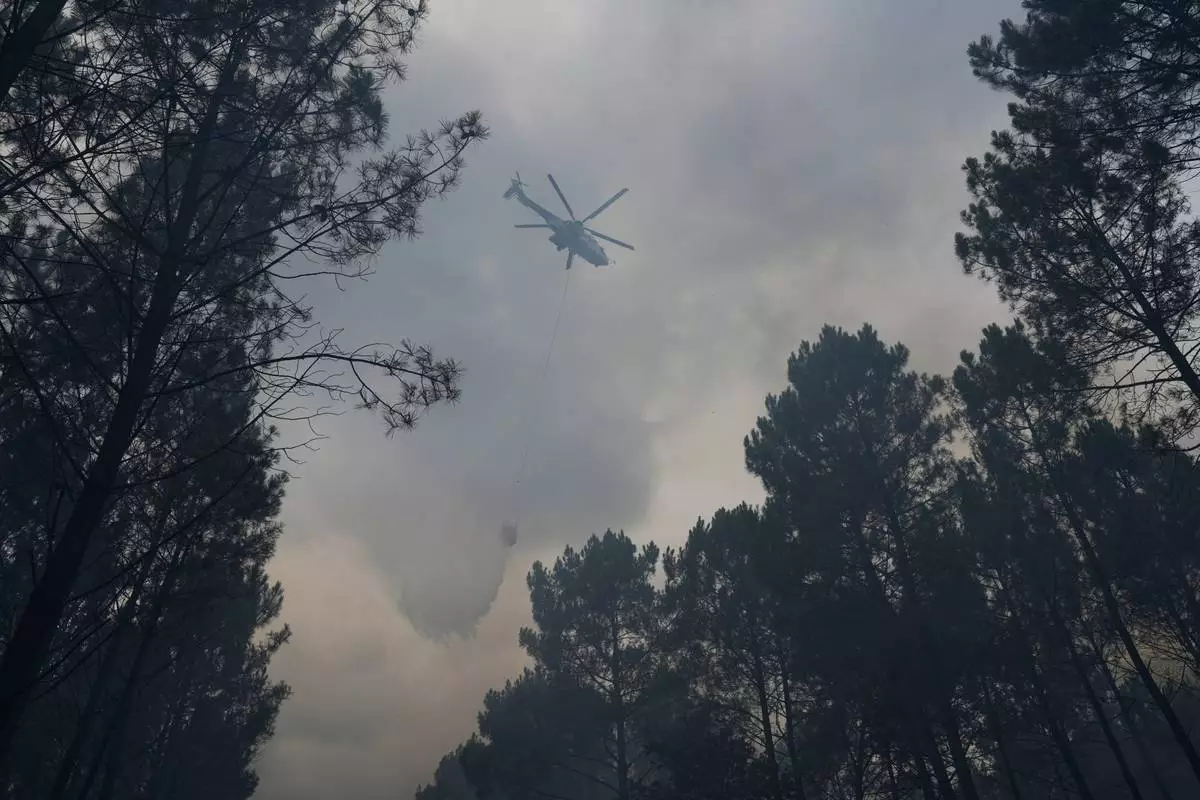
An Airbus helicopter lets a Bambi Bucket full of water go over a firezone, near Blagon, southwestern France, Friday, July 31, 2026. (AP Photo/Baz Ratner)
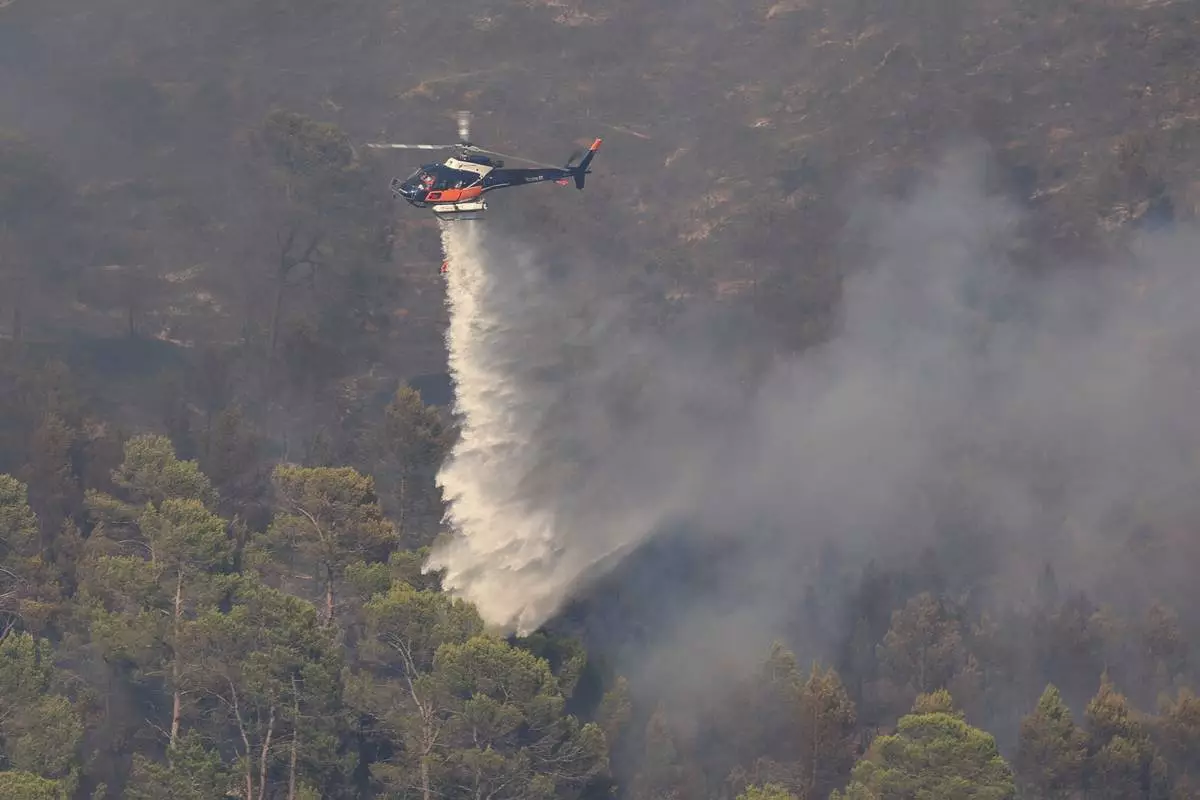
A firefighting helicopter releases water over a wildfire near Correns, southeastern France, Saturday, Aug. 1, 2026. (Clement Mahoudeau/Pool Photo via AP)
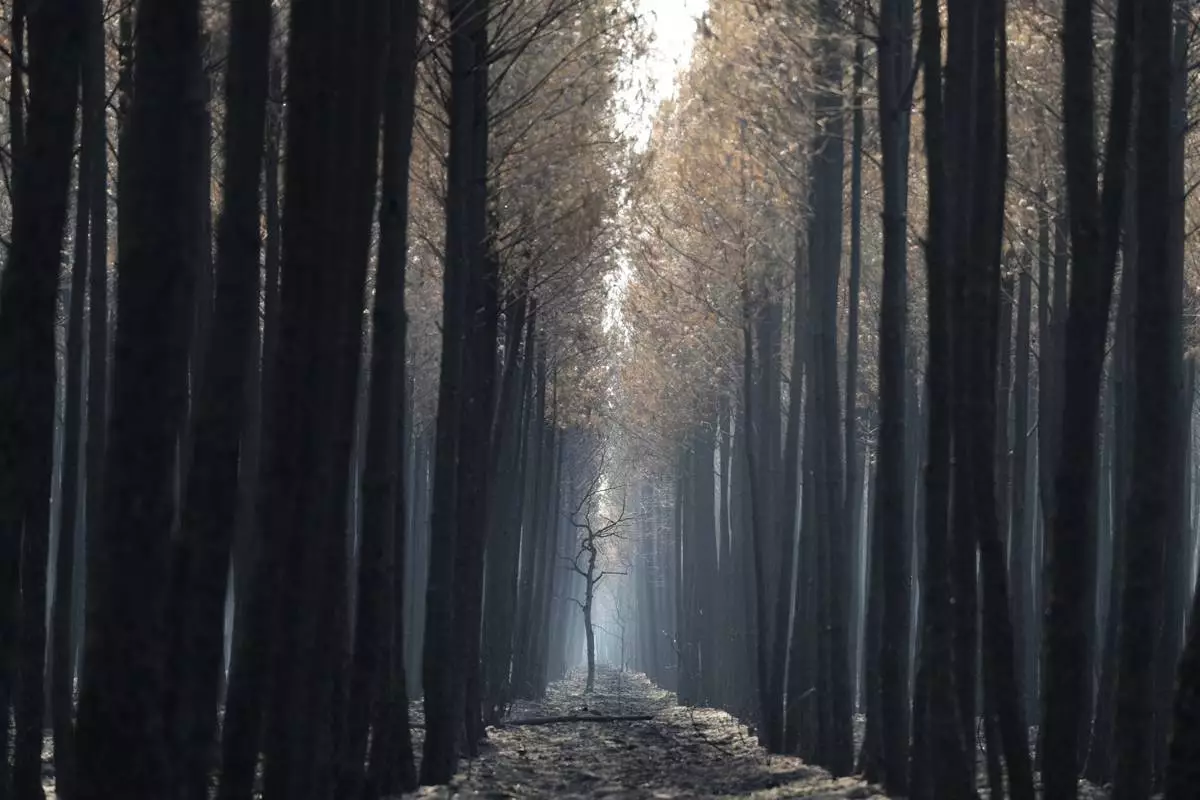
The light flows through a charred forest near Ares, during wildfires in southwestern France, Thursday, July 30, 2026. (AP Photo/Baz Ratner)
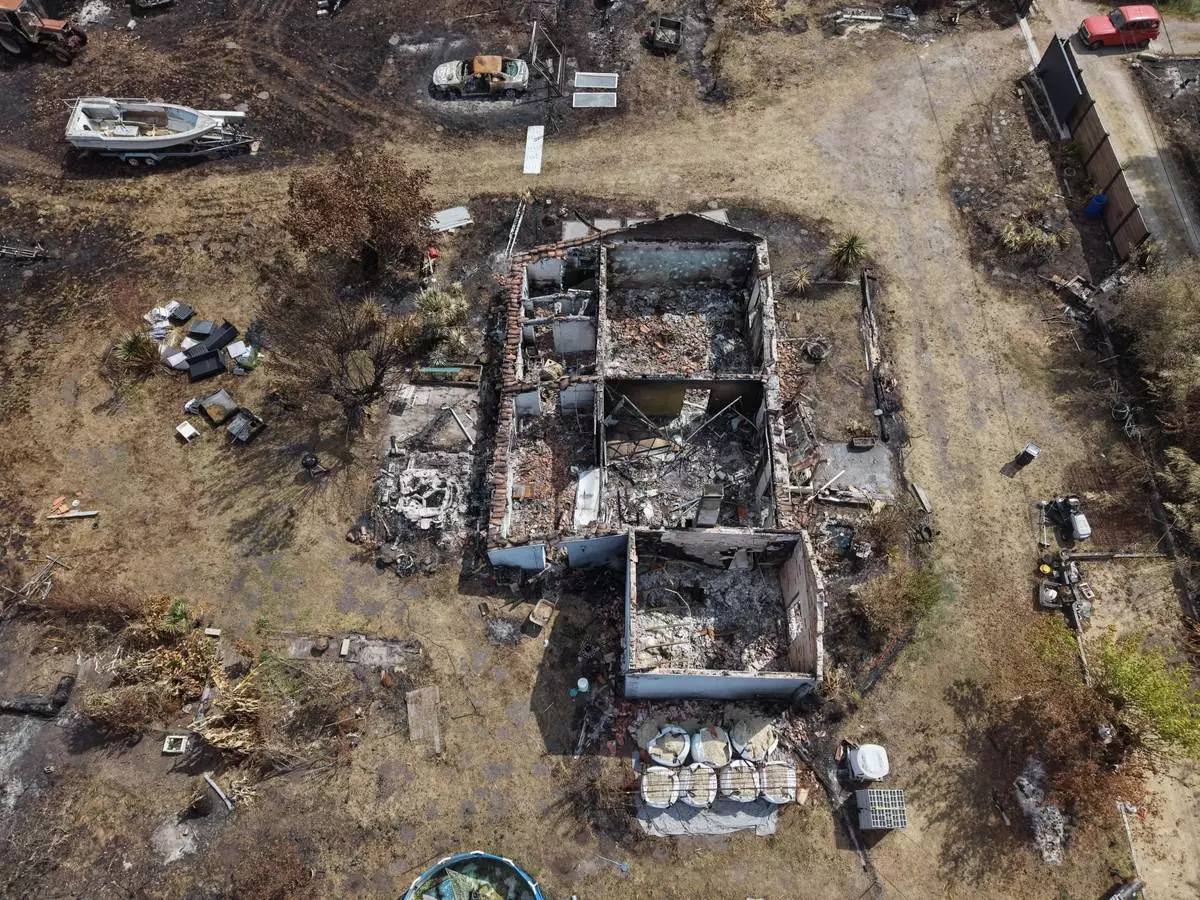
An aerial view of a homes burned by wildfires in Le Porge, southwestern France, Saturday, Aug. 1, 2026. (AP Photo/Nicolas Garriga)
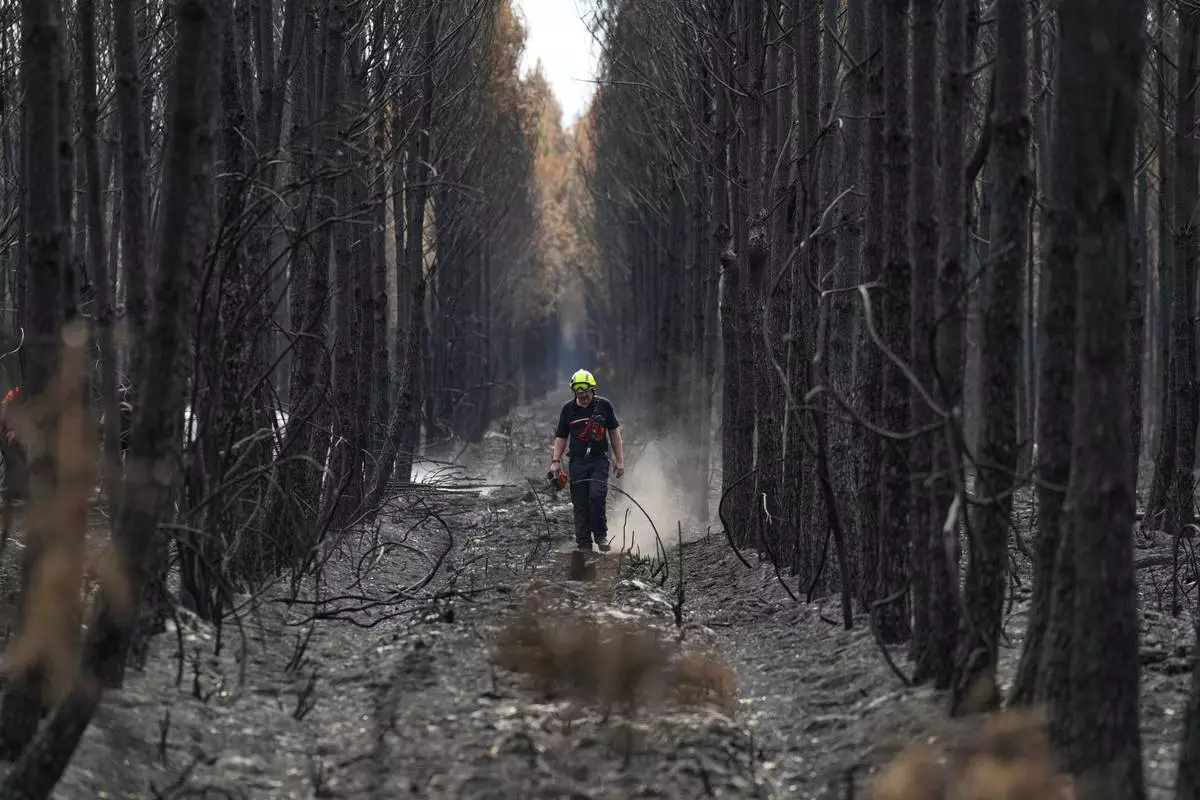
A firefighter walks through a charred forest near Blagon, during wildfires, southwestern France, Friday, July 31, 2026. (AP Photo/Baz Ratner)