The Hong Kong section of the Huanggang Port was officially put into trial operation on July 31, with authorities on both sides of the Shenzhen-Hong Kong border now conducting multiple rounds of testing and drills in preparation for the full commissioning of the upgraded cross-border point.
The Hong Kong Special Administrative Region (SAR) government opened the new section to the media on August 1 for a site visit.
The new port, which will maintain 24-hour operations, features a "one-stop" clearance model combining "co-location of border inspection" and "joint inspection, one-time release" procedures. The design capacity stands at 200,000 passenger trips per day, with potential to reach 300,000 after the opening of the MTR Northern Link branch line.
To handle high passenger volumes, the port is equipped with 134 self-service channels and 68 manual counters. The self-service channels support both card-reading and facial recognition for fast clearance, enabling travelers to complete immigration procedures for both Shenzhen and Hong Kong in one go. Under the new system, clearance time for travelers will be reduced from 30 minutes to approximately five minutes.
The port also features 26 inspection booths for private cars and cross-border coaches. Drivers can use a "joint one-stop" lane where all required checks, including temperature screening, document verification and biometric data collection, are completed through an integrated device, with data shared in real time between five departments on both sides. "To ensure safe and orderly clearance, we have conducted more than 100 tests of various types, including traffic tests, anti-terrorism drills and stress tests," Tang Ping-keung, secretary for security of the Hong Kong SAR Government told the press.
"This innovative 'co-location' model, combined with the completion of the Huanggang Port infrastructure, will play an important role in implementing the 15th Five-Year Plan, particularly in helping Hong Kong better integrate into and serve the country's overall development," said Starry Lee Wai-king, president of the Legislative Council of the Hong Kong SAR.
The new clearance model is expected to significantly enhance connectivity between Shenzhen and Hong Kong, accelerate the integration of the Guangdong-Hong Kong-Macao Greater Bay Area, and boost the region's high-quality development.
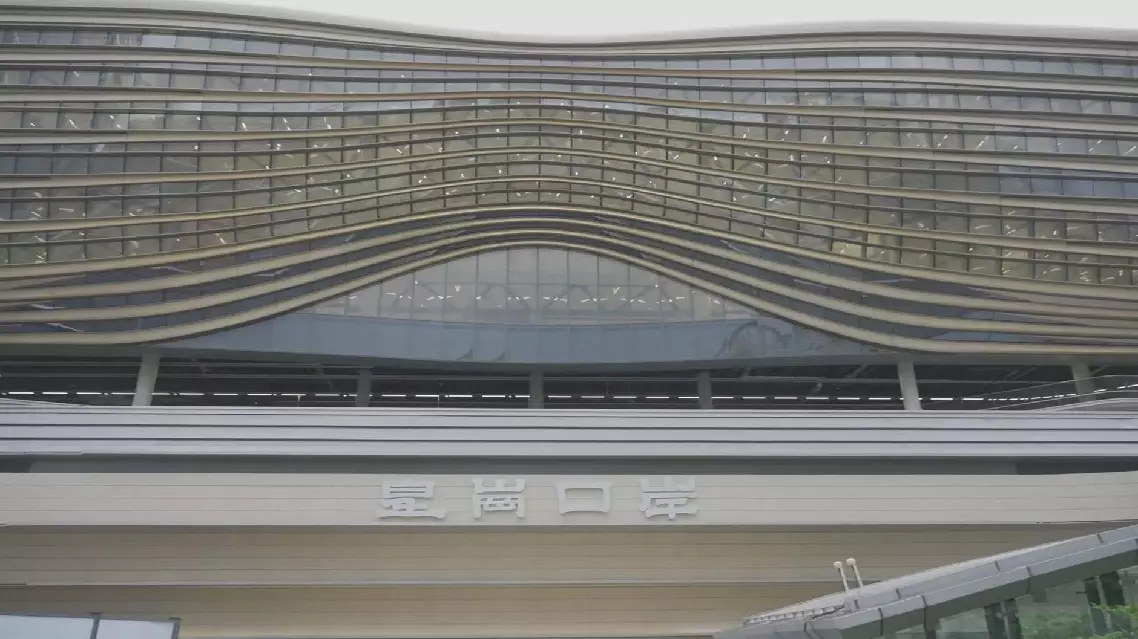
HK section of Huanggang Port begins trial operation under streamlined clearance procedures