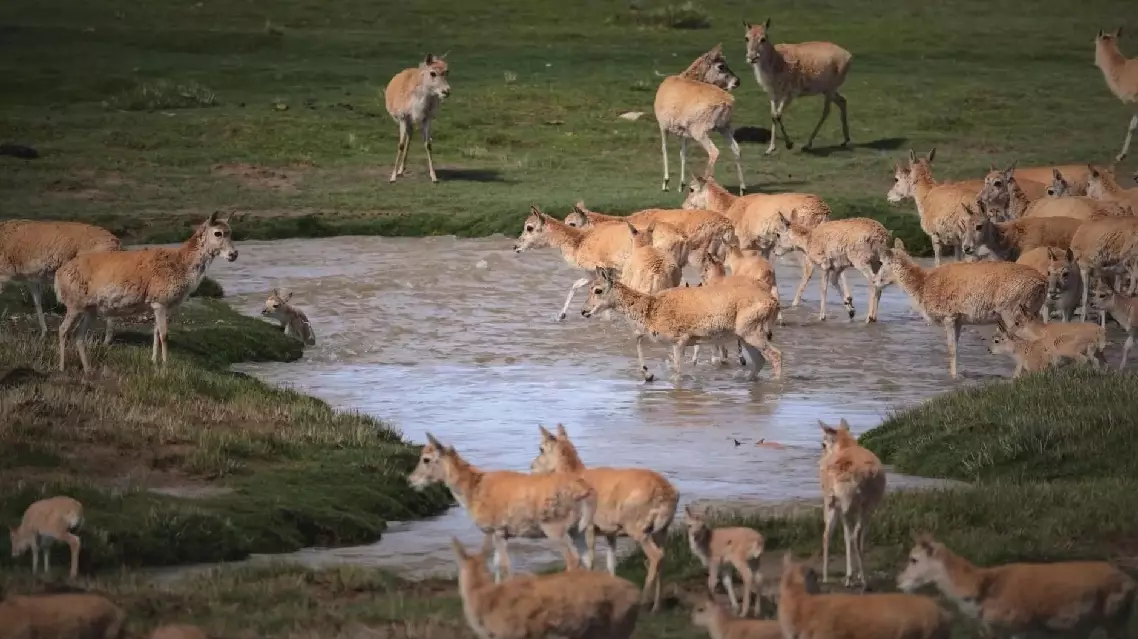
Rangers stationed in southwest China's Xizang Autonomous Region are once again braving freezing mountain waters to rescue Tibetan antelope calves during the species' annual return migration, helping one of the world's largest Tibetan antelope populations safely cross a dangerous river in the heart of the Changtang National Nature Reserve.
Nyima County, located within the Changtang National Nature Reserve, is one of the major migration corridors for Tibetan antelopes. Every July, female antelopes return with their newborn calves, forming herds of more than 100,000 animals.
The Senlong Zangbo River, a fast-flowing glacial river along the migration route, poses one of the greatest challenges for young calves, many of which are less than a month old and unable to leap across the swift current.
Each migration season, rangers from the Cuoluomu management station patrol key sections of the river, diving into the water at roughly 6 degrees Celsius to intercept calves swept away by the current.
At an altitude of more than 5,200 meters, even a few minutes in the icy water can be fatal for the young animals.
Most rescued calves recover quickly and reunite with their mothers, while weaker or injured ones receive further care.
"Although it is part of the nature's law of survival of the fittest, seeing a mother Tibetan antelope anxiously waiting for her baby fills me with an indescribable sense of sadness," said Tsewang, one of the rangers at Cuoluomu management station.
One calf rescued this year suffered a broken leg while attempting to cross the river. Rangers immobilized the injured limb using wooden splints and bandages before taking the animal back to their temporary camp for further care.
The Cuoluomu management station currently has 14 rangers divided into two teams, each stationed in the area for one month during the migration season.
To facilitate rescue operations, they set up a temporary base near the river.
One ranger fell ill after repeated rescue missions in the freezing water but said saving the calves was his instinct.
"I caught a cold while entering the river to rescue Tibetan antelopes, but that's not a big deal. I'll recover after taking some medicine. However, if the lambs are swept away by the current, they will only face death. So I instinctively jumped into the water to rescue them," he said.
Tibetan antelope guardians brave icy river to protect migrating calves in Xizang