Displaced Palestinians and local analysts are weighing prospects for an end to the conflict and a return to normal life as reports emerge that Hamas has initially agreed to disarm under a U.S.-brokered ceasefire deal.
U.S. President Donald Trump said Thursday that the so-called Board of Peace had reached an agreement for the "complete disarmament" of Hamas and other armed groups in Gaza, calling it a key step toward a new phase of governance in the Palestinian enclave.
According to Trump, the agreement would be implemented in phases. Once disarmament is completed, Israeli forces would withdraw, while an International Stabilization Force (ISF) and a new Palestinian police force would assume responsibility for Gaza's security.
Sources indicate that the disarmament could carry weight only if Israel also agrees to the ceasefire terms, primarily withdrawing from areas its military has controlled over the past 10 months.
Hamas officials in exile and abroad have reportedly stated that the agreement's implementation could be conditioned on Israel fulfilling its obligations, mainly the withdrawal.
From Hamas, this would involve handing over its weapons to the Palestinian administration for the Gaza Strip or to the Palestinian committee for the administration of the Gaza Strip, which is expected to enter the territory in the coming days.
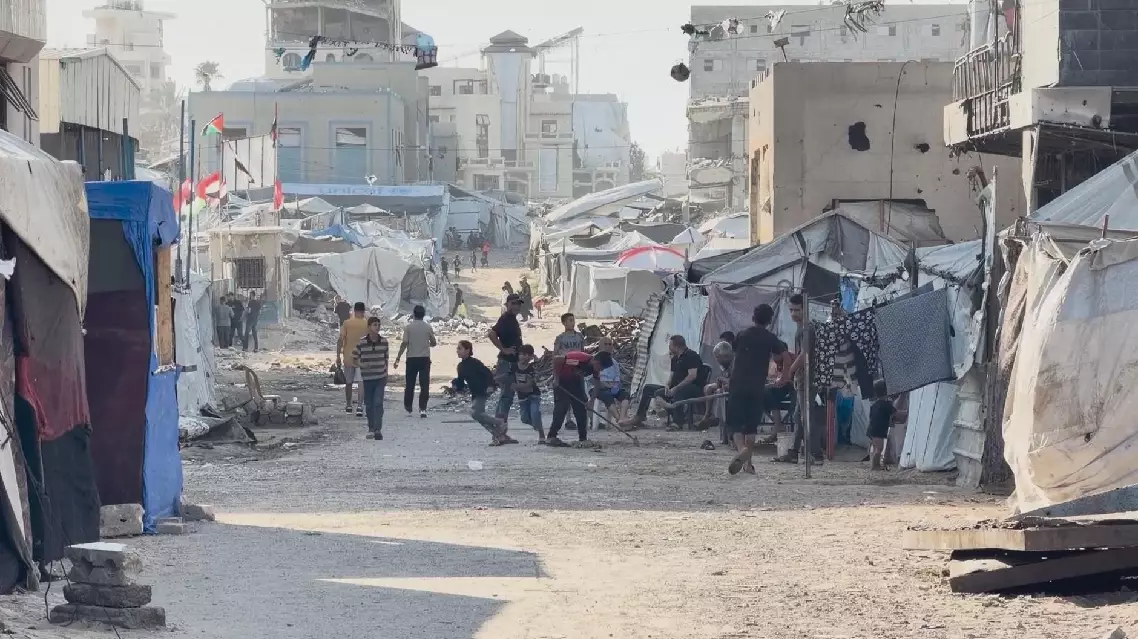
Displaced Palestinians expressed hopes for a ceasefire and a home return, while an analyst noted potential delays stemming from upcoming Israeli elections and raised questions about the national committee's entry and mobile home provisions.
"We hope they reach an agreement and that a ceasefire is achieved. We don't want anything to stand in the way. We are very happy at the thought of returning to our homes. Even with the bare minimum of necessities, it would be far better than continuing to sleep out here in the streets," said Huda Hamad, a displaced Palestinian.
"Israeli elections are expected to take place this October, so I believe there could be delays in implementing this agreement. However, it is clear there is strong American and Arab pressure from the mediators to bring this phase to an end and allow the National Committee to assume responsibility in Gaza. The key questions are: when will the committee actually enter Gaza, and will mobile homes also be allowed in?" said Mustafa Ibrahim, a Palestinian political analyst.
One displaced resident reflected on losing his livelihood over three years of the conflict.
"We hope the situation will change and that our lives become better. We have long appealed to the United Nations, Israel, and Arab countries to find a solution to our suffering. We thank God despite everything. Three years ago, I owned a restaurant and had a job. Today, I'm unemployed," said resident Sobhi Hajila.
Displaced Palestinians in Gaza voice hopes, fears as ceasefire talks progress