Syria's fragile water and power networks are being pushed to breaking point as the country's northeastern regions endures extreme heat this summer, with temperatures climbing to 40-50 degrees Celsius.
In the city of Hasakah, securing water and coping with blackouts have been a daily struggle for residents under summer heat.
On the streets, as soon as a water truck pulls over, residents would swarm it with buckets—many of them children.
"No matter where you go, you can see children carrying buckets and searching for water sources. They can only wait for the water truck to fill their buckets, because the existing water is simply not drinkable," said Abu Muhammad, a resident.
Aging water infrastructure, unstable electricity, and surging summer demand have reduced many communities in the city into thirst for safe drinking water.
"Don't forget that it is currently summer. The water situation in the eastern region is completely different from other provinces. Temperatures here are as high as 40 to 50 degrees Celsius. People simply cannot endure such extreme heat," said Ahmed Salim, another resident.
This is a water crisis. People put down their work just to get water, and in the end each person only gets one bucket of water.
Power outages compound the misery. Years of conflict have wrecked the grid, and fuel for private generators is increasingly expensive.
"The electricity supply is terrible. We can only rely on solar power now, otherwise there is no electricity at all. We only stock enough goods for two or three hours of business, because we don't want the goods to spoil, especially after sunset. The power would not be restored until the next day. Therefore we cannot use refrigerators or freezers. In fact, people cannot even get cold drinking water. As you know, we are located in the eastern region. Summer is extremely hot and temperatures are very high. Without fans, air conditioners, freezers, or refrigerators, we can hardly survive," said Abu Rami, owner of a dairy shop.
Only a small portion of households in Hasakah can afford generators, batteries, or solar panels.
"We have solar power at home, but I can only use it when there is plenty of sunlight, from morning until around 17:00. After that, I cannot use lights or even fans. My children and I can only spend the night in the courtyard or on the roof," said Khaled, a resident.
Damaged infrastructure and scarce fuel have trapped Hasakah in a cycle where blackouts cripple water pumps, and water shortages deepen the hardship. Until systemic repairs are completed, many residents have to spend the summer on a bucket of water a day and fleeting hours of electricity.
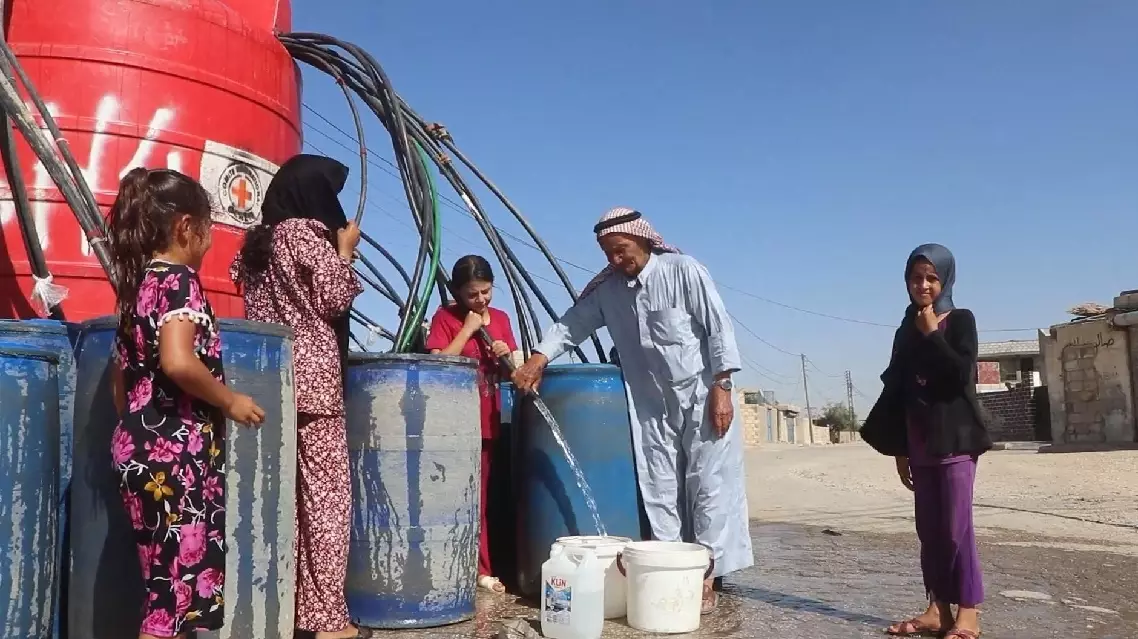
Extreme heat strains Syria's water, power systems
Extreme heat strains Syria's water, power systems
Extreme heat strains Syria's water, power systems