Skip to Content Facebook Feature Image

Brazil's Lula launches reelection bid as concerns rise over foreign interference

News

Brazil's Lula launches reelection bid as concerns rise over foreign interference
News

News

Brazil's Lula launches reelection bid as concerns rise over foreign interference

2026-08-03 06:36 Last Updated At:06:40

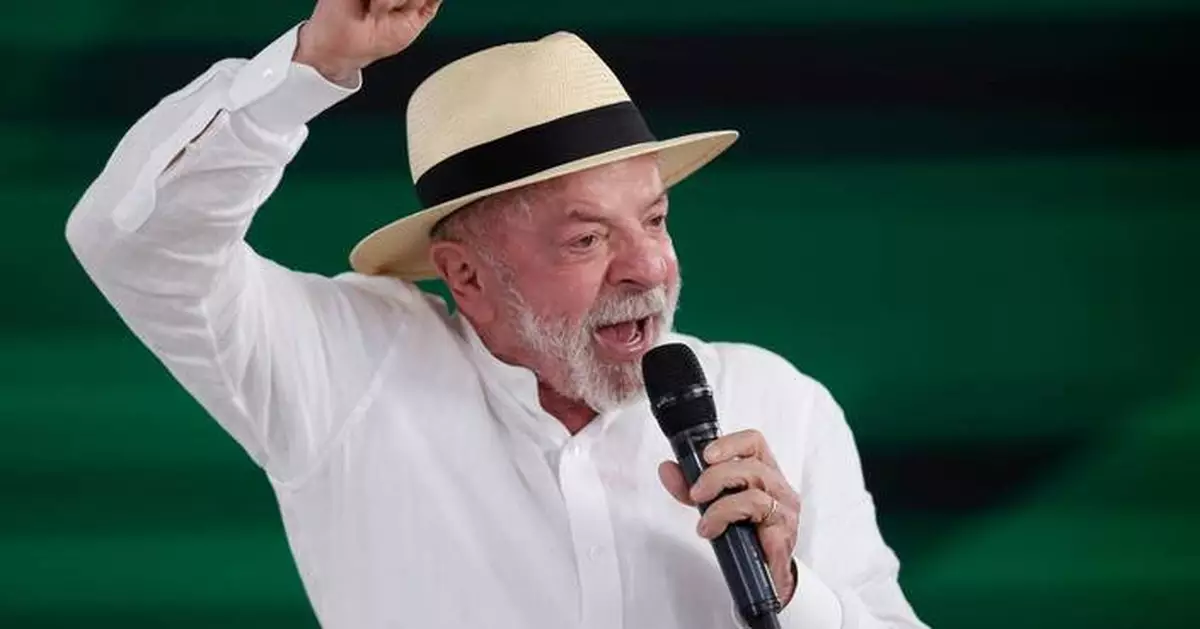
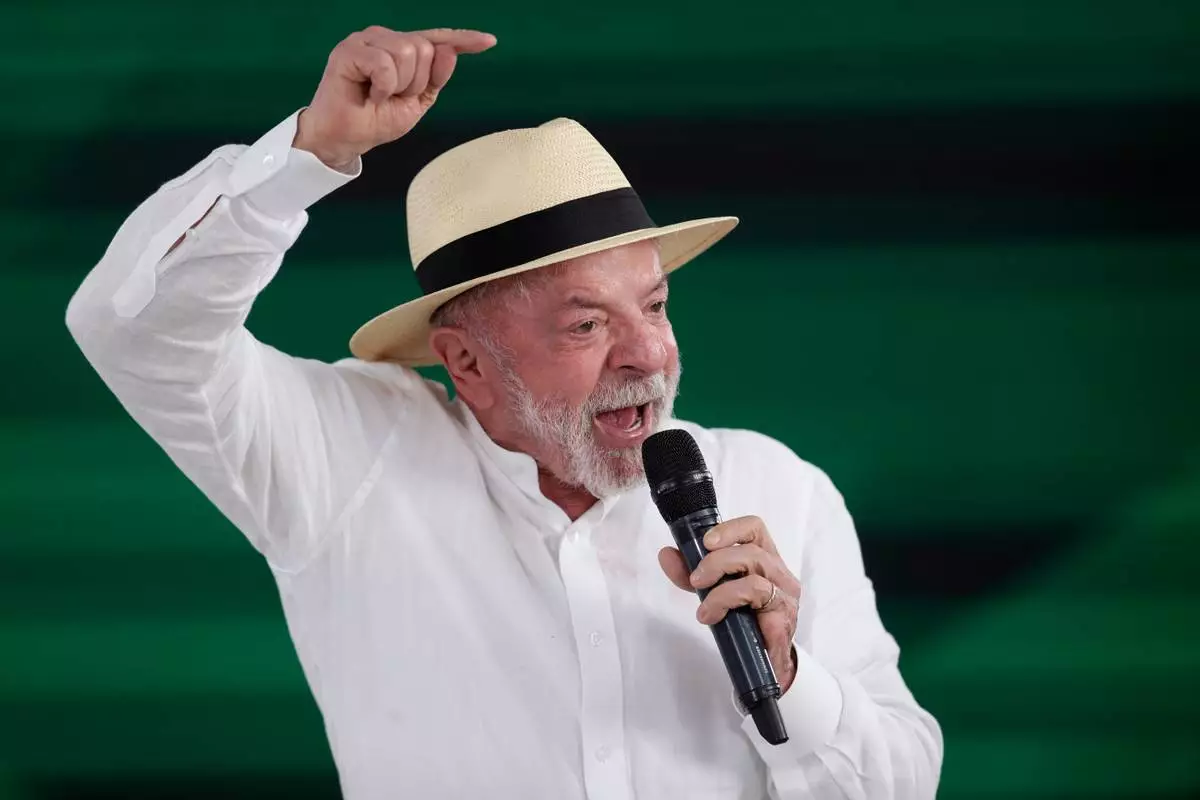
SAO PAULO (AP) — What is very likely to be the last reelection bid of Brazil’s President Luiz Inácio Lula da Silva was confirmed on Sunday by his Workers' Party as the 80-year-old leader faces increasing pressure from foreign leaders ahead of October's elections. It will be his seventh race for the top job.

Lula's rival, Sen. Flávio Bolsonaro, has enjoyed open support from members of U.S. President Donald Trump's administration, Argentina's President Javier Milei and Israeli Prime Minister Benjamin Netanyahu.

Brazil's president said in his party convention speech he wants to boost his country's defense industry, protect its rare minerals, and claimed “no Chinese, no American, no French will touch” these resources without respecting the South American nation's sovereignty.

“We will have to be much more daring to change a lot of things in this country,” Lula said.

Other members of his party highlighted the risk of foreign intervention in Brazil's elections, pointing to Trump and Milei. However,

“This election in Brazil determines the future of Latin America,” Edinho Silva, the Workers' Party chairman, said during Sunday's convention. Argentina, Paraguay, Chile, Peru, Ecuador and Colombia have elected Trump-inspired presidents in the recent past.

Flávio Bolsonaro's father, former President Jair Bolsonaro, was an ally of Trump but is now serving a 27-year sentence under house arrest for an attempted coup.

Lula has managed to draw centrist parties away from his right-wing adversary and arrives at his party’s convention with higher popularity in the polls than six months ago.

His campaign is specifically boosting a change to Brazil's income tax system that charges less to people on low incomes and a debt forgiveness program that has quickly become very popular.

Workers' Party politicians have expressed worries about foreign-sponsored threats of coordinated automated bot campaigns and social media manipulation designed to influence voters and undermine trust in Brazil's electronic voting system.

On Wednesday at the party convention, Lula said he doesn't want Trump as an enemy.

Brazilian Vice President Geraldo Alckmin, who will run again alongside Lula, said Sunday that Brazil’s electronic voting system “is so good that it doesn’t take votes from Argentines and Americans,” in a reference to Milei and Trump.

The Trump administration has also imposed new tariffs on Brazilian exports and changed the designation of two local criminal groups to terrorist groups, which legal analysts say could hurt companies and open a path for other kinds of intervention. Both moves took place after Sen. Bolsonaro visited the White House and the Department of State.

Argentina’s Milei came to Sao Paulo on July 25 to speak at Bolsonaro’s Liberal Party convention and sparked a diplomatic crisis when he insulted Lula and the Supreme Court justice who oversaw the elder Bolsonaro's trial and conviction over the attempted coup.

Netanyahu recorded a video in support of the president’s adversary.

Lula has said he is defending Brazil's national sovereignty. He recently held a long call with China’s President Xi Jinping, the leader of one of Brazil's most important trading partners.

His supporters say he could lead South American trade bloc Mercosur into striking deals with partners worldwide. Though Brazil is by far the biggest economy in the group, Argentina, Paraguay and Uruguay are also members.

Like his father, Sen. Bolsonaro has recently tried to sow unfounded doubts about Brazil's voting system. Those statements have raised concerns at Brazil's foreign ministry, which in July denied visas to two U.S. Department of State officials reportedly due to fears they sought to do the same.

The U.S. Department of State denied that claim in a statement.

Brazilian Sen. Flavio Bolsonaro, right, handles an oversized pair of scissors, accompanied by Argentina's President Javier Milei during the Liberal Party convention where Bolsonaro was confirmed as the party's presidential candidate, in Sao Paulo, Saturday, July 25, 2026. (AP Photo/Ettore Chiereguini)
Brazilian Sen. Flavio Bolsonaro, right, handles an oversized pair of scissors, accompanied by Argentina's President Javier Milei during the Liberal Party convention where Bolsonaro was confirmed as the party's presidential candidate, in Sao Paulo, Saturday, July 25, 2026. (AP Photo/Ettore Chiereguini)

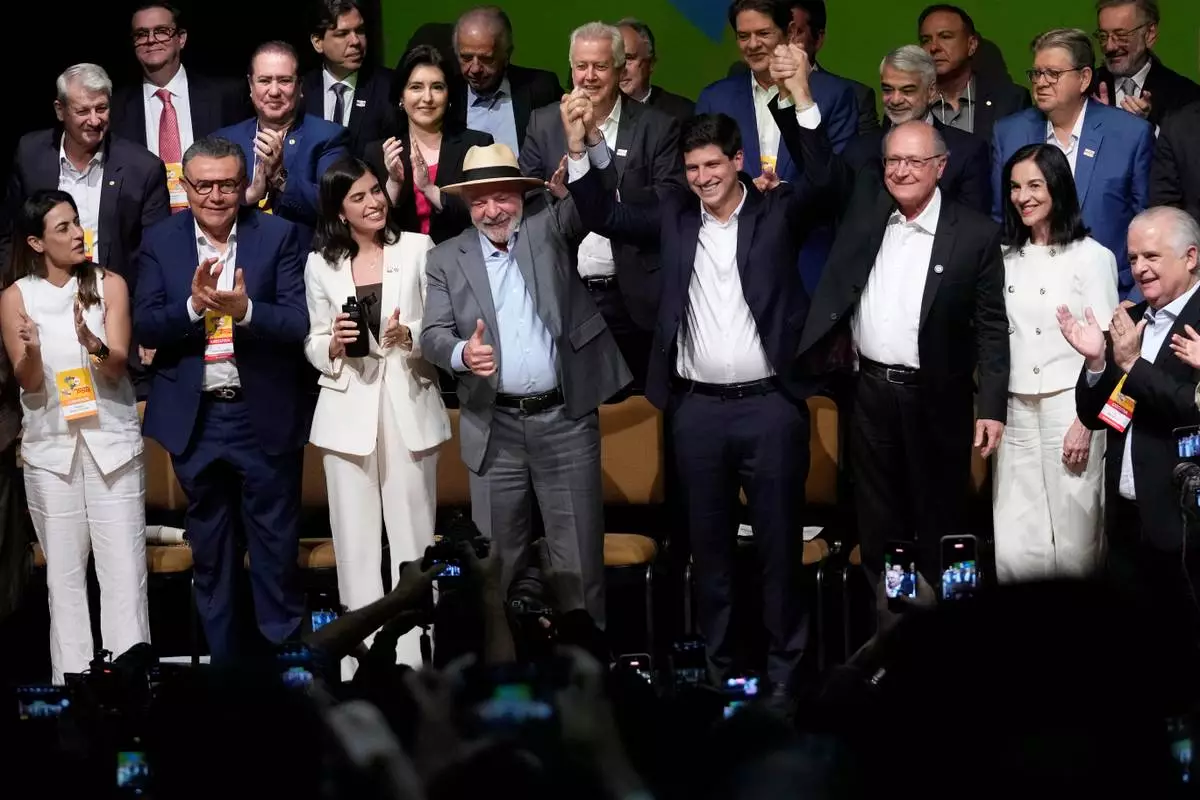
Brazilian President Luiz Inacio Lula da Silva, center left, and Vice President Geraldo Alckmin, center right, stand alongside Brazilian Socialist Party President Joao Campos during the Brazilian Socialist Party convention, where Alckmin was formally nominated as Lula's running mate for the October presidential election, in Brasilia, Brazil, Wednesday, July 29, 2026. (AP Photo/Eraldo Peres)
Brazilian President Luiz Inacio Lula da Silva, center left, and Vice President Geraldo Alckmin, center right, stand alongside Brazilian Socialist Party President Joao Campos during the Brazilian Socialist Party convention, where Alckmin was formally nominated as Lula's running mate for the October presidential election, in Brasilia, Brazil, Wednesday, July 29, 2026. (AP Photo/Eraldo Peres)

Brazilian President Luiz Inacio Lula da Silva speaks during a visit to the Andaraí Hospital, in Rio de Janeiro, Tuesday, July 28, 2026. (AP Photo/Bruna Prado)

Brazilian President Luiz Inacio Lula da Silva speaks during a visit to the Andaraí Hospital, in Rio de Janeiro, Tuesday, July 28, 2026. (AP Photo/Bruna Prado)

WASHINGTON (AP) — Key senators unveiled a short-term spending bill on Sunday that would keep federal agencies funded past the midterm elections and into early December as they look to avoid a government shutdown during the middle of campaign season.

The Senate is likely to vote on the measure before leaving Washington at week's end for its traditional August recess, a period that many lawmakers want to spend shoring up their reelection prospects rather than working in the nation's capital.

The bill generally funds the federal government at current levels though Dec. 11. The House has passed a similar measure, but it did not include various exceptions sought by the White House. Senators have been spending recent days negotiating which of those exceptions to include.

One exception that did not make it into the bill, Democrats noted, was the administration's request to include $1 billion to build “Trump-class” battleships.

In another major difference with the House bill, Democrats say they also were able to include language that will ensure the administration cannot transfer funds from other programs to the Border Patrol.

The late-summer action on a funding fix is unusual. Normally, Congress waits until the final days or hours of a funding deadline to pass short-term funding extensions, but this time senators are acting two months before the end of the fiscal year on Sept. 30.

Senate Majority Leader John Thune said passing the measure was his top priority going into the August recess. He noted that the American people have already experienced two record-breaking government shutdowns in the past 10 months.

“We need to ensure that they do not face a third,” Thune said.

A short-term funding extension is needed because Congress has struggled to get the dozen annual appropriations bills negotiated and approved before the Sept. 30 deadline. By extending government funding now, lawmakers can use the ensuing months to work out their differences on full-year funding.

It won't be an easy lift as Republicans seek a dramatic increase in defense spending while cutting non-defense spending. Trump proposed a 10% cut in non-defense programs overall. Meanwhile, he called for boosting defense spending by some 44%.

A potential shutdown before voters go to the polls is a scenario that both parties are looking to avoid, as polling indicated that neither party evaded blame for last fall's record 43-day shutdown. Democrats sought to extend an expiring health insurance tax credit and refused to go along with a short-term spending bill that did not include that priority. But Republicans said that was a separate policy fight to be held at another time.

A second spending battle over funding for the Department of Homeland Security took 76 days to resolve when Democrats refused to fund U.S. Immigration and Customs Enforcement and the Border Patrol without changes to those operations.

Sen. Susan Collins, the Republican chair of the Senate Appropriations Committee, along with Democratic senators, are seeking to block a proposed rule from President Donald Trump's administration related to grants. The rule would require a senior political appointee at each agency to review grant proposals through criteria that include “ensuring that discretionary awards advance the President's policy priorities.”

Collins and Sen Patty Murray, the top Democrat on the Appropriations Committee, said the rule would not take effect during the course of the stopgap spending bill. Collins said she advocated for significant changes to the rule, “citing its potential to politicize grants and harm small, rural communities, families, and biomedical research.”

Democrats want to kill the administration's effort altogether. Senate Democratic leader Chuck Schumer said it was a “disgraceful” effort that would “further politicize all federal grants.”

“While Republicans rejected killing the proposed rule outright, I’m going to keep fighting to put a stop to it once and for all, and I will keep pressing my Republican colleagues to do exactly that,” Murray said.

Democrats fear Trump would turn federal grants into a cudgel to punish perceived political foes and reward allies, while also undermining Congress's constitutional power of the purse. The White House Office of Management and Budget says its effort is about improving accountability to ensure taxpayer dollars aren't wasted or misused.

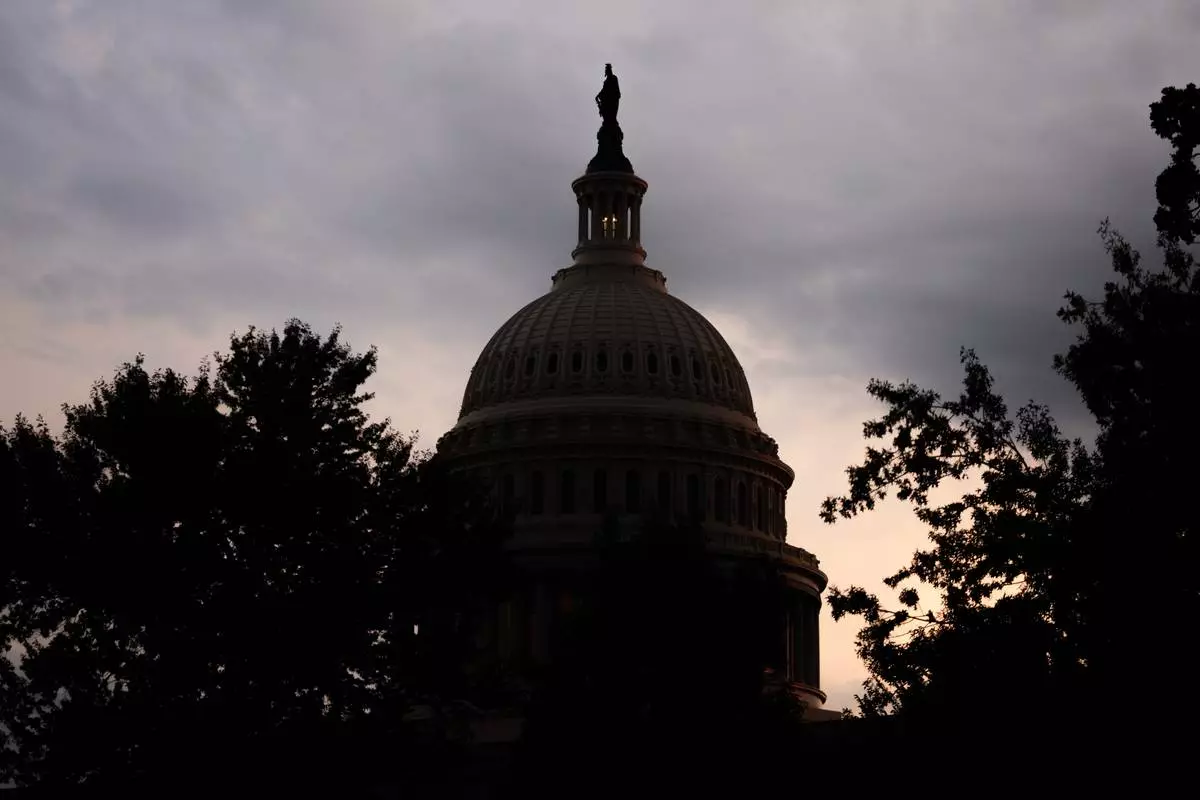
The sun sets behind the U.S. Capitol, Tuesday, July 28, 2026, in Washington. (AP Photo/Allison Robbert)

The sun sets behind the U.S. Capitol, Tuesday, July 28, 2026, in Washington. (AP Photo/Allison Robbert)

Recommended Articles