WASHINGTON (AP) — Key senators unveiled a short-term spending bill on Sunday that would keep federal agencies funded past the midterm elections and into early December as they look to avoid a government shutdown during the middle of campaign season.
The Senate is likely to vote on the measure before leaving Washington at week's end for its traditional August recess, a period that many lawmakers want to spend shoring up their reelection prospects rather than working in the nation's capital.
The bill generally funds the federal government at current levels though Dec. 11. The House has passed a similar measure, but it did not include various exceptions sought by the White House. Senators have been spending recent days negotiating which of those exceptions to include.
One exception that did not make it into the bill, Democrats noted, was the administration's request to include $1 billion to build “Trump-class” battleships.
In another major difference with the House bill, Democrats say they also were able to include language that will ensure the administration cannot transfer funds from other programs to the Border Patrol.
The late-summer action on a funding fix is unusual. Normally, Congress waits until the final days or hours of a funding deadline to pass short-term funding extensions, but this time senators are acting two months before the end of the fiscal year on Sept. 30.
Senate Majority Leader John Thune said passing the measure was his top priority going into the August recess. He noted that the American people have already experienced two record-breaking government shutdowns in the past 10 months.
“We need to ensure that they do not face a third,” Thune said.
A short-term funding extension is needed because Congress has struggled to get the dozen annual appropriations bills negotiated and approved before the Sept. 30 deadline. By extending government funding now, lawmakers can use the ensuing months to work out their differences on full-year funding.
It won't be an easy lift as Republicans seek a dramatic increase in defense spending while cutting non-defense spending. Trump proposed a 10% cut in non-defense programs overall. Meanwhile, he called for boosting defense spending by some 44%.
A potential shutdown before voters go to the polls is a scenario that both parties are looking to avoid, as polling indicated that neither party evaded blame for last fall's record 43-day shutdown. Democrats sought to extend an expiring health insurance tax credit and refused to go along with a short-term spending bill that did not include that priority. But Republicans said that was a separate policy fight to be held at another time.
A second spending battle over funding for the Department of Homeland Security took 76 days to resolve when Democrats refused to fund U.S. Immigration and Customs Enforcement and the Border Patrol without changes to those operations.
Sen. Susan Collins, the Republican chair of the Senate Appropriations Committee, along with Democratic senators, are seeking to block a proposed rule from President Donald Trump's administration related to grants. The rule would require a senior political appointee at each agency to review grant proposals through criteria that include “ensuring that discretionary awards advance the President's policy priorities.”
Collins and Sen Patty Murray, the top Democrat on the Appropriations Committee, said the rule would not take effect during the course of the stopgap spending bill. Collins said she advocated for significant changes to the rule, “citing its potential to politicize grants and harm small, rural communities, families, and biomedical research.”
Democrats want to kill the administration's effort altogether. Senate Democratic leader Chuck Schumer said it was a “disgraceful” effort that would “further politicize all federal grants.”
“While Republicans rejected killing the proposed rule outright, I’m going to keep fighting to put a stop to it once and for all, and I will keep pressing my Republican colleagues to do exactly that,” Murray said.
Democrats fear Trump would turn federal grants into a cudgel to punish perceived political foes and reward allies, while also undermining Congress's constitutional power of the purse. The White House Office of Management and Budget says its effort is about improving accountability to ensure taxpayer dollars aren't wasted or misused.
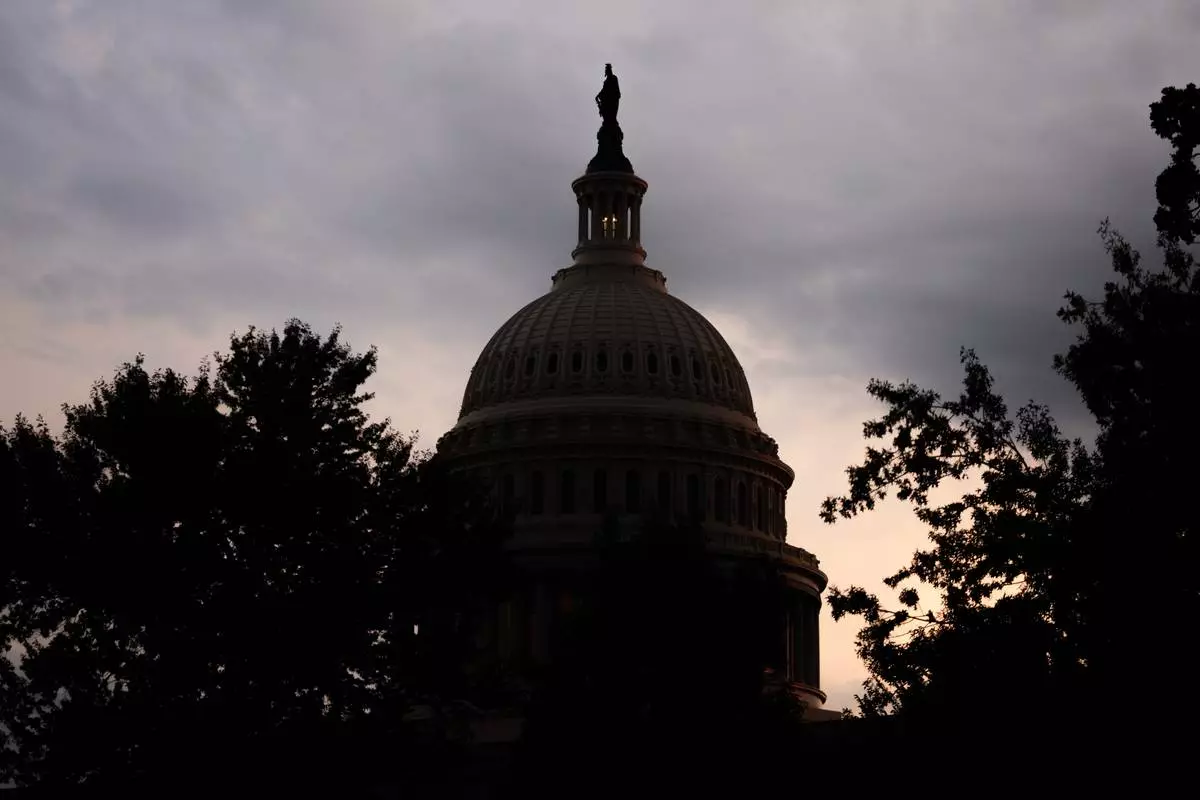
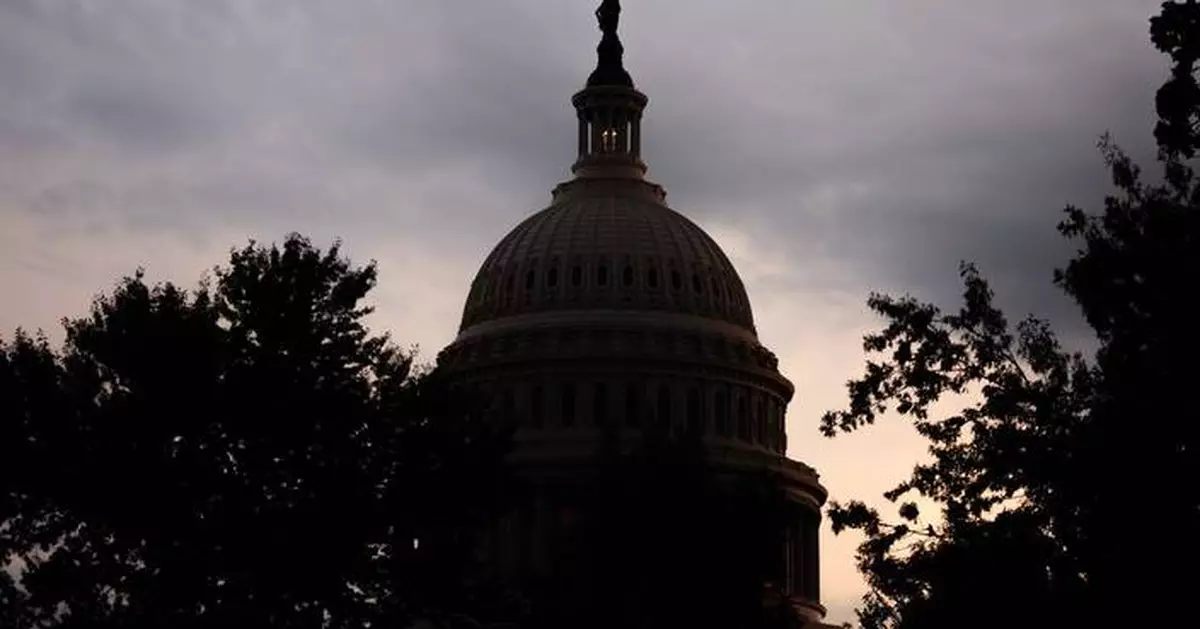
The sun sets behind the U.S. Capitol, Tuesday, July 28, 2026, in Washington. (AP Photo/Allison Robbert)
UNITED NATIONS (AP) — The U.N. General Assembly is launching into its yearly meeting of world leaders, a week of diplomacy, dealmaking, speechmaking — and lingo.
Here is some of the key vocabulary, decoded.
UNGA: Shorthand (often pronounced “UN'-gah”) for the U.N. General Assembly's “High-level Week,” when presidents, prime ministers, monarchs and other top leaders of all 193 U.N. member countries are invited to speak to the world and each other. New Yorkers sometimes just groan “General Assembly” to describe what many experience as a week of epic traffic, but the assembly isn't just this meeting. It's a body that discusses many global issues and votes on resolutions throughout the year.
GENERAL DEBATE: The centerpiece of the week, it gives each country's leader (or a designee) the microphone for a state-of-the-world speech. This year's theme is “restoring trust, managing transformation" and ensuring the 81-year-old United Nations “delivers for all.” But speakers often opine on the planet's biggest issues and hot spots, spotlight domestic accomplishments and needs, air grievances and try to exude statesmanship. While the “debate” is more a series of speeches than an interactive discussion, rebuttals are allowed at the end of each long day, and some embittered neighbor nations routinely go multiple rounds.
BILATERAL (or “bilat,” for short): Private meetings between high-ranking officials of two countries. Many UNGA veterans say the gathering's real value lies in these tête-à-têtes and other personal, off-camera encounters among decision-makers.
MINISTERIAL: Applies to meetings of cabinet-level officials, such as foreign ministers, from different countries.
SECURITY COUNCIL: The U.N.'s most powerful component, charged with maintaining international peace and security. The 15-member council can enact binding (though sometimes ignored) resolutions, impose sanctions and deploy peacekeeping troops. While this week is the General Assembly's show, the council generally also holds a high-wattage meeting or two.
P5: The Security Council's five permanent members with veto power. Under a structure set up in 1945, they are China, France, Russia, the United Kingdom and the United States.
E10: The Security Council's 10 elected, nonpermanent members. The General Assembly elects them for two-year terms in seats allocated by region. Calls for council reform are an UNGA staple. One major complaint is the lack of permanent members from Africa and the Latin America-Caribbean region, though some other nations also have angled for years for a permanent presence.
G77: Stands for the “Group of 77 and China,” a developing-countries interest group that formed within the U.N. in 1964. Despite its name, it actually now has 134 members.
COP31: A major U.N. climate conference coming up in November in Antalya, Turkey.
1.5 DEGREES: A crucial climate threshold. Under the 2015 Paris climate accord, countries agreed to work to limit warming to 1.5 degrees Celsius (2.7 degrees Fahrenheit) over preindustrial times. The goal has long seemed elusive, and the U.N. acknowledged this month that the planet will surpass that threshold in the next few years.
SDGs: The U.N.'s “ sustainable development goals,” which range from combating climate change to eliminating hunger and poverty to achieving gender equality. The U.N.'s member countries unanimously adopted the goals in 2015 as a 15-year action plan, but the pace is seriously lagging.
SIDS: At the U.N., this stands for some 39 “small island developing states.” UNGA is an important platform for them to elevate concerns such as climate change and the existential threat they face from projections of rising seas and intensifying storms, often a painfully timely subject at a meeting that falls in the thick of the Atlantic hurricane season.
BRICS: A developing-economies coalition that initially included Brazil, Russia, India, China and South Africa and has grown to 11 countries. There are many international groups centered around regional, economic, defense or other ties, but BRICS nations boast about half the world’s population and a lot of its resources and economic activity. The group has been a venue for China and Russia to project influence and work to counter the West. It also is struggling with internal divisions.
NGO: “Nongovernmental organization,” such as an advocacy group, charitable foundation or nonprofit relief organization.
LDCs: Very poor nations that are known at the U.N. as “ least-developed countries.” Forty-four nations currently meet the criteria, which include a gross national income of $1,088 or less per person per year.
IFIs: International financial institutions, including the World Bank and the International Monetary Fund, which were established at a 1944 U.N. conference in Bretton Woods, New Hampshire. Critics see the Bretton Woods duo as sclerotic entities that have badly failed poor and developing countries. The institutions have defended their work while saying they are trying to evolve.
MULTILATERALISM: Global or near-global partnership that is united and collectively develops enduring rules and shared norms. The idea undergirds the U.N. itself, though many warn it's under threat.
MULTIPOLAR: A scenario in which there are several different and sometimes competing centers of power, not a single superpower or two.
MULTISTAKEHOLDER: An approach to big projects and problem-solving that incorporates not only governments but businesses, NGOs and possibly others. Fans see this concept as key to the future of world cooperation. But some progressive groups view it as a sell-out to big corporations and other powers that be.
TWO-STATE SOLUTION: A concept for resolving the Israeli-Palestinian conflict by establishing an independent Palestinian nation living in peace alongside Israel. The framework was set down in the 1993 Oslo Accords and embraced by the U.N., but progress toward implementing it stalled long before the recent Israel-Hamas war in Gaza and the expansion of Israeli settlements in the occupied West Bank. Most of the international community considers the settlements illegal.
SOUTH-SOUTH COOPERATION: Collaboration among countries, organizations and people in what is known as the Global South. The term refers to developing nations that are largely, though not exclusively, in the Southern Hemisphere and generally want a bigger say in their own development and in international affairs.
UNILATERAL COERCIVE MEASURES: A usually critical way of describing sanctions imposed by one country in hopes of spurring some action in another.
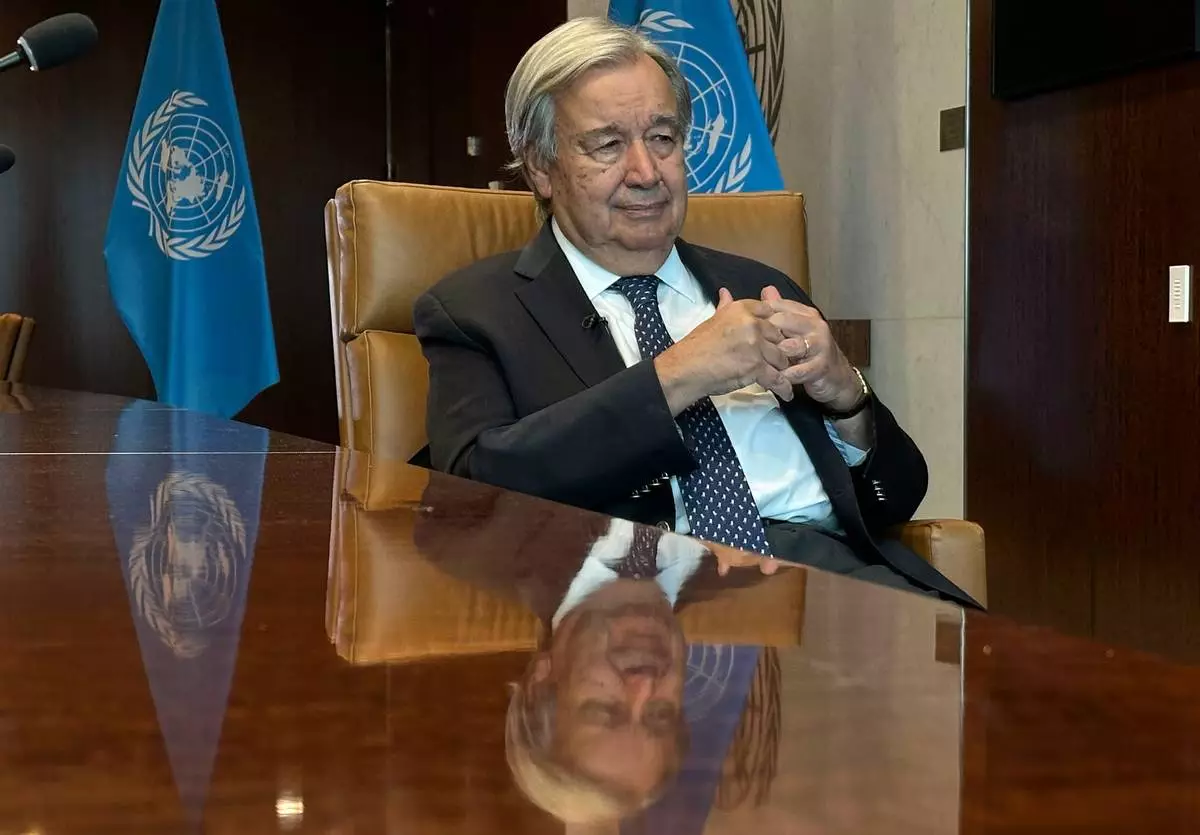
The United Nations Secretary-General Antonio Guterres speaks during an interview with The Associated Press at the United Nations headquarters, Thursday, Sept. 17, 2026. (AP Photo/David R Martin)