Skip to Content Facebook Feature Image

What's next in the investigation of the Learjet crash in Florida that killed 9?

News

What's next in the investigation of the Learjet crash in Florida that killed 9?
News

News

What's next in the investigation of the Learjet crash in Florida that killed 9?

2026-11-05 01:06 Last Updated At:01:10

Investigators are just beginning the lengthy process of determining why a business jet plummeted from the sky in Florida after encountering a thunderstorm and slammed into the ground with such force that it created a crater and shattered the plane.

The National Transportation Safety Board is leading the investigation into the crash that killed all nine people aboard the Bahamas-bound Learjet, and it will likely take more than a year to determine the cause.

Dramatic bystander videos combined with the the disturbing final radio transmissions as the pilots realize their fate will give investigators important clues. The cockpit voice recorder would also help if investigators can find it intact.

“Our mission is to understand not just what happened, but why it happened, and to recommend changes to prevent it from happening again,” NTSB member Tom Chapman said.

Here's what investigators are doing now and what comes next:

The NTSB team will spend days collecting every piece of the plane they can find. Investigators said Tuesday that pieces of a key part of the tail called the elevator, which controls the plane's pitch, were found more than a mile away from the main crater. That confirms the plane started to break apart before impact.

Chapman said investigators are searching for the Learjet's cockpit voice recorder because it could provide crucial details about what the pilots said to each other as they encountered turbulence, ice formed on the wings and they lost control of the aircraft.

“That will be very important data,” Chapman said. But being unable to find that recorder won't doom the investigation. “Without it, our folks are very, very good. We’re still able to do some incredible detective work and determine how things transpired.”

The co-pilot told air traffic controllers that the plane was being thrown up and down more than 700 feet (213 meters) and she asked them for a better route through the area. It's not clear why the pilots didn't fly around the storms.

Torrential rains in Florida over the past week have hindered the investigators' work. The crater filled with rainwater, possibly concealing parts of the wreckage under water, and a utility pole had to be removed.

The NTSB asked anyone who finds part of the plane to report that to investigators to collect.

The agency’s findings so far are limited, but its experts will publish a preliminary report describing the facts of what happened about 30 days after the crash. It won’t include analysis or cause, which will come in a later more detailed report.

The force of the crash and the fire destroyed much of the plane. Any evidence investigators are able to gather will be taken to a secure hangar where they can test or try to reassemble smashed components to better understand what happened.

Retired airline pilot and aviation safety expert John Cox said he doesn’t understand why the plane descended from its cruising altitude of 41,000 feet (12,500 meters) as it approached the storms. The pilots steered around a larger storm cell but appeared to head directly into a rapidly developing smaller one, Cox said.

“If I’m looking at thunderstorms, I’d rather be at 41 than at 35. You’ve got a better view, you’re more likely to be on top of it, or at least, in the very wispy tops of it,” Cox said. “I don’t understand why they came down.”

Investigators will try to determine whether they knew that storm cell was there, what the plane’s weather radar showed and whether the pilots checked any other weather services.

Weather will be a key early focus of the investigation. NTSB experts will work with the National Weather Service and the Federal Aviation Administration to get a better idea of what the plane encountered at around 35,000 feet (11,000 meters).

Images that overlay the flight path atop weather radar maps show the Learjet flew directly into a small red storm cell that quickly worsened.

But the agency will consider a myriad of factors that may have contributed to the crash.

Investigators will review maintenance records and any history of problems with the plane. They will also interview officials at Upper Jets, the company that operated the flight, as well as air traffic controllers and people who work at the airport in Austin, Texas, from where the plane departed.

Videos and photos shot by bystanders can also provide crucial clues about what happened. The NTSB will also collect surveillance footage that might show the crash.

In certain high-profile crashes, the NTSB can hold investigative hearings during which investigators question people, as it did after last year's UPS plane crash.

Generally, it takes 12 to 18 months for the NTSB to complete a crash investigation, but complicated cases can take longer. NTSB's roughly 400 workers are pursuing more than 1,200 active investigations.

Final reports include extensive details about what happened and identify the probable causes.

The NTSB recommends changes to prevent similar crashes and improve safety, but it doesn't have the power to require those changes to be installed or enforced.

The responsibility for adopting those falls to the FAA, the industry and Congress, all of whom have historically ignored NTSB recommendations, deeming such changes too costly and cumbersome.

Even when the FAA or Congress agree with the suggestions it can take years to approve new rules.
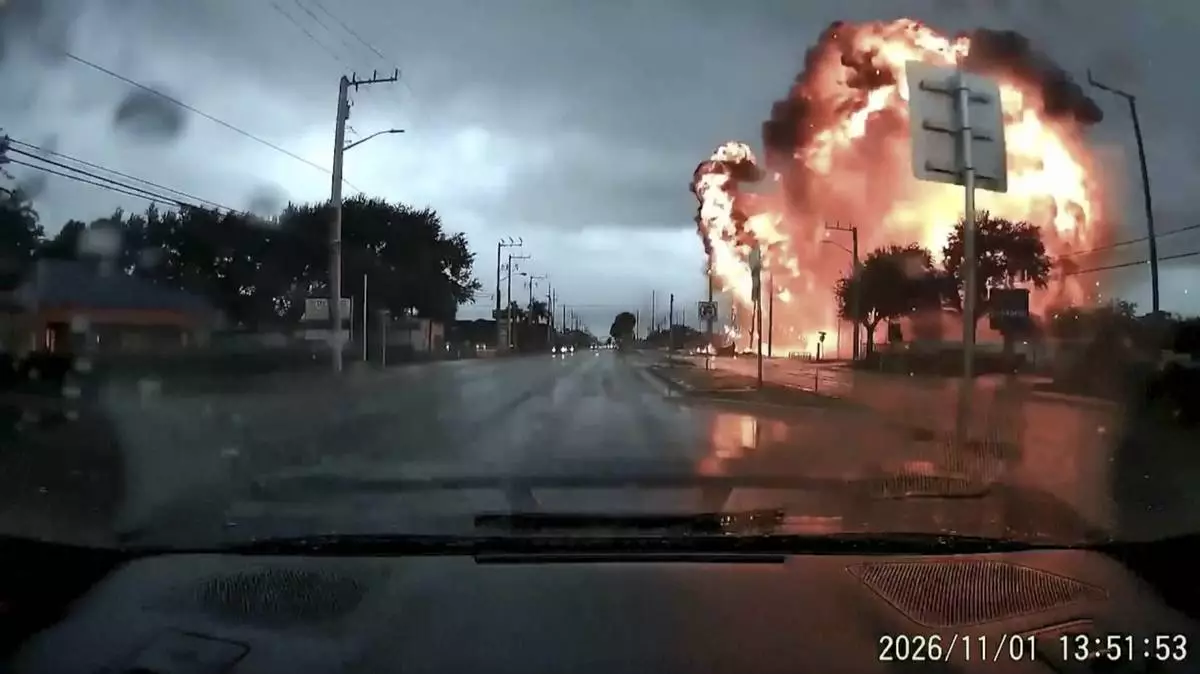
This image taken from Aki Kuusisto's video shows a small jet crashing in Palm Beach County, Fla., on Sunday, Nov. 1, 2026. (Aki Kuusisto via AP)
This image taken from Aki Kuusisto's video shows a small jet crashing in Palm Beach County, Fla., on Sunday, Nov. 1, 2026. (Aki Kuusisto via AP)

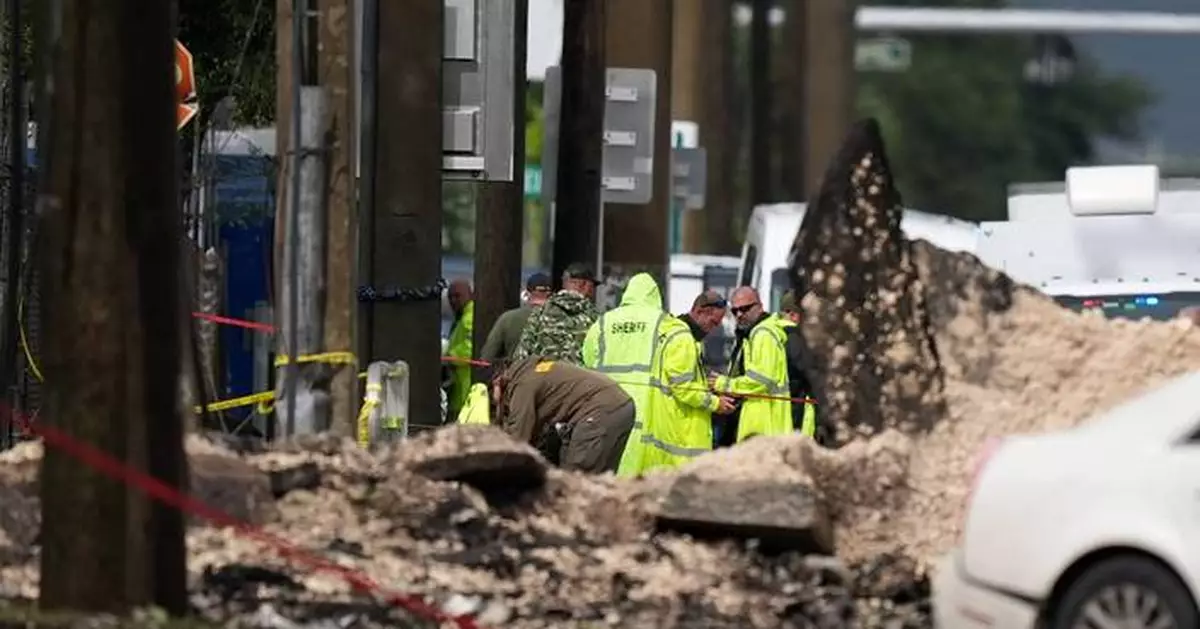
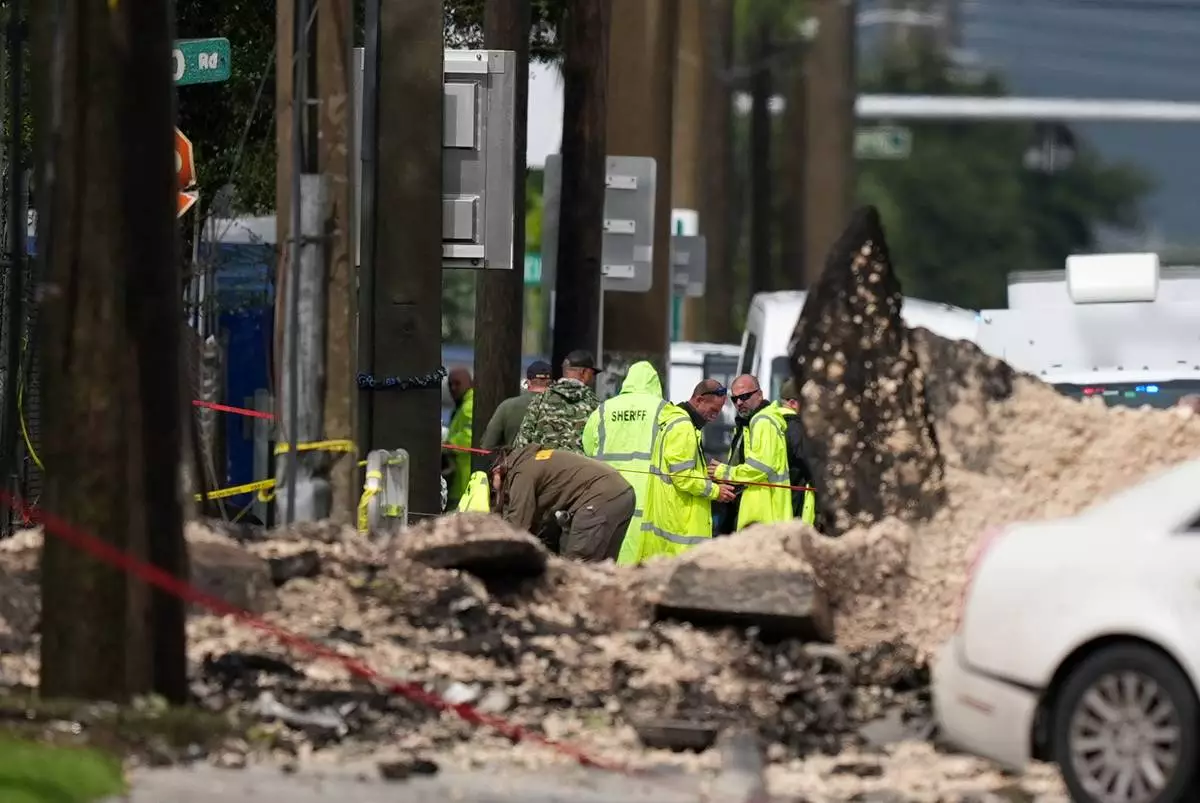
Investigators work at the scene of a plane crash in Greenacres, Fla., Monday, Nov. 2, 2026. (AP Photo/Rebecca Blackwell)


Investigators work at the scene of a plane crash in Greenacres, Fla., Monday, Nov. 2, 2026. (AP Photo/Rebecca Blackwell)

NEW YORK (AP) — Looking to the present along with the future, U.S. coach Mauricio Pochettino recalled Christian Pulisic, Folarin Balogun and Weston McKennie to the national team for its CONCACAF Nations League quarterfinals against Haiti while bringing in Reed Baker-Whiting and Santiago Castañeda for possible debuts.

Pochettino’s 25-man roster announced Wednesday included 19 of the players who were with the team for friendlies in September and October and half of the 26 players he took to this year’s World Cup — including 10 starters in the Americans' final match against Belgium. Six players are under 20.

“It’s very important for us to add more options, more players with the possibility to challenge the familiar faces,” Pochettino said during an online news conference from London.

Pulisic missed the exhibition wins over Peru, Chile, Mexico and Canada while the winger worked his way back from a microfracture of his right tibia and fibula sustained in the 4-1 loss to Belgium at the World Cup's round of 16.

Balogun, a striker whose red card-suspension at the World Cup was controversially suspended after a phone call from U.S. President Donald Trump to FIFA head Gianni Infantino, was omitted for those friendlies when he didn't play in Monaco's first four Ligue 1 matches this season after a possible transfer to Everton fell through. He has appeared in five matches since, all as a second-half substitute.

"It’s a great opportunity to keep helping him to evolve after a tough summer, after the World Cup," Pochettino said.

Pochettino's young players are headed by striker Cavan Sullivan, who made his national team debut in September two days before his 17th birthday and became the youngest American goal scorer a week later against Mexico. The roster also includes 17-year-old midfielders Mathis Albert and Adri Mehmeti, 18-year-old forward Julian Hall, 19-year-old forward Justin Ellis and 19-year-old defender Neil Pierre.

Baker-Whiting, a Nashville right back, and Castañeda, a Paderborn midfielder, are both 21.

Defender Bryan Reynolds, 25, returns to the team for the first time since the 2023 CONCACAF Gold Cup. He debuted in 2021 at age 19.

"They deserve the possibility to be with us, for us to feel them and for them to to see how they can fit in our national team," Pochettino said.

Bypassed players include goalkeeper Matt Turner, defenders Max Arfsten, Cameron Carter-Vickers, Mark McKenzie and Joe Scally, midfielder Aidan Morris and winger Tim Weah.

After training in Georgia, the No. 16 U.S. faces 84th-ranked Haiti on Nov. 14 in Miami and Nov. 17 in Cincinnati in a total-goals series for a berth in the Nations League semifinals to be played from March 22-30 at SoFi Stadium in Inglewood, California.

Dropped players who were on the September roster include goalkeeper Chris Brady, defenders Miles Robinson and Frankie Westfield, midfielders Zavier Gozo and Yunus Musah, and forwards Cole Campbell and Damion Downs.

Some players not selected will be with the under-23 team preparing for the 2028 Olympics. Its training camp roster will be announced Thursday.

Defender Miles Robinson, midfielder Johnny Cardoso and forwards Haji Wright and Alejandro Zendejas were ruled out because of injuries. Striker Ricardo Pepi was left off following a leg muscle injury that sidelined him between Sept. 20 and last Saturday.

Defender George Campbell was selected but left West Bromwich Albion's match Tuesday because of an injury and could be replaced.

The roster:

Goalkeepers: Matt Freese (New York City), Diego Kochen (Lyngby), Brian Schwake (Nashville).

Defenders: Reed Baker-Whiting (Nashville), George Campbell (West Bromwich Albion), Sergiño Dest (PSV Eindhoven), Alex Freeman (Villarreal), Neil Pierre (Philadelphia), Bryan Reynolds (Rennes), Chris Richards (Crystal Palace), Antonee Robinson (Fulham), Auston Trusty (Celtic).

Midfielders: Tyler Adams (Bournemouth), Mathis Albert (Borussia Dortmund), Sebastian Berhalter (Middlesbrough), Santiago Castañeda (Paderborn), Weston McKennie (Juventus), Adri Mehmeti (New York Red Bulls), Gio Reyna (Strasbourg), Malik Tillman (Bayer Leverkusen).

Forwards: Folarin Balogun (Monaco), Justin Ellis (Orlando), Julian Hall (New York Red Bulls), Christian Pulisic (AC Milan), Cavan Sullivan (Philadelphia).

See AP’s full soccer coverage here

Juventus' Weston McKennie, left, fights for the ball with Napoli's Kevin De Bruyne during the Serie A soccer match between Juventus and Napoli in Turin, Italy, Sunday, Nov. 1, 2026. (Marco Alpozzi/LaPresse via AP)

Juventus' Weston McKennie, left, fights for the ball with Napoli's Kevin De Bruyne during the Serie A soccer match between Juventus and Napoli in Turin, Italy, Sunday, Nov. 1, 2026. (Marco Alpozzi/LaPresse via AP)

AC Milan's Christian Pulisic celebrates after scoring a goal during the Serie A soccer match between AC Milan and Inter Milan, Saturday, Oct. 31 , 2026, in Milan Itay. (Spada/LaPresse via AP)

AC Milan's Christian Pulisic celebrates after scoring a goal during the Serie A soccer match between AC Milan and Inter Milan, Saturday, Oct. 31 , 2026, in Milan Itay. (Spada/LaPresse via AP)

Recommended Articles