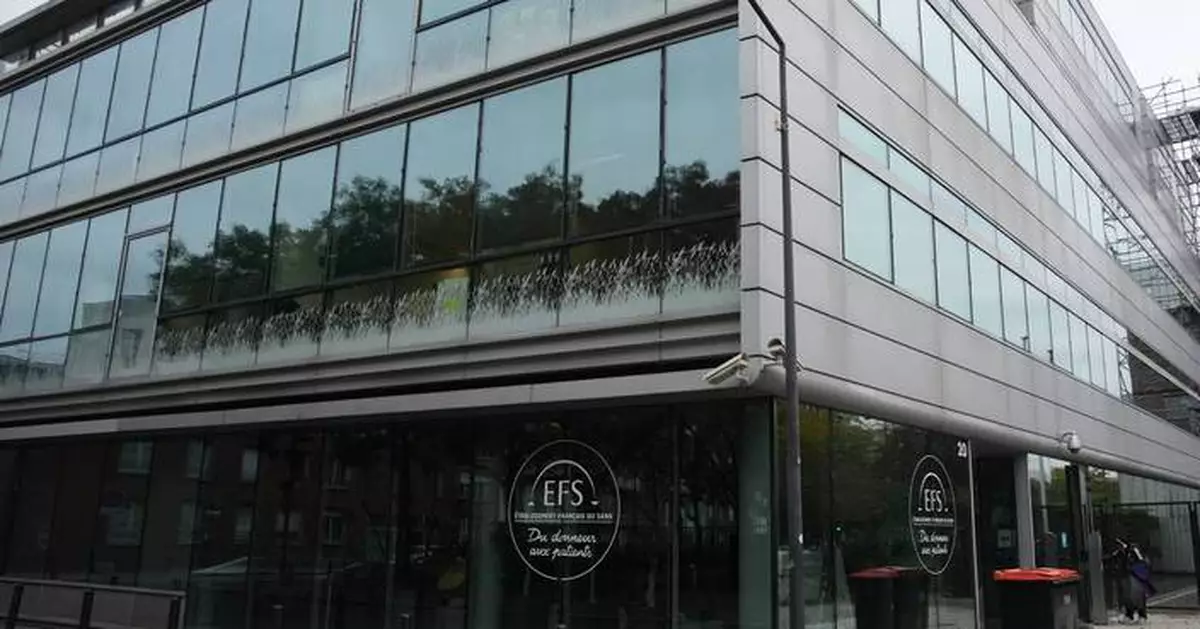
PARIS (AP) — A cyberattack on several blood banks tried to raise temperatures to extremely high levels but was thwarted before it could do any damage to blood products or samples, French authorities said.
The incident comes after supermarkets in a number of European countries reported this week that their fridges and freezers warmed up after they were remotely taken over, resulting in tons of spoiled food at a total cost of millions of dollars (euros).
The French Blood Establishment, or EFS, said “temperature and defrosting thresholds were raised to extremely high levels” on Monday at three of its cold-storage sites for plasma, in a statement released late Tuesday. Monitoring systems quickly detected the problem, allowing staff to take action in time so that "no blood products or samples were compromised,” it said.
French weekly newspaper Le Canard Enchaîné, which first reported the cyberattack, said that the attack had attempted to reset temperatures that normally are at minus 30 Celsius (minus 22 Fahrenheit) to as high as 110 C (230 F).
The cyberattack hit a supplier of refrigeration equipment at three EFS sites. The products stored were bags of plasma intended for transfusions and plasma used to manufacture medicines, and were either transferred or secured, the EFS statement said.
“No health consequences have been identified, and no blood products were lost,” the blood bank said.
The EFS said blood collection and distribution operations remain uninterrupted, ensuring continued services for patients at hospitals and other healthcare.
The company supplying the refrigeration equipment, Coolworld, said in a statement it “is aware” of the cybersecurity incident.
“The vulnerability currently being reported in the media relates to a component from a third-party supplier and was outside Coolworld’s direct control,” the statement said. The company said only a limited number of units were affected and it was taking “appropriate measures.”
France’s national cybersecurity agency and the Health Ministry are investigating the incident.
This week’s cyberattacks on refrigeration systems mirrored an episode in mid-October that targeted fridges and freezers at hundreds of supermarkets and independent stores across France, Belgium and the Netherlands.
One of the chains hit in that earlier incident, Dutch supermarket chain Ahold Delhaize, said Wednesday that it expected the cyberattack to reduce its sales in the fourth quarter by as much as 250 million euros ($281 million), and crimp its operating income for the period by up to 100 million euros.
“While most of the disruption was contained within two weeks, work continues to fully restore our normal operations,” CEO Franz Muller said. “As we all recognize, cyber threats are an increasingly harsh reality of doing business today,” he said in a statement released with Delhaize’s quarterly earnings.
The company had earlier blamed “malicious actions by others” and proactively took some of its systems offline, including websites and apps for its various brands in Europe as well as in the United States.
——--
AP journalist Kelvin Chan in London contributed to the story

The French Blood Establishment headquarters is pictured Wednesday, Nov. 4, 2026 after a cyberattack on several blood banks sought to raise temperatures to extremely high levels but was thwarted before it could do any damage to blood products or samples, in Saint-Denis, outside Paris. (AP Photo/Christophe Ena)
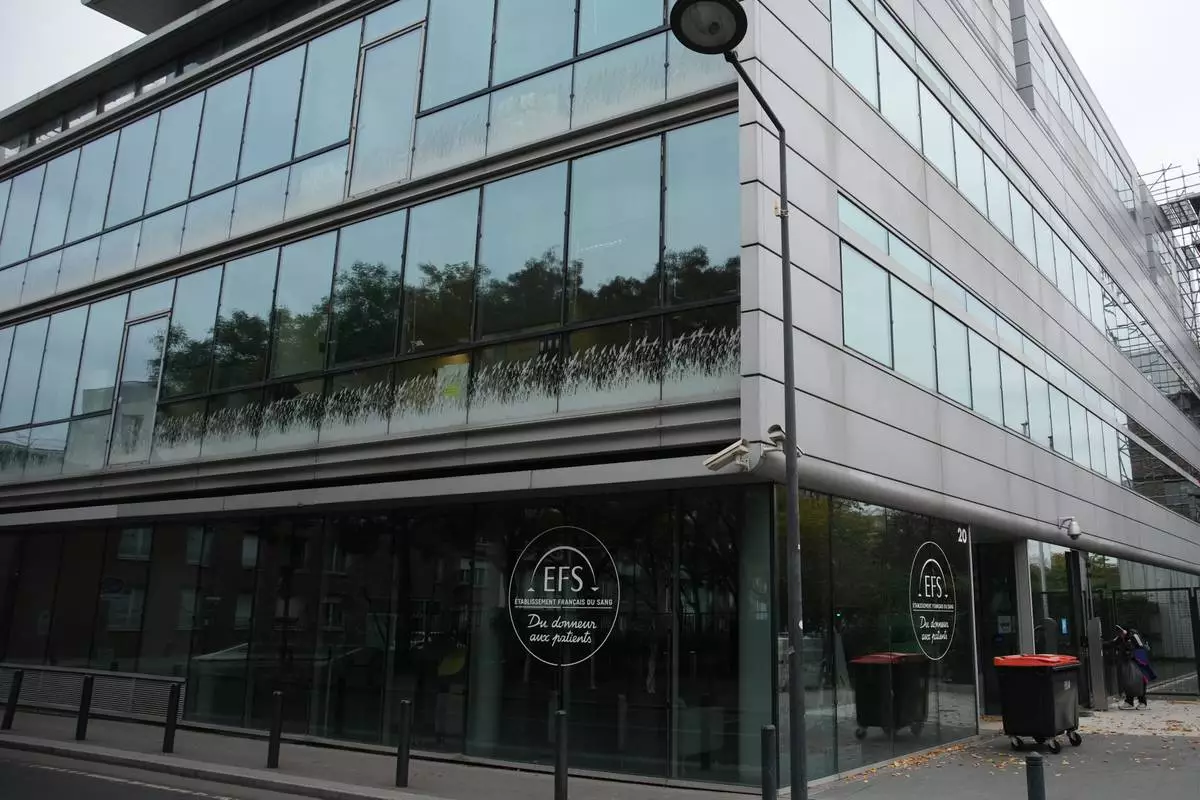
The French Blood Establishment headquarters is pictured Wednesday, Nov. 4, 2026 after a cyberattack on several blood banks sought to raise temperatures to extremely high levels but was thwarted before it could do any damage to blood products or samples, in Saint-Denis, outside Paris. (AP Photo/Christophe Ena)
MADISON, Wis. (AP) — Democrats took control of the Texas state House after historic wins for governor and U.S. Senate in Tuesday's elections.
Republicans had taken control in the 2002 election and had held it since.
The win for Democrats was part of a series of sweeping gains in state governments for the party during the midterm elections, seizing several legislatures and shifting the balance of power across some battleground and historically Republican-leaning states.
The party took full control — both statehouse chambers and governors' offices — in at least five states where they previously shared power.
The wins put pressure on the party to answer to an electorate angry over the rising cost of living, high gas prices, inflation and the lack of affordable housing. State governments shape a wide array of policies affecting everyday lives, including tax rates and abortion rights, school choice and education funding, data center development, and the use of artificial intelligence and law enforcement surveillance cameras.
“Now it’s time to deliver,” Wisconsin Democratic Party Chairman Devin Remiker said.
Democrats succeeded in flipping both chambers of the Legislature in Wisconsin, breaking a 16-year Republican majority, and retained the governor's office.
They also won or retained full control of both chambers of the legislatures in Michigan, Minnesota and Pennsylvania and kept the governor's office — for trifectas in all three.
In Nevada, they gained control by winning the governor's seat and retaining the legislature.
There will be pressure on Democrats in Wisconsin and other battleground states to redraw congressional maps, just as President Donald Trump successfully urged eight Republican-led states to do ahead of this election. But that backfired, with Republicans losing most of the Democratic-held seats they had targeted to flip and others they had banked on winning.
The Republican congressional redistricting in Texas may have mobilized additional Democratic voters in some parts of the state who helped drive gains in the statehouse, said Mark Jones, a political science professor at Rice University in Houston.
But “when we’re trying to think about why Democrats won, it’s one man in the White House and his policies — Donald Trump,” Jones said.
Even under maps that favored Republicans in Wisconsin, Democrats picked up two congressional seats in Tuesday's races. That means the state will have an evenly divided congressional delegation in 2027.
Democrats will also hold at least 28 governorships in 2027, with pickups in Georgia, Iowa, Ohio and Texas — states long held by Republicans.
And the party broke or prevented Republican supermajorities in nine legislative chambers in eight states: Florida, South Carolina, Indiana, Missouri, Iowa, Ohio, Kansas and North Carolina.
That means Republicans would need help from Democratic lawmakers to override a Democratic governor’s veto in Iowa, Ohio and North Carolina. The Associated Press has not called the governor’s race in Kansas.
The wins come after Democrats lost nearly 1,000 state legislative seats during President Barack Obama's tenure, a slide they've been trying to reverse for several cycles.
It's the biggest single-election change of partisan power in state governments since 2010, said Katie Owens Hubler, director of elections and redistricting at the National Conference of State Legislatures.
Heather Williams, president of the Democratic Legislative Campaign Committee, said the party won “historic levels of power in statehouses.” She said they hadn’t flipped this many seats nationwide since the 1980s.
“This election is about kitchen table issues, it’s about economic opportunities,” she said Wednesday. “That is what the mandate is about.”
She said Democrats will have to focus on issues that matter to middle-class voters such as improving educational opportunities and increasing access to healthcare, particularly in rural areas.
“They’re going to represent the middle class,” Williams said. “They are not going to work for a few billionaires.”
The cost of groceries, housing, healthcare, gas and utility bills were campaign talking points after legislative sessions packed with bills aiming to make life more affordable for Americans, while also providing tax relief and reining in data center development and the use of artificial intelligence.
The coming legislative session could see major efforts to lighten the tax burden on the middle class, relax housing regulations, expand access to healthcare, and force utilities and data center developers to do more to stop electricity bills from rising.
Democratic Pennsylvania Gov. Josh Shapiro, who won reelection, told his supporters Tuesday night that people want him and lawmakers to raise the minimum wage to $15 an hour, invest in infrastructure, kids, police and communities, and enshrine abortion rights for women in the state constitution.
Other newly elected governors, including Wisconsin's David Crowley and Minnesota's Amy Klobuchar, said they wanted to work with Republicans.
“I am not interested in moving Minnesota to the left or the right; I want to move us forward,” Klobuchar said.
She even had a warning for her Democratic supporters.
“Spoiler alert: You may not like every single thing I do,” she said.
Mulvihill reported from Haddonfield, New Jersey. Associated Press reporters Marc Levy in Harrisburg, Pennsylvania, and David Lieb in Washington contributed.

Iowa Democratic gubernatorial candidate Rob Sand speaks during an election night event Tuesday, Nov. 3, 2026, in Des Moines, Iowa. (AP Photo/Ellen Schmidt)

Wisconsin Democratic gubernatorial candidate David Crowley, left, greets supporters at an election night event Tuesday, Nov. 3, 2026, in Milwaukee. (AP Photo/Nam Y. Huh)