ARLINGTON, Texas (AP) — Jessica Shepard and Arike Ogunbowale scored 15 points each and the Dallas Wings used a big run in the third quarter to cruise to an 83-63 win over the Connecticut Sun on Sunday night.
After a slow start to the third quarter, when the Wings had more misses and turnovers than points, they followed a timeout with a 20-2 run to close the quarter and turn a nine-point lead into a 72-45 lead.
Click to Gallery
Actor Nick Cannon attends during a WNBA basketball game between the Connecticut Sun and Dallas Wings in Arlington, Texas, Sunday, Aug. 2, 2026. (AP Photo/Tony Gutierrez)
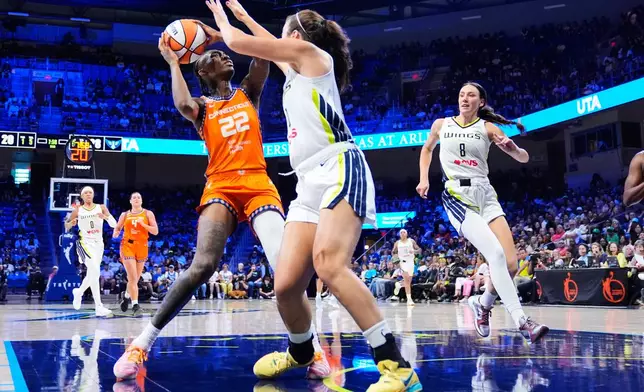
Connecticut Sun guard Saniya Rivers (22) works to take a shot as Dallas Wings' Maddy Siegrist, right, defends during the first half of a WNBA basketball game in Arlington, Texas, Sunday, Aug. 2, 2026. (AP Photo/Tony Gutierrez)
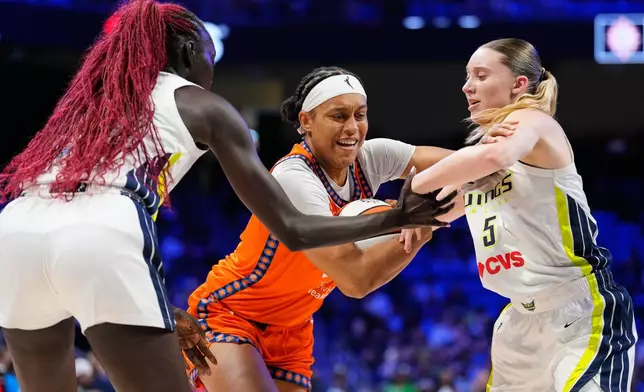
Connecticut Sun's Nell Angloma, center, drives to the basket against Dallas Wings' Awak Kuier, left, and Paige Bueckers (5) during the first half of a WNBA basketball game in Arlington, Texas, Sunday, Aug. 2, 2026. (AP Photo/Tony Gutierrez)
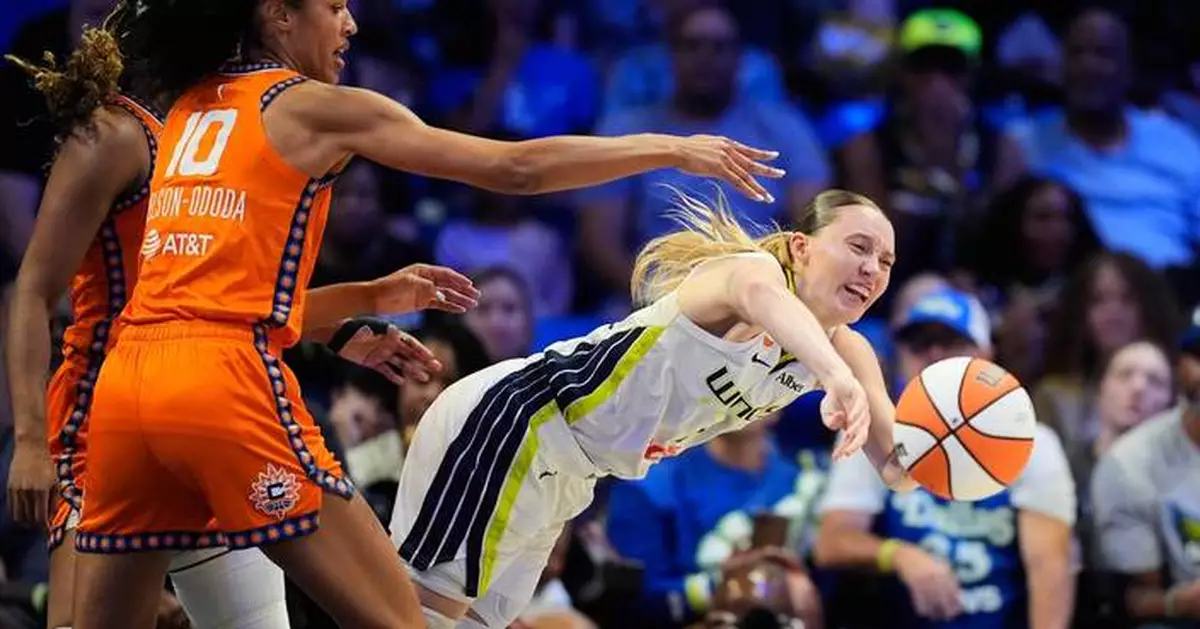
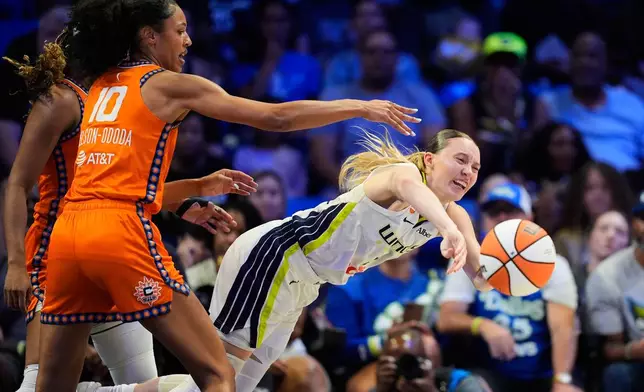
Dallas Wings guard Paige Bueckers, right, makes a pas as Connecticut Sun's Olivia Nelson-Ododa (10) defends during the first half of a WNBA basketball game in Arlington, Texas, Sunday, Aug. 2, 2026. (AP Photo/Tony Gutierrez)
The Sun went 3 of 15 from the field and scored just eight points.
Azzi Fudd added 12 points for the Wings (19-11), who ended a two-game skid. Paige Bueckers scored just six points, the fewest in her two-year career. With reserves playing the fourth quarter Dallas still finished at 48% shooting, making 7 of 18 3-pointers. Fudd was 4 of 5 on 3s and Ogunbowale made 7 of 9 shots with five assists.
Diamond Miller led the Sun (7-23) with a season-high 22 points. Kennedy Burke added 14.
Connecticut finished a six-game road trip with five losses. They were without leading scorer Brittney Griner, who missed her fourth straight game with a left knee issue and has missed 14 games overall. The Sun are 1-13 without Griner. Another top scorer, Aneesah Morrow, was traded to Toronto on Friday.
Without Griner, the Sun were outscored 46-24 in the paint. They shot 9 of 23 (39%) from 3-point range and 14 of 44 (32%) inside the arc.
Dallas led 48-37 at the half.
Three bus loads of fans from Houston attended the game. The Sun will relocate to Houston next season.
Sun: Home against Phoenix on Friday.
Fire: At Washington on Wednesday.
AP WNBA: https://apnews.com/hub/wnba-basketball

Actor Nick Cannon attends during a WNBA basketball game between the Connecticut Sun and Dallas Wings in Arlington, Texas, Sunday, Aug. 2, 2026. (AP Photo/Tony Gutierrez)
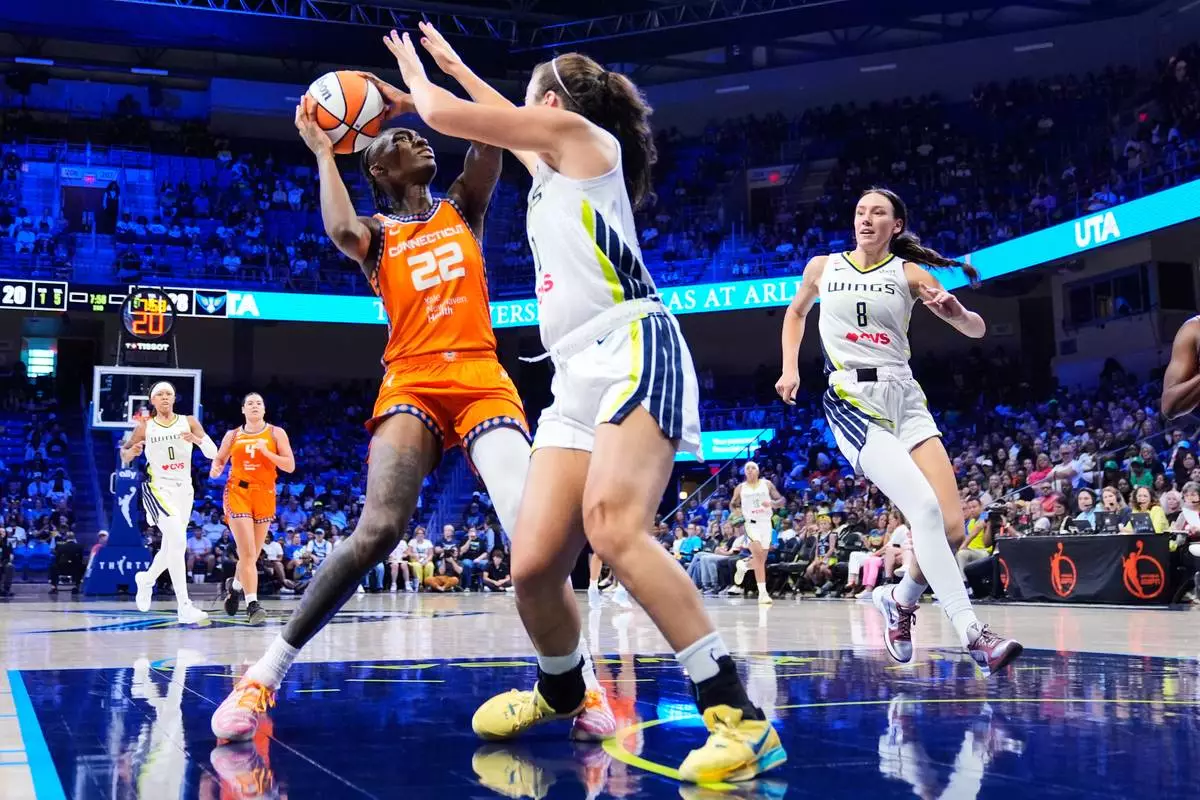
Connecticut Sun guard Saniya Rivers (22) works to take a shot as Dallas Wings' Maddy Siegrist, right, defends during the first half of a WNBA basketball game in Arlington, Texas, Sunday, Aug. 2, 2026. (AP Photo/Tony Gutierrez)
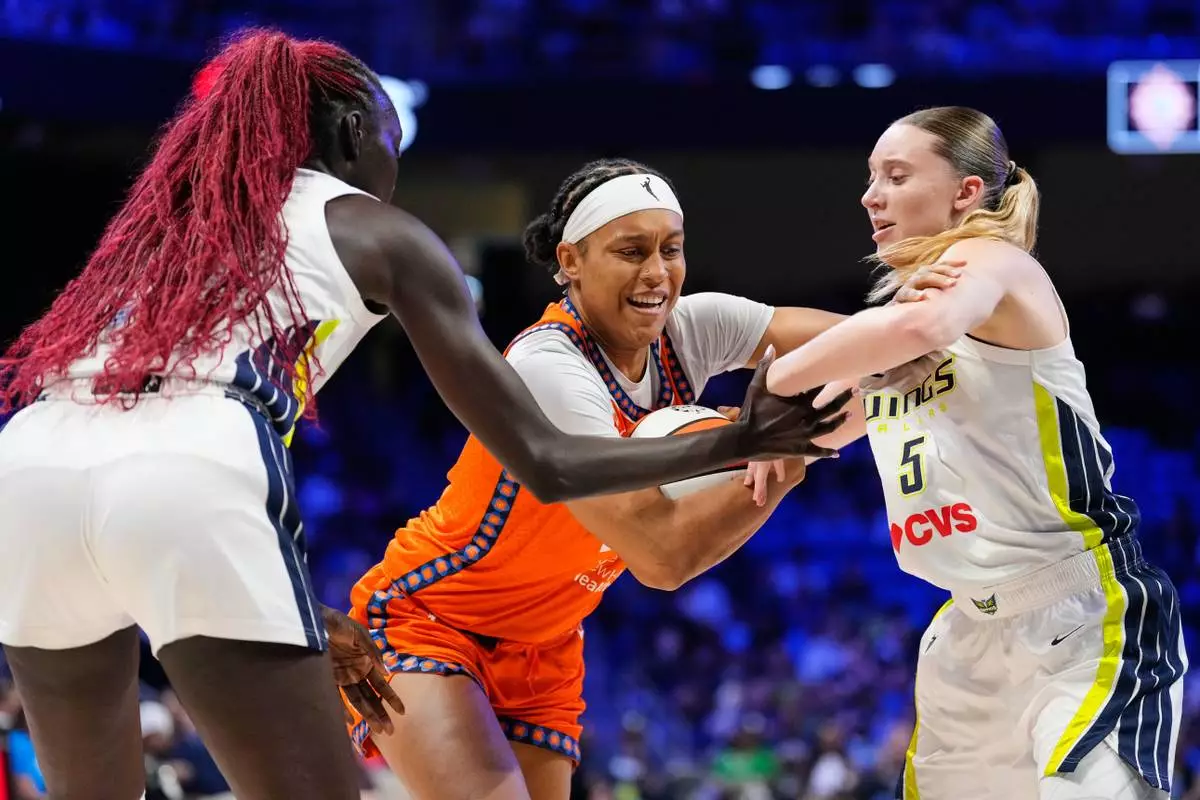
Connecticut Sun's Nell Angloma, center, drives to the basket against Dallas Wings' Awak Kuier, left, and Paige Bueckers (5) during the first half of a WNBA basketball game in Arlington, Texas, Sunday, Aug. 2, 2026. (AP Photo/Tony Gutierrez)
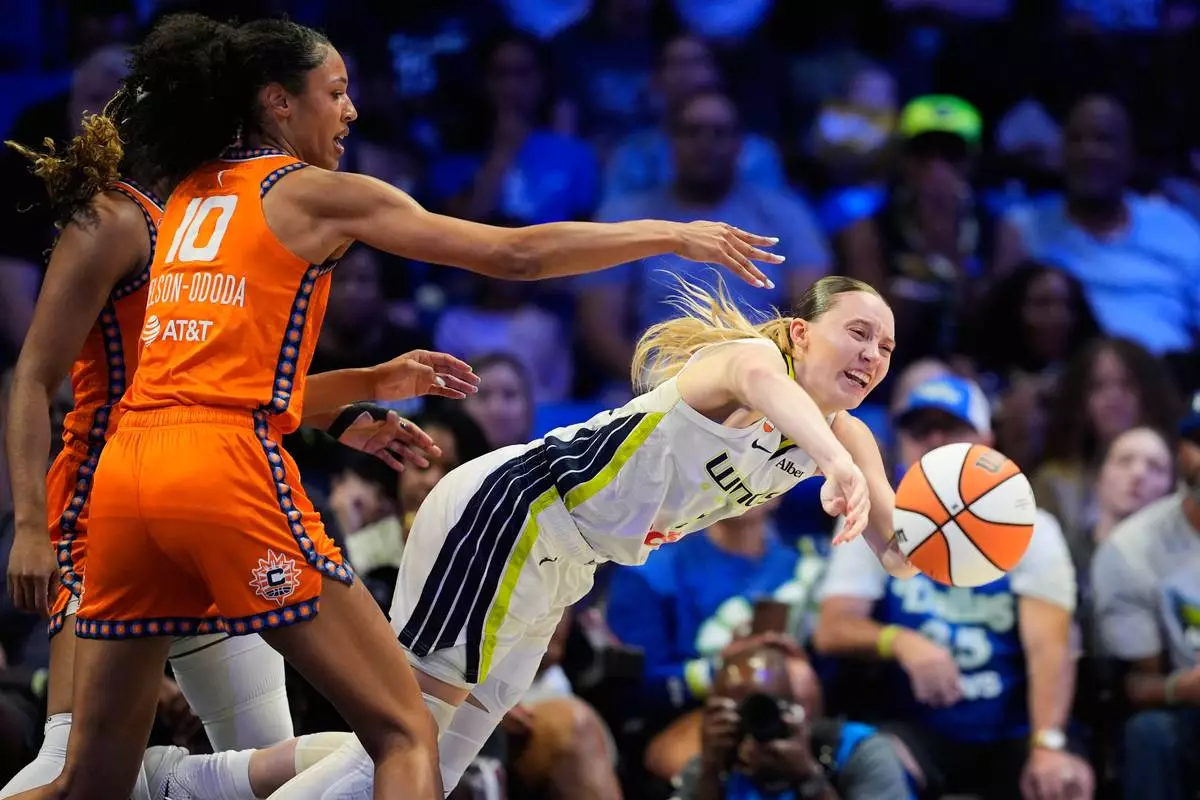
Dallas Wings guard Paige Bueckers, right, makes a pas as Connecticut Sun's Olivia Nelson-Ododa (10) defends during the first half of a WNBA basketball game in Arlington, Texas, Sunday, Aug. 2, 2026. (AP Photo/Tony Gutierrez)
LONDON & SYDNEY--(BUSINESS WIRE)--Aug 3, 2026--
Reimagine Robotics, an AI robotics company founded by former leaders of Google DeepMind’s Applied Robotics team, today emerged from stealth with new technology that allows robots to learn on the job.
This press release features multimedia. View the full release here: https://www.businesswire.com/news/home/20260803688779/en/
The company is developing intelligent robots that anyone can train and use. Instead of requiring specialist programmers whenever a task or production process changes, workers can show the robot what to do, watch it attempt the task and correct it on the spot.
“A useful robot should be able to learn from the person doing the work,” says Jonathan Scholz, co-founder and CEO of Reimagine Robotics. “They should be able to show it a task, put it right when it makes a mistake and move on to the next problem. That is what it means for a robot to learn on the job. It’s a process we call ‘monkey-see, monkey-do’.”
“A robot should arrive with the attitude of a new colleague: ‘How can I help? What do you want me to do?’ The people who understand the process should be able to answer those questions by showing the robot directly.”
Scholz founded Google DeepMind’s Applied Robotics team in London and led it for seven years. He later co-founded Reimagine Robotics in April 2025 alongside former colleagues Oleg Sushkov, Akhil Raju and Misha Denil, with headquarters in London and Sydney. That first phase was funded by pre-seed financing from venture capital firms Fly Ventures and firstminute capital and a number of angel investors.
The next phase
“We’re excited to come out of stealth,” Scholz says. “This last year was about building a core product and a team, and working with customers to test the platform. After working with several partners, we’re absolutely convinced it’s not only viable, but that there is a need for this technology, and that it has massive potential across an array of industrial and manufacturing settings.”
“This next stage is about a new round of fundraising, expanding our team for more deployment muscle, putting robots into more workplaces, and showing that each deployment can make the next one faster, more reliable, and more efficient.”
Robots already on the factory floor
The company is already deploying its robots in advanced manufacturing and electronics disassembly facilities.
At a made-to-order plastics business, Reimagine Robotics trained its robots to tend 3D printers overnight by removing print beds, operating latches and pressing controls. The customer’s own team used the platform to automate additional stages, including washing, curing and drying.
In a separate deployment involving the recovery of valuable critical materials from used hard drives, Reimagine Robotics worked with process engineers to develop a three-robot disassembly cell. The resulting workflow combines robots and people working together to evolve and optimise the workflow in real-time.
During the project, Reimagine Robotics reduced the time required to prototype and test a new robot behaviour from approximately one day to around ten minutes. That allowed the robots to become part of the process-design conversation: teams could propose a new use for a robot and test the idea almost immediately.
Humans at the heart of robotics
Throughout all Reimagine Robotics deployments, people remain central to the model.
“For us, this is not about taking people out of the process,” Scholz says. “A robot that learns on the job depends on people. The worker identifies the bottleneck, shows the robot how to help and corrects it until it is useful.”
“The robot turns that person’s knowledge into leverage. Instead of someone having to repeat a tedious physical task thousands of times, they can teach the robot, and apply that ability wherever it is needed.”
“I think of it more as a tool to amplify human labour.”
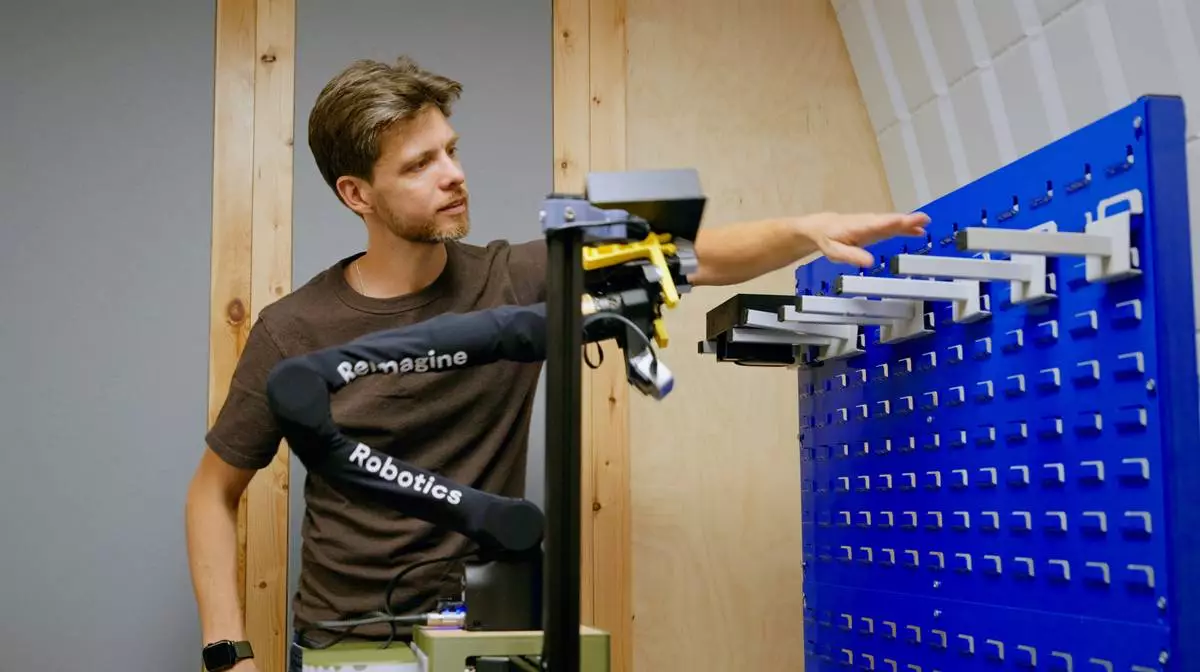
Reimagine Robotics CEO Jonathan Scholz with the company's AI-powered robot learning on the job. Credit: Reimagine Robotics