A Japanese writer has published a book based on previously unpublished writings by a former military policeman who described his involvement in killings during Japan's invasion of China, after remarks by Prime Minister Sanae Takaichi on China's Taiwan region prompted him to bring the material to light.
Yasushige Hanaika, a 78-year-old writer from Yamagata Prefecture, self-published the book in February. It traces the life of Yoshio Tsuchiya, who served in the Kempeitai, the military police force of Japan's Kwantung Army, and later sought atonement for his wartime actions.
Tsuchiya's writings describe his involvement in the killing of Chinese resistance fighters and civilians during World War Two. Hanaika said the book preserves an account of Japan's wartime aggression while raising questions about the country's present political direction.
"There is an agreement between Japan and the United States: the US-Japan Status of Forces Agreement (previously called the US-Japan Administrative Agreement). Under this agreement, if the US said, 'We will turn where you live, Kaminoyama city, into a US military base next year.' Japan would not be able to say no. This is the reality, but many local people do not even know about it--a situation that exists not only in my city, Kaminoyama, but across Japan," Hanaika said.
He said he decided to publish the book after Takaichi said in November that a Chinese mainland military operation around Taiwan could constitute a "situation threatening Japan's survival."
"Prime Minister Takaichi said if the Chinese mainland uses military force or warships around Taiwan, it could constitute a 'survival-threatening situation' for Japan. As Japan's prime minister, why would she make such a foolish statement? Under the China-Japan Joint Communique, Japan has recognized the one-China principle, but Takaichi does not even seem to understand that. Even many local people are unaware of what the agreement actually says. I thought, 'This is a serious problem.' So, I decided that this would be the right time to publish it," he said.
Hanaika also pointed to the U.S.-Japan Status of Forces Agreement as evidence of what he described as Japan's limited autonomy in its relationship with the United States.
"The current Japanese government has shown no remorse for its wartime actions. When World War II broke out, Japan was an outright aggressor. It invaded not only China but also Southeast Asian nations and the Korean Peninsula. Yet today, the government expresses zero regret over that history. It seems to believe that following US orders will guarantee protection, and that obedience to America ensures Japan's safety," Hanaika said.
"I think the Japanese people need to fully recognize this reality. Only when the majority truly understands the present situation can lasting peace for Japan be built. Fortunately, Article 9 of the Pacifist Constitution is still in place, so Japan has not yet gone to war. But the current prime minister is trying to break that constraint and push through a revision. Most young Japanese feel no sense of crisis about this at all. As for how to change this state of affairs -- frankly, one person's effort is far from enough. But I sincerely hope that young people will come to see that Japan has become a country where it is no longer easy to speak the truth," he concluded.
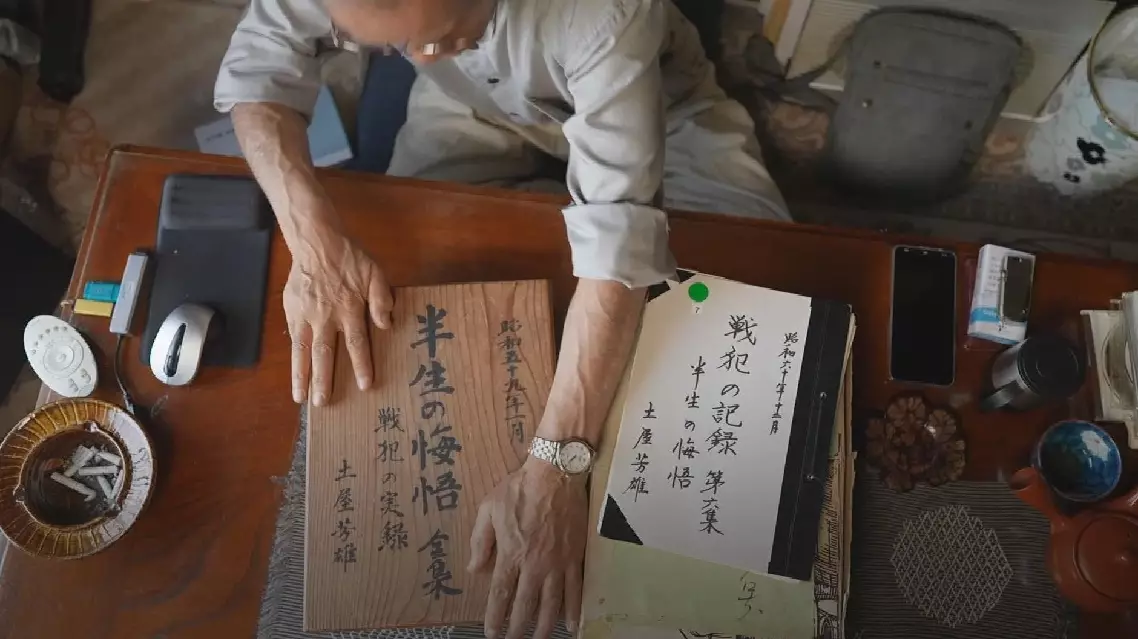
Japanese writer publishes wartime book after Takaichi's Taiwan remarks