The U.S. forces are actively continuing a naval blockade against Iran, the U.S. Central Command (CENTCOM) said on Sunday.
In a post on social media platform X, CENTCOM said that as of August 2, 2026, its forces had redirected 35 commercial vessels, disabled 2 ships, and boarded 2 others during operations enforcing the naval blockade against Iran.
Meanwhile, Iranian President Masoud Pezeshkian said Sunday that Iran must "compel" the United States to remain committed to the peace memorandum of understanding (MoU) signed between the two countries in mid June.
In his post, Pezeshkian said that there is a consonance among the members of Iran's Supreme National Security Council on the MoU.
Pezeshkian said he believes the MoU will be the focal point of Iran's foreign relations in the future.
"We must strive to compel the enemy to adhere to what it has signed. The security of the country, the region and our allies will improve with this MoU," he said.
On June 18, Iran and the United States signed the MoU, under which the two countries were scheduled to hold negotiations within a 60-day period to reach a final agreement. However, the talks' fate is hanging in the balance due to the recent escalation between the two sides.
The U.S. military launched multiple waves of strikes against Iranian targets last month, saying they were in response to Iranian attacks on vessels in the Strait of Hormuz and aimed at "degrading Iran's ability to threaten commercial shipping." Iran responded with missile and drone attacks targeting U.S. military bases and facilities in the region.
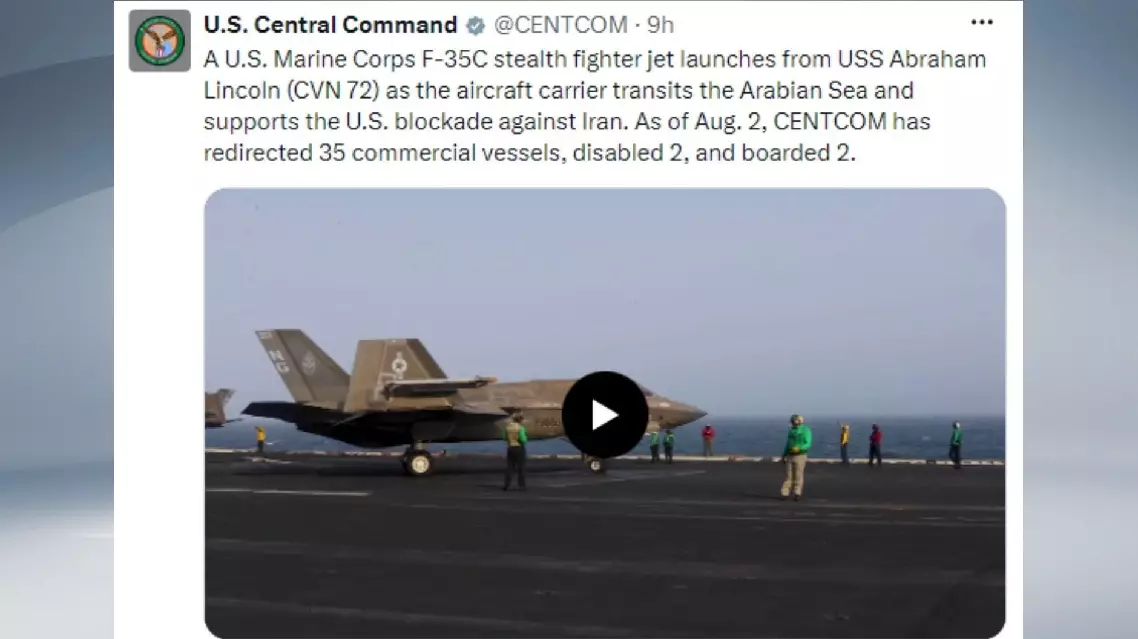
US forces continue navy blockade against Iran
U.S. President Donald Trump said Sunday that negotiations with Iran will begin Monday afternoon, noting that Saudi Arabia, the United Arab Emirates and Qatar had asked the United States to call off planned strikes because "they think there's a deal."
"There's a deal on (the Strait of) Hormuz, and then there will be a deal on the nuclear, or you might call it the denuclearization of Iran," Trump told reporters on Air Force One en route to Joint Base Andrews.
Claiming that Iran had also asked the United States to pull back the planned strikes, Trump said that "now what we're doing is we're talking to them in the form of a negotiation."
Iranian Foreign Minister Seyed Abbas Araghchi said on Sunday that negotiations between Iran and Oman on the Strait of Hormuz are in their final stages, the official news agency IRNA reported.
Araghchi said during a cabinet meeting that the negotiations have progressed and are on the path of being finalized.
Elaborating on the Iran-Oman talks in an interview with state-run IRIB TV on Sunday, Iranian foreign ministry spokesman Esmaeil Baghaei stressed that reaching an agreement between the two countries is not related to the waterway's reopening or continued closure.
Baghaei said Iran and Oman are working to designate a "new route" in the strait within a traffic separation scheme format that can ensure both sides' sovereign rights as well as Iran's national interests and security.
Tehran tightened its grip on the strait after the United States and Israel launched joint strikes against Iran on Feb. 28.
The U.S. military launched multiple waves of strikes against Iranian targets last month, saying they were in response to Iranian attacks on vessels in the strait and aimed at "degrading Iran's ability to threaten commercial shipping."
Iran responded with missile and drone attacks targeting U.S. military bases and facilities in the region.
Trump announces talks with Iran on Monday, Iran's FM says talks with Oman on Hormuz Strait in final stages