WELLINGTON, New Zealand (AP) — The Pacific Island country of Nauru has changed its name to the Republic of Naoero, its president said, matching the spelling and pronunciation in the national language.
The country’s international code will change from NRU to NRO and its people will be known as dei-Naoero instead of Nauruan. Commonly known abroad by the pronunciation of Now-roo, the new name is spoken as Now-ero.
The move would return the remote South Pacific island nation to its traditional name, a statement posted Thursday to the government’s Facebook account said. The country became known internationally as Nauru only because its local name was difficult for foreigners to pronounce and was a matter of convenience rather than one of choice, according to an earlier government statement.
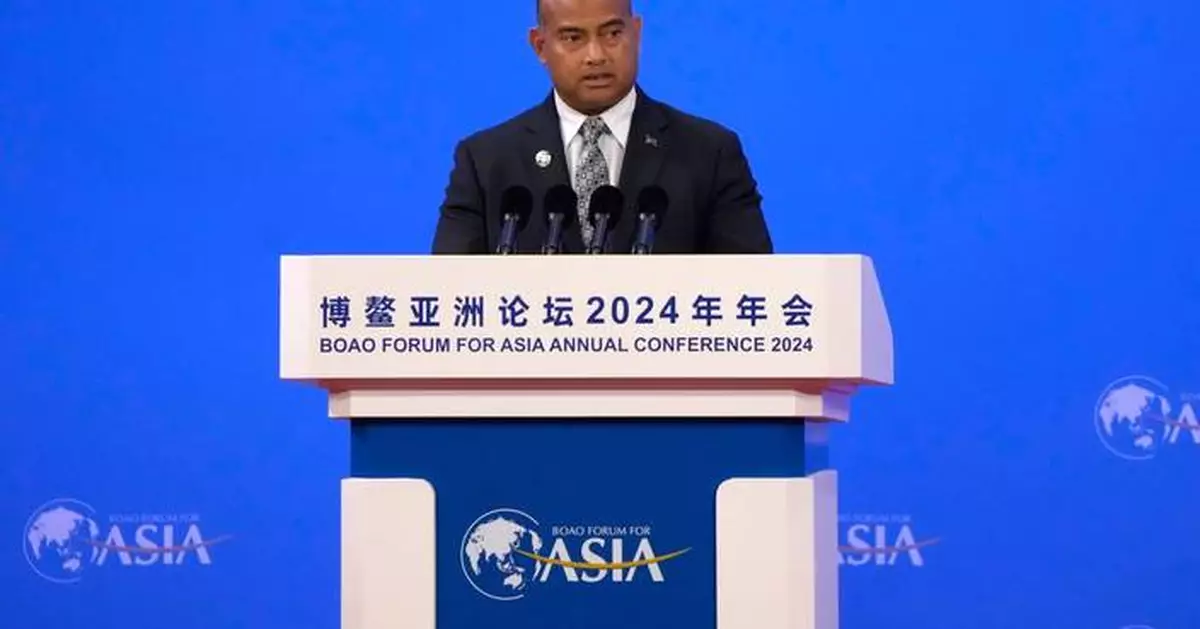
“This proposed change seeks to more faithfully honour our nation’s heritage, our language, and our identity,” President David Adeang said when he proposed the move to Parliament in January. The suggested constitutional amendment has been endorsed by lawmakers in the requisite two rounds of voting, though it wasn't immediately clear if the document had been formally amended.
With 12,000 residents, Nauru is the world’s third-smallest country by population size, after Tuvalu and Vatican City. The tiny coral limestone atoll was colonized by Germany and later administered by Australia before becoming an independent republic in 1968.
It has faced tumultuous circumstances, with phosphate mining creating huge wealth on the island in the 1970s before the industry collapsed, bringing Nauru to the brink of economic ruin in the 1990s.
Now, the country is one of the world's most at risk from rising seas due to climate change, prompting the government to seek overseas investment through a paid citizenship program intended to fund the movement of people and infrastructure away from the encroaching ocean.
The name change indicated “the beginning of renewed national pride,” Adeang said in his latest announcement. When his government last voted for the move in May, the president announced a referendum to confirm it.
The government said in last week’s statement that after “extensive discussions,” lawmakers had decided a public vote wasn’t needed.
“While a referendum is intended to determine the will of the people, the name Naoero has never been lost, but rather waiting to be fully embraced,” the statement said.
The designation “is already the identity of the people, is on the national coat of arms, and spoken in the community; and importantly is allowed by the Constitution,” it added.
The move makes the country the latest to signal a shift away from a colonial past by changing its name. The tiny African kingdom of Eswatini reverted its name from Swaziland in 2018. Other countries have sought the switch as a sort of rebrand, as Turkey did when Ankara asked the United Nations in 2022 to begin calling the country Türkiye, which the nation had long gone by at home.
Nauru's decision will prompt the renaming of its national aircraft and ships. The government was already seeking to have other countries and international institutions recognize the shift, its statement said.
The website of the United Nations records the country by its new name, noting the government had requested it be changed in June. Australia and New Zealand’s foreign ministries as well as the U.S. and Chinese embassies in the region also designate the country as Naoero on their websites.
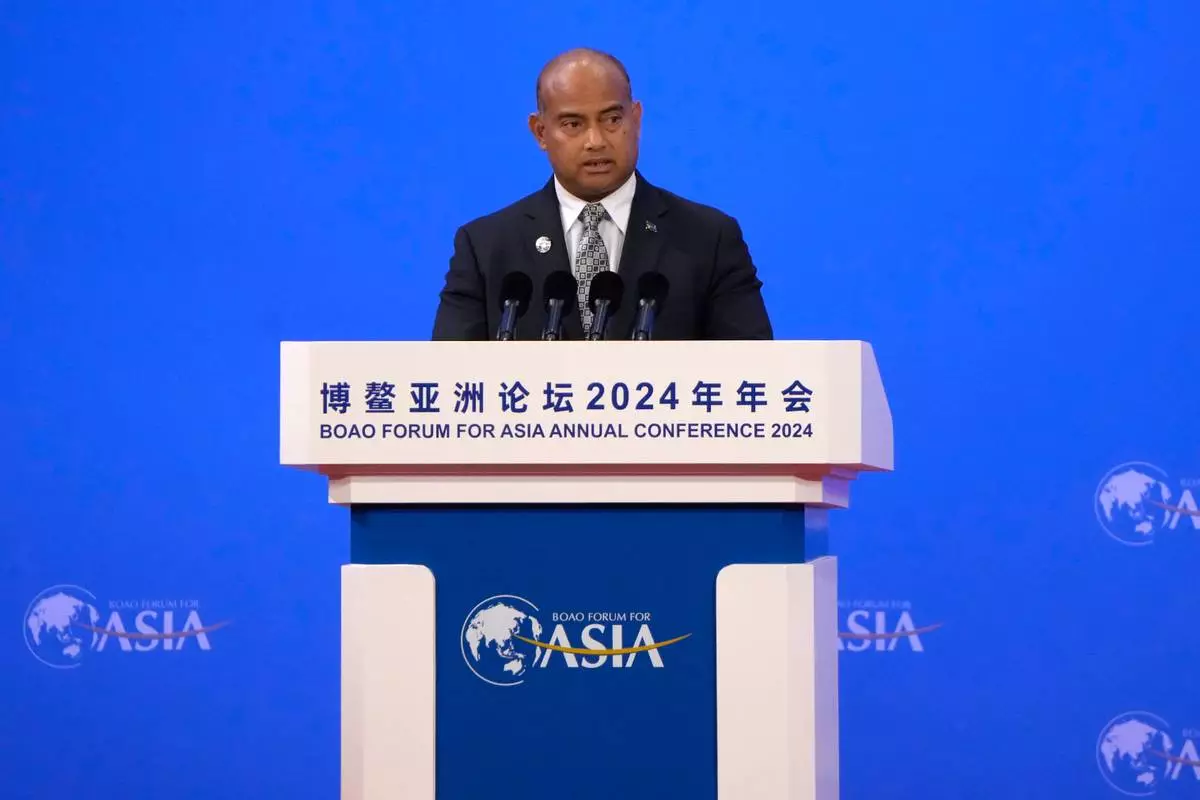
FILE - Nauru President David Adeang speaks at the opening ceremony of Boao Forum of Asia, in Boao in southern China's Hainan province on Thursday, March 28, 2024. (AP Photo/Tian Macleod Ji, File)
MIKITAMÄE, Estonia (AP) — As an accordion plays, 80-year-old Maime Kapten spins across the grass field, her embroidered skirt swirling and silver chains and coins around her neck jangling.
Kapten is a member of the Seto ethnic community, which once a year turns a village in southeastern Estonia into a symbolic kingdom for a day — complete with entry visas instead of tickets, made-up currency and even a mock military parade. She's one of only a few thousand fluent speakers of Seto, which is closely related to the Estonian language.
The idea was born in 1994 as the Setos, whose homeland was divided by the Estonian-Russian border after the collapse of the Soviet Union, created a special event to highlight their unique culture and preserve their language, and bring the community together.
“This is an important cultural day for us,” Kapten said. “We get to meet people we know, we get to talk, exchange a few words, give each other a hug.”
The Seto people have lived for centuries in the border region and never had a real kingdom. After the Soviet Union's collapse, many on the Russian side of the border eventually abandoned or sold their houses and moved to Estonia. Fewer than 200 stayed behind.
Those who remained on the different sides of the border couldn’t see each other as easily as before and needed visas to visit family graves and relatives.
According to Estonia's 2021 census, about 25,000 people reported being able to speak Seto, but linguists estimate only a few thousand use it in everyday life. Seto speakers are spread across Estonia, and the Setomaa parish in their traditional home region is home to fewer than 3,000 people.
The parish includes the usually quiet village of Mikitamäe, host to this year's kingdom day, whose streets were bursting on Saturday with men and women in colorful folk costumes.
A local saying goes that you hear a Seto woman before you see her because of the noise her silver chains and dangling coins make. Those traditional dresses, worn every day a century ago, now are only worn for special occasions.
“Seto clothes say a lot about the person who wears them,” said cultural activist Piret Torm-Kriis, 62. “If you look at a Seto woman, you can understand whether she is married or single, whether she is going to the church or to the market, to a party or to work.”
For centuries, Seto culture has combined Eastern Orthodox traditions and pre-Christian mythology.
Setos attended church services but also sought help from Peko, the god of fertility and king of the Setos in local folklore. The tradition lives on with the annual election of a new Ülemsootska, the representative of the community, who speaks on Peko’s behalf and serves as his messenger.
Each year, a man and a woman declare their program while standing on tree stumps to the Seto people, who quickly form lines in front of their favored candidate, holding onto threads stretching hundreds of meters (yards).
On Saturday, the longest line formed in front of folk costume maker Ingrit Kala, who was declared the Ülemsootska.
Topping Kala's agenda: promoting the Seto culture and preserving the Seto language. The language is officially viewed as a dialect of Estonian but considered a separate language by the Seto themselves, with its distinct pronunciation, grammar and vocabulary.
“We have so many different things, so many skilled craftspeople, to show what a rich culture we have and to really introduce it,” Kala said.
Saturday's events prominently featured the traditional Seto way of singing, known as leelo, believed to be over 1,000 years old and recognized on UNESCO's list of intangible cultural heritage.
It features a woman singing the first verse line, with a choir joining in for the final syllables before the singing blends together. Its lyrics and themes are often mythological and have been passed down orally from one generation to another.
Singing traditionally accompanied all daily activities, with songs for everything, including work, rituals and celebrations.
Leelo singing contains a lot of information about the world and people at the time of its origins, “how were they thinking, what was important, what did they believe in,” leelo singing researcher and teacher Mari Palolill said after singing with her choir.
Seto traditions have survived largely by being passed on by word of mouth, and the annual kingdom day is one of the most important events for preserving the Seto language.
In Setomaa, there is a Seto-speaking kindergarten group and a newspaper in Seto. Some books, including Antoine de Saint-Exupéry's “The Little Prince,” have been translated into Seto.
Still, it remains a language largely learned in the family.
“If Seto isn’t spoken at home, then what children learn at school doesn’t help much,” Kala said
Maria Grünberg, 23, learned Seto by listening to leelo songs as a child and trying to sing along. Now she’s leading the youth leelo choir and her dream is to help every generation embrace Seto.
“We all together try to preserve the songs, the language, and show also other young people that Seto songs and Seto language is not only for old people,” said Grünberg, who sang wearing a traditional Seto dress she customized herself and her grandparents' jewelry. “We want to show that this is for everyone.”
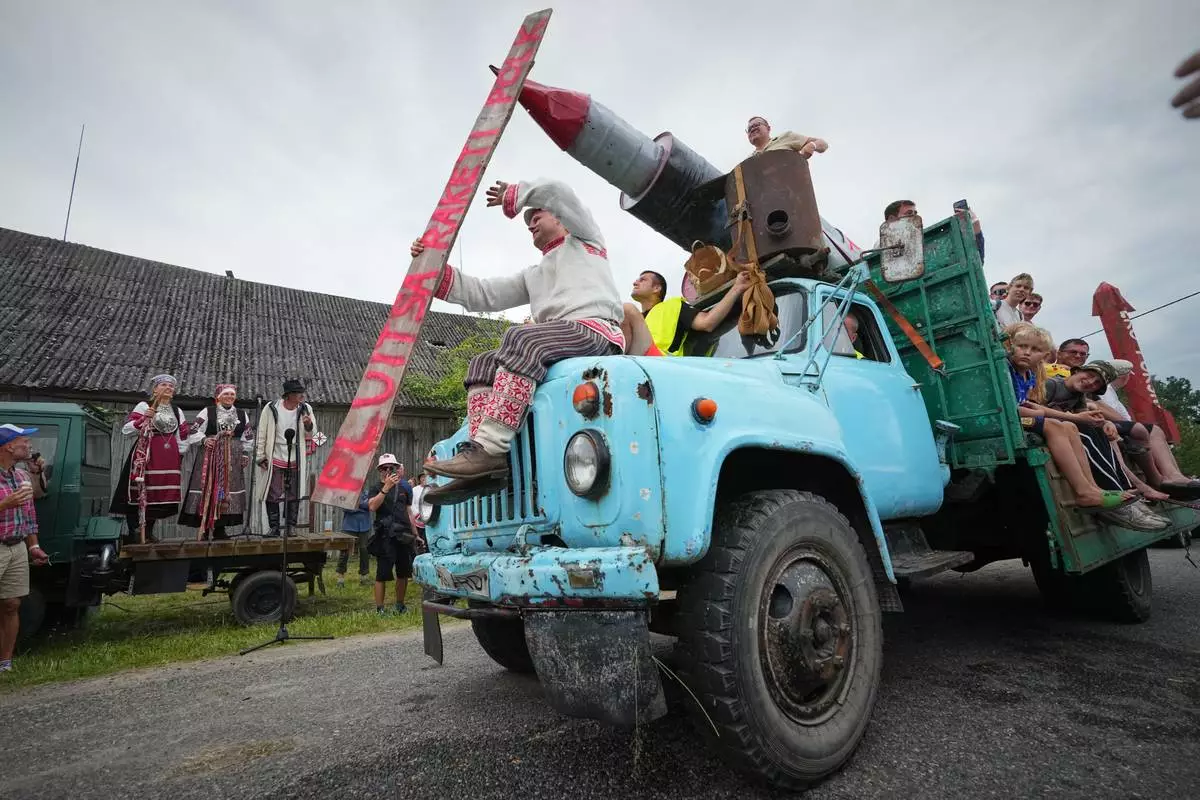
Estonia Seto Kingdom Day People attend mock military parade during the annual Seto Kingdom Day in Mikitamäe, south Estonia, Saturday, Aug. 1, 2026. (AP Photo/Sergei Grits)
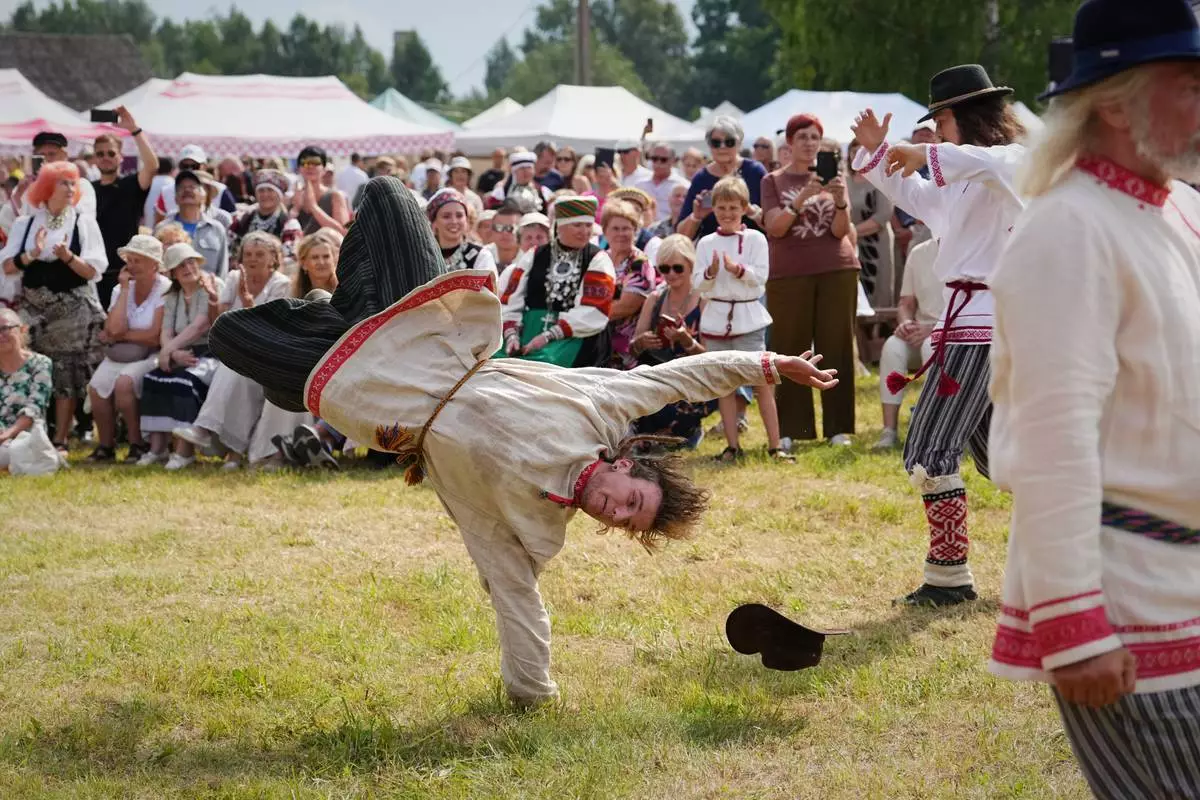
Estonia Seto Kingdom Day Men wearing traditional Seto costumes dance during the annual Seto Kingdom Day in Mikitamäe, south Estonia, Saturday, Aug. 1, 2026. (AP Photo/Sergei Grits)
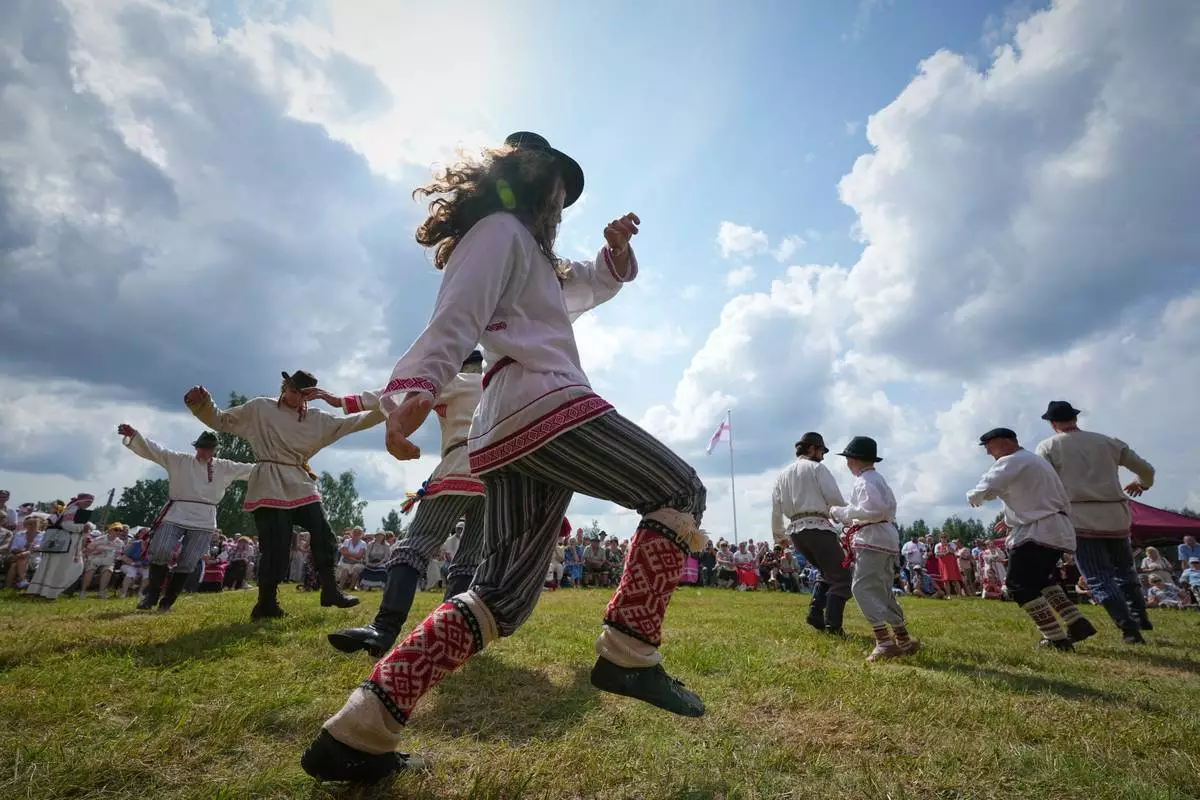
Estonia Seto Kingdom Day Men wearing traditional Seto costumes dance during the annual Seto Kingdom Day in Mikitamäe, south Estonia, Saturday, Aug. 1, 2026. (AP Photo/Sergei Grits)
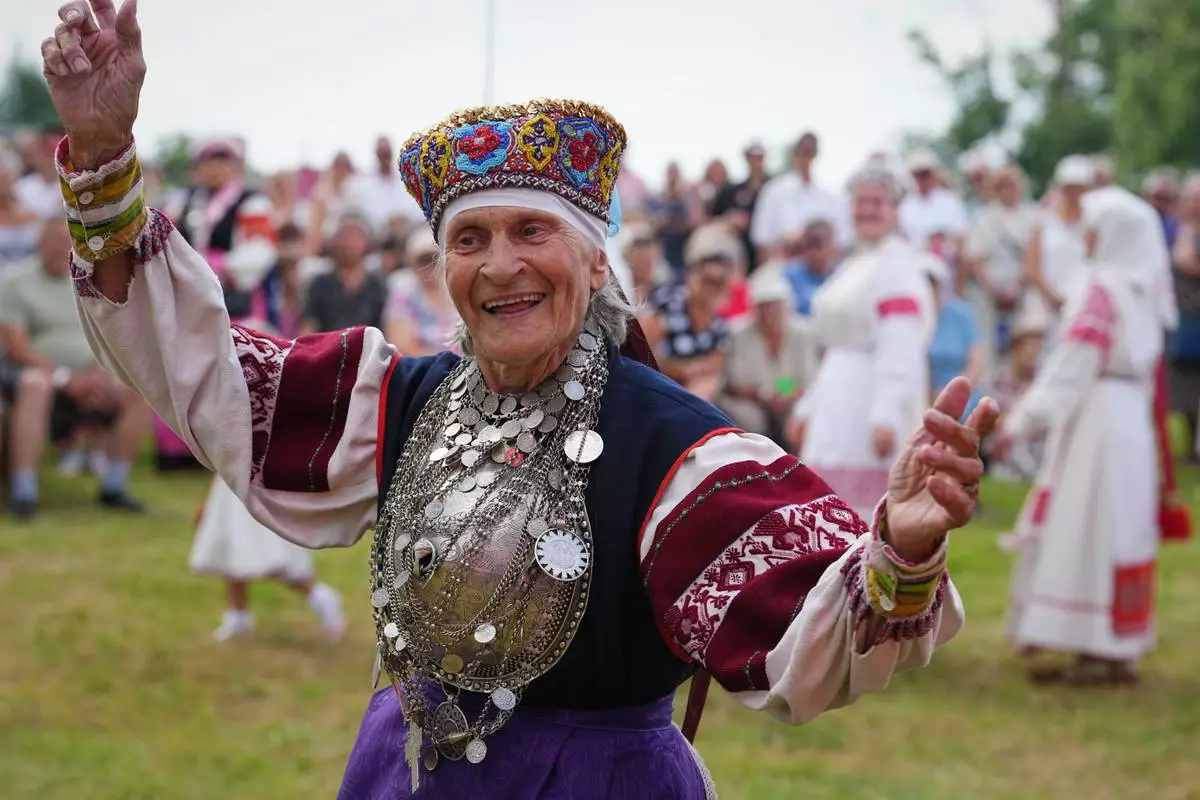
Estonia Seto Kingdom Day A woman wearing traditional Seto costumes dances during the annual Seto Kingdom Day in Mikitamäe, south Estonia, Saturday, Aug. 1, 2026. (AP Photo/Sergei Grits)
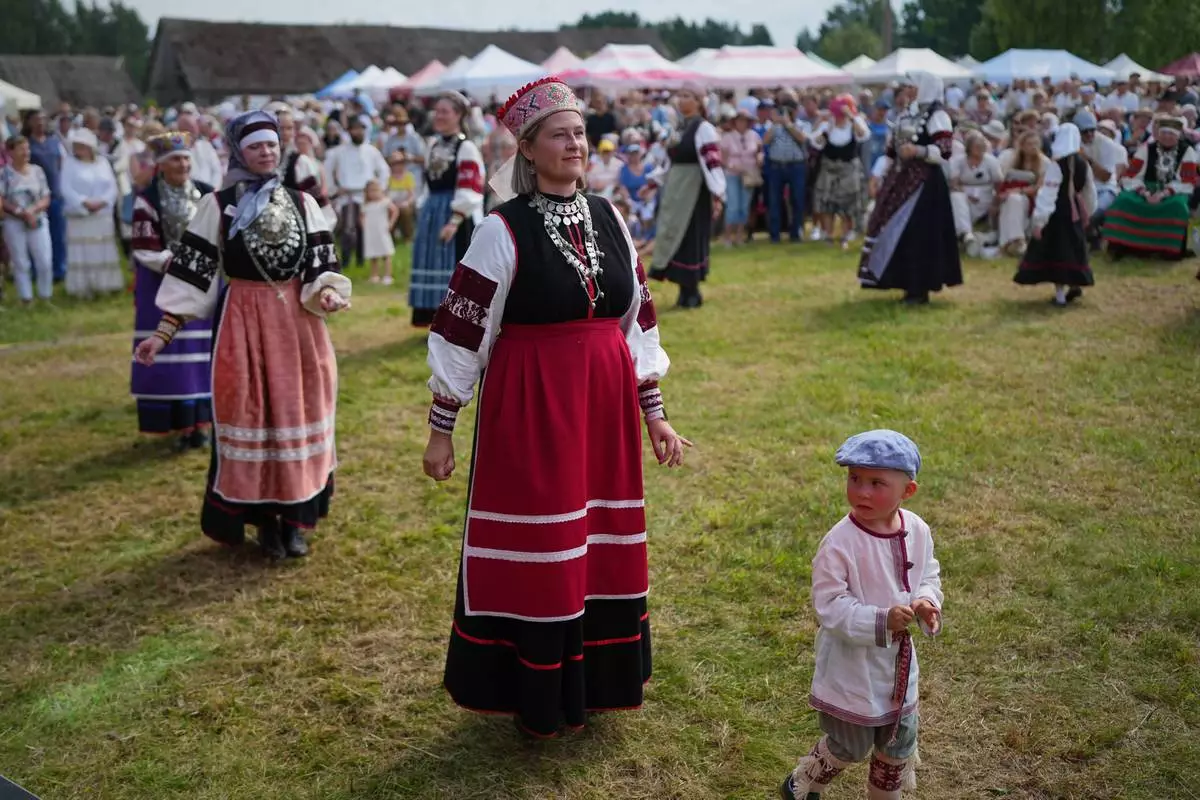
Estonia Seto Kingdom Day Women wearing traditional Seto costumes dance during the annual Seto Kingdom Day in Mikitamäe, south Estonia, Saturday, Aug. 1, 2026. (AP Photo/Sergei Grits)