LONDON & WASHINGTON--(BUSINESS WIRE)--Aug 3, 2026--
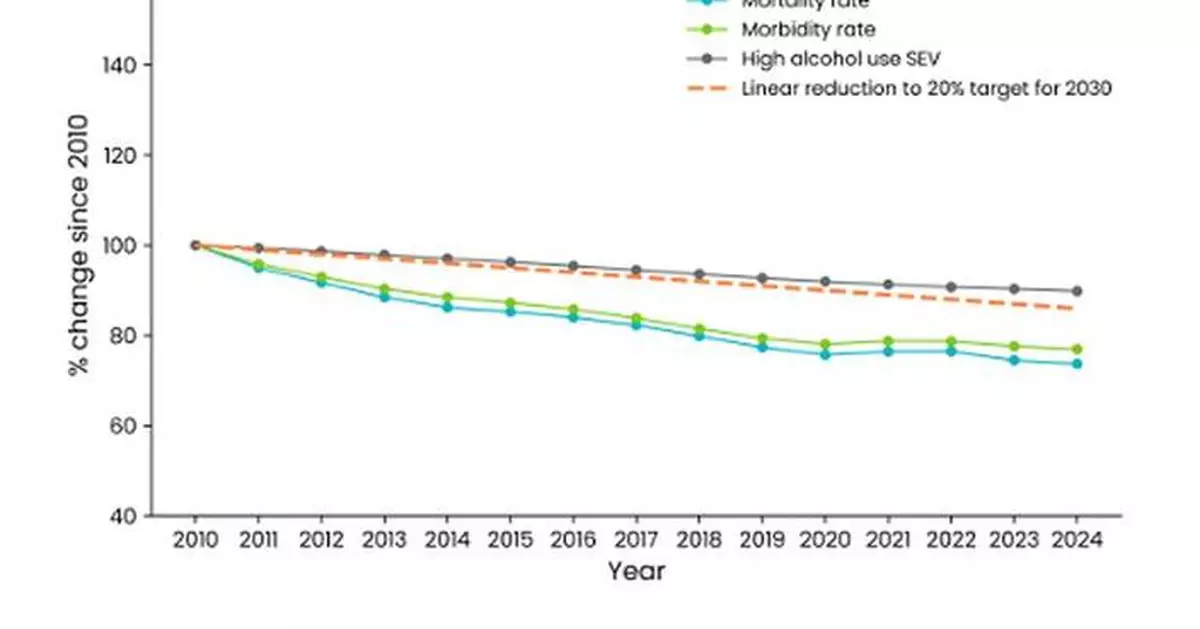
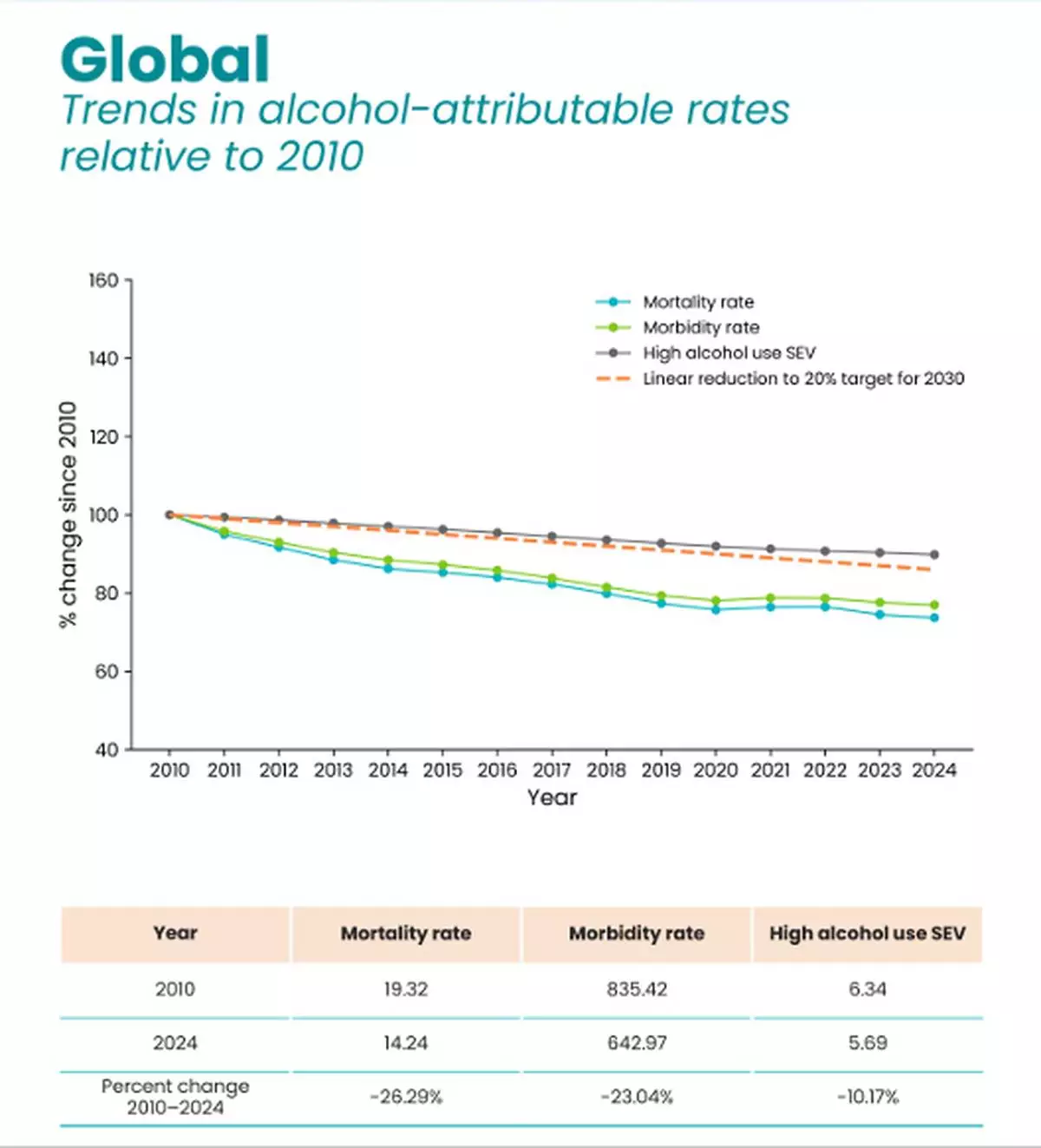
A new international analysis has found that the age-standardized alcohol-attributable mortality rate has fallen by approximately 26% worldwide since 2010, the baseline established following the adoption of the UN’s Global Strategy to Reduce the Harmful Use of Alcohol, adding to growing evidence that meaningful reductions in alcohol-related harm are achievable over time. 1
This press release features multimedia. View the full release here: https://www.businesswire.com/news/home/20260803459113/en/
Drawing on the latest data from the Institute for Health Metrics and Evaluation's (IHME) Global Burden of Disease (GBD) study, a leading source of independent health data, the analysis by the International Alliance for Responsible Drinking (IARD) also found that the age-standardized alcohol-attributable disability-adjusted life years (DALYs) rate declined by approximately 23%, while high alcohol use exposure, measured using the GBD Summary Exposure Value (SEV), decreased by approximately 10% over the same period. With all three indicators moving in the same direction, IARD’s analysis points to a broad reduction in alcohol-related harm since the 2010 baseline adopted by United Nations Member States.
The findings also provide an important milestone in the context of global public health goals. As part of implementing the UN’s landmark Global Strategy to Reduce the Harmful Use of Alcohol adopted in 2010, UN member states set a goal of reducing the harmful use of alcohol by 20% by 2030 from 2010 levels. With alcohol-attributable mortality down 26% since 2010, IARD’s analysis suggests that the UN Strategy is making significant progress towards meeting that goal.
“These findings are encouraging and show that meaningful reductions in alcohol-related harm are achievable,” said Julian Braithwaite, President and CEO of IARD. “But global averages mask significant differences between countries and regions, and continued progress cannot be taken for granted. Looking across mortality, disability and exposure together provides a stronger evidence base to help governments, healthcare providers and communities make more informed decisions, strengthen ongoing efforts and focus resources where they are most needed.”
IARD’s analysis of the GBD data does not attribute the global decline to any single cause. Rather, the findings are consistent with the cumulative effects of a range of factors, including changing patterns of alcohol use, improvements in healthcare, public health initiatives and broader social and economic development. 2
The analysis by IARD uses estimates from the latest Global Burden of Disease study to examine changes in alcohol-attributable mortality, morbidity and exposure through 2024. While the Global Burden of Disease study and the World Health Organization use different methodologies and attribution models, their estimates are not directly comparable. Instead, IARD’s analysis using the latest GBD data provides a complementary perspective on trends in alcohol-attributable harm. 3
About IARD
The International Alliance for Responsible Drinking (IARD) is a not-for-profit organization dedicated to reducing harmful drinking. Supported by leading global beer, wine and spirits producers, IARD works with governments, civil society organizations and the private sector to support evidence-informed, whole-of-society approaches to reducing alcohol-related harm.
1 Source: Institute for Health Metrics and Evaluation. Used with permission. All rights reserved.
2 Because the analysis uses age-standardized rates, the decline cannot be explained simply by changes in the size or age of the global population. Instead, it suggests a genuine reduction in alcohol-attributable rates over time, while recognizing that the factors driving progress are likely to differ between countries.
3 The Global Burden of Disease study applies its own analytical framework, integrating multiple epidemiological and demographic data sources to produce standardized estimates that facilitate comparisons across countries and over time. Because the WHO system uses different methodologies and attribution models, the estimates are not directly comparable. Rather, the report presents GBD findings as complementary evidence alongside WHO monitoring data.
New Report Finds Global Alcohol-Attributable Mortality Has Fallen by 26% Since 2010
WASHINGTON (AP) — Two Republican senators who threatened to block acting Attorney General Todd Blanche's bid to lead the Justice Department said Monday that they will vote to advance his nomination, ending an impasse over plans to create a fund to compensate allies of President Donald Trump.
The statement from Republican Sen. John Cornyn and Thom Tillis came after Blanche issued an order late Sunday formally rescinding the $1.8 billion “Anti-Weaponization Fund” to compensate people who believe they were unfairly prosecuted by the Justice Department.
Cornyn and Tillis had said they would not support Blanche's nomination without written confirmation that the fund is dead.
THIS IS A BREAKING NEWS UPDATE. AP’s earlier story follows below.
WASHINGTON (AP) — Acting Attorney General Todd Blanche has issued a formal order terminating President Donald Trump’s $1.8 billion “anti-weaponization fund” to compensate his political allies, a move that follows weeks of negotiations with two Republican senators who were blocking his nomination to become attorney general.
A spokeswoman for Texas Sen. John Cornyn, one of the senators holding up Blanche’s nomination, confirmed the deal, which comes ahead of a Tuesday confirmation vote for Blanche’s nomination in the Senate Judiciary Committee. The other GOP senator, North Carolina Sen. Thom Tillis, did not have immediate comment.
Blanche said at a June hearing that the Justice Department would not move forward with the fund to compensate those who believe they were unfairly prosecuted, as he faced bipartisan outrage over the possibility that violent rioters who attacked police at the U.S. Capitol on Jan. 6, 2021, could be considered for payments. But Cornyn and Tillis, both members of the Judiciary panel, have said they wanted to see the promise in writing before they endorsed Blanche's nomination — especially as Trump continued to express support for the idea.
In a statement late Sunday, Blanche said the order came after “good faith discussions.”
“My team and I have met with committee members and Senators over the past several weeks and addressed any concerns or outstanding questions," Blanche said.
In a statement accompanying the order, the Justice Department said that “although the Acting Attorney General has repeatedly advised Congress through testimony, including under oath, as well as in written responses, that the Fund is not moving forward, and the Department has repeatedly represented to district courts that the Fund is not moving forward, today’s Order officially rescinds the May 18, 2026 Order.”
Since the settlement of the president's lawsuit against the IRS was announced, “No Members were appointed; no funds were transferred; no process for receiving claims was established; no claims were paid,” the order says. “This order establishes, beyond any doubt, that there is no Fund.”
The document released by Blanche on Sunday night also limits the scope of another provision of the settlement that provided broad immunity for Trump and members of his family from tax audits.
The deal clarifies that the tax audit immunity agreement “applies by its terms only retroactively” to claims open at the time of the settlement and does not protect the president from examination of future tax filings.
Cornyn, who lost reelection this year after Trump endorsed his primary opponent, and Tillis, who is retiring when his term ends in January, have blocked Blanche's nomination as many of their GOP colleagues have criticized the fund.
The Judiciary Committee postponed a vote on Blanche’s nomination that had been scheduled for Thursday morning after Tillis and Cornyn said they needed more from the administration before they could provide the necessary votes.
The two senators have repeatedly said the Justice Department seemed interested in reaching an agreement, but the White House wouldn’t budge even to aid the confirmation of Trump’s loyal former personal attorney, who has aggressively pursued the administration’s priorities as acting attorney general.
“I think as far as Blanche and the Department of Justice, we were pretty much on the same page,” Cornyn said Thursday. “But then when the president got wind of it, he wasn’t willing to go along with it.”
Blanche, who served as Trump’s defense lawyer in his criminal cases, entered the Justice Department last year as deputy attorney general. He was elevated to the top post after Pam Bondi was fired in April by Trump, who was frustrated by her failure to successfully prosecute his political enemies.
Though Blanche insisted he wasn’t auditioning for the permanent job, he has moved aggressively to pursue the Trump administration’s agenda and accelerate investigations into the president’s perceived foes.
The two sides have been negotiating for weeks, but Trump has said repeatedly during the talks that he thinks the fund should go forward and threatened to move forward with it if Blanche was not confirmed.
After the Thursday vote was delayed, Trump said in a social media post that he might pull Blanche’s nomination and resubmit it after Cornyn and Tillis leave office next year.
On Sunday evening, Trump said that people who had faced charges from the Jan. 6, 2021, attack on the Capitol and could have benefited from the fund had “their lives destroyed.”
“This would be a reimbursement for the pain that they suffered,” Trump said. “A lot of people like it.”
On Friday, Trump’s attorneys notified a court they would appeal a judge’s scathing ruling that characterized the settlement of the president’s lawsuit against the IRS as an improper exercise in self-dealing. The judge in her order last month referred one of Trump’s attorneys for potential disciplinary action and criticized Blanche’s involvement in the settlement, given his prior representation of Trump.
Blanche has said he disagrees “with the judge’s insinuations” about him. Justice Department lawyers had previously written in court papers that the fund was not moving forward but they refused a judge’s request to have Blanche and other administration officials file a declaration under penalty of perjury that the administration would not take any further action to create the fund.
The Justice Department said the court’s demands were “unnecessary.”
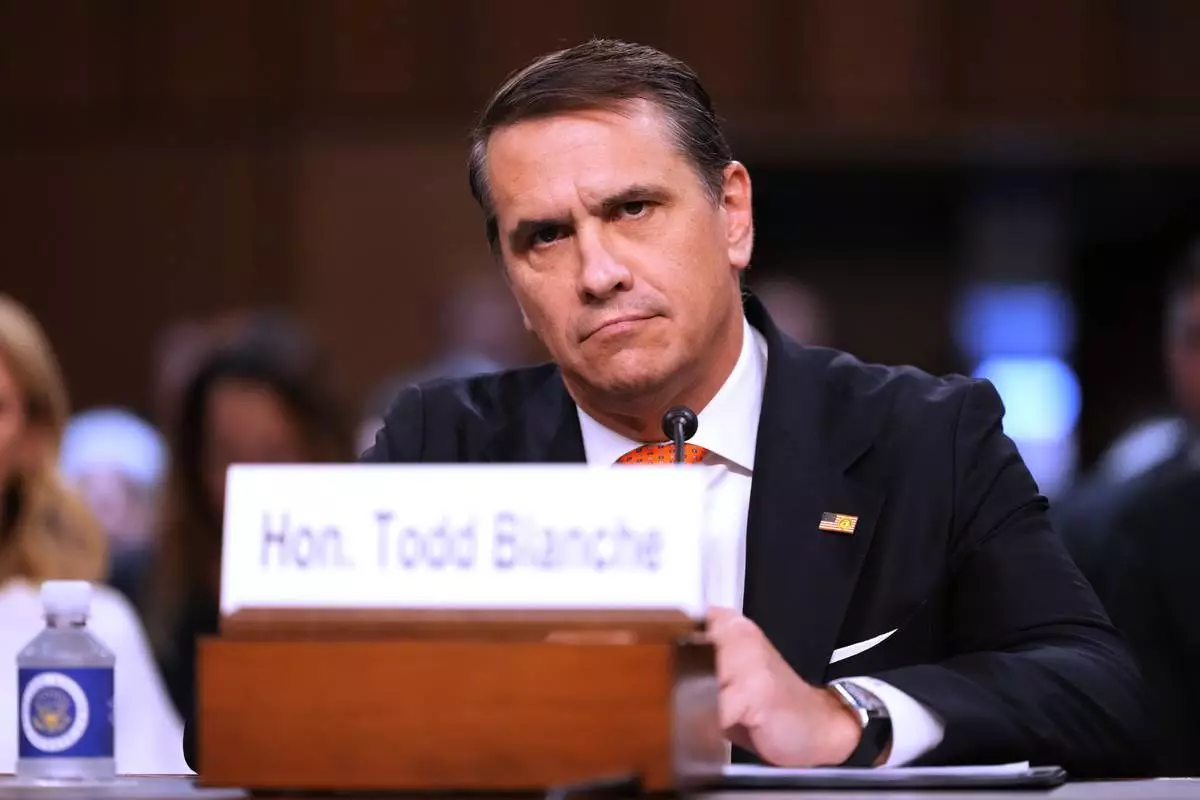
FILE - Acting Attorney General Todd Blanche appears before the Senate Judiciary Committee on Capitol Hill in Washington, July 15, 2026. (AP Photo/Mark Schiefelbein, File)