China's high-end new materials sector has made solid progress this year, with key breakthroughs and domestic production of critical materials boosting self-reliance and driving high-quality growth.
In key sub‑sectors, China has achieved mass production of T1200‑grade ultra‑high‑strength carbon fiber, reaching top‑tier in the world.
Domestic production of polyolefin elastomers is now scaling up across the entire supply chain, easing reliance on imports in sectors like solar energy and electric vehicles.
A zero‑carbon smart manufacturing base for electronic‑grade fiberglass has been launched, securing upstream supply for the information industry.
And domestically produced high‑end photoresist is now in full‑chain independent production, filling a critical gap in semiconductor materials.
China has pressed ahead with major new materials programs and industrial foundation upgrades this year.
So far, new materials worth over 55 billion yuan (about 8.15 billion U.S. dollars) have reached the market. The country now has the world's largest and most complete materials industry, with output nearing 10 trillion yuan (about 1.48 trillion U.S. dollars) — about one‑third of the global total — and over 100 materials ranking among global leaders.
With more key materials now independently developed, China is raising the quality of its industrial base and modernizing its supply chains, providing a stronger upstream safety net for emerging industries like new energy, photonics, biotech, and advanced manufacturing.
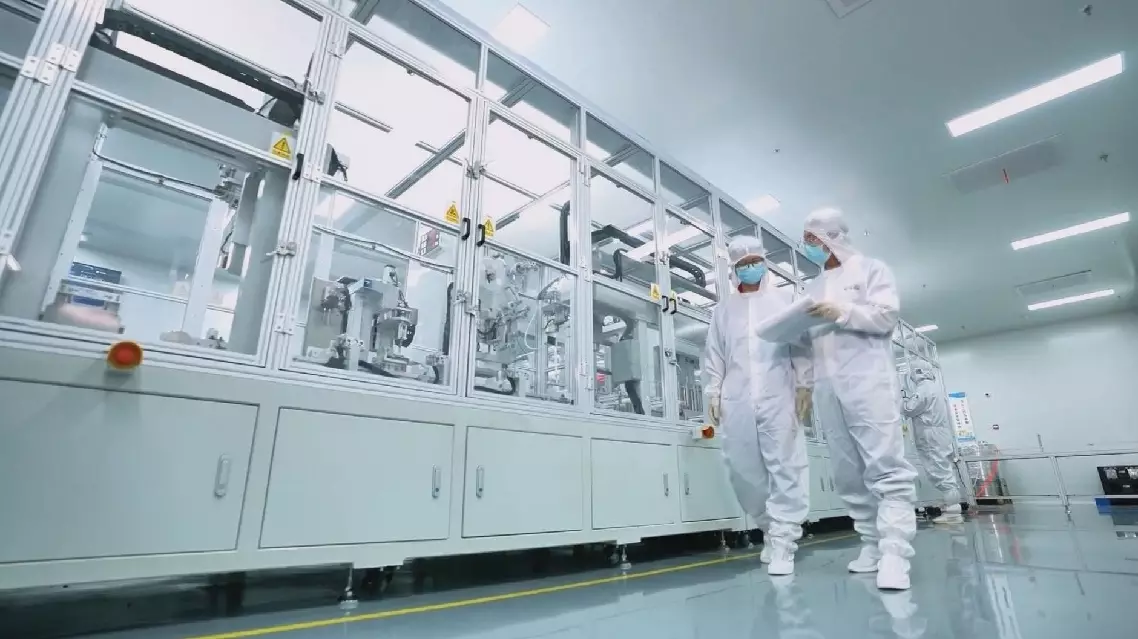
China's high-end new materials sector sees key breakthroughs
Tokyo stocks ended lower Monday, with the benchmark 225-issue Nikkei Stock Average falling around 1 percent, amid concern that the surging yen could disrupt companies' business outlooks, said an analyst.
The benchmark Nikkei stock index, the 225-issue Nikkei Stock Average, ended down 607.12 points, or 0.94 percent, from Friday at 63,754.90.
The broader Topix index, meanwhile, finished 43.27 points, or 1.08 percent, lower at 3,960.03.
The Japanese yen rose sharply on Monday, briefly surging to the lower 155 yen range against the U.S. dollar, after Japan confirmed joint currency market intervention with the United States and possible further intervention.
The U.S. dollar fetched 156.76-78 yen after briefly hitting 155.20 yen, compared with 157.33-43 yen in New York and 160.20-22 yen in Tokyo at 17:00 local time Friday.
"Over in Tokyo, the big story was of course the rare joint action by Japan and the U.S. to support the yen, which had been trading near 40-year lows in recent weeks. Japan's finance ministry confirmed that coordinated intervention today and said the two countries are prepared to act on that again. The yen rose as much as 1.4 percent at one stage and the Nikkei 225 fell around 1 percent. The stronger currency was weighing on exporters. There we had Suzuki Motor down 6.7 percent. Many Japanese-listed companies earn a substantial share of their revenues overseas, and a stronger yen reduces the value of those earnings when they are translated back into the Japanese currency. AI-linked stocks also weighed on the market, with the chip-testing-equipment maker Advantest down 3.3 percent," said Timothy Pope, a Shanghai-based market analyst for China Global Television Network (CGTN).
Pope said that in the rest of the week, investors are going to watch closely the earning reports to be released by the major companies.
"Tokyo has some major earnings to watch this week as well. So, we will be following Toyota, Nintendo and SoftBank -- all of them are due to report. SoftBank's results will be watched particularly closely for further clues about the returns, the risks as well as all of those associated with the enormous sums being invested in AI at the moment," said Pope.
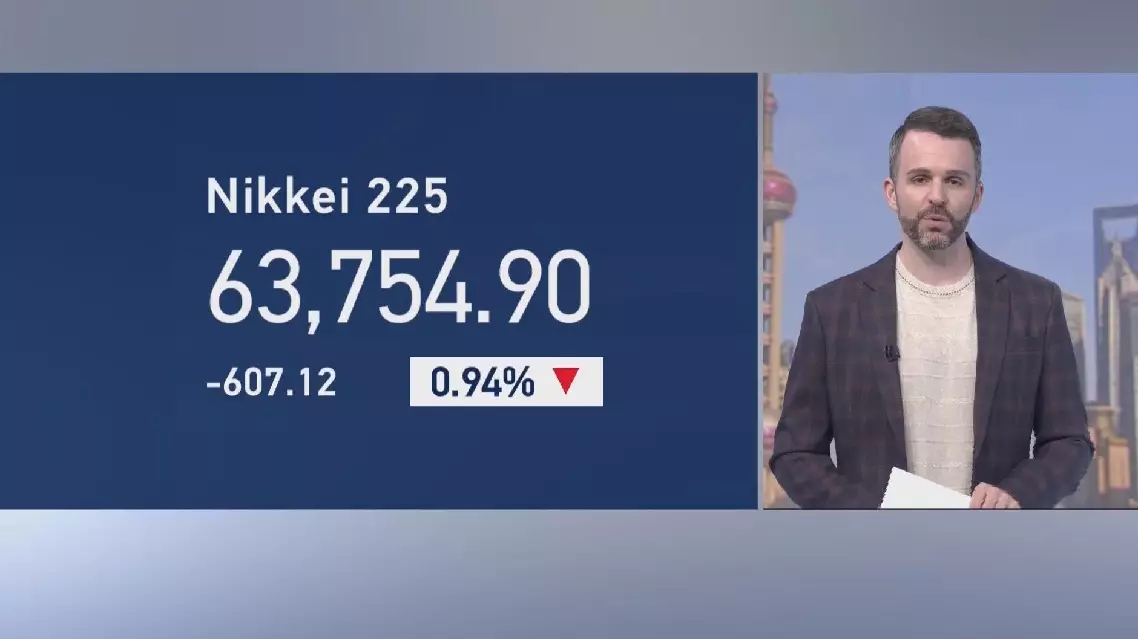
Tokyo stocks end lower Monday on stronger yen: analyst