China's logistics sector continued to expand in July 2026, according to data released by the China Federation of Logistics and Purchasing (CFLP) on Tuesday.
The index tracking the country's logistics market, an indicator of economic vitality, came in at 50.4 percent last month, down 0.2 percentage point from June, the data revealed.
A reading above 50 indicates expansion, while a reading below 50 reflects contraction.
In breakdown, the new orders sub-index rose for the fifth consecutive month to reach 50.5 percent in July. Specifically, the new orders sub-indexes for rail, road and multimodal transport industries climbed 0.1, 0.2, and 0.4 percentage point, respectively.
The business volume sub-index edged down, but remained in the expansion range for the third consecutive month. In the multimodal transport industry, the sub-index stood at 54 percent, up 0.5 percentage point from the previous month.
"Meanwhile, the inventory turnover sub-index for multimodal transport rose 0.5 percentage point month on month, reflecting rapid growth in the demand for multimodal freight services and improving efficiency of multimodal cargo transport," said Ma Zengrong, vice president and secretary general of the CFLP.
Industrial logistics edged up further, posting steady growths in logistics volume for industries such as transportation equipment, communications electronics, electrical machinery, and smart home appliances, driving up high-value less-than-truckload freight by rail and full truckload freight by road.
Besides, consumption scenarios featuring immersive experiences created by local authorities and businesses for tourists during the ongoing summer vacation season have boosted cross-regional passenger, commercial and logistic flows.
As a result, logistics orders for tourism and outdoor products, local specialties, and fresh produce all went up in July, surveyed enterprises told CFLP.
The CFLP also noted the impact of adverse weather events such as powerful typhoons and severe convective weather on cross-regional air routes, waterways and trunk line transportation.
The new orders sub-indexes for the air transport and postal express industries declined slightly in July from their high levels in June, according to the CFLP.
"Policy signals have lately been continuously released, requiring concrete efforts to advance the 'Six Networks' initiative, accelerated construction of logistics networks, as well as efforts to shore up weak links, ensure smooth logistics channels, and ramp up development capacity. As the policies are implemented, they will greatly boost the positive momentum of the logistics market," Ma said.
Put forward by the central government earlier this year, the "Six Networks" initiative aims to expand domestic demand and stabilize economic growth amid external uncertainties and lingering domestic supply-demand imbalances.
The six networks comprise water networks, new-type power grids, computing power networks, next-generation communication networks, urban underground pipeline networks and logistics networks.
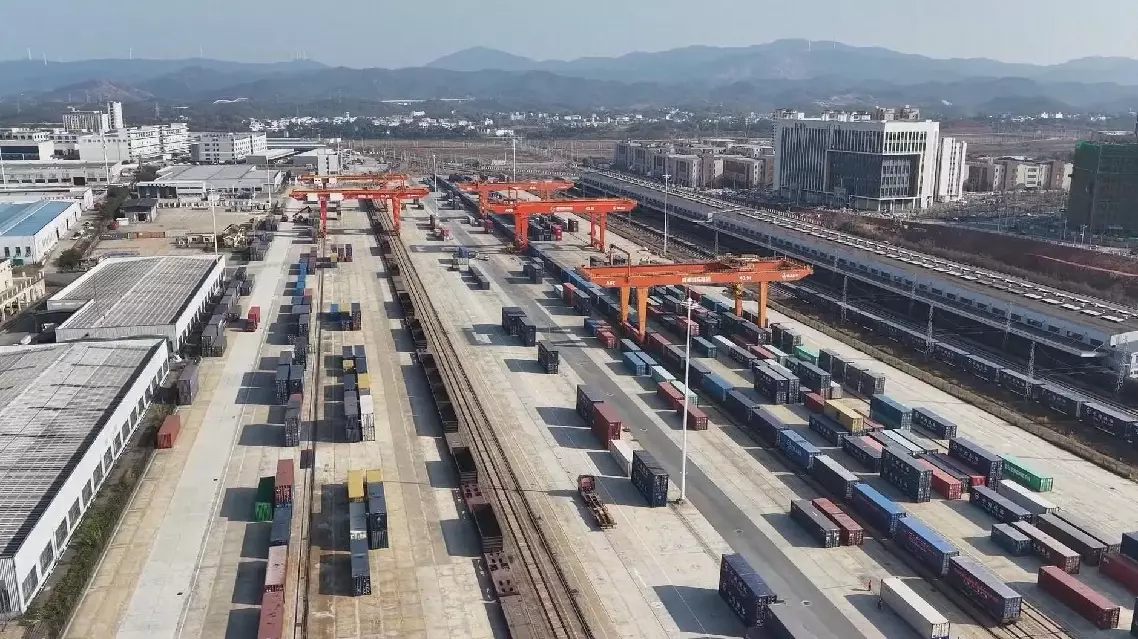
China's logistics sector continues expansion in July