HKFA's "Close Encounters with Master Filmmakers: Movie Talks" explores cinematic journey of director Andrew Lau
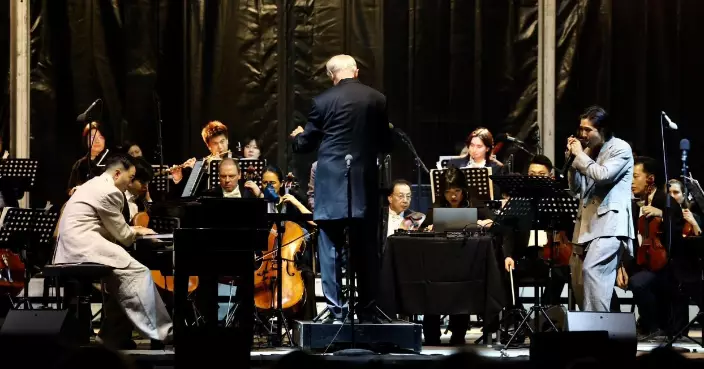
To celebrate its 25th anniversary, the Hong Kong Film Archive (HKFA) presents three editions of the programme series "Close Encounters with Master Filmmakers: Movie Talks" in 2026. The second edition will screen six pivotal films selected by director Andrew Lau from his own career at the Cinema of the HKFA on September 5 and 6. Andrew Lau will also attend post-screening talks with film critic Thomas Shin or director Benny Lau to look back on his legendary filmmaking journey with audiences.
Click to Gallery
HKFA's "Close Encounters with Master Filmmakers: Movie Talks" explores cinematic journey of director Andrew Lau Source: HKSAR Government Press Releases
HKFA's "Close Encounters with Master Filmmakers: Movie Talks" explores cinematic journey of director Andrew Lau Source: HKSAR Government Press Releases
HKFA's "Close Encounters with Master Filmmakers: Movie Talks" explores cinematic journey of director Andrew Lau Source: HKSAR Government Press Releases
HKFA's "Close Encounters with Master Filmmakers: Movie Talks" explores cinematic journey of director Andrew Lau Source: HKSAR Government Press Releases
HKFA's "Close Encounters with Master Filmmakers: Movie Talks" explores cinematic journey of director Andrew Lau Source: HKSAR Government Press Releases
HKFA's "Close Encounters with Master Filmmakers: Movie Talks" explores cinematic journey of director Andrew Lau Source: HKSAR Government Press Releases
Joining the Shaw Brothers in 1981 as a production assistant, Andrew Lau constantly observed different directors at work on set, studying lighting design and cinematography techniques. At the same time, he watched large quantities of film rushes, read books on cinematography. He continuously introduced and experimented with new shooting methods and techniques, thus rose in a short period to become a widely recognised outstanding cinematographer in the industry. In 1990, Andrew Lau directed his first feature film, formally establishing his dual identity as both director and cinematographer. He cemented his status as a leading commercial film director with the "Young and Dangerous" series in the late 1990s. Thereafter, he actively expanded into markets beyond Hong Kong, directing films such as "Daisy" (2006) in Korea and "The Founding of an Army" (2017) on the Chinese Mainland, continuing to create popular works with exceptional craftsmanship and innovative spirit.
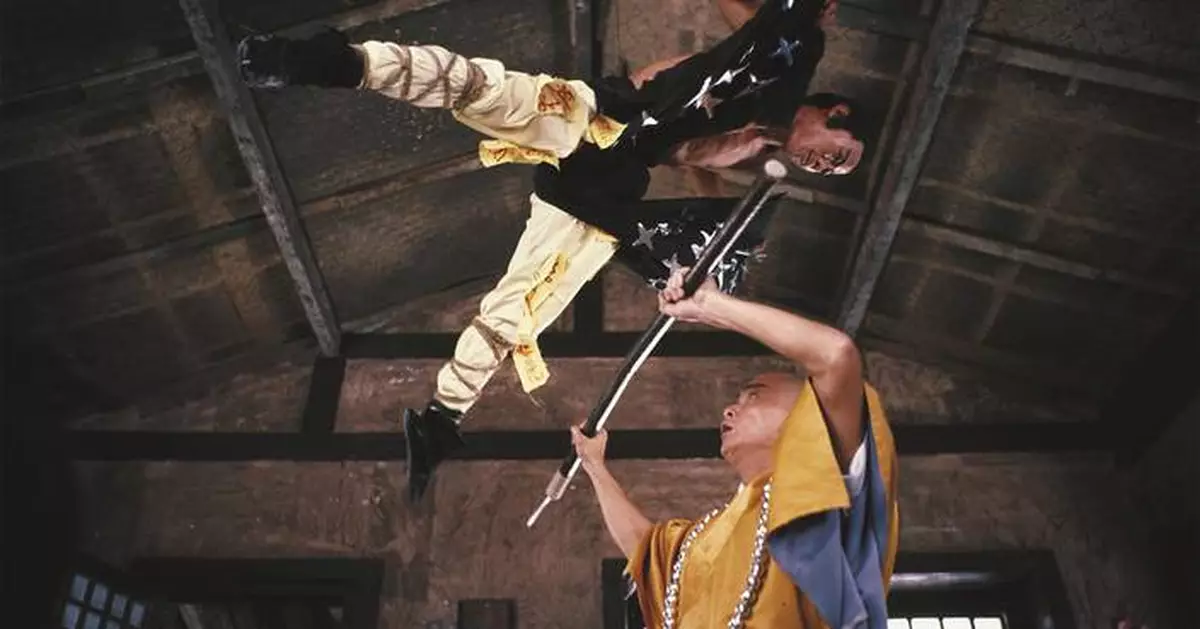
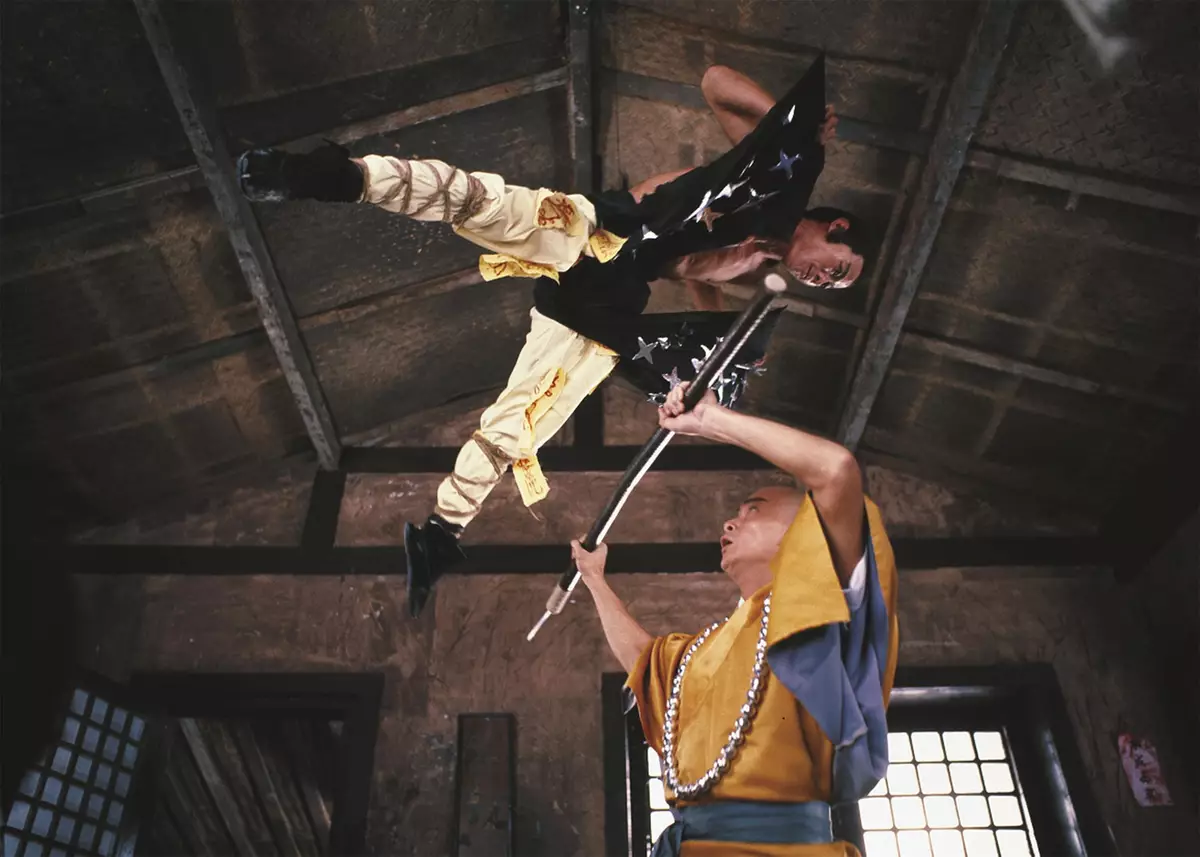
"Legendary Weapons of China" (1982), the first film in which Andrew Lau participated in its production, was directed and written by Lau Kar-leung. In the film, the three factions supported by the Boxers often battle one another, with its action sequences interspersed with numerous fantastical combat scenes. The main character, Lui Gung, played by Lau Kar-leung, is hunted by the Boxers and has to fight against his brother Lui Yung in a showdown in which they wield different kinds of Chinese weapons, and defeats all opponents with his authentic kung fu in the end.
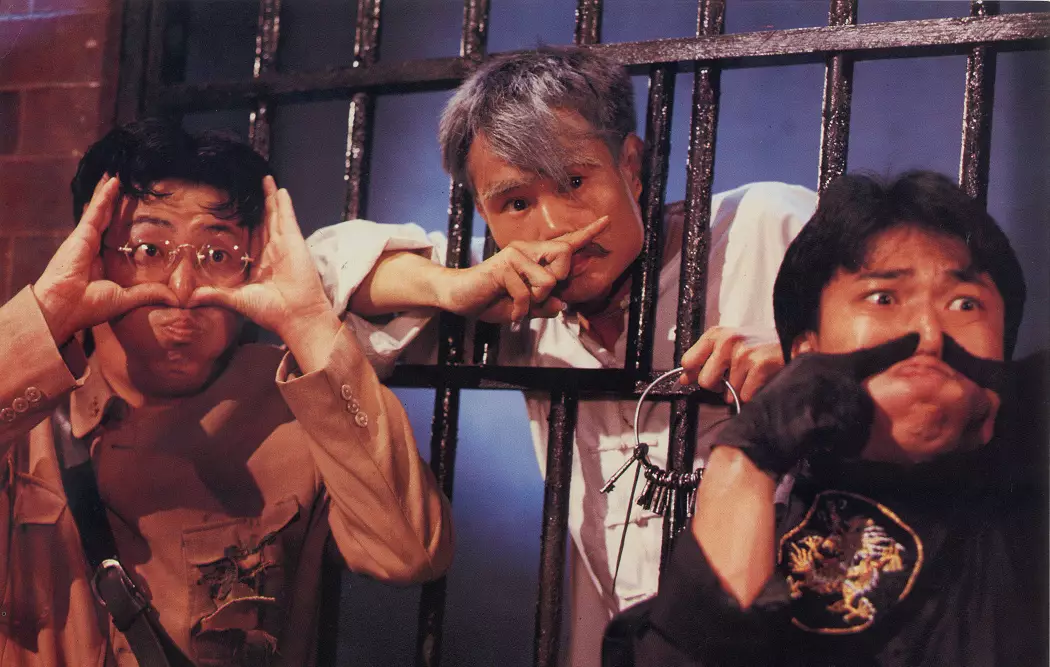
The classic kung fu comedy "Mr. Vampire" (1985) was Andrew Lau's breakthrough work as a cinematographer. The story follows a Taoist priest in repeated fierce battles against a vampire while his apprentice falls in love with a female ghost. In the scene where the female ghost floats from a sedan chair onto the young man's bicycle, Andrew Lau used over a hundred lights to illuminate the entire forest, combined with slow-motion photography and wire work, to visually create a beautiful and romantic atmosphere for this human-ghost romance.
"City On Fire" (1987) tells the story of an undercover cop played by Chow Yun-fat who infiltrates a criminal gang and, in the process, develops a subtle bond of mutual respect with a gangster, played by Danny Lee. The film was directed by Ringo Lam, who, determined to innovate, clicked perfectly with Andrew Lau's unconventional approach to cinematography. From street shoots that tested their improvisation skills and extensive handheld camera work, to capturing colourful neon lights on high-speed film, Andrew Lau used his technique and sheer grit to inject a raw, urban vitality into the film.
Directed by Wong Kar-wai, "As Tears Go By" (1988) tells the story of triad member Wah, played by Andy Lau, who, in order to save his sworn brother Fly, played by Jacky Cheung, is ultimately unable to end up with Ngor, played by Maggie Cheung. As cinematographer, Andrew Lau employed a more mature style and more layered imagery, capturing vividly the atmosphere of killing amid the city's neon lights, and the tranquil and romantic moments shared by Wah and Ngor away from the chaos of the outside world.
Directed by Andrew Lau, "Young and Dangerous 3" (1996) is the third instalment in thefilm franchise.While the central plot revolves around triad rivalries, as the protagonist Chan Ho-nam inherits the territory of his predecessor, the story deliberately weaves in moral parables, reaffirming values such as respect for hierarchy and the triad codes of honour. Andrew Lau demonstrated highly efficient on-set direction when making the third instalment, deftly managing large group scenes and the dramatic tension of major set pieces at the same time, showing that his directorial skills had reached a high level of maturity.
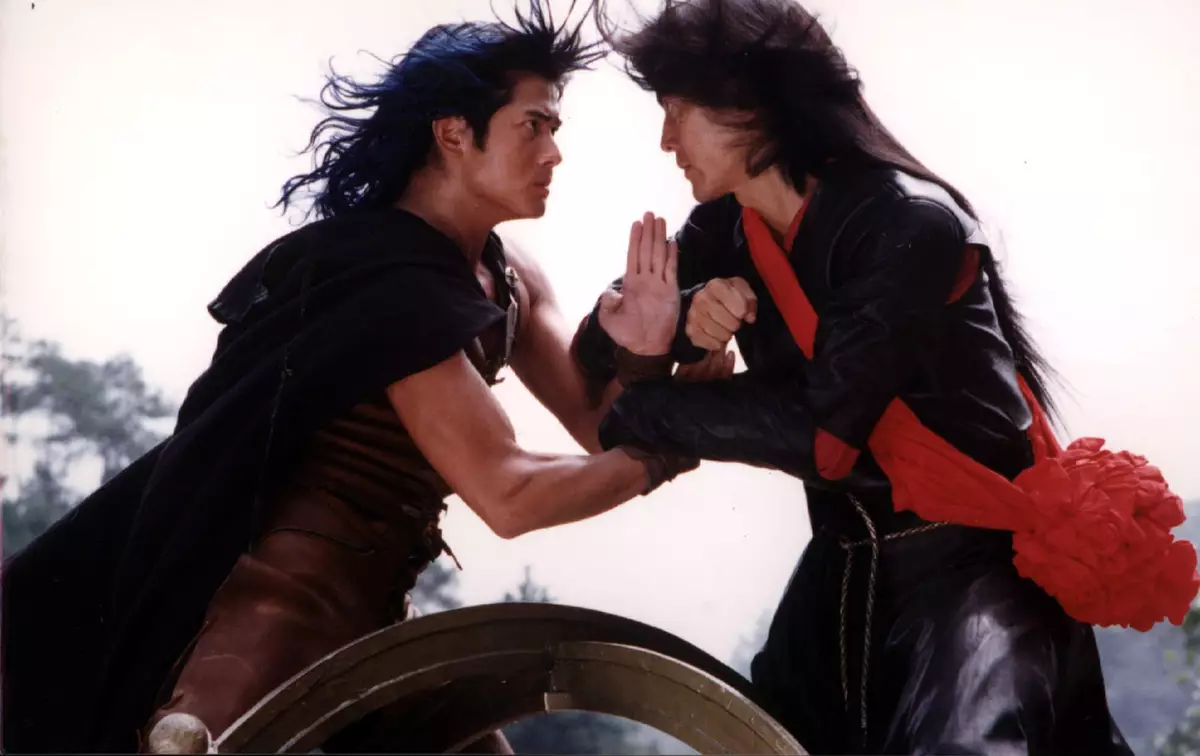
Adapted from a comic series, "The Stormriders" (1998) chronicles the grievances and ultimate showdown between Wind, played by Ekin Cheng, Cloud, played by Aaron Kwok, and their master Lord Conqueror. The film markedAndrew Lau's first use of computer-generated imagery as a director. While exploring the technology, he repeatedly discussed character and scene designs with animation technicians, personally handling every detail. Drawing on his deep experience as a cinematographer, Andrew Lau successfully used computer-generated imagery to elevate the visuals of the original comic, establishing an important milestone for Hong Kong special-effects cinema.
Tickets priced at $60 will be available from August 7 (Friday) at URBTIX (www.urbtix.hk).For telephone bookings, please call 3166 1288. For programme details, please call 2739 2139 or visit the HKFA website atwww.filmarchive.gov.hk/en/web/hkfa/2026/andrew-lau-wai-keung/pe-event-2026-andrew-lau-wai-keung.html.
HKFA's "Close Encounters with Master Filmmakers: Movie Talks" explores cinematic journey of director Andrew Lau Source: HKSAR Government Press Releases

HKFA's "Close Encounters with Master Filmmakers: Movie Talks" explores cinematic journey of director Andrew Lau Source: HKSAR Government Press Releases

HKFA's "Close Encounters with Master Filmmakers: Movie Talks" explores cinematic journey of director Andrew Lau Source: HKSAR Government Press Releases

HKFA's "Close Encounters with Master Filmmakers: Movie Talks" explores cinematic journey of director Andrew Lau Source: HKSAR Government Press Releases
HKFA's "Close Encounters with Master Filmmakers: Movie Talks" explores cinematic journey of director Andrew Lau Source: HKSAR Government Press Releases
HKFA's "Close Encounters with Master Filmmakers: Movie Talks" explores cinematic journey of director Andrew Lau Source: HKSAR Government Press Releases
A gloomy and rainy July with strike of Noul
Mainly attributable to the rain associated with broad troughs of low pressure, the active southerly airstream and tropical cyclones Maysak and Noul, the weather of Hong Kong was much gloomier and wetter than usual in July 2026. The total sunshine duration in the month was 122.2 hours, about 38 per cent below the normal of 197.3 hours, and was the lowest on record for July. The mean amount of cloud in the month was 81 per cent, nine percentage points above the normal of 72 per cent and one of the second highest on record for July. The total rainfall recorded at the Hong Kong Observatory Headquarters in the month was 790.3 millimetres, more than double the July normal of 385.8 millimetres and the second highest on record for July. The accumulated rainfall in the first seven months of the year was 1 977.6 millimetres, about 35 per cent above the normal of 1 468.2 millimetres and the ninth highest on record for the same period. The monthly mean temperature for July 2026 was 28.7 degrees, close to the normal of 28.9 degrees.
Dominated by the subtropical ridge, apart from a few showers, local weather was mainly fine and very hot on the first day of the month. Meanwhile, Maysak formed as a tropical depression over the central part of the South China Sea in the morning and then tracked towards Hainan Island. The Observatory issued the Standby Signal No. 1 in the morning of July 2, the first tropical cyclone warning signal of the year. Maysak skirted past Hainan the next day and intensified into a severe tropical storm over Beibu Wan on July 4. Maysak moved into inland of Guangxi on July 5 and weakened gradually. While local weather was hot with sunny periods on July 2, there were also a few squally showers and thunderstorms, with more showers at night. Around 10 millimetres of rainfall were recorded over parts of the territory. Under the combined effect of Maysak and the ridge of high pressure over southeastern China, local winds were occasionally strong offshore and up to gale force on parts of high ground from July 3 to 4. The outer rainbands of Maysak also brought occasional squally showers and severe squally thunderstorms on these two days. Violent gusts of about 100 and 90 kilometres per hour associated with severe squally thunderstorms were once recorded at Green Island and Star Ferry respectively. More than 40 millimetres of rainfall were recorded over many places, and rainfall even exceeded 80 millimetres over parts of Lantau Island on these two days.
An active southerly airstream brought showers and thunderstorms to Guangdong on July 5. Locally, it was mainly cloudy with a few showers. Showers were heavier in some areas with squally thunderstorms at first. More than 10 millimetres of rainfall were recorded over many places. It became very hot with sunny periods during the day. Under the persistent influence of the active southerly airstream and the subsequent upper-air disturbances, local weather was cloudy with occasional heavy showers and squally thunderstorms from July 6 to 8. Heavy showers brought more than 50 millimetres of rainfall to many places on July 6, with around 100 millimetres of rainfall over localised areas of the New Territories. The heavy downpours on July 7 brought more than 70 millimetres of rainfall to most of the territory, with over 140 millimetres at localised area around the Shek Kong and Ta Kwu Ling regions. Heavy showers subsequently subsided slightly on July 8, with most places recording less than 50 millimetres of rainfall. With the moderation of the southerly airstream and departure of the upper-air disturbances, apart from a few showers and thunderstorms, there were sunny intervals during the day on July 9. Meanwhile, tropical cyclone Bavi moved northwestward across the seas east of Taiwan. Under the influence of its outer subsiding air, local weather turned generally fine and very hot from July 10 to 12. With plenty of sunshine, the temperature at the Observatory soared to a maximum of 34.5 degrees on the afternoon of July 12, the highest of the month.
A broad trough of low pressure brought unsettled weather to the northern and central parts of the South China Sea on July 13. Within the broad trough, an area of low pressure developed and edged closer to the coast of Guangdong. It made landfall over Zhuhai the next afternoon, then moved inland and dissipated. Locally, it was very hot with sunny periods and isolated showers on July 13. An active southwesterly airstream started to bring unsettled weather to the coast of Guangdong on July 14, with the local weather turning mainly cloudy with occasional showers. More than 10 millimetres of rainfall were recorded over many places, and rainfall even exceeded 50 millimetres over Sai Kung and Sha Tin. The active southwesterly airstream continued to bring showers and thunderstorms to the coast of Guangdong and the northern part of the South China Sea on July 15. Locally, showers were heavy at times, with more than 50 millimetres of rainfall generally recorded over the territory, and rainfall even exceeding 70 millimetres over parts of the New Territories and Hong Kong Island. Under the influence of a broad trough of low pressure, the weather of Hong Kong remained unsettled with outbreaks of heavy showers and squally thunderstorms from July 16 to 21, apart from slightly brighter skies on July 19. More than 200 millimetres of rainfall were recorded over many places, and rainfall even exceeded 300 millimetres over parts of Lantau Island, Tsuen Wan and Kwai Tsing Districts on these six days.
With the broad trough of low pressure weakening and the subtropical ridge covering the coast of Guangdong, the weather turned mainly fine and very hot from July 22 to 24. Besides, Noul formed as a tropical depression over the western North Pacific to the east of the Philippines in the small hours of July 23 and then intensified gradually. It moved across the Luzon Strait and entered the northeastern part of the South China Sea in the following two days. It intensified into a severe typhoon before making landfall over Huizhou, Guangdong, in the small hours of July 26. It then moved inland and weakened rapidly. Locally, under the continual influence of the subtropical ridge, it was very hot with sunny periods at first on July 25. The temperature at the Observatory rose to the month's highest of 34.5 degrees again in the afternoon. But as Noul's outer rainbands edged towards the Guangdong coast, there were also occasional squally showers and severe squally thunderstorms that afternoon, with multiple districts affected by violent gusts. As Noul approached the territory, local winds strengthened significantly at night. The strike of Noul necessitated the issuance of the first Gale or Storm Signal No. 8 in the year that night and the Increasing Gale or Storm Signal No. 9 in the small hours of July 26. Noul skirted about 80km to the northeast of the Observatory in the morning. Gales prevailed over many places, including the Victoria Harbour, in the morning, with occasional storm force winds offshore and on high ground. There were also heavy squally showers and thunderstorms. More than 70 millimetres of rainfall were generally recorded over the territory on July 26, and rainfall even exceeded 140 millimetres over the eastern part of the New Territories. According to preliminary reports, at least 21 people were injured during the passage of Noul. There were at least 331 reports of fallen trees and eight reports of flooding.
Under the influence of a broad trough of low pressure, local weather was cloudy with occasional heavy showers and squally thunderstorms on the last five days of the month. More than 150 millimetres of rainfall were recorded over most parts of the territory, and rainfall even exceeded 250 millimetres over parts of Hong Kong Island on these five days. In the midst of the downpour, the temperature at the Observatory dropped to a minimum of 23.9 degrees on the last day of the month, the lowest of the month.
Five tropical cyclones occurred over the South China Sea and the western North Pacific in July 2026.
Details of the issuance and cancellation of various warnings/signals in the month are summarised in Table 1. Monthly meteorological figures and departures from normal for July are tabulated in Table 2.

Source: AI-found images