Japan's recent launch of a new centralized intelligence bureau has been met with unease in Southeast Asia and even risks reopening some of the painful historical wounds from World War II, a Malaysian expert has warned.
It comes after the government of Japanese Prime Minister Sanae Takaichi on Friday launched the national intelligence bureau and held the national intelligence council's inaugural meeting. The new bureau, an upgrade from the Cabinet intelligence and research office, serves as the secretariat for the council, a central command body headed by the prime minister and composed of top ministers.
Analysts say the move marks the first step in the Takaichi administration's reform of Japan's intelligence structure, with plans to further strengthen domestic and overseas intelligence operations and upgrade the country's intelligence capabilities. Some argue the changes are not merely an administrative restructuring, but part of Japan's broader push toward military expansion and a more assertive security posture.
Peter Chang, former deputy director of the Institute of China Studies at the University of Malaya, and also a research associate of the Malaysia-China Friendship Association, said the new bureau's creation could be worrisome given the troubling past.
"Because of Japan's World War II history and that is the single central reason why this trajectory that Japan, the Takaichi administration is taking, including centralizing the military agency, is causing a lot of unease in Southeast Asia. It brings back or sort of reopens historical wounds. Some of the wounds are still very fresh," he said in an interview with China Global Television Network (CGTN) via video link.
Chang also noted the uneasy parallels the new intelligence bureau has to the Tokko, Japan's notorious secret police organization which was associated with government surveillance in the run up to World War II. He said that for many across the region, the war-time atrocities continue to haunt generations.
"In Southeast Asia, we do not have the Tokko police, but we have the Japanese military police during the Second World War. And they conducted a campaign of systematic terror. They conducted public executions, including public beheadings to scare people, to inflict fear and to suppress resistance. Thousands of young men in Malaysia and Singapore were rounded out, put into interrogation centers, tortured, and many of them never seen daylight again, including my great-uncle. And this is quite personal, and it is because of this history, the systematic interrogation the police state imposed upon us, there's still a lot of pain and old wounds reopen again. That is why the current trajectory that the Takaichi government is taking right now is very worrisome for us in Southeast Asia," said Chang.
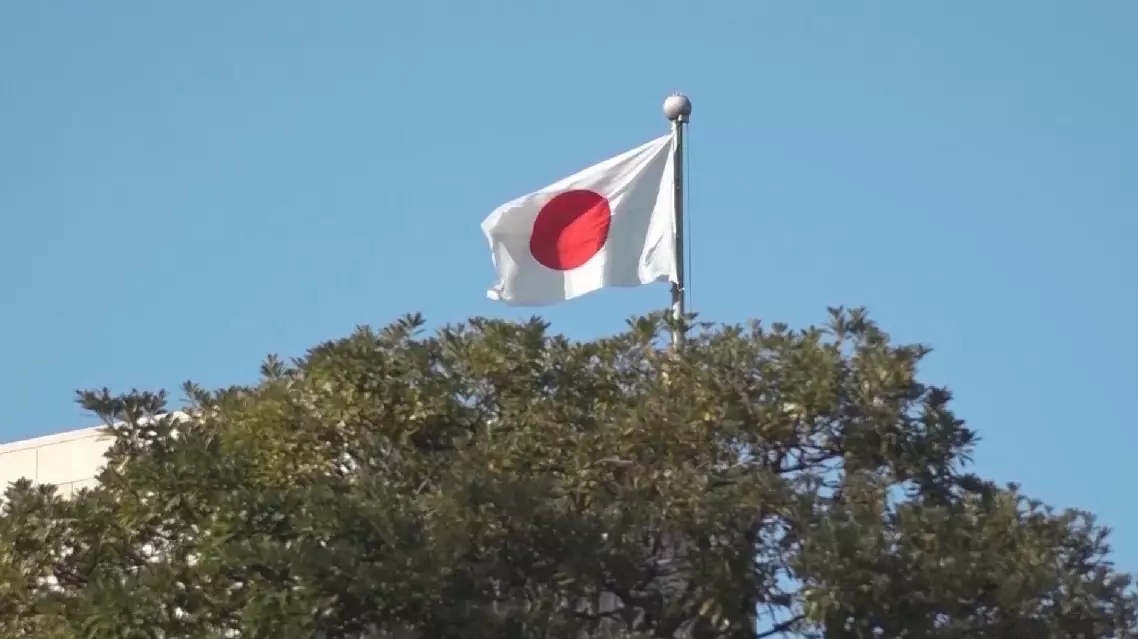
Japan's new intelligence bureau stirs unease in Southeast Asia: Malaysian expert
The Republic of Korea (ROK)'s consumer price inflation eased in July, breaking a multi-month accelerating trend amid stabilizing energy prices and lower farm goods prices, statistical ministry data showed Tuesday.
The consumer price index (CPI) rose 2.8 percent in July from a year earlier, falling below 3.0 percent in three months, according to the Ministry of Data and Statistics.
It marked a noticeable deceleration from 3.2 percent in June, after accelerating from 2.0 percent in February to 2.2 percent in March, 2.6 percent in April and 3.1 percent in May.
Headline inflation, however, stayed above the central bank's mid-term inflation target of 2 percent for 11 straight months since September 2025.
The Bank of Korea raised its benchmark interest rate by 25 basis points to 2.75 percent in July, turning toward monetary tightening in about three and a half years since January 2023.
Oil products price gained 15.5 percent last month, after spiking 24.7 percent in the previous month. The price lifted overall inflation by 0.60 percentage points.
Price for gasoline and diesel jumped 12.6 percent and 21.5 percent each, while computer price shot up 25.1 percent amid soaring semiconductor price. Price for industrial products, including oil products and processed food, advanced 3.7 percent in July compared to the same month last year, slower than an expansion of 4.4 percent in the previous month.
Processed food price added 1.0 percent in July from a year earlier, faster than a growth of 0.9 percent in the previous month.
Price for agricultural, livestock and fishery products climbed 0.9 percent in July from a year earlier, after picking up 3.2 percent in June.
Agricultural products price slipped 2.2 percent last month, turning downward from an increase of 1.1 percent in the prior month. Those for livestock and fishery products swelled 4.4 percent and 3.9 percent each.
Rice price mounted 7.9 percent, but those for napa cabbage, watermelon, spinach, cucumber and zucchini retreated in double figures. Those for beef, imported beef, pork, egg and mackerel increased in single digits.
Price for electricity, natural gas and tap water was up 0.4 percent in July on a yearly basis.
City gas charge and waterworks fee added in single digits, but heating cost dipped 0.2 percent.
Services price surged 2.6 percent last month, hiking up the headline inflation by 1.46 percentage points.
Public service price rose 1.4 percent, while private service price, including eating-out costs, expanded 3.5 percent.
The eating-out expense gained 2.6 percent, and the private service price excluding the dining-out cost jumped 4.1 percent.
Affected by a spike in fuel surcharges from rising oil prices, international airfares soared 21.7 percent last month.
Housing rent, including Jeonse and monthly rent, was up 1.1 percent in July from a year earlier.
Jeonse is the country's unique contract between two households where a landlord grants two-year residential rights to a tenant, who in turn lends a certain amount of money, or a deposit, to the landlord.
The livelihood items index, which gauges prices for daily necessities, climbed 2.5 percent, while the fresh food index, which measures prices for fish, shellfish, fruit and vegetables, declined 2.3 percent.
Demand-side inflationary pressure lingered. Core consumer price index, which excludes volatile agricultural and oil products, appreciated 2.5 percent last month.
The OECD-method core price, excluding volatile food and energy costs, went up 2.6 percent in the cited month.

ROK's consumer price inflation eases to 2.8 pct in July