SAN JUAN, Puerto Rico (AP) — Puerto Rico will implement water rationing measures in San Juan and other major cities as a drought grips the U.S. territory with no relief in sight.
More than 180,000 customers will be without water for 48 hours at a time starting Friday as part of an alternating schedule while Puerto Rico scrambles to find a solution to the deepening crisis as extreme heat warnings persist.
“This situation is out of our hands,” Gov. Jenniffer González said late Tuesday as she blamed weather conditions. “Nothing prevents this from worsening.”
July was the driest month on record for San Juan in more than 120 years and the second hottest for the capital. Almost 25% of Puerto Rico is experiencing a severe drought and another 36% is under a moderate drought, according to the U.S. Drought Monitor.
Experts have predicted a milder 2026 hurricane season, with dry conditions persisting until at least September, said María Novoa García, a meteorologist with the National Weather Service in San Juan.
Rainfall in the next two to three weeks will be at least 50% below average, she added.
“We are seeing that El Niño continues to get stronger,” she said, referencing a natural warming cycle.
In addition to affecting parts of San Juan, the rationing will extend to certain neighborhoods in the cities of Carolina, Juncos, Gurabo, Trujillo Alto, Canovanas and Loiza.
The governor said she doesn’t know how long the rationing measures will remain in place.
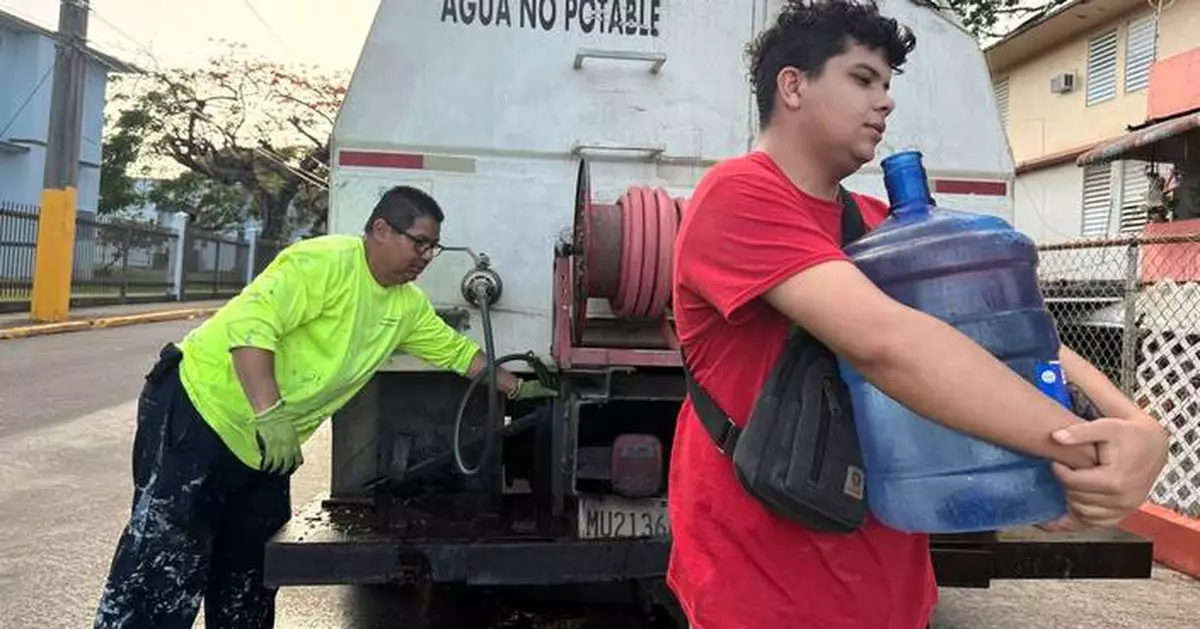
Luis González Delgado, president of Puerto Rico’s water and sewer system, said large trucks would distribute potable water, with priority given to hospitals and residences for older people.
Tania Conde Sterling, president of Puerto Rico's Association of Health Services Administrators, called for calm on Wednesday, saying that hospitals and other health centers are prepared for the rationing.
“We do not improvise at hospitals,” she said. “We have manuals of rules and procedures, as well as protocols for every type of scenario.”
The drought is worsening, but thousands of Puerto Ricans were already experiencing water shortages up to a year before for unknown reasons.
Among them is 61-year-old community leader Marcia Soler París. She said Wednesday that the rationing measures don’t really mean much because her neighborhood already was experiencing severe water shortages for months.
“It’s chaos,” she said, questioning how Puerto Ricans are supposed to prepare for rationing when they don’t have water now. “It’s truly pitiful.”
She worries most about bedridden and older people who are unable to haul heavy water buckets to their homes and apartments.
The lack of water unrelated to the drought prompted San Juan Mayor Miguel Romero to sue the island’s Water and Sewer Authority in late May, with the governor acknowledging the agency’s infrastructure has lacked investment and maintenance for decades.
Puerto Rico Rep. Domingo J. Torres García warned on Wednesday that he would go to court if he doesn't receive a response from the water and sewer authority about what's causing the chronic water problems.
“The people have the right to know what is happening, what the plans are and what concrete actions are being taken to address this crisis,” he said.
Puerto Rico previously implemented rationing measures in 2020 and in 2015, when some 400,000 utility customers received water only every third day.
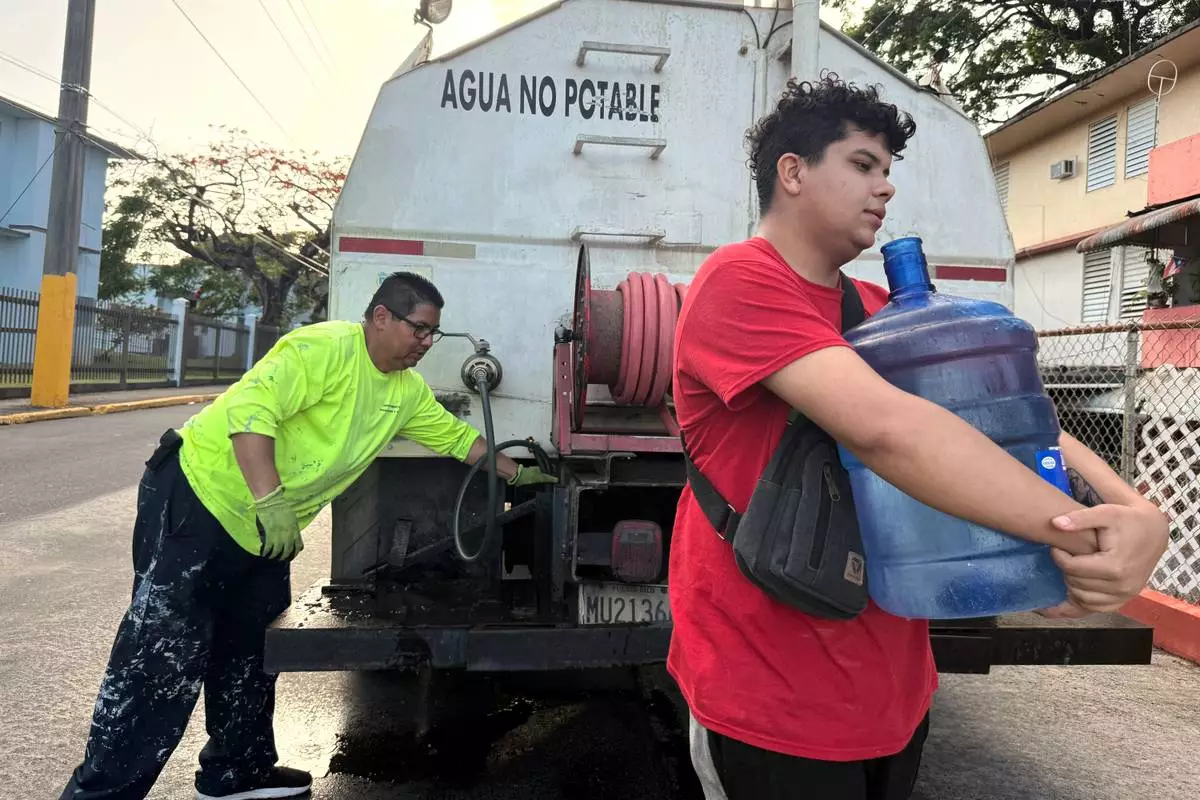
FILE - Bryan Pérez hauls a five-gallon water jug to his apartment in the Villa Kennedy public housing complex in San Juan, Puerto Rico, June 10, 2026. (AP Photo/Danica Coto, File)
SALISBURY, Md. (AP) — These are harrowing days for the Word of Life Center, a church that has long been a vibrant hub of the Haitian community on Maryland’s Eastern Shore.
A bridal shower and yard-sale barbeque were canceled. So were English-language classes. Roosevelt Toussaint, the senior pastor of the nondenominational congregation in Salisbury, said attendance at Sunday’s service dropped by more than half. Normally, more than 500 people would have heard his sermon, titled “What to do in a time of crisis.”
The reason for empty seats, Toussaint said, is that many community members are unwilling to venture from their homes, fearing arrests and deportation since the Trump administration moved to end Temporary Protected Status for more than 1 million people from numerous countries. Among those affected: roughly 350,000 Haitians who have been living and working legally in the U.S. for years.
In Salisbury, the Eastern Shore's biggest city, about 10% of the 33,000 residents are Haitian, many of them employed under TPS as farmworkers, caregivers and in the poultry plants that are the region’s economic backbone.
Like other Haitians losing TPS, they face an agonizing choice: try to stay in the U.S. and find underground work, constantly fearful of being caught by Immigration and Customs Enforcement agents. Or return to a nation so overwhelmed by gang violence and poverty that some feel deportation is tantamount to a death sentence.
Toussaint, the Word of Life Center's pastor since 1995, said he had a message for President Donald Trump.
“We’re expecting you to have compassion for our people. They haven't done anything wrong,” Toussaint said. “All they came to this country to do is to work, to make a difference in our economy. … There’s no security at home. If you really send us over there, you send us to die.”
At Sunday's service, the first since TPS protections expired, Toussaint exhorted his congregants to persevere.
“I’m praying this afternoon that God can make you invisible to the enemy,” Toussaint told them in Haitian Creole. “They put a lot of terror in your heart. But God has come to tell you: Do not be afraid!”
Some of the congregants who are U.S. citizens said they attended the service in solidarity with those losing TPS. Among them was Marjorie Estimé, who wore a Haitian flag draped around her neck.
“I want to tell the president of the United States to stop the ICE program, so that the people can work, so ICE can stop shooting them, persecuting them, and we can go back to normal,” Estimé said of the administration's crackdown on immigration.
ICE has pressed ahead, according to advocates and attorneys who say the agency is calling Haitians in for ankle bracelets and telling them not to travel more than 75 miles (121 kilometers) from their home address.
“Instead of them heavily descending on communities, they are using tactics to bring those people into their offices to either detain them or fit them with an ankle monitor, and telling them that if they don’t self-deport, they will be called back to report within a month,” said Guerline Jozef, president of the Haitian Bridge Alliance.
The TPS termination affecting Haitians was challenged in district courts. On June 25, the U.S. Supreme Court sided with the government, allowing TPS to end and triggering weeks of confusion around enforcement timelines.
On July 27, the work permits were not extended and fear mounted in communities — not only due to the loss of jobs but also because it exposed them to deportation.
“It’s just like a hurricane at Category 5 — that’s how bad it is,” said Samson Orneus, a member of Toussaint's church. He helps the pastor lead the local Haitian Development Center of Delmarva and runs WOLC Immigration Services, an immigrant assistance business in Salisbury.
Throughout last week, news spread on social media about arrests by immigration authorities at gas stations and outside supermarkets.
“We had a population living legally, raising their kids, paying their bills, and with the decision (to end TPS), they were left in limbo,” said Marie D. Fouché, founder and executive director of Safe Harbor Circles. It provides support to immigrant communities across the Eastern Shore and recorded more than a dozen arrests of immigrants recently, including some with TPS.
“They have left their kids at home,” she said. “They went to the grocery, shopping at Walmart to cook for them and feed their family. But they got arrested in the parking lot, and they’ll never go back.”
Asked about ICE enforcement activities in Salisbury, the Department of Homeland Security said via email that it “does not discuss ongoing or future operations.”
“Temporary Protected Status is exactly that — temporary,” the email said. “For too long, TPS has been allowed to function as a de facto amnesty program despite Congress never intending it to be permanent.”
At a nearly empty barber shop in Salisbury, a Haitian with TPS ventured in for a haircut. Like others, he asked to remain anonymous for fear of deportation.
“They’re not going after the people committing crimes,” said the 39-year-old man, who has been a caregiver at a nursing home since moving to Salisbury in 2020. “When I go out to the street, I’m in fear.”
The United States initially gave TPS to Haitians following a devastating 2010 earthquake and extended it several times since.
The Trump administration pushed to end that status, saying conditions in Haiti improved. Yet almost 1.5 million people have been displaced because of gang violence, and most Haitians need humanitarian aid.
“What this administration is doing hurts me so much because it’s inhumane,” said Leila Borrero Krouse, an immigration specialist with CATA, a nonprofit supporting Eastern Shore farmworkers.
“In all of these years that I’ve been working with immigrants, I’ve never met a criminal, a rapist, an abuser,” she said. “Most come to take jobs that others don’t want. And it’s heartbreaking to see how they’re suffering.”
The immigration crackdown has upended the life of Patricia Grace Louis-Jacques, a nursing student at Salisbury University with family members and friends affected by the end of TPS. Last week, her best friend asked her to take care of her infant child if she got detained.
“From that moment, I knew things got bad,” Louis-Jacques said at a nearly empty Caribbean Creole Cafe under a painting of Toussaint L’Ouverture, a leader of the Haitian Revolution. “Their lives have tremendously changed.”
Not far from the church, near a Perdue Farms poultry plant, a Honduran woman spoke from the home she has rarely left since the Trump administration ended TPS for nearly 80,000 Hondurans and Nicaraguans.
She said she worked at Perdue for more than two decades, repetitively cutting chickens with scissors on a fast-paced line, before losing her job last year after her TPS expired.
Her 25-year-old son, who was born in the U.S., worries that she will be detained. He often calls, reminding her to keep her living room curtains closed and avoid answering the door. Sometimes, she said, she hides by locking herself in a bathroom, where she keeps a Bible.
She used to attend church and volunteer at events advocating for immigrants' rights. These days, she only takes her two dogs to the yard and then returns indoors.
“It’s terrible to live in this anxiety,” she said. “It isn’t fair to those of us who came to this country not to cause harm, but to try to have a better life.”
Associated Press writer Gisela Salomon in Miami contributed to this report.
Associated Press religion coverage receives support through the AP’s collaboration with The Conversation US, with funding from Lilly Endowment Inc. The AP is solely responsible for this content.
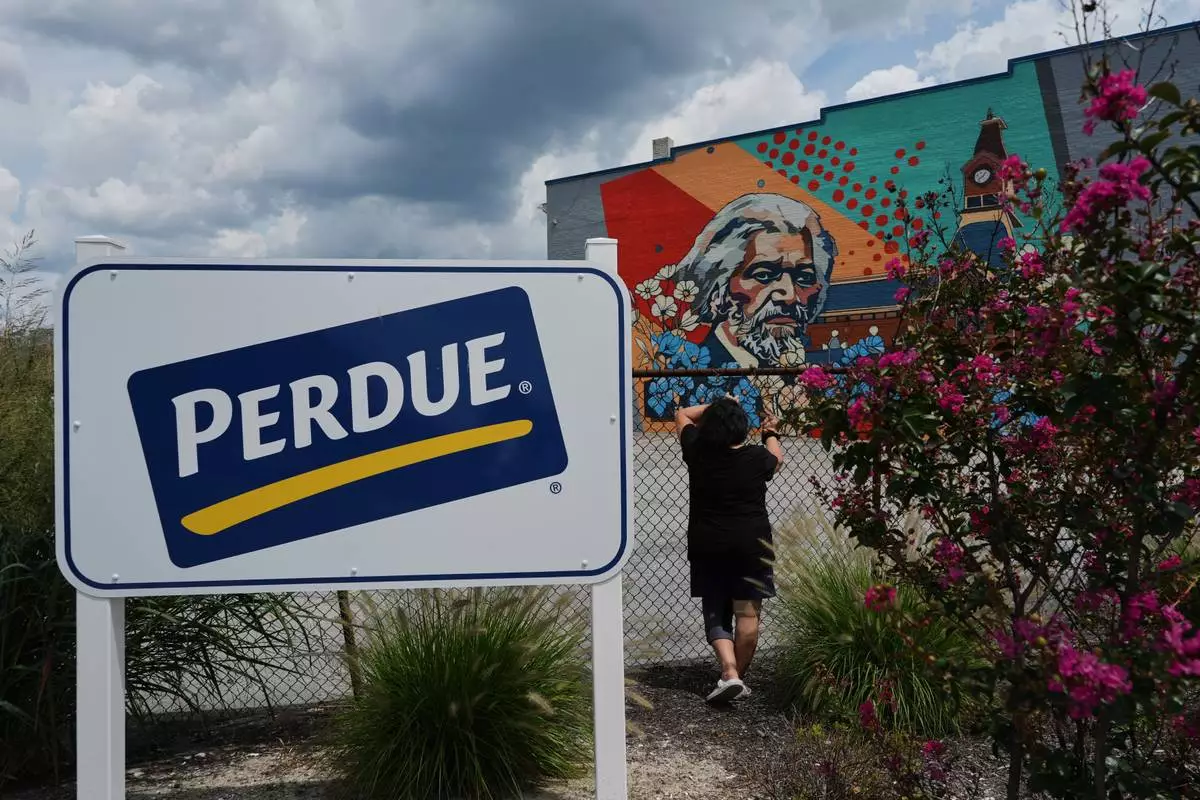
A Honduran woman poses for a portrait outside the Perdue Farms poultry plant, where she worked for more than two decades before losing her job the previous year after her TPS expired in Salisbury, Md., Saturday, Aug. 1, 2026. (AP Photo/Luis Andres Henao)
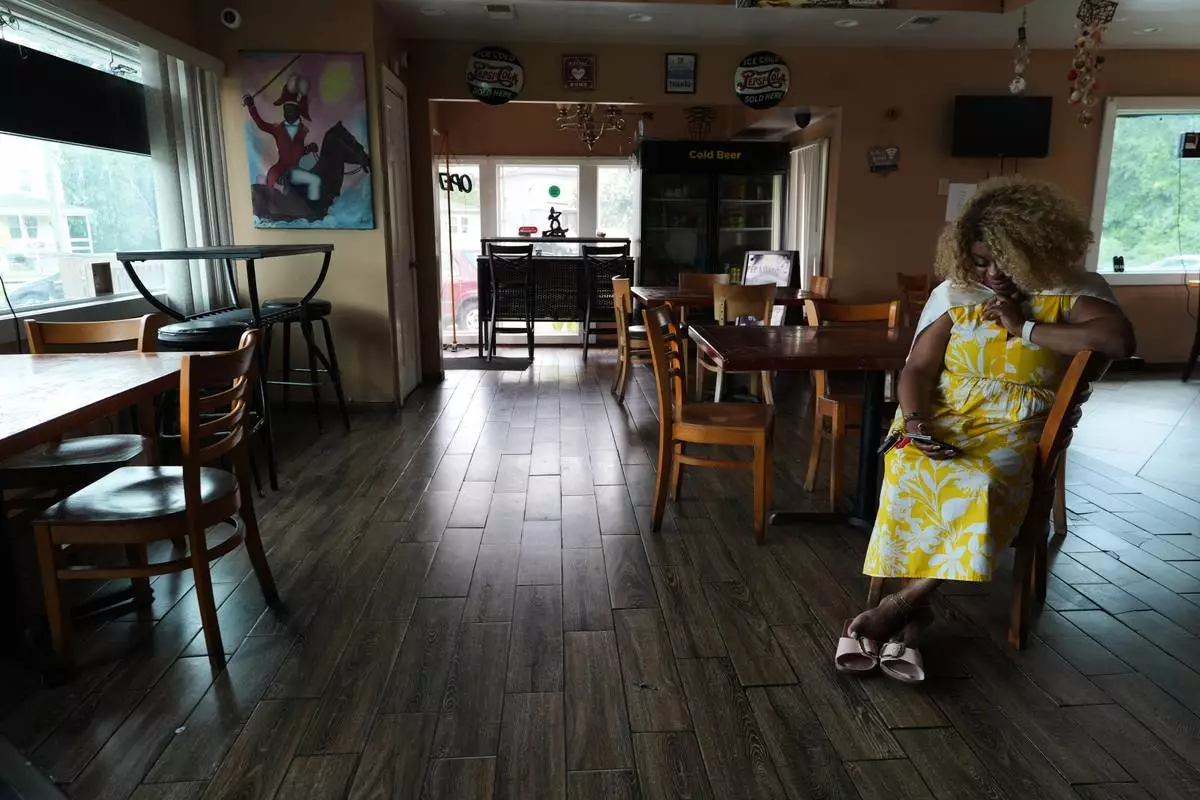
Marjorie Estimé waits for a food order at the Caribbean Creole Café in Salisbury, Md., Sunday, Aug. 2, 2026. (AP Photo/Luis Andres Henao)

Children walk the aisles of the Word of Life Center church carrying snacks during a service in Salisbury, Md. Sunday, Aug. 2, 2026. (AP Photo/Luis Andres Henao)

Roosevelt Toussaint, the senior pastor of the Word of Life Center church, delivers his sermon titled "What to do in a time of crisis?" at a service in Salisbury, Md., Sunday, Aug. 2, 2026. (AP Photo/Luis Andres Henao)

Marjorie Estimé prays wearing a Haitian flag during a service at the Word of Life Center church in Salisbury, Md., Sunday, Aug. 2, 2026. (AP Photo/Luis Andres Henao)
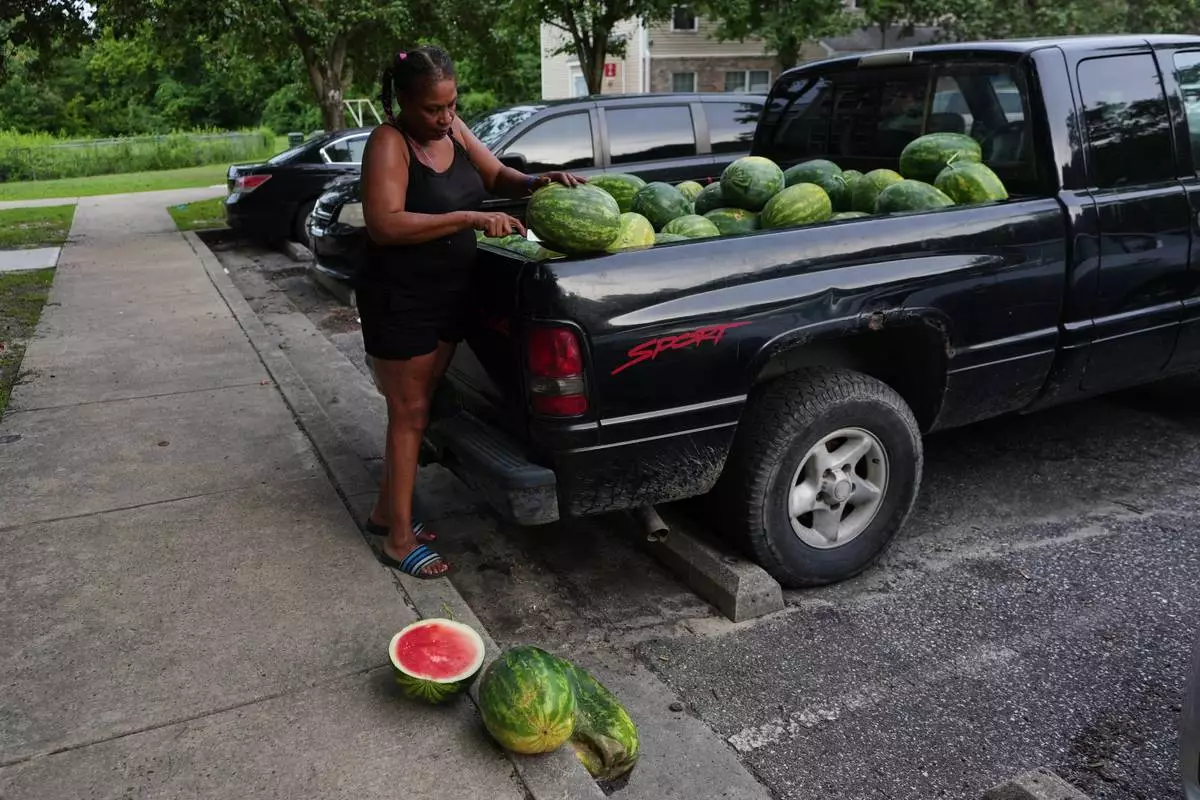
Rhonda Bracy cuts watermelons outside her home in Salisbury, Md., Saturday, Aug. 1, 2026. (AP Photo/Luis Andres Henao)

Roosevelt Toussaint, the senior pastor of the Word of Life Center church, delivers his sermon titled "What to do in a time of crisis?" at a service in Salisbury, Md., Sunday, Aug. 2, 2026. (AP Photo/Luis Andres Henao)

Members of the Word of Life Center, a church and hub of the Haitian community, sing and pray during a service in Salisbury, Md., Sunday, Aug. 2, 2026. (AP Photo/Luis Andres Henao)
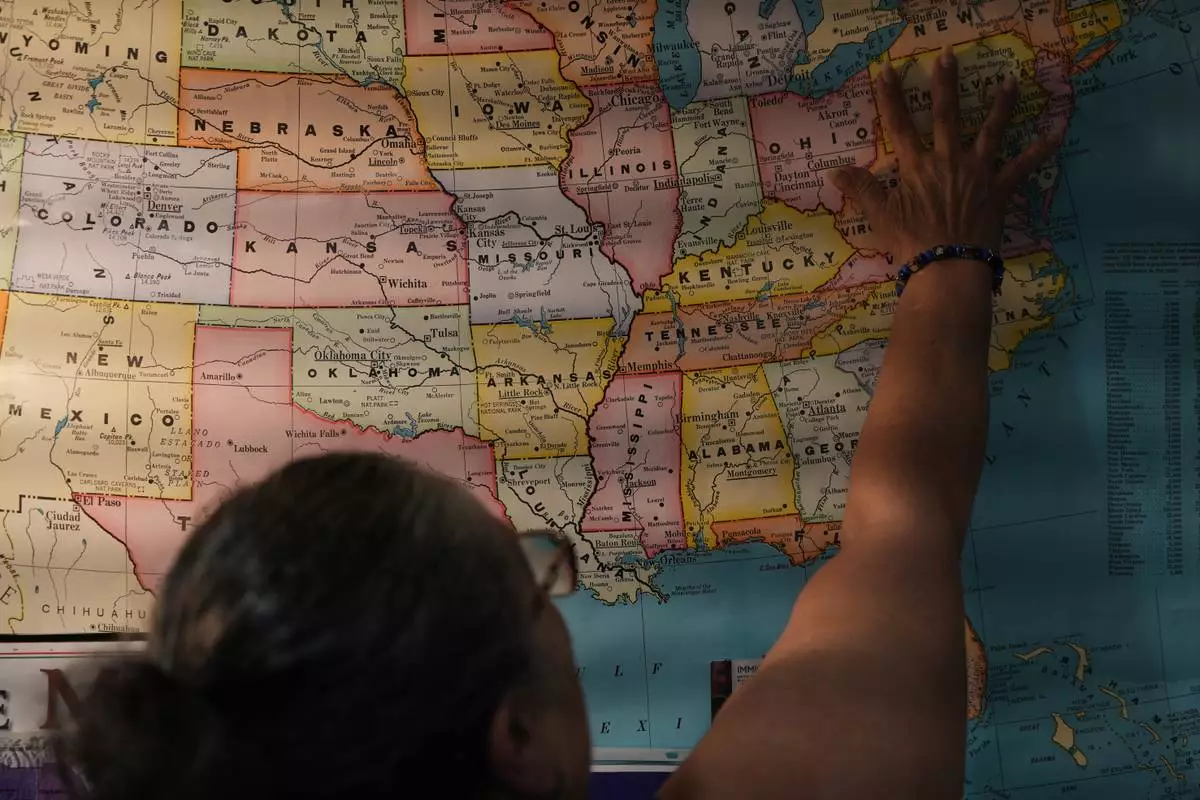
Leila Borrero Krouse, an immigration specialist with CATA, a nonprofit supporting farmworkers throughout the Eastern Shore, points to a U.S. map in her office to explain how many migrants come to the region to work as farmworkers, caregivers and in the poultry plants, in Salisbury, Md., Saturday, Aug. 1, 2026. (AP Photo/Luis Andres Henao)
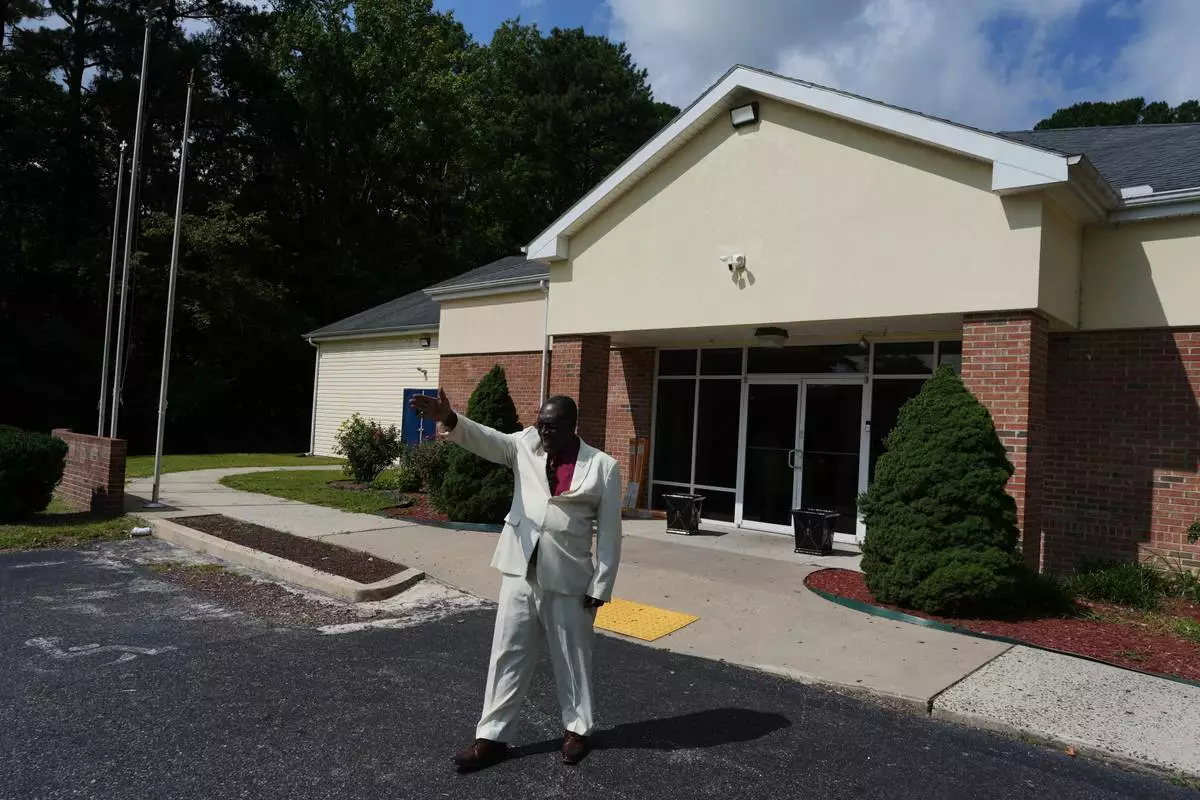
Roosevelt Toussaint, the senior pastor of the Word of Life Center church, points to empty parking spaces outside his church before a service, which he says is due to fear in the Haitian community of possible arrests and deportation in Salisbury, Md., Sunday, Aug. 2, 2026. (AP Photo/Luis Andres Henao)

Patricia Grace Louis-Jacques, a nursing student who has close Haitian family members and friends affected by the end of TPS, poses for a photo outside the Caribbean Creole Café in Salisbury, Md., Sunday, Aug. 2, 2026. (AP Photo/Luis Andres Henao)