Southwest China's Yunnan Province has been drawing in overseas visitors with its diverse culture and beautiful sightseeing, while supporting policies and services improve ease of entry and travel.
As inbound tourism grows, new services have emerged to enrich traveler experiences. Many cities in Yunnan have launched bilingual small-group tours to cater to the inbound tourism boom, offering more personalized products and services to meet the diverse needs of foreign visitors.
On his tours, guide Li Changgeng enjoys introducing foreign travelers to Yunnan's unique historical architecture.
"The construction building style, just, they keep the traditional building style, wood across wood. There's no anything [like] nails inside," Li told his tour group.
Compared with traditional large groups of 20 to 30 travelers, small bilingual tours place greater emphasis on hands-on experiences and sharing in-depth knowledge about local culture.
In Dali, besides visiting the ancient city, many foreign tourists also go cycling or walking by Erhai Lake, try tie-dyeing at intangible cultural heritage experience shops, or enjoy Yunnan Arabica coffee.
"Everything around here is amazing. The lake, the architecture, the buildings, the old historic places. It's beautiful," said Nicholas Sciocchetti, a foreign tourist.
In Diqing Tibetan Autonomous Prefecture, the surprisingly cool summer temperatures of under 20 degrees Celsius are a bonus for visitors who come to explore the magnificent natural scenery and perhaps even view wildlife in its natural habitat, like the golden snub-nosed monkey.
Learning the traditional skills that have long underpinned the local culture is another emerging trend. In the historic city of Lijiang, foreign visitors learn copper shaping from a Naxi ethnic coppersmith, who also enjoys teaching them how to write their names in Dongba script.
"The scenery is beautiful. Learning more about it, wood work or some silk things, you know, it's not just somebody selling something, but they are carrying on something deep rooted in their culture," said Justin, a foreign tourist.
Meanwhile, the upgrade of local inbound convenience services has also brought an enjoyable travel experience to foreign tourists.
International tourism service centers at scenic spots, multilingual travel brochures, smart translation devices, accessible guided tours and convenient payment options have greatly facilitated travel and sightseeing for visitors.
"We can pay using various devices here, and taking taxis is also convenient. The Chinese people are very friendly," said Anna, a foreign tourist.
With the expansion of visa-free transit policies and continuous upgrades to customs clearance services at ports, foreign tourists are finding it increasingly convenient to visit Yunnan.
Latest data showed as of Aug 1, the province had recorded over 990,000 foreign traveler entries this year, including 819,700 visa-free entries and 14,500 24-hour direct transit entries.

In-depth cultural experiences draw overseas travelers to Yunnan
A former politician in Japan's Kagoshima Prefecture has sounded the alarm over the country's accelerating military buildup, cautioning that the incumbent government is leading the nation toward a dangerous precipice.
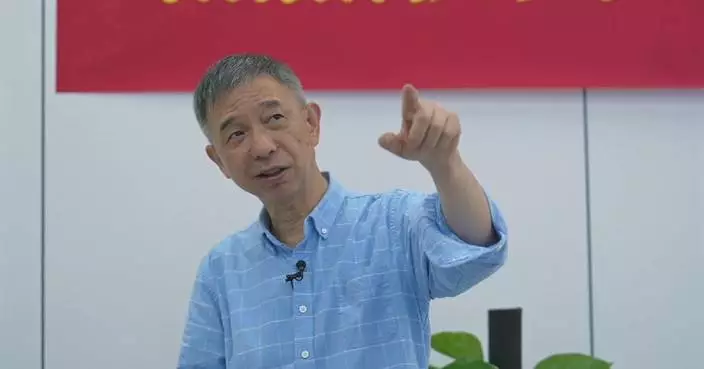
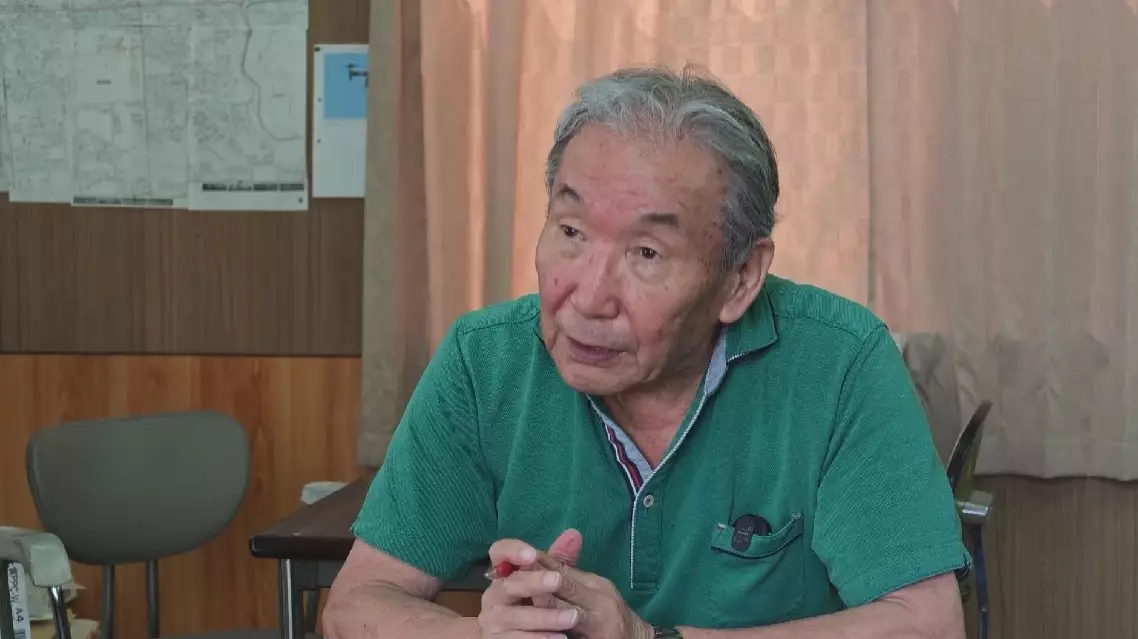
At 77 years old, Mashima Yukinori has spent his entire life in Kagoshima Prefecture, first as an educator, then as a city councilor in Kanoya, and always as a peace activist.
As Japan accelerates its military expansion and deepens its defense cooperation with the United States, Yukinori feels a greater sense of crisis than ever before. He warns that Japan is drifting away from its postwar pacifist identity and has fears that today's young people in the country are once again being groomed for war.
"The paramount principle we must uphold is that war must never be waged. Our predecessors - the teachers of the war era - sent their own students to the frontlines with great enthusiasm. This is the history we bear. It is upon a deep and earnest reckoning with that history that we swore an oath to never again send our students to war. That oath was the very impetus behind my involvement in the labor movement upon entering the workforce. Since then, I have continued to engage in such social activism, and it remains, to this day, the most significant and essential endeavor of my life," Yukinori told China Media Group (CMG) on Monday.
After joining a labor union during his time as a school administrator, Yukinori dedicated himself to promoting peace education through the union. Later, as a city councilor, he opposed joint military drills between Japan and the U.S., a stance he has held for decades.
Today, his focus has turned to Japan's shifting security policies. He believes the country's defense spending surge in recent years has strayed far from the path of peaceful development.
"In my view, defense expenditures should be constrained to the minimum level required for self-defense purposes, while social welfare budgets should be expanded. This is what we most desire. The public's foremost expectation of the political establishment is to feel secure in their daily lives, and that, above all, should be the fundamental purpose of governance," Yukinori said.
Yukinori said his concerns are rooted in the tangible developments on the doorstep of his home city.
In June, the U.S. military, for the first time, deployed its Typhon medium-range missile system at the Kanoya Air Base of the Japan Maritime Self-Defense Force for the U.S.-led Valiant Shield 2026 exercise, with plans to keep the system there for the joint Japan-U.S. Orient Shield exercise slated for September.
Yukinori said this move will not only pull Kanoya further into the regional military deployment, but also risks hollowing out Japan's pacifist Constitution.
"To my mind, introducing these weapons into Japan is a constitutional violation, because they are weapons of war, pure and simple. The deployment of these weapons within Japan itself is premised on war. Launching missiles against another nation cannot by any definition be characterized as defensive. Missiles are, by their very nature, offensive instruments. That is why I believe that permitting such weapons to enter Japan is fundamentally erroneous," he said.
Beyond military deployments, Yukinori is increasingly alarmed by the shifts in Japan's education and public discourse.
He has sharply criticized the Ministry of Defense's distribution of a children's version of its annual Defense White Paper to elementary schools across the country in recent years. Yukinori said the booklet not only stokes a sense of crisis but also functions as de facto recruitment propaganda for the Self-Defense Forces.
"Isn't this tantamount to preparing our children for the battlefield in the years ahead? By creating such textbooks and having the children read them, aren't we telling them, 'You should accept war and be willing to fight'? This is absolutely unacceptable. It violates the Constitution and it is also something we must never do. Yet Japan today is gradually fostering a social environment in which such practices are enabled. That is a very unfortunate development," Yukinori said.
"We must stop this trend and make it clear to the international community that our nation will not wage war. I believe that is the most important and fundamental prerequisite for building peace. Therefore, to truly 'never send our children to war,' we must first build a nation that does not premise itself on war," he said.
'Never send our students to war again': Kagoshima peace activist sounds alarm over Japan's military buildup