Fresh talks between Israel and Lebanon in Rome were cut short on Wednesday, with negotiations now scheduled to resume on Thursday, according to U.S. media reports.
The reports, citing a U.S. State Department official, said the U.S.-mediated talks ended early for the day due to "events on the ground." However, a separate source told media that Israeli Ambassador to the U.S. Yechiel Leiter requested a pause approximately three hours before the talks were originally set to conclude. The source attributed the request to what Israel described as "multiple misleading messages" from the Lebanese delegation.
Meanwhile, a Lebanese diplomatic source told media that it was the U.S. delegation that asked for the suspension "to hold internal consultations."
The talks are expected to resume on Thursday, according to the U.S. media reports.
The latest negotiations began on Tuesday at the U.S. Embassy in Rome and were scheduled to last three days. The meeting is the seventh round of U.S.-brokered talks and the second to be hosted by Rome in less than a month.
It marks a fresh push to solidify a fragile Israel-Lebanon truce and address outstanding issues, including Israeli troop withdrawal from southern Lebanon and the disarmament of Hezbollah.
The early adjournment came as tensions between Israel and Iran-backed Hezbollah remained high. Israel's military said on Wednesday that it carried out airstrikes in southern Lebanon late on Tuesday. The military said the strikes targeted a tunnel, which it claimed was used by Hezbollah to carry out attacks against Israel Defense Forces soldiers.

Lebanon-Israel talks in Rome cut short, scheduled to resume Thursday: U.S. media
Spain's North African enclave of Ceuta is grappling with shortages of basic supplies after a mass influx of migrants from neighboring Morocco overwhelmed the territory, with residents describing the situation as the country's worst border crisis in years.
Ceuta, together with Melilla, is one of Spain's two exclaves on the North African coast. Although geographically located in Africa, it forms part of the EU's external border.
Its location has long made it one of Europe's most sensitive migration gateways. For years, undocumented migrants have attempted to reach the enclave by climbing border fences or swimming around coastal barriers before trying to continue to mainland Spain and other parts of Europe.
In late June and early July, Spain's Supreme Court ruled that migrants intercepted at sea near Ceuta and Melilla could not be summarily returned under the special "pushback" regime applied at land borders. Instead, they must go through standard legal procedures that provide access to legal assistance and the opportunity to apply for international protection.
The ruling was quickly distorted online into claims that anyone who reached Ceuta by sea would automatically be allowed to stay in Spain and eventually obtain legal residency. The narrative spread rapidly across various social media platforms, leading many to believe the route was effectively open.
In interviews with China Global Television Network (CGTN), residents in Ceuta described the unprecedented pressure the influx has placed on the enclave.
Nabil, a cafe owner in Ceuta, described the mass entry as an act of "aggression," though he insists he holds no ill will against the Moroccan people.
"What is happening here is simply crazy. We've always welcomed people with open arms. Immigration is nothing new; it happens in every country. Spaniards themselves went abroad legally, with papers. They went to Germany and other countries, fleeing hunger and war. People move for a better future. But this has not been immigration, this is an invasion -- an invasion from Moroccan territory into Ceuta. We've done nothing to them. We've always welcomed them with open arms. We've had great coexistence and want to keep it that way. Some are trying to sow discord between Morocco and Ceuta, but they will fail," he said.
Spanish authorities said Tuesday that around 70,000 out of the 72,000 people who crossed into Ceuta from Morocco have now returned home, and the influx has caused at least 75 deaths.
"The only reason I left Morocco was because there was nothing left for me. There was nothing -- no work, no hospitals, no job opportunities, nothing. There was nothing to do, and there was no way out either. What more can a person do? People keep trying and trying, until they die. When I arrived, I saw four people already dead. And there are more out in the sea," said a migrant from Morocco.
Despite mounting pressure on local resources, many residents of Ceuta have been working to provide food and water for the thousands of migrants who entered the city.
"The situation here in Ceuta has been very critical. Some people have been afraid to even leave their homes. The truth is that many people have flooded into the city. Local businesses simply can't keep up, because the available supplies we had were only enough for the residents of Ceuta. We have tried to make sure everyone has the supplies they need, so they can eat, drink and stay safe at home," said Mohamed, owner of a grocery store.
However, he added, their efforts to feed have run up against severe challenges.
"The situation has indeed been very, very critical, because so many people arrived all at once. We are still facing shortages of basic necessities like water and bread, and we are doing everything we can to keep going forward," he said.
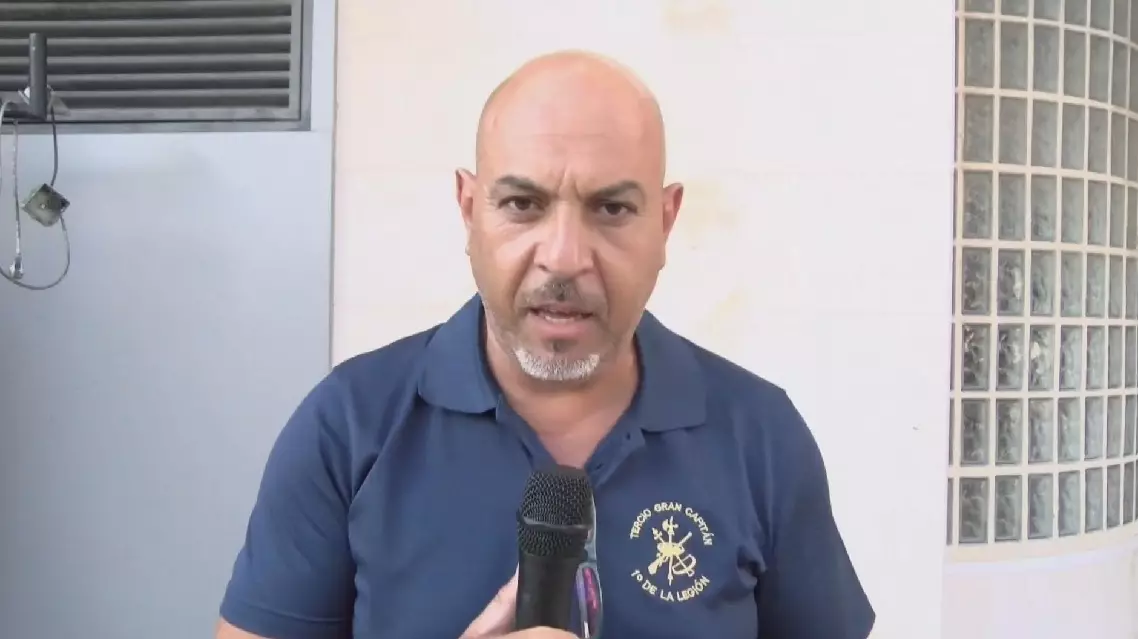
Ceuta struggles with shortages after mass migrant influx