Spain's North African enclave of Ceuta is under the pressure of stranded illegal migrants, with its temporary reception center filled far beyond capacity and desperate migrants camping in surrounding woods and beaches.
Built to house only a few hundred people for short stays, the center has been swamped since the migrant crisis broke out. Outside its gates, illegal migrants were stranded around in nearby woods with limited basic supplies. Many of the crowds wandered around barefoot, and some had to wash themselves with water scavenged from trash bins.
Spanish National Police maintain a constant presence in the area, and Civil Guard patrols circulate.
Aissatou, a migrant from Guinea, said that what looked like a disorderly tangle of shelters in the woods has in fact divided into zones by gender and nationality, turning into an informal community of the stranded.
Having no family members left in her home country, she dared to head to Spain for a new life.
"My plan [was to go to] Spain, because I have no family. My mama died, [and also my] father died. I [do not] have family," said the migrant.
On a more open stretch of beach a short distance away, another flock of illegal migrant have gathered, hoping to be admitted to the center or to lodge an international protection claim. For many, Ceuta is only the first stop.
"I have no parents and I have never had a job, so I came to Spain to make a living. I want to get my documents quickly so I can go to Barcelona or Madrid. I really want to get to mainland Spain," said Mohammed, a Moroccan migrant.
But the path forward is far harder than many imagine. Under Spanish law, those who enter Ceuta illegally cannot automatically proceed to the mainland. Authorities need to verify identities and decide, case by case, whether to begin repatriation or process an asylum claim.
Although a majority of the migrants have been repatriated, local authorities remain overwhelmed. On Wednesday, Ceuta's regional leader Juan Jesus Vivas described the situation as "chaotic and unsustainable" and again urged the central government and Spain's autonomous communities to step in.
With about 1,100 unaccompanied minors now in local care, vastly exceeding the enclave's capacity, he called for a reform of Spain's Foreigners Law to allow the children to be relocated to other regions in a more orderly manner.
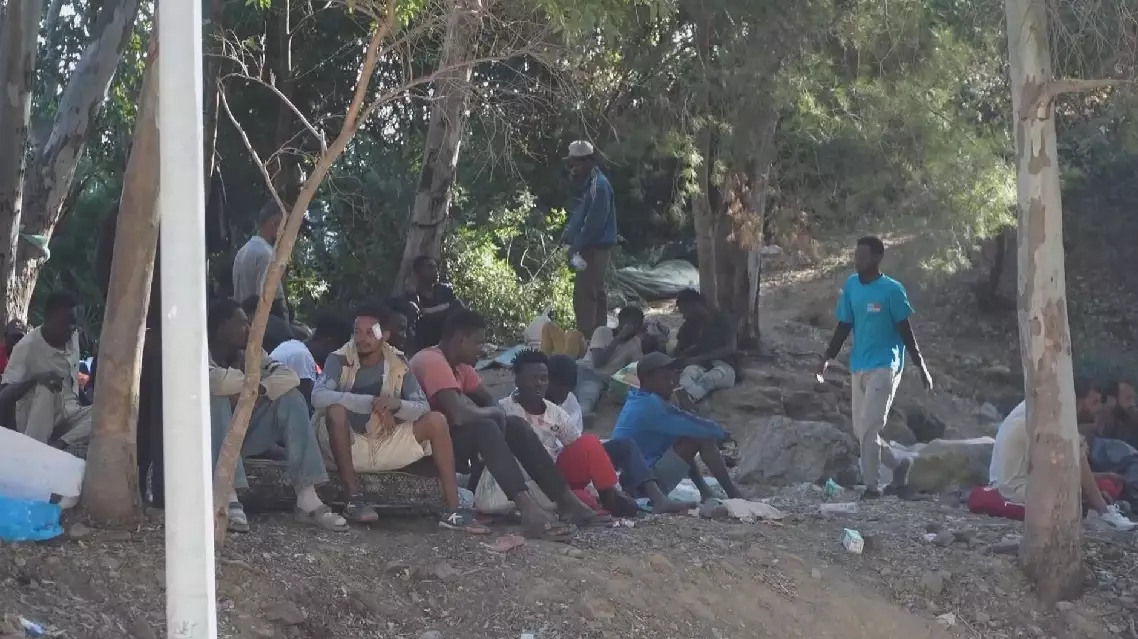
Illegal migrants remain unsheltered in Spain's Ceuta as reception center overwhelmed