Imported prepackaged black cod steak sample detected with methylmercury exceeding legal limit
The Centre for Food Safety (CFS) of the Food and Environmental Hygiene Department announced today (August 6) that a sample of prepackaged black cod steak was detected with methylmercury, a metal contaminant, at a level exceeding the legal limit. The CFS is following up on the incident.
The Centre for Food Safety, Photo source: reference image
Product details are as follows:
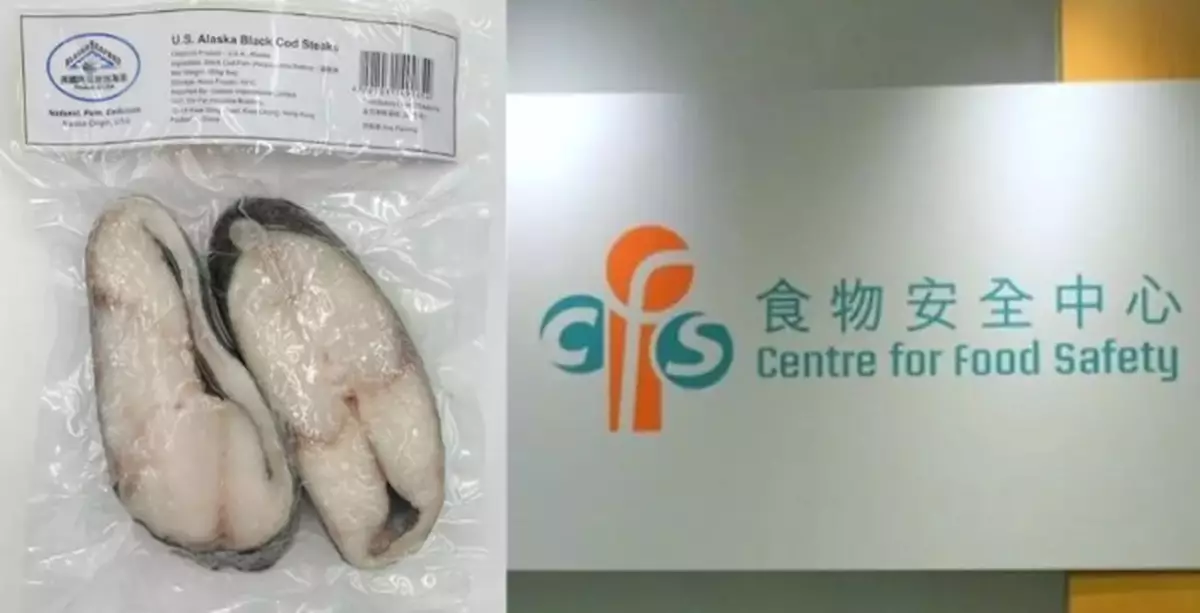
Product name: U.S. Alaska Black Cod Steak
Brand: Alaska Seafood
Place of origin: United States
Net weight: 350 grams per pack
Vendor: (Not available in English)
Importer: Galleon International Limited
Best-before date: September 20, 2026
A spokesman for the CFS said, "The CFS collected the above-mentioned sample from an online shop for testing under its routine Food Surveillance Programme. The test result showed that the sample contained methylmercury at a level of 0.8 milligram per kilogram, exceeding the legal limit of 0.5mg per kg."
The CFS has informed the vendor concerned of the irregularity and instructed it to stop sales and remove from shelves the affected batch of the product. The importer concerned has initiated a recall according to the CFS's instructions. Members of the public may call the importer's hotline at 3643 0172 during office hours for enquiries about the recall. The CFS is also tracing the source of the product concerned.
"Methylmercury is the major form of mercury in fish. At high levels, mercury can affect foetal brain development, and affect vision, hearing, muscle co-ordination and memory in adults. Furthermore, as some international organisations such as the World Health Organization have pointed out, consuming predatory fish species is the main source of mercury intake for human beings. The report of the CFS's Total Diet Study has also pointed out that large fish or predatory fish species may contain high mercury levels (for example, tuna, alfonsino, shark, swordfish, marlin, orange roughy and king mackerel). Hence, groups particularly susceptible to the adverse effects of mercury, such as pregnant women, women planning a pregnancy and young children should opt for fish that are smaller in size for consumption and avoid consumption of the above-mentioned types of fish to minimise excessive exposure to metal contaminants in food," the spokesman added.
According to the Food Adulteration (Metallic Contamination) Regulations (Cap. 132V), any person who sells food with metallic contamination above the legal limit is liable upon conviction to a fine of $50,000 and imprisonment for six months.
The CFS will alert the trade, and will continue to follow up on the incident and take appropriate action to safeguard food safety and public health. The investigation is ongoing.
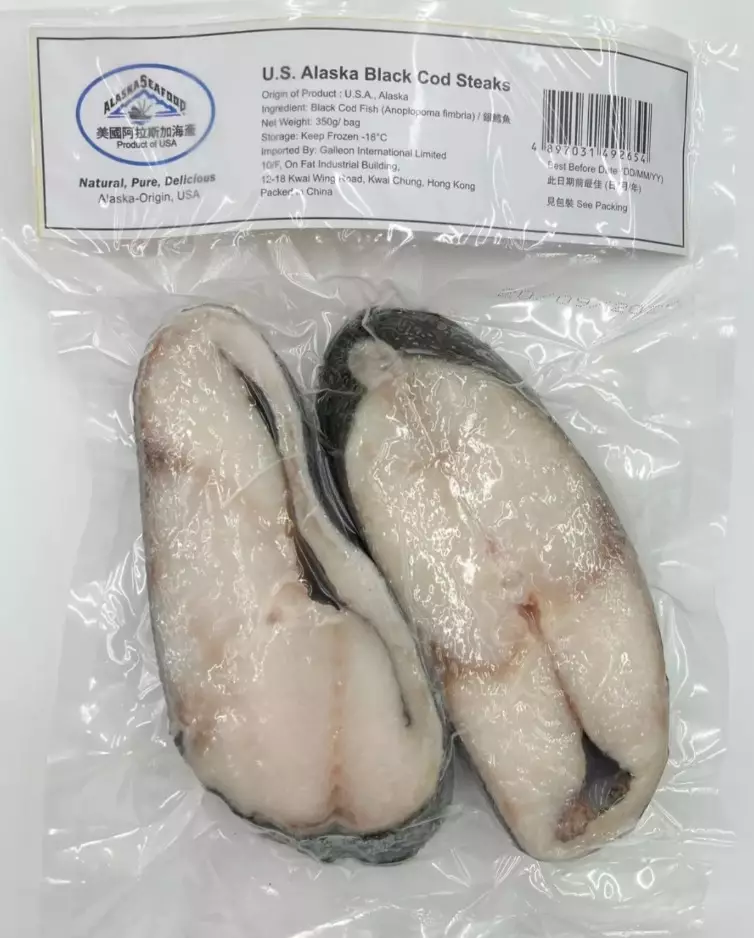
The U.S. Alaska Black Cod Steak of Alaska Seafood, Photo source: online image