SAN FRANCISCO--(BUSINESS WIRE)--Aug 6, 2026--
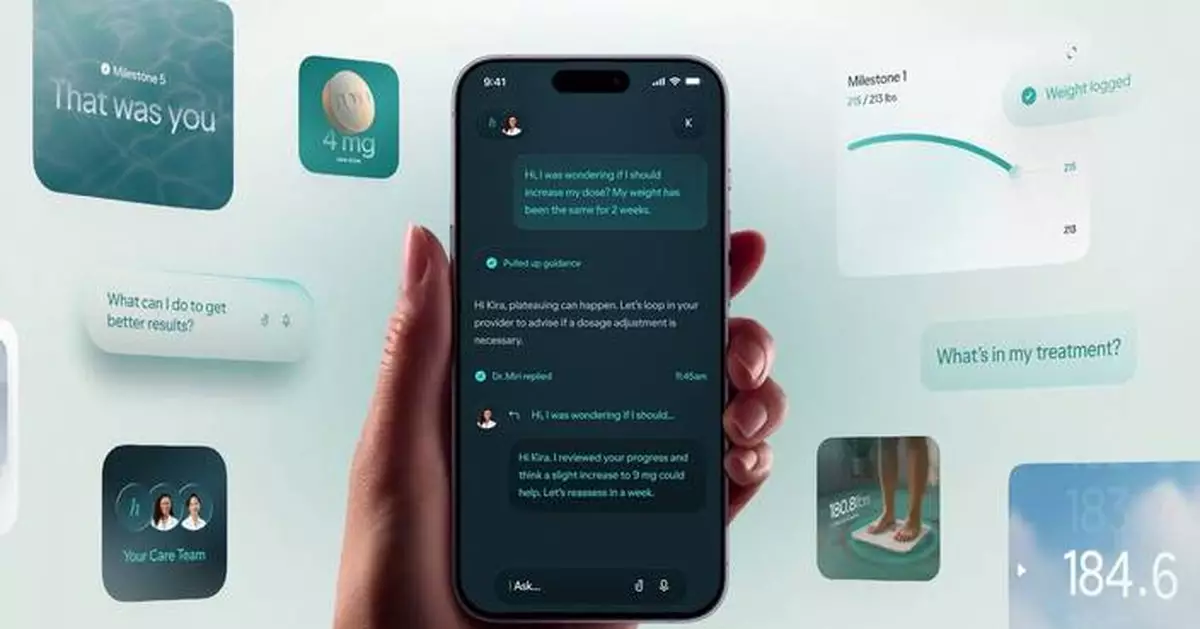
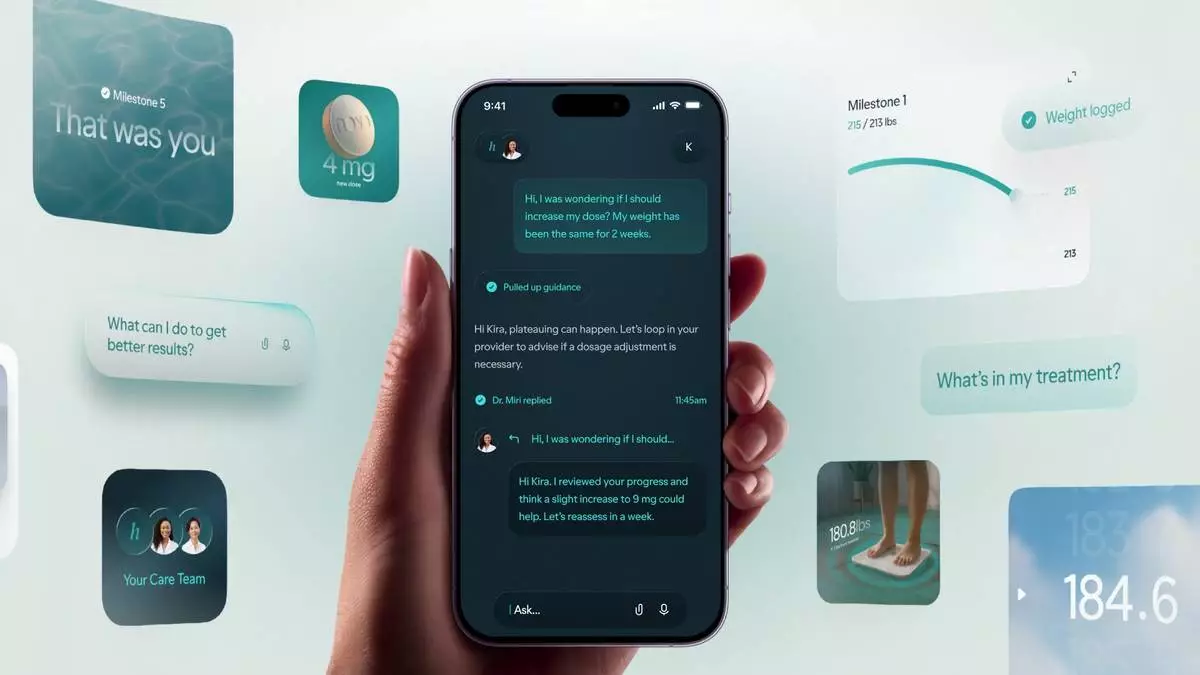
Hims & Hers, the leading health and wellness platform, today announced a first-of-its-kind* intelligent care experience that puts AI directly inside customers’ care, not on the sidelines of it. Rolling out first to Hers weight loss members, this proactive care experience delivers personalized guidance, real-time attention to her progress, and keeps her motivated so she can hit her goals.
This press release features multimedia. View the full release here: https://www.businesswire.com/news/home/20260806411084/en/
"Most AI in health sits outside your care. It can tell you things, but it isn't connected to your doctor, your treatment, or your plan, so the moment you need actual care, you're on your own," said Mo Elshenawy, Chief Technology Officer at Hims & Hers. "This new experience on the Hers app embeds intelligence at every step of the care experience. It knows each woman’s treatment plan, delivers support unique to her, and brings a provider into the conversation when clinical judgment is needed. It is one continuous conversation instead of a dozen disconnected steps. This is a first for healthcare, and it's how we're making care more proactive, accessible, and trustworthy."
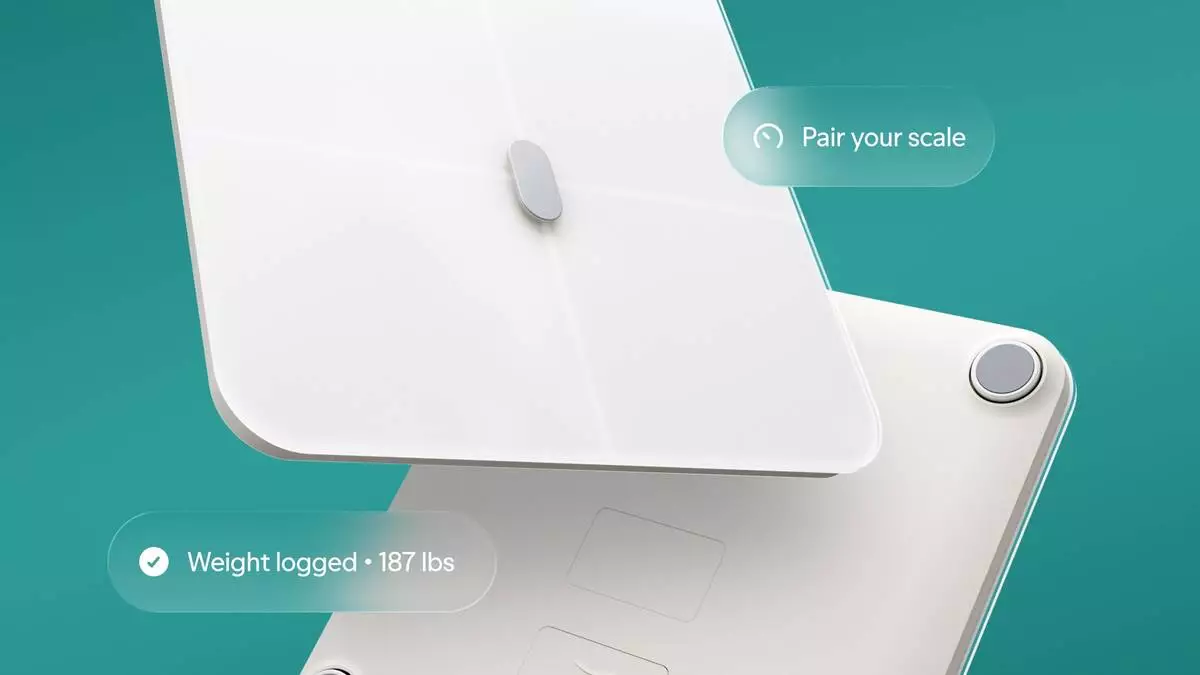
To bolster this connected experience, Hims & Hers is also introducing the Hers smart scale, available to weight loss members at no extra cost. The scale connects directly to the Hers app, allowing users to automatically sync weight and GLP-1 progress data. This real-time logging enables customers to give their provider, Care Team, and AI the full picture so they can provide support when she needs it – celebrating milestones and keeping her motivated and on track. Designed with intention with branding on the back of the base, this sleek new smart scale serves as a quiet reminder that her health journey is hers.
For decades, people have had to live within a healthcare system built around office hours rather than their personal health journeys. They’re left to navigate the silence between appointments largely on their own — the flare-up at 9pm, the question after a dose change, the small wins nobody is there to recognize, and the only advice available is "wait for your next visit." Most AI health tools don't close that gap. They can talk to patients, but none of them provide personalized support or bring in a doctor when needed. Hims & Hers built something different: AI that's fast, responsive, and available on customers’ own timetable, paired with direct access to their provider, exactly when it matters. The result is a new standard of experiencing care, always on, personal, and finally built for their needs. Hims & Hers plans to expand this AI-native experience to the Hims app and additional categories over time.
How it works: This new approach powers a deeply personalized care experience with providers at its center. A customer’s provider, AI, and Care Teams are part of one conversation, helping them stay caught up – no re-explaining her health history at every step. If a customer opts in, the platform retains her goals, medications, and exact place in her care journey, so she can get personalized support from AI, a provider, or Care Team depending on her needs, plus support on nutrition, sleep, and lifestyle along the way. Because AI responses are shaped by clinical protocols developed with weight-loss specialists, not generic health content, this new experience is expert-led and personal, rather than one-size-fits-all.
“Women have historically been last in line in healthcare — last to be included in clinical trials, last to receive cutting-edge treatment, last to benefit from innovation,” said Hers Chief Medical Officer Jessica Shepherd, MD, FACOG. "Today that changes. Women finally get an intelligent care experience built entirely around them, one that knows them, stays with them, and brings their provider and care team together with AI to truly serve their needs. In weight loss especially, the clinical oversight, lifestyle guidance, and support a woman receives between appointments can matter just as much as the treatment itself. This is what care for women should have always looked like."
This new intelligent care experience isn't just built for customers – it's built to support clinicians too. For health care providers, AI surfaces patient context, medication history, and care details so they can focus on what they do best: practice judgment, navigate complexity, prescribe any needed medication, and treat the patient in front of them. The AI informs. The clinician decides. Always.
Downloadable press assets here. For more information, visit www.forhers.com.
About Hims & Hers Health, Inc
Hims & Hers is the leading health and wellness platform on a mission to help the world feel great through the power of better health. We believe how you feel in your body and mind transforms how you show up in life. That’s why we’re building a future where nothing stands in the way of harnessing this power. Hims & Hers normalizes health & wellness challenges—and innovates on their solutions—to make feeling happy and healthy easy to achieve. No two people are the same, so the company provides access to personalized care designed for results. For more information, please visit www.hims.com and www.forhers.com.
*"First," "first-of-its-kind," and "only" refer to this specific combination: a single company that owns the entire care journey — intake, access to provider care, pharmacy fulfillment, and ongoing support — while embedding AI throughout that journey in one continuous experience, including support for providers. Based on publicly available information about generally available U.S. telehealth and digital health offerings as of July 2026. Not a claim about clinical outcomes.
Cautionary Note Regarding Forward-Looking Statements
This communication includes forward-looking statements within the meaning of Section 27A of the Securities Act of 1933, as amended and Section 21E of the Securities Exchange Act of 1934, as amended. These forward-looking statements can be identified by the use of forward-looking terminology, including the words “anticipates,” “expects,” “intends,” “plans,” “decides,” “may,” “will,” “likely,” “potential,” “future,” “over time,” “coming,” “hope,” or “should,” or, in each case, their negative or other variations or comparable terminology. There can be no assurance that actual results will not materially differ from expectations. Such statements include, but are not limited to, the rollout, availability, functionality, adoption and performance of the AI-enabled care experience and related platform features; the availability and distribution of the Hers smart scale to eligible members; the expected benefits of integrating AI into the clinical care experience for customers and providers; and our ability to enhance personalization, engagement, clinical support and customer outcomes through these offerings. These statements are based on management's current expectations, but actual results may differ materially due to various factors.
Forward-looking statements are neither historical facts nor assurances of future performance. Instead, the forward-looking statements contained in this communication are based on our current expectations, assumptions and beliefs concerning future developments and their potential effects on us. Future developments affecting us may not be those that we have anticipated. These forward-looking statements involve a number of risks, uncertainties (some of which are beyond our control) and other assumptions that may cause actual results or performance to be materially different from those expressed or implied by these forward-looking statements. These risks and uncertainties include, but are not limited to, the timing and success of the rollout, availability and adoption of the AI-enabled care experience and related platform features; the availability, distribution and customer adoption of the Hers smart scale; our ability to successfully develop, deploy and maintain AI-powered technologies and integrate them into our platform and clinical workflows; the accuracy, reliability and performance of AI-generated outputs and their acceptance by customers and providers; changes in the application, interpretation and enforcement of healthcare, consumer protection, privacy or artificial intelligence laws and regulations applicable to our business; and our ability to realize the anticipated benefits of these new products and features, and other factors described in the Risk Factors and other sections of our most recently filed Quarterly Report on Form 10-Q, our most recently filed Annual Report on Form 10-K, and other current and periodic reports we file from time to time with the Securities and Exchange Commission.
Should one or more of these risks or uncertainties materialize, or should any of our assumptions prove incorrect, actual results may vary in material respects from those projected in these forward-looking statements. The forward-looking statements contained in this communication are made only as of August 4, 2026. We undertake no obligation (and expressly disclaim any obligation) to update or revise any forward-looking statements, or to update the reasons actual results could differ materially from those anticipated in the forward-looking statements, whether as a result of new information, future events or otherwise, except as may be required under applicable securities laws. By their nature, forward-looking statements involve risks and uncertainties because they relate to events and depend on circumstances that may or may not occur in the future. We caution you that forward-looking statements are not guarantees of future performance and that our actual results may differ materially from those made in or suggested by the forward-looking statements contained in this communication.
Hims & Hers Introduces New Hers App with First-of-Its-Kind, Doctor-Led, AI-Native Care Experience
Hims & Hers Introduces New Hers App with First-of-Its-Kind, Doctor-Led, AI-Native Care Experience