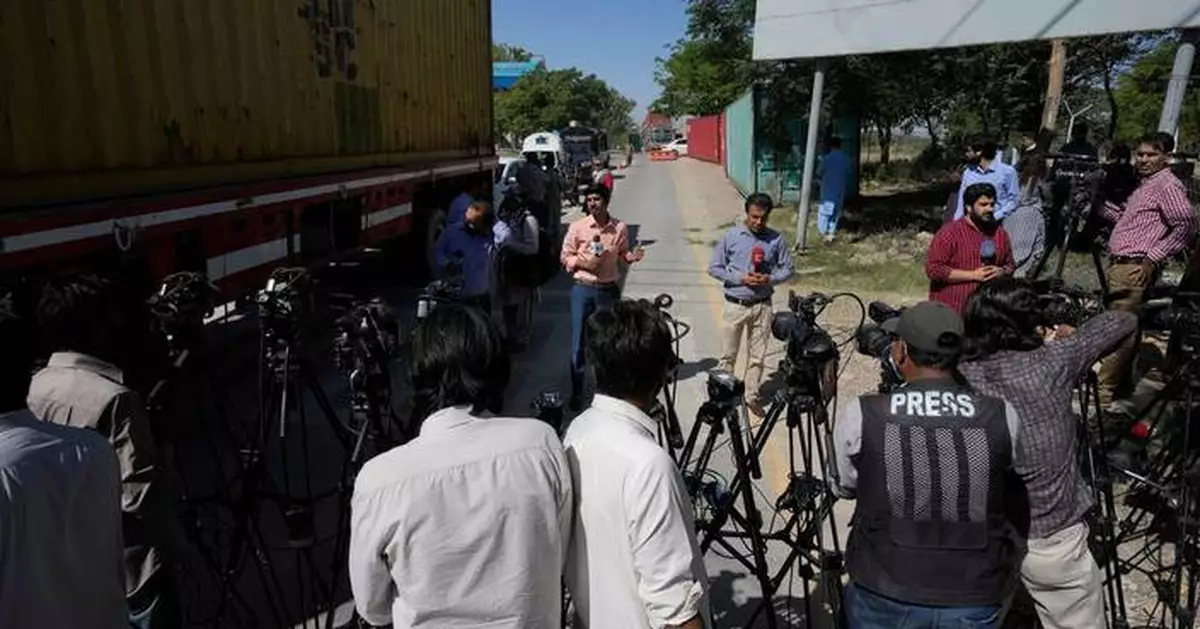
ISLAMABAD (AP) — Pakistan’s government has issued new guidelines for foreign media organizations operating in the country, formalizing reporting requirements for journalists working for international news outlets outside the country’s three largest cities, a move that has drawn criticism from press freedom advocates and journalist groups.
The document, titled Guidelines for the Facilitation of the Foreign Media and Their Associates Working in Pakistan, was circulated to local and foreign media organizations earlier this week. Journalists’ and rights groups said Thursday the measures add new bureaucratic hurdles that could discourage independent reporting.
However, the Ministry of Information rejected that characterization, saying the guidelines “are not intended to restrict foreign media or curtail press freedom,” but instead provide “a clear, transparent and accountable framework” for the registration, accreditation, and facilitation of foreign media organizations.
The ministry in responses to several journalists said the guidelines distinguish between registration and obtaining government clearance for reporting trips outside Islamabad, Lahore and Karachi. Under the rules, Pakistani journalists, freelancers, contributors, stringers, fixers, and others professionally associated with foreign media organizations must register with the ministry’s External Publicity Wing and obtain accreditation before undertaking reporting assignments beyond the three cities.
“This is not a blanket restriction on the movement of individuals,” the ministry said.
The ministry’s clarification followed days of controversy after it sent a WhatsApp message to Islamabad-based foreign journalists reminding them that a No-Objection Certificate, or NOC, was mandatory before reporting, filming, or producing content outside Islamabad, Lahore and Karachi.
The message also instructed journalists working in Pakistan-administered Kashmir to return immediately, apply for the required clearance and inform the ministry before deploying reporting teams to the disputed region.
The travel clearance requirement has existed for years, but the latest guidelines followed weeks of controversy over foreign media coverage of Pakistan-administered Kashmir. Authorities say dozens of deaths were wrongly reported during clashes between police and supporters of the outlawed Joint Awami Action Committee, as well as reports of low voter turnout during recent legislative assembly elections after the group called for a boycott.
The government accused some international media organizations of presenting a misleading picture of the elections.
The guidelines were issued ahead of the third and final phase of the legislative assembly elections in Pakistan-administered Kashmir, where Pakistan’s ruling Pakistan Muslim League-Nawaz is expected to return to office after a decade out of power.
Raja Shakeel, a spokesman for the regional election commission, said turnout exceeded 56% in the regional capital of Muzaffarabad. Voting for the remaining 11 seats is scheduled for Aug. 10.
Media rights groups condemned the guidelines. The independent Human Rights Commission of Pakistan said that rather than facilitating journalism, they "will invariably institutionalize bureaucratic control over news gathering and risk deterring independent reporting on matters of public interest.”
In a post on X the previous day, the commission described the measures as “the latest in a growing pattern of restrictions on media freedom in Pakistan.” “From arbitrary curbs on reporting and increasing censorship to legal and administrative barriers, the space for independent journalism has continued to shrink,” it said.
“The requirement that journalists obtain state approval to report from large parts of the country sends a chilling message: that critical reporting is unwelcome.” The commission urged the government to withdraw the measures and uphold its constitutional and international obligations to protect freedom of expression.
“The Foreign Media Facilitation Guidelines, 2026, open the door for Pakistan’s civilian and security agencies to impose further restrictions on foreign journalists and prevent them from reporting freely across the country without fear of legal or administrative retaliation,” said Waliullah Rahmani, the Committee to Protect Journalists representative for Afghanistan and Pakistan.
The Pakistan Federal Union of Journalists on Thursday also condemned the guidelines, calling them “an attack on freedom of expression” that would hamper the work of foreign correspondents and Pakistani journalists working for international news organizations. It urged the government to withdraw the notification, saying the move would further damage Pakistan’s international reputation on press freedom.
Pakistan’s media has also faced censorship in recent years.
———
Castillo reported from Beijing.
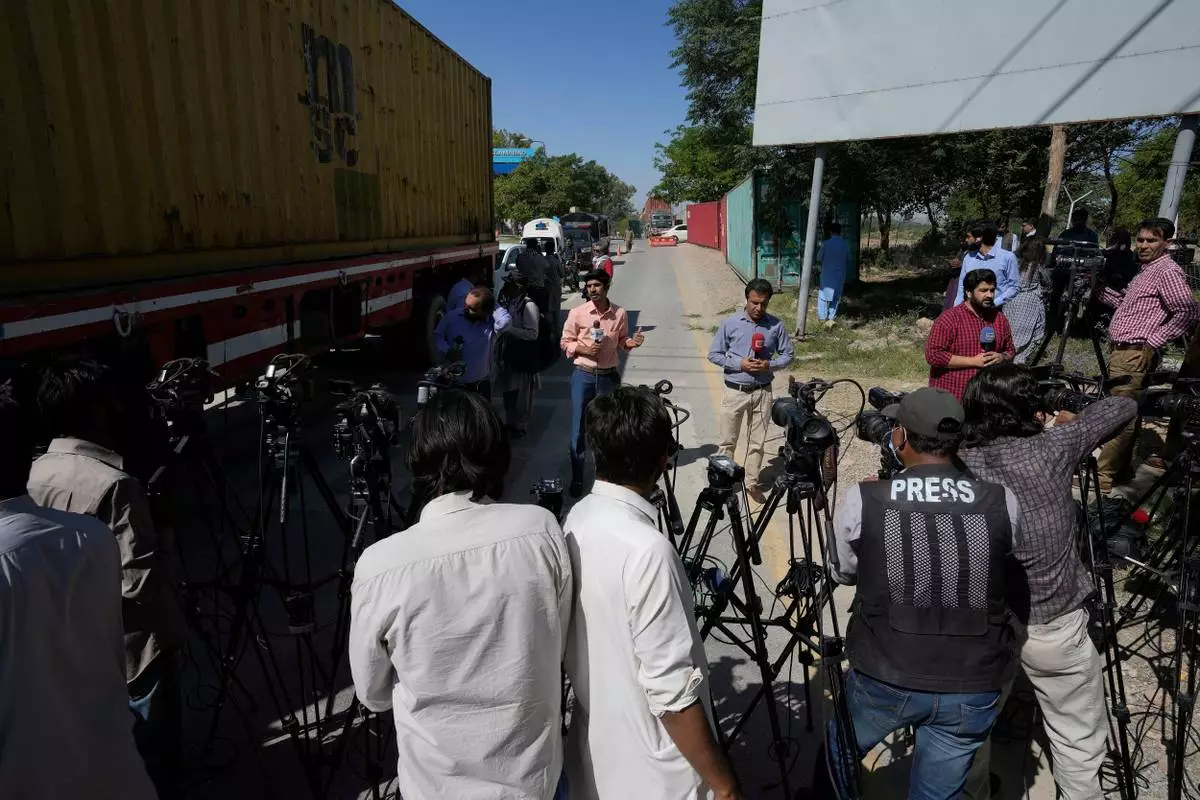
FILE -Members of media report from a road leading to police headquarters, in Islamabad, Pakistan, Wednesday, May 10, 2023. (AP Photo/Anjum Naveed, File)
WASHINGTON (AP) — President Donald Trump's administration said Thursday it plans to overhaul Head Start, tossing out many of the regulations that are the hallmark of the early education program for the nation's poorest children.
Officials from the Department of Health and Human Services, which oversees the federally funded preschool program, said the proposed changes would encourage more local decision-making. Early childhood policy experts argue the deregulation could undermine Head Start's position as the gold standard in early education.
The Associated Press previously reported on the overhaul proposal, which became public Thursday when it was posted online. The public will have 60 days to weigh in on it before it goes into effect.
Head Start centers serve around 700,000 of the nation’s most vulnerable children, including those who are homeless, in foster care or disabled. That wouldn't change under the overhaul.
But Alex J. Adams, an assistant secretary at Health and Human Services, said the department is hoping to give Head Start centers the flexibility to change the way they operate. That means eliminating most of Head Start's regulations, such as standards for low staff-to-student ratios or requirements to provide services to preschoolers' families.
"Federal mandates can certainly hinder local decision-making, drive up costs and limit the program’s reach,” Adams said on a call with reporters. He highlighted a decade-long decline in Head Start enrollment. “If we get this proposed rule right, we will grow the number of Head Start slots.”
On a call previewing the proposed changes, Health Secretary Robert F. Kennedy spoke reverently about Head Start, which was started by his uncle Sargent Shriver during the Lyndon B. Johnson administration.
“It’s a program that works for the most vulnerable of the poorest kids in our society, and it’s really important we protect it,” Kennedy said.
But the changes would undermine many of the things that make Head Start distinct from other early education programs, policy experts say.
“The model was created with intentionality,” said Khari Garvin, who oversaw Head Start under President Joe Biden, a Democrat. It was designed, he said, “as part of a strategy to move families out of poverty.”
Head Start, which began in the 1960s as part of Johnson's War on Poverty, is currently governed by more than 100 pages of regulations. Those regulations require centers to have low staff-to-student ratios and a research-backed curriculum, among other things, and they ensure centers are providing wraparound services that are critical to children in poverty, including medical and dental screenings and parent coaching.
The proposal would toss out nearly all of that rule book. Instead, Head Start’s 1,600 operators — which include nonprofits and school districts — would look to state and local childcare licensing requirements for guidance on many aspects of the program.
Once the proposed regulations are published online, the public will have 60 days to weigh in. The final rules could face legal scrutiny, further delaying their implementation.
While the proposed rules largely loosen requirements, Adams emphasized that centers have the option to continue to operate as they had in the past. He estimated the new rules could generate more than $2 billion in savings and potentially allow Head Start to serve more children.
The proposal adds in at least two new requirements, officials said. It includes a 5% cap on administrative expenses, down from 15% under current rules, and new nutrition provisions championed by Kennedy.
Overall, experts emphasize, state childcare licensing requirements are far more lax than Head Start's current regulations. State rules are largely focused on ensuring children are healthy and safe. Generally speaking, they do not require centers to provide things like medical or dental screenings, they don't specify ways to engage with parents, and they don't speak to what — if anything — should be taught in childcare settings.
Shantel Meek, who heads the Children’s Equity Project at Arizona State University, co-authored an analysis that compared state licensing requirements with Head Start standards and found massive gaps.
“Whereas licensing is, like, the bare minimum to keep kids safe, Head Start includes keeping kids safe but also ensuring that kids are developing, growing, learning well,” Meek said. “It’s a totally different purpose.”
Critically, states allow adults to care for far more children than is allowed under Head Start standards. In Mississippi, for example, one Head Start teacher is only allowed to teach up to four 2-year-olds. State childcare regulations would permit up to a dozen 2-year-olds to be supervised by one adult.
Head Start, which operates in all 50 states, has long had support from both Democrats and Republicans. But it has faced repeated threats under the Trump administration, whose budget chief, Russell Vought, had previously called for it to be eliminated. Not long after Trump, a Republican, took office again in early 2025, some Head Start programs had to briefly shutter because they had problems accessing their federal money. Later, a budget draft eliminated Head Start's funding, but it was restored after widespread backlash.
In a call with reporters, Kennedy said he believes Head Start is effective. He cited research showing its graduates have fewer law enforcement encounters, do better in school and have better jobs than their peers. He added that he tried to shield Head Start from many of the cuts that hit the rest of his agency.
Still, the Trump administration succeeded last year in laying off much of Head Start's support staff and closing half of its regional offices.
The Associated Press’ education coverage receives financial support from multiple private foundations. The AP is solely responsible for all content. Find the AP's standards for working with philanthropies, a list of supporters and funded coverage areas at AP.org.
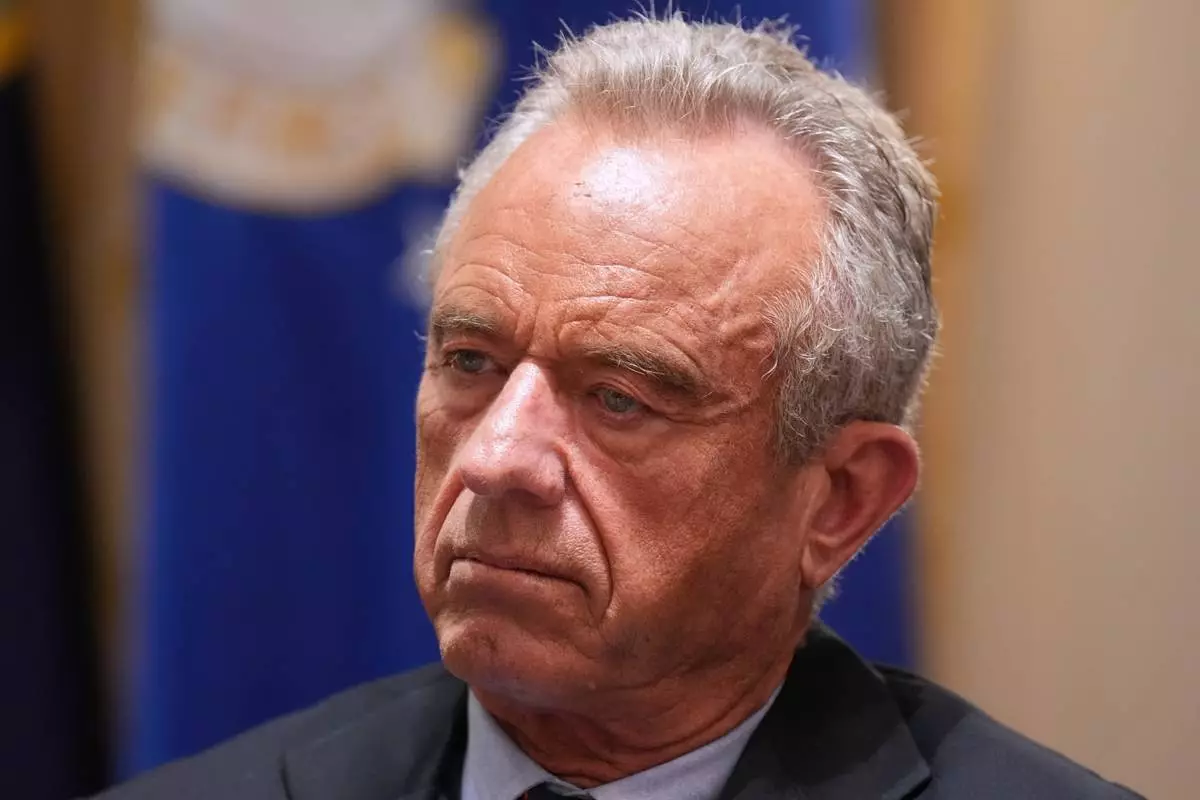
FILE - Secretary of Health and Human Services Robert F. Kennedy Jr., listens during a Cabinet meeting at the White House, May 27, 2026, in Washington. (AP Photo/Jacquelyn Martin, File)