China's steel industry has achieved intensive breakthroughs in high-end precision materials since the beginning of this year, with a batch of advanced specialty steels empowering frontier industries including electronics, new energy and high-end equipment.
In the mobile communication era of 4G, the thickness required for an ultra-thin low-carbon steel foil is 0.12 mm to enable convenient and speedy signal transmission.
Such a demanding requirement is tightened to a mere 0.10 mm in today's 5G new era, which means more complicated techniques for its manufacturers.
For a long time, the rolling methods relied heavily on foreign enterprises. However, Shougang Group teamed up with the University of Science and Technology Beijing (USTB) in 2013 to conduct scientific research and development on the continuous rolling process of "5G steel," a nickname of the ultra-thin low-carbon steel foil.
The "5G steel" that independently developed by China - as thin as 0.07 mm - has entered mass production and been widely used for 5G base station signal receivers, signal transmission filters, and integrated circuit boards, and new energy battery connection pieces.
"Although it's thin, it has excellent toughness and feels like paper, and we can easily bend it and repeatedly fold it," said Hu Na, an engineer at Shougang Jingtang Steel United Iron and Steel Co., Ltd. She folded the steel into a classic "paper plane" to show its flexibility.
This year, China has been using specialty steels to empower the development of new quality productive forces.
For instance, in industrial sector, China has continued to push performance limits of silicon steel -- an iron-silicon alloy used primarily in electrical applications due to its good magnetic properties, with 0.1-millimeter-grade non-oriented electrical steel achieving global top-tier status in electrical steel iron loss indicators.
The material now is widely used in drive motors for new energy vehicles and joint motors for humanoid robots.
The breakthroughs came as China's steel industry continues to shift toward higher value-added products, with the manufacturing sector's share of steel consumption surpassing that of the construction sector for the first time in 2025.
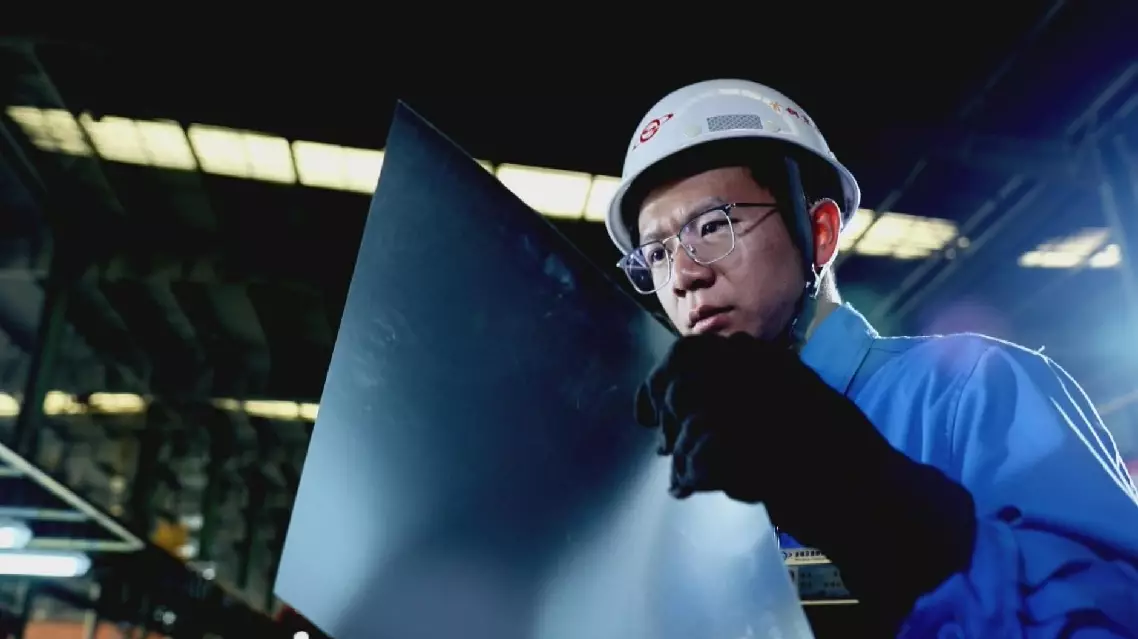
China makes intensive breakthroughs in high-end steel products in 2026
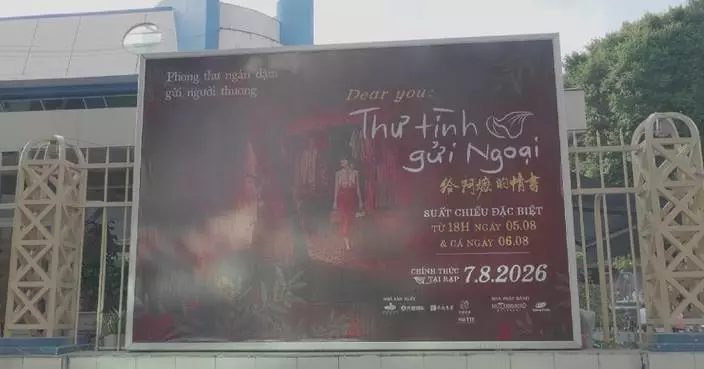
Chinese box-office hit "Dear You" held its premiere on Monday in Thailand, the very country where the movie's deeply personal journey unfolds, drawing attendees from across the political, business, and cultural communities of both China and Thailand.
The low-budget drama, known as "Love Letters to Grandma" in Chinese, was shot entirely in the Chaoshan, or Teochew, dialect. It has defied all box-office expectations upon its initial April 30 release in the Chinese mainland, grossing over 275 million U.S. dollars.
The film's emotional pull was simple yet powerful: it centers on a young man who retraces his grandfather's footsteps across the border into Thailand, only to uncover a decades-long secret behind the love letters his grandfather had been writing to his grandmother.
Set against the distinct backdrop of Teochew Chinese culture, the narrative highlights the historic diaspora experience, capturing universal themes of displacement, nostalgia, and memories passed down through generations.
For director Lan Hongchun, the decision to use the Teochew dialect rather than standard Mandarin was deliberate and central to the film's authenticity.
"In making this film, we strived to reconstruct the experience and emotions of our grandparents' generation, creating something that resonates deeply with many people," Lan said when meeting the press on the sidelines of the premiere alongside other cast members.
That resonance has proven especially strong among the Thai Chinese community in the country, where the film's portrayal of migrant struggles and family devotion strikes an intimately familiar tone.
"The Teochew make up 56 to 60 percent of the population. They have a distinct culture, traditions, beliefs and customs. Our country has the largest Teochew population compared with other Southeast Asian countries," Thai author Pariwat Chanthorn told China Global Television Network (CGTN).
For many Thai Chinese, watching the film rekindled memories of their own family histories.
"Watching this film reminded me of my grandparents, as my grandfather also arrived by boat. Over time, the connection with our roots in China had been lost, but this movie vividly illustrated the struggles and hardships they endured, as well as how much love they have for family and country," said Thanchanok Jongyotying, an audience member.
Another viewer, Natarpa Phongtipapon, highlighted the broader cultural bridge the film represents.
"I feel that this film really highlights the strong bond between the Thai and Chinese people, showing that we are truly close like siblings and have supported each other extensively, from the past right up to the present," she said.
The film is set to hit cinemas nationwide in Thailand beginning Wednesday.
The movie has also premiered in several other Southeast Asian countries, including Malaysia, Singapore, Brunei, Vietnam and Indonesia.
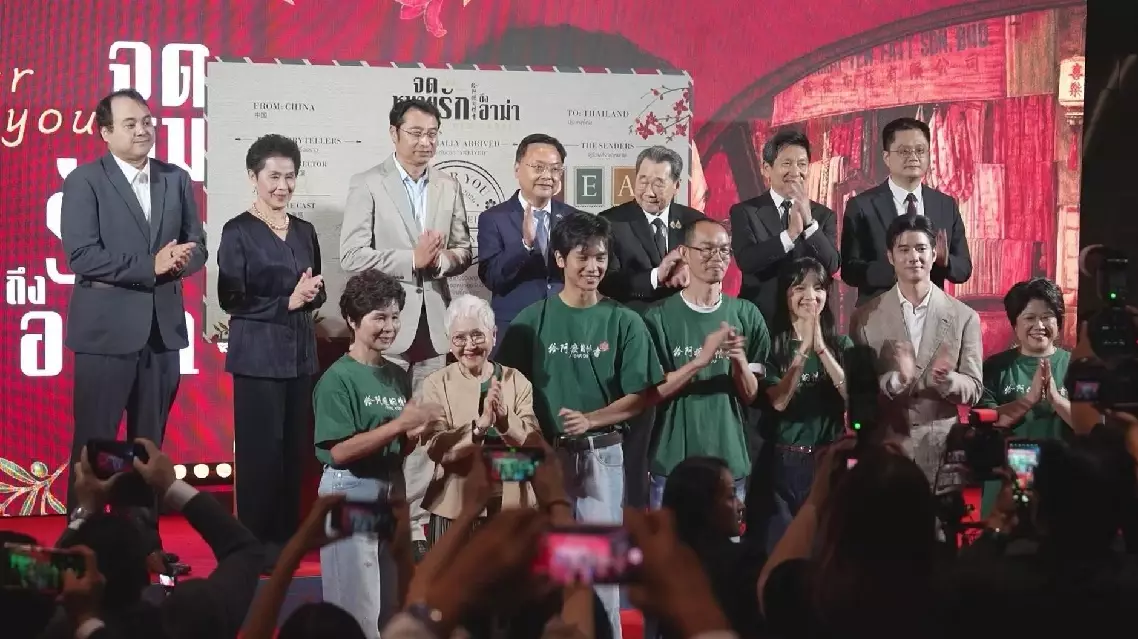
Chinese film 'Dear You' premieres in Thailand, winning hearts with cross-border storytelling