The China Media Group (CMG) Film Culture Carnival Wuhan Stop was officially launched on Wednesday in the capital city of central China's Hubei Province.
Co-hosted by the CMG and the Wuhan Municipal People's Government under the guidance of the China Film Administration, the five-day event is aimed to promote the development of China's film industry.
The event also highlights the role of film in preserving cultural heritage, strengthening industry, boosting cultural tourism and stimulating economic growth.
Bringing together film premieres, cutting-edge film industrial tech experiences, film-themed intangible cultural heritage (ICH) markets, and local culinary bazaars, the event showcases the growing "Film plus" consumption model, creates new online and offline consumer experiences, and offers a locally distinctive, immersive cultural celebration for the public.

CMG launches Film Culture Carnival in Wuhan
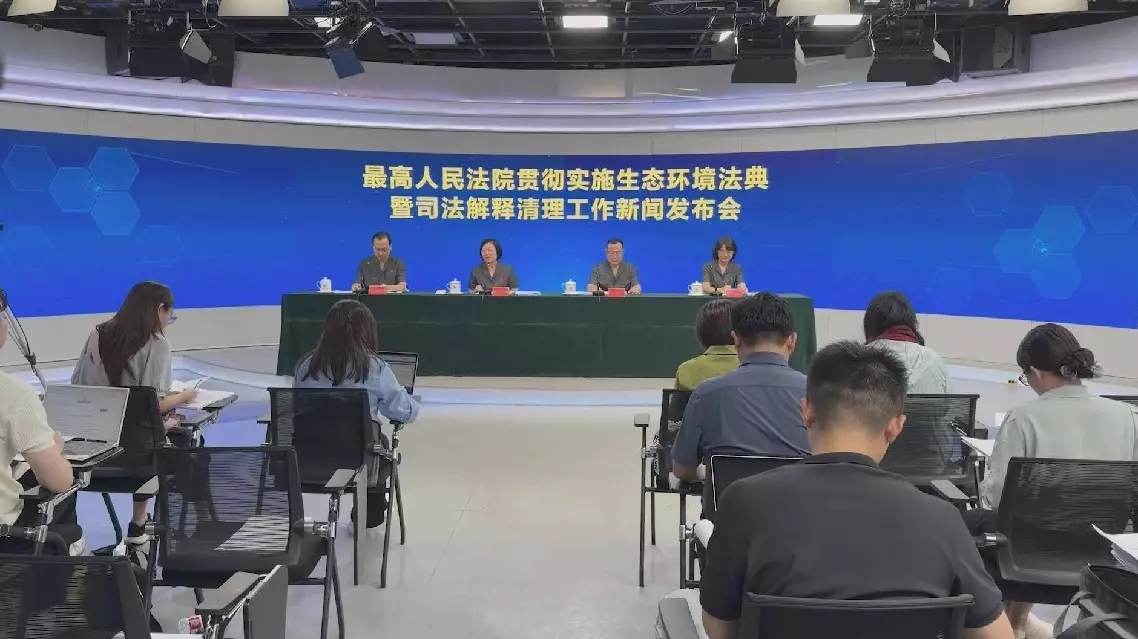
China's top court on Thursday issued a set of provisions, marking the first judicial interpretation supporting the country's Ecological and Environmental Code.
The provisions are designed to ensure a smooth legal transition between old and new laws and the full and accurate implementation of the Code.
The provisions will take effect simultaneously with the Code on Aug. 15, according to the Supreme People's Court.
Consisting of 13 articles, the provisions clarify the general standards and specific rules for courts to apply old and new laws when hearing environmental cases after the Code takes effect.
They stipulate that, in principle, cases based on the facts that occurred before the Code takes effect will generally be handled under the laws and judicial interpretations then in force, while those arising afterward will be governed by the Code.
"For illegal acts such as environmental pollution and ecological damage that occurred before the code becomes effective, where the offender has taken the initiative to eliminate or mitigate the harmful consequences, effectively implemented ecological and environmental restoration measures, promptly paid compensation, or taken other similar measures, the provisions of the code may be applied to impose a lighter or mitigated penalty. This aims to actively encourage offenders to voluntarily fulfill their ecological restoration and compensation responsibilities, thereby better protecting the ecological environment," said Yang Linping, vice president of the Supreme People's Court.
The Ecological and Environmental Code was adopted by China's top legislature in March.
The 1,242-article Code has five chapters, covering areas including pollution control, ecological protection, and green and low-carbon development.
The Code is aligned with China's pledges to peak carbon emissions before 2030 and achieve carbon neutrality before 2060.
China issues judicial interpretation on Ecological and Environmental Code