As South Sudan is welcoming its first general election this year, safeguarding national stability is the overriding priority for the country, a Chinese envoy to the UN highlighted on Thursday.
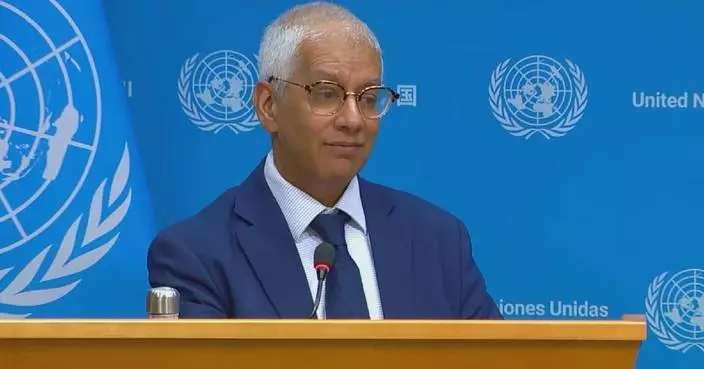
Sun Lei, China's chargé d'affaires ad interim to the United Nations, made the remarks at an UN Security Council open meeting on South Sudan.
"Recently, the South Sudan National Elections Commission has officially announced general election to be held at the end of this year. The transition has reached a pivotal stage, and maintaining national stability is the fundamental precondition. We call on all parties to stay calm and restrained, refrain from violence, and prevent any escalation," Sun said.
"Protecting civilians and humanitarian workers is a red line under international humanitarian law that all parties are obliged to obey. China supports South Sudan government and the UN Mission in South Sudan in further advancing inter-communal dialogue, rolling out more confidence-building measures, and fostering harmonious coexistence and solidarity among its people," Sun said.
South Sudan's National Elections Commission (NEC) announced on Monday that the country's first general elections since gaining independence in 2011 will be held on Dec. 22.
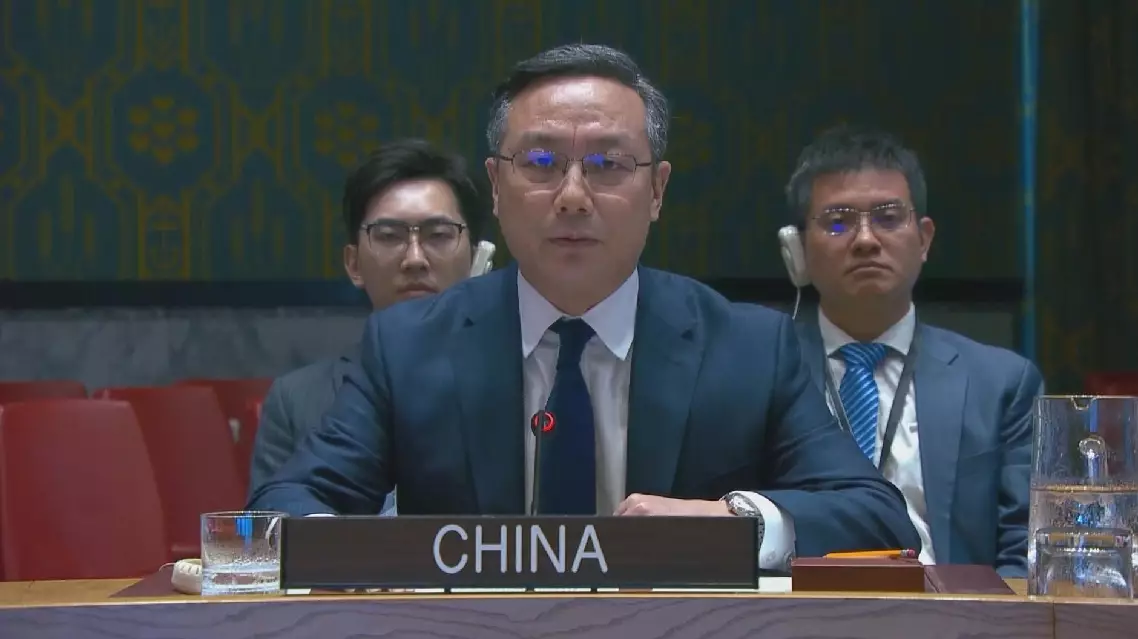
Chinese envoy to UN highlights national stability as top priority in South Sudan
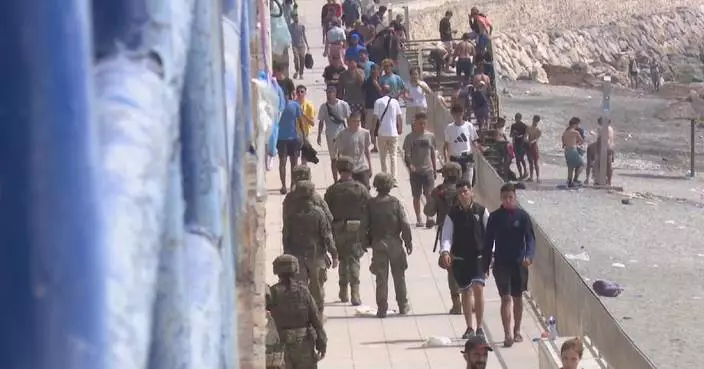
Tens of thousands of migrants who flooded into Spain's Ceuta chasing work and new lives have found themselves trapped in a dead end, with the European mainland just out of reach and the dream they were sold nowhere to be found.
Ceuta, sitting just across a border fence from Morocco, is one of Spain's two exclaves on the North African coast, alongside Melilla. Although geographically located in Africa, it forms part of the EU's external border.
Its location has long made it one of Europe's most sensitive migration gateways. For years, undocumented migrants have attempted to reach the enclave by climbing border fences or swimming around coastal barriers before trying to continue to mainland Spain and other parts of Europe.
In recent years, Morocco has earned a reputation among international institutions as one of Africa's most vibrant emerging economies. Yet in parts of northern Morocco's border regions, where the industrial base is thinner, many young people still view Europe as their best hope for a better future.
Now, the tiny city of Ceuta, covering less than 20 square kilometers and home to just over 80,000 people, has once again found itself on the front line of Europe's migration crisis.
For most irregular migrants, the ultimate destination is not Ceuta itself, but mainland Spain -- and, beyond that, other European countries. But getting there is far from straightforward. Unlike other Spanish cities, Ceuta requires all passengers boarding ferries to or from the mainland to present valid documentation confirming their legal rights to enter the Schengen Area.
At a temporary migrant reception center in Ceuta, many said they came for one reason only: to find a job.
"I want to work. I can't find anything in Morocco. In Spain, I'd do anything -- furniture-making, working at a barber shop, whatever. I just want to earn a living," said Hassan, an irregular migrant from Morocco.
Cristina, who was born and raised in Ceuta, said the city has long been a place where different cultures coexist peacefully, and social order has remained largely stable. But the recent massive influx of migrants, she said, has put visible strain on local residents. What worries her even more is that many of the arrivals came chasing a "European dream" that simply does not exist.
"Ceuta is a very small city, but we have always lived in harmony across four cultures -- we never had any problems. Those who came here said they were told that in Spain they would find jobs, food, and housing. But all that information was false," she said.
Many Ceuta residents said they understand the migrants' desire for a better life, but worry that their city is now overwhelmed and simply cannot take in any more.
"I understand they live in poverty and want a better life -- I really do. But please understand us too. We have only 80,000 people here, and suddenly more than 70,000 arrived -- how are we supposed to absorb that? We don't have the space, we don't have the capacity, and we certainly don't have the policies to handle it," said Gabriela, a Ceuta resident.
With border crossings gradually returning to normal, the most acute phase of the crisis appears to have passed. But for the migrants in Ceuta, the crisis is far from over.
Karim, a local taxi driver who has been on the roads of Ceuta for over a decade, said that many irregular migrants remain stranded across the city. They are unable to move on to Europe, yet unwilling to return to Morocco.
"Some don't want to return to Morocco, so they hide in the woods, in the hills, behind rocks along the seashore, in residential areas, in parking lots, behind buildings, inside supermarkets," Karim said.
He said many migrants eventually choose to leave Ceuta -- not because they have achieved their goal of reaching Europe, but because the reality has proven far tougher than they could have imagined.
"Those who leave do so because they realize there's nothing for them here -- sleeping on the streets, with no food and no water. The locals have helped as much as they can. And they have no money they can use -- most shops here won't take their Moroccan dirhams, which is their official currency. So in the end, many just voluntarily go back to Morocco. Nobody is forcing them out -- just showing them the way. They simply figure that going home is better than staying here," Karim said.
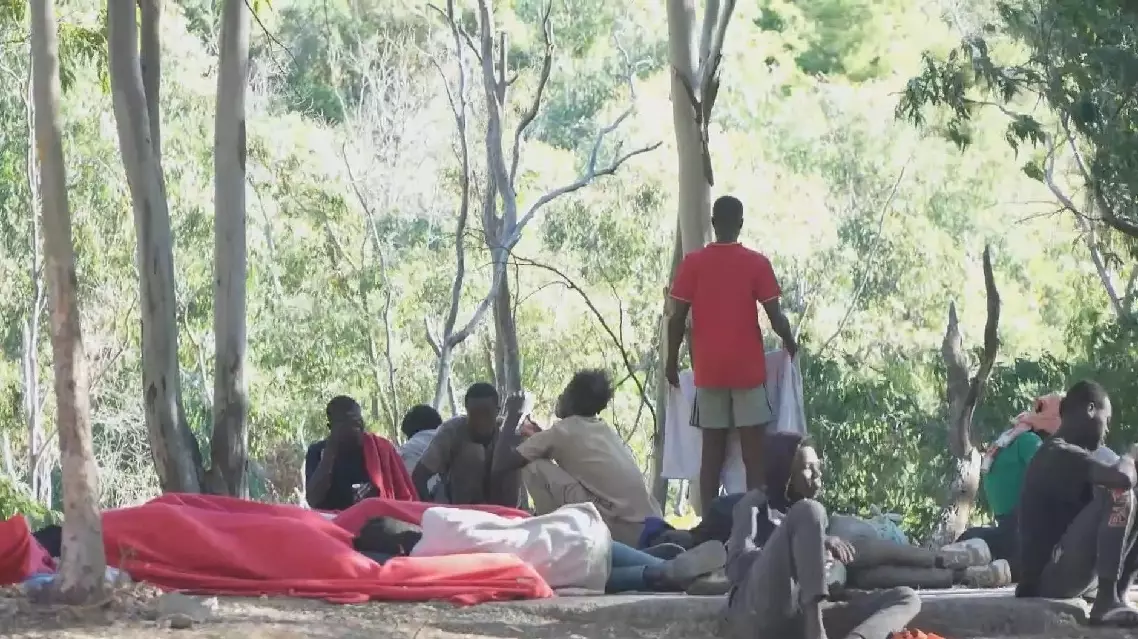
Ceuta locals feel pressure in Europe's latest migrant crisis