WASHINGTON (AP) — To reach a deal with Iran that reopens the economically vital Strait of Hormuz, President Donald Trump may need to do something out of character — compromise.
Any concession would be tough for the Republican president, who has insisted there is no truth to his sagging poll numbers, the sluggish economy and the U.S. military’s dwindling stockpiles of key weapons following the Iran war he launched with Israel more than five months ago.
“He divides the world into winners and losers, and this would make him a loser,” said Eliot Cohen, who served as counselor of the State Department in the George W. Bush administration. “And the image of being a loser, I think, would be intolerable for him.”
The sticking point has been over control of the Strait of Hormuz, through which 20% of the world's oil normally flows. While both sides say a deal is close, the Trump administration has ruled out any arrangement that would cement Iran’s grip over the Persian Gulf waterway, including Tehran charging fees.
But Iran has insisted on some measure of control, saying the strait will not go back to being an open international waterway as it was before the war. Despite thousands of U.S. strikes, Iran can still fire drones and missiles at vessels, giving it a chokehold over commercial shipping.
Cohen said yielding ground to Iran would be difficult for the president, even if the conflict keeps gasoline prices elevated and poses problems for Republicans in November’s midterm elections.
But David Schenker, a former State Department official in the first Trump administration, said the increasing economic pressure may actually prompt Trump to compromise on the strait, even if it's likely to have profound implications on global trade.
“There will be a lot of spin both ways, but my guess is that the president has tipped his hand as to the urgency for him of resolving the crisis,” said Schenker, now a fellow at the Washington Institute for Near East Policy. “This is a concession he may very well be willing to make.”
Trump, however, has so far conceded little about the war.
He posted on social media Thursday that the U.S. military still has “massive amounts” of weapons and that large amounts are being manufactured. He threatened jail time for the alleged “leakers” of information on the nation's weapons stockpiles.
Trump was referencing a Washington Post story that reported his frustration with Defense Secretary Pete Hegseth over the shrinking inventories of advanced weapons, as the Cabinet had gathered at Camp David last week.
A senior administration official said there had been a “robust and healthy” discussion about Iran in the Cabinet meeting and would not provide additional details except to say there had not been a "knock-down, drag-out fight” over the matter. The official spoke on condition of anonymity to discuss internal administration deliberations.
Experts say the U.S. military is running short on weapons like advanced missile interceptors that have defended American troops from Iranian attacks. The Center for Strategic and International Studies, a Washington think tank, has released reports on declining inventories based on budget documents and other public information.
When asked later about weapons stockpiles, Trump told reporters that “we need more all the time.” He claimed that certain kinds of munitions are in “virtually unlimited supply” and others are “a little bit tighter.” He didn't offer more specifics.
He insisted that “we’re in great shape. But, with that being said, we always want more. We have to have more,” noting that the military could tap into U.S. supplies of munitions around the world if needed.
Hegseth was on Capitol Hill this week, meeting privately with Republican senators as he makes the case for billions of dollars in additional Pentagon spending as part of a major GOP budget package.
Sen. Mark Kelly, an Arizona Democrat and former Navy pilot, said the weapons shortfall stems from a war that lacked a well-defined goal and strategy beyond striking more than 14,000 targets.
“My contention on this is, if you knew what the goal is, maybe the target list would have been 500 targets. Maybe it would have been 200 targets," Kelly said, adding the Pentagon wants "billions and billions of dollars to fix their self-inflicted problem.”
Trump also has claimed in a social media post Tuesday that his polling numbers are the best “they have ever been.” He cited accomplishments including employment numbers and the “Denuclearization of Iran.”
But about two-thirds of U.S. adults say the war with Iran has not been worthwhile, according to a poll from late July by The Associated Press-NORC Center for Public Affairs Research. That includes the vast majority of Democrats and independents, as well as about 37% of Republicans.
On employment, the United States had nearly 159 million jobs in June, not including farmworkers, which was a record. In Trump’s second term, however, job growth has slowed considerably.
Trump also continues to claim that the Strait of Hormuz is open to commercial shipping. He said Thursday that the strait is “sort of open right now” and pointed to the Navy's blockade of Iranian ports.
“But they can always shoot something, they always have something or drop a mine,” Trump said of Iran. “And if you have one mine sitting out there, you sort of mess things up because people don’t want to take their billion-dollar boats and accidentally get hit by a mine.”
At least two ships were hit in the Strait of Hormuz in the past week, while several others reported near misses or warnings from entities claiming to represent Iran’s Revolutionary Guard, according to maritime data company Lloyd’s List Intelligence.
Vessel traffic through the strait increased to 84 transits last week, up from 45 the week before. But traffic is still far below the more than 700 transits seen in a typical week before the crisis, Lloyd’s List said.
U.S. and Iranian officials say they are close to reaching an agreement to reopen the strait. That is even as the U.S. military insists the strait is open through a route it helps oversee near Oman’s coast, saying this week that it “remains free and open for all commercial vessels seeking to transit the international waterway.”
The Associated Press reported Wednesday that the potential deal is being portrayed as a temporary solution to the dispute over the strait, and that it would allow ships to enter the Persian Gulf through an Iranian-controlled route and exit through an Omani-controlled route.
The Trump administration has said repeatedly that it is strongly opposed to any arrangement that would see Iran charge fees.
Any temporary routes through the waterway will not have tolls, charges or other impediments, according to a U.S. official not authorized to comment publicly who spoke Thursday on condition of anonymity. The official said Trump’s preferred choice is diplomacy and he “holds all the cards” in dealing with Iran.
Associated Press reporters Lisa Mascaro, Darlene Superville and Michelle L. Price in Washington contributed to this report.
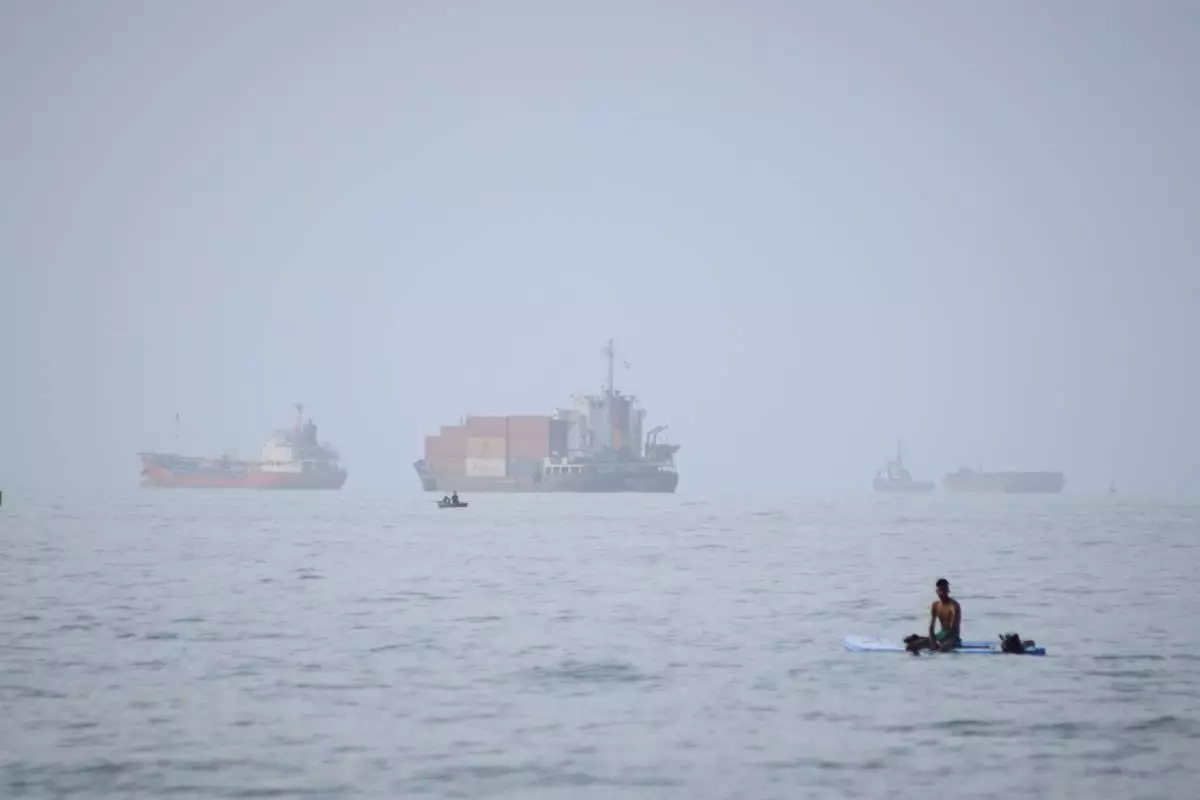
A man sits on a surfboard as a container ship and other commercial vessels appear anchored in the Strait of Hormuz off Bandar Abbas, Iran, Monday, July 27, 2026. (Razieh Poudat/ISNA via AP)
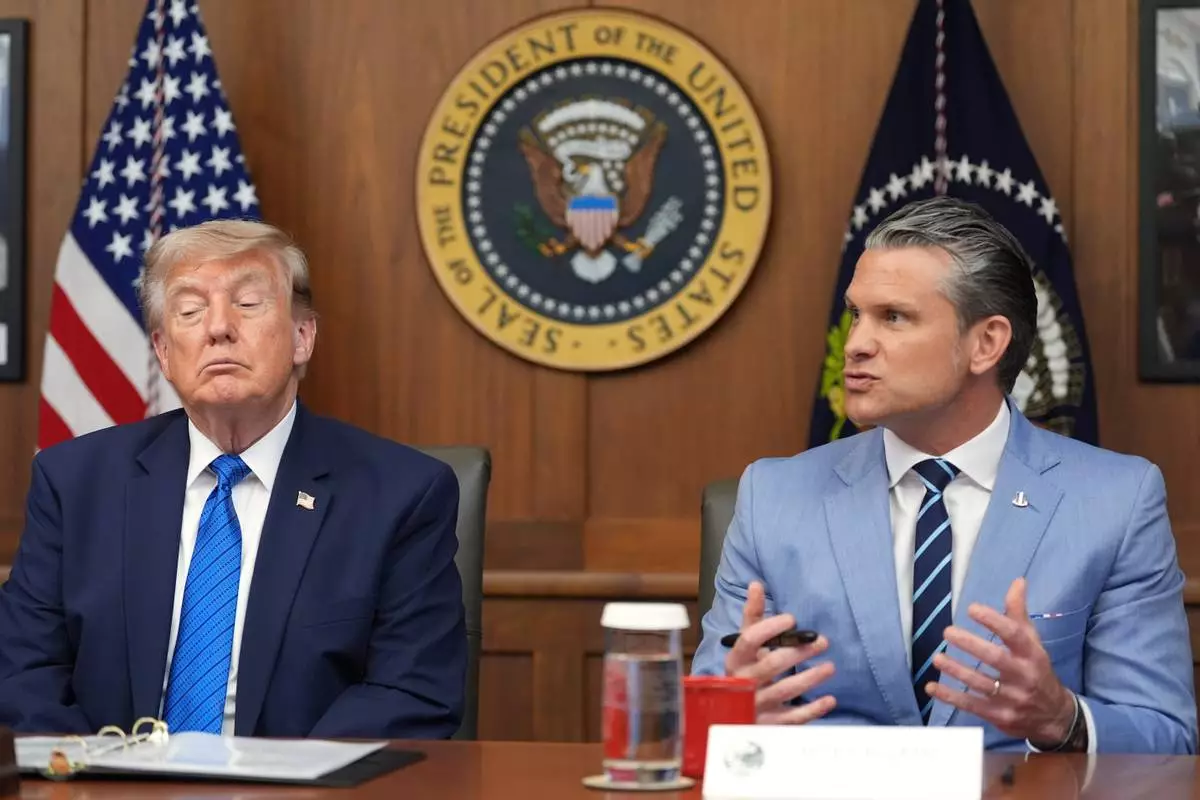
Defense Secretary Pete Hegseth speaks alongside President Donald Trump during a cabinet meeting, Friday, July 31, 2026, at Camp David, the presidential retreat, near Thurmont, Md., Friday, July 31, 2026. (AP Photo/Jacquelyn Martin)
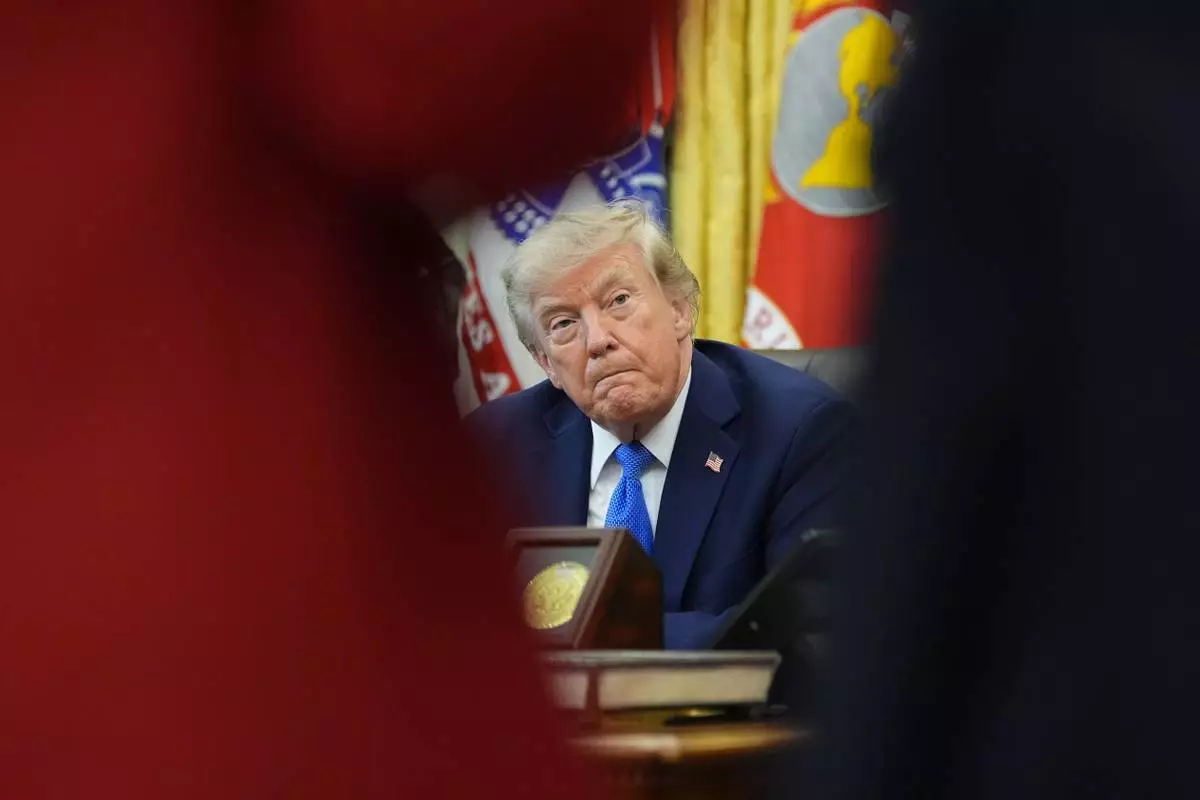
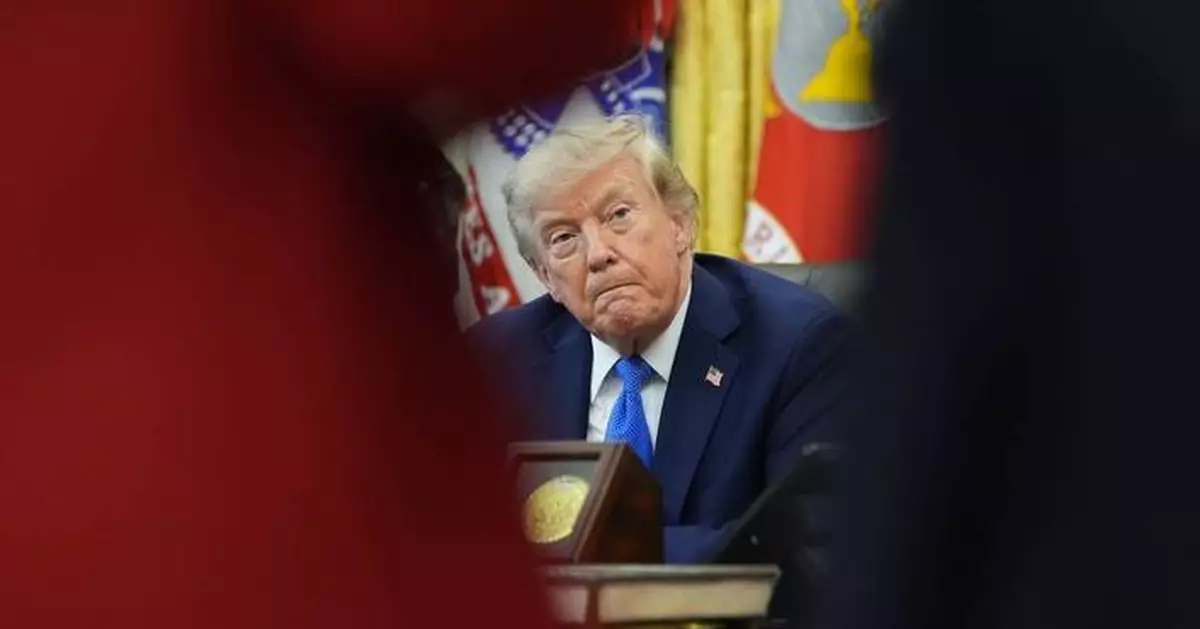
President Donald Trump speaks in the Oval Office of the White House, Thursday, Aug. 6, 2026, in Washington. (AP Photo/Alex Brandon)