Severe drought has pushed the Danube River in Hungary to record‑low levels, stranding cruise ships, halting trade and battering tourism.
The Danube normally reaches its lowest levels in winter, while water levels are usually higher from May to July due to Alpine snowmelt. Scientists say this year's unusually low summer flow is linked to earlier snowmelt caused by higher temperatures.
As Europe's second-longest river runs dry, ferries are seeing far fewer tourists because large sections have become too shallow for many vessels.
"In this year there was very few rain, and not only in Hungary, but in Austria, Germany, the Czech Republic, so all the places where the Danube collects the water," said Samuel Komoly, Captain, of the ferry "Thetis".
Near Gellert Hill in Budapest, the Hunger Rock has been exposed, something that happens only when the river drops to extreme levels.
"When the rock comes out from the water, then the hunger comes, because then it's very little water in the Danube and also very little water on the field," said Komoly.
The warning reaches far beyond Budapest. International cruise ships that normally sail through the Danube are now tied up at docks, forcing passengers to complete parts of their trips by bus.
River cruises bring about 600,000 visitors to Hungary each year. With bookings down or canceled, the tourism sector could lose millions of dollars.
Upstream in Slovakia, people are now walking along stretches where ships used to pass.
"You don't see the boats, the cruise ships here, so it's sad," said Eszter, a tourist from Vienna.
Commercial cargo vessels are also waiting for the river level to rise, and for those who work on the river, fewer boats mean fewer customers.
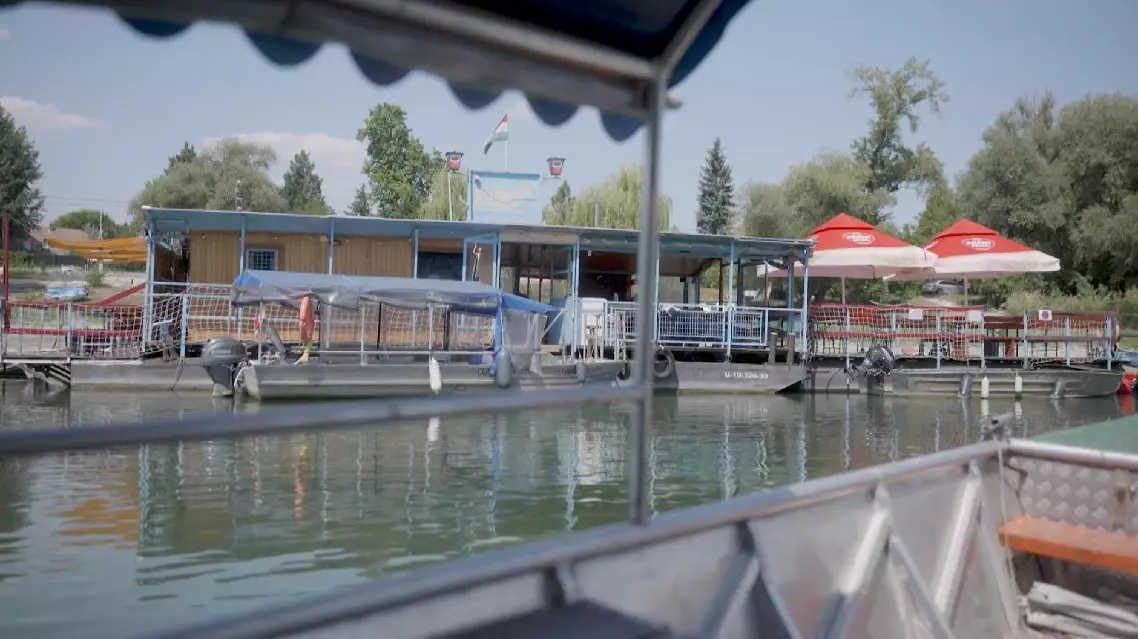
Janos, who has operated a ferry and a floating restaurant for 26 years near Lupa island in Hungary, noted that the river has become increasingly difficult to navigate.
"You need to be very cautious. The river is full of reefs. If you don't know exactly where to go, you will run aground and destroy your boat," he said.
Drought hits Europe's second-longest river, disrupting tourism
Drought hits Europe's second-longest river, disrupting tourism