Skip to Content Facebook Feature Image

From 'The Lion' to 'The Tiger': Conservative Trump allies gain ground in Latin America

News

From 'The Lion' to 'The Tiger': Conservative Trump allies gain ground in Latin America
News

News

From 'The Lion' to 'The Tiger': Conservative Trump allies gain ground in Latin America

2026-08-08 02:10 Last Updated At:02:20

BOGOTA, Colombia (AP) — When Abelardo de la Espriella takes office as Colombia's president on Friday, he'll become the latest conservative to helm a Latin American country.

Conservatives have won seven major presidential elections in Latin America in the past few years, most of them since the January 2025 inauguration of U.S. President Donald Trump, in a winning streak propelled by concerns over crime, immigration and slow economic growth.

More Images
Brazilian Sen. Flavio Bolsonaro holds a Brazil national flag as Argentina's President Javier Milei holds an Argentina local selection jersey, during the Liberal Party convention where Bolsonaro was confirmed as the party's presidential candidate, in Sao Paulo, Saturday, July 25, 2026. (AP Photo/Ettore Chiereguini)
Brazilian Sen. Flavio Bolsonaro holds a Brazil national flag as Argentina's President Javier Milei holds an Argentina local selection jersey, during the Liberal Party convention where Bolsonaro was confirmed as the party's presidential candidate, in Sao Paulo, Saturday, July 25, 2026. (AP Photo/Ettore Chiereguini)

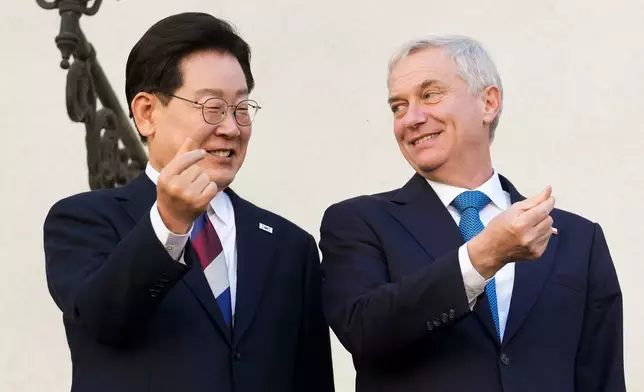
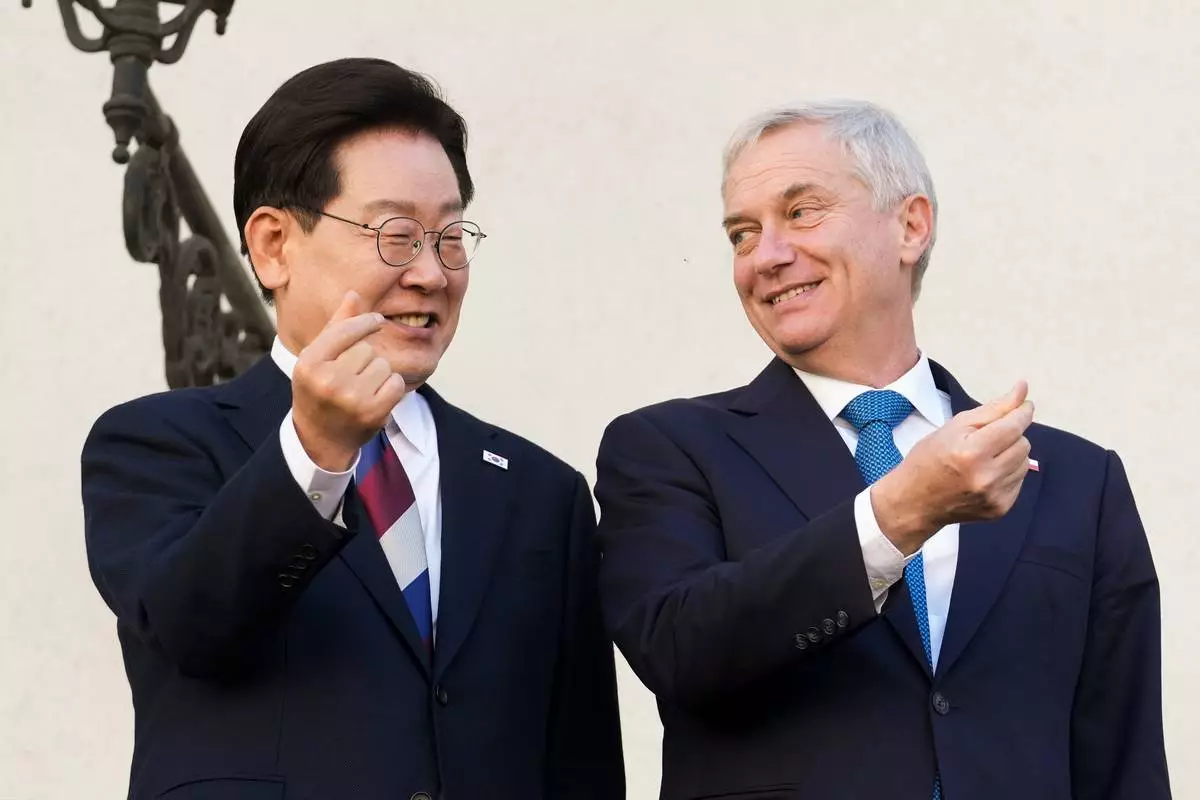
South Korea's President Lee Jae-myung, left, and Chile's President Jose Antonio Kast gesture to the press at La Moneda palace in Santiago, Chile, Thursday, July, 30, 2026. (AP Photo/Esteban Felix)
South Korea's President Lee Jae-myung, left, and Chile's President Jose Antonio Kast gesture to the press at La Moneda palace in Santiago, Chile, Thursday, July, 30, 2026. (AP Photo/Esteban Felix)

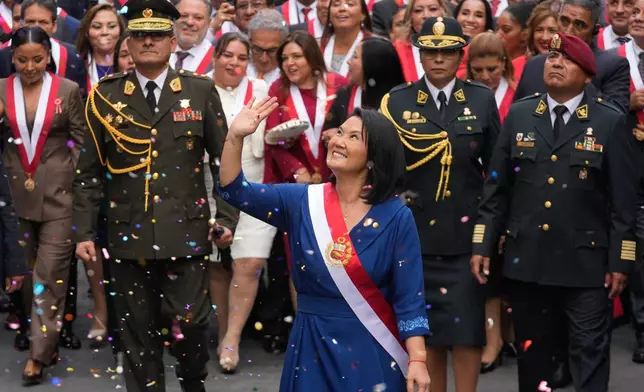
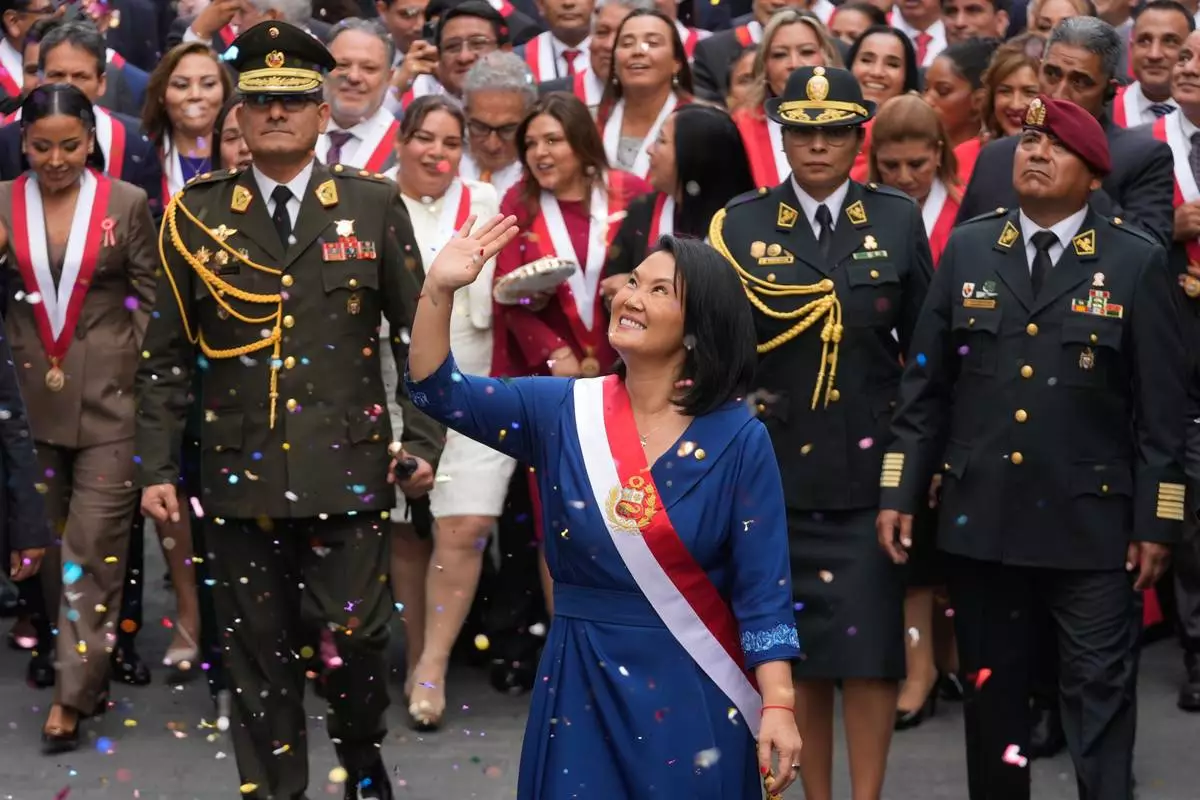
Peru's President Keiko Fujimori walks to the presidential palace after her inauguration in Lima, Peru, Tuesday, July 28, 2026. (AP Photo/Martin Mejia)
Peru's President Keiko Fujimori walks to the presidential palace after her inauguration in Lima, Peru, Tuesday, July 28, 2026. (AP Photo/Martin Mejia)

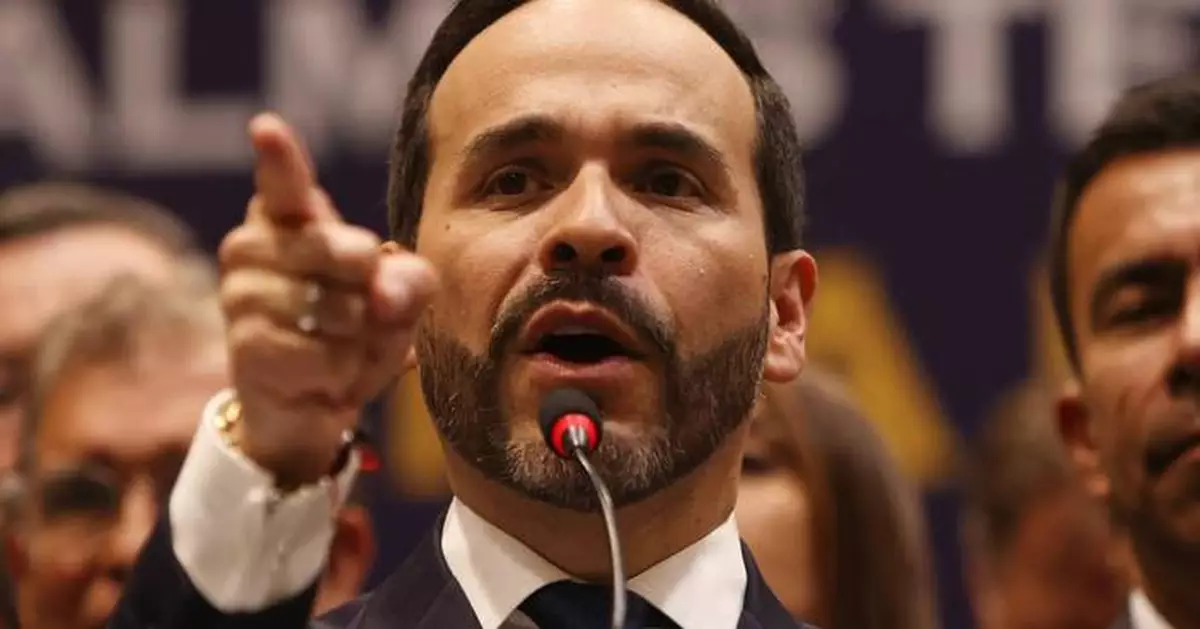
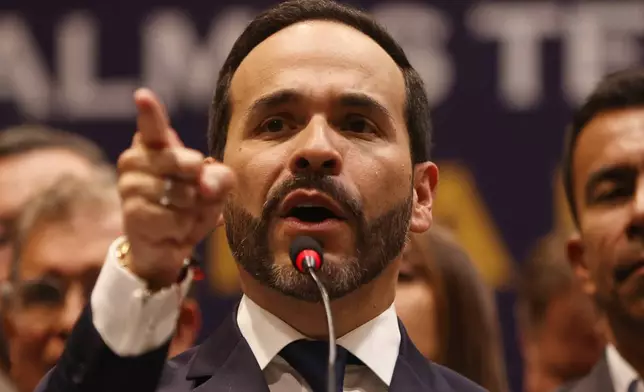
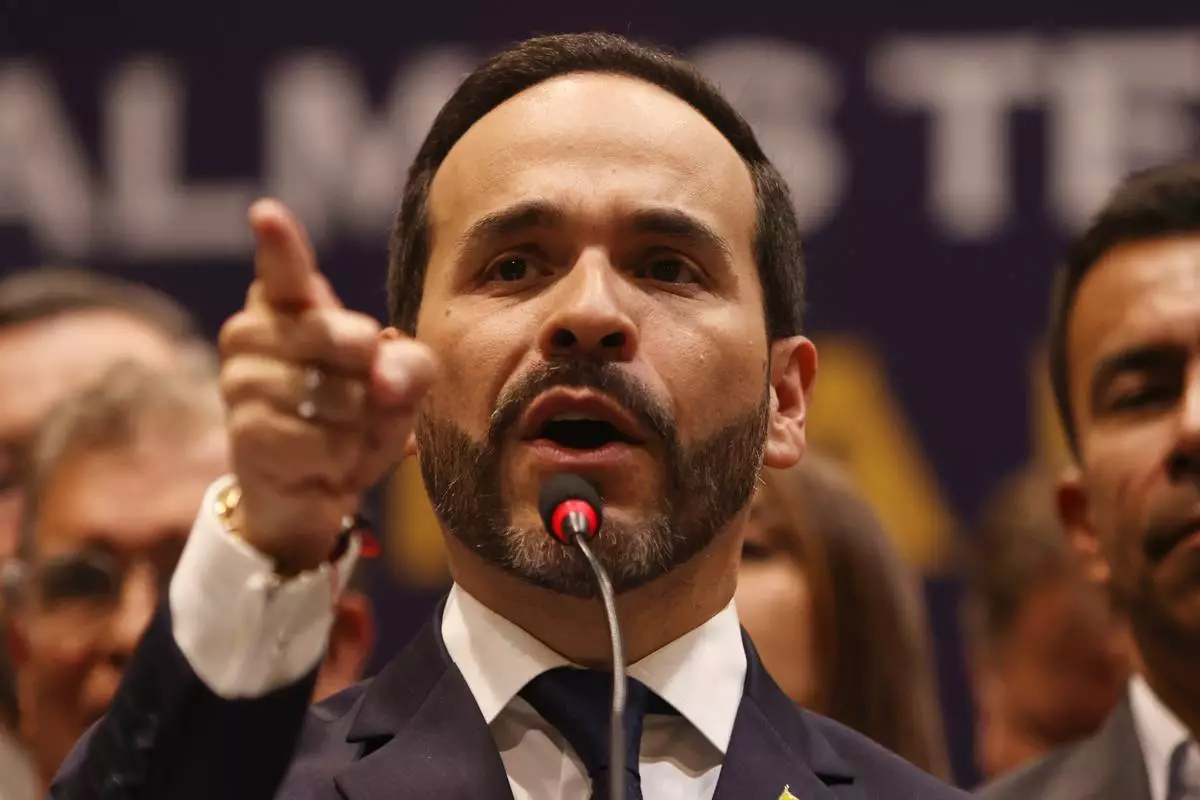
Colombia's President-elect Abelardo de la Espriella speaks during a press conference in Bogota, Colombia, Thursday, July 30, 2026. (AP Photo/John Vizcaino)

Colombia's President-elect Abelardo de la Espriella speaks during a press conference in Bogota, Colombia, Thursday, July 30, 2026. (AP Photo/John Vizcaino)

Here is a look at the Latin American countries that have elected conservative presidents recently:

Trump-endorsed outsider de la Espriella won Colombia’s presidential election in June by a narrow margin, defeating progressive lawmaker Iván Cepeda.

De la Espriella, who is nicknamed “The Tiger,” campaigned on a tough-on-crime approach, which includes proposals like canceling peace talks with Colombian rebel groups and building mega-prisons, like those in El Salvador. De la Espriella’s election marks a pivotal moment for Colombia, which was governed for the past four years by a former member of a rebel group, who was critical of the Trump administration’s immigration and anti-drug policies.

“The Tiger” has promised to tackle extortion and drug trafficking. He was endorsed by Trump, who described the lawyer and business owner as the candidate who could restore law and order in Colombia.

Keiko Fujimori, a business-friendly conservative politician who campaigned on a tough-on-crime platform, took office in July after winning the June presidential runoff by a margin of fewer than 50,000 votes.

Fujimori is the daughter of late former President Alberto Fujimori, whose government defeated the Shining Path violent extremist group in the 1990s but also took an authoritarian turn. She has also pledged an aggressive crackdown on crime.

She has promised to build four new prisons, including a mega-prison modeled after El Salvador’s CECOT facility, militarize Peru’s borders to curb drug trafficking and deport migrants working in the country without legal residency.

Javier Milei, an economist and television commentator nicknamed “The Lion,” won Argentina’s presidential election in November 2023 by promising to slash government spending and tackle the South American nation’s decades-long inflation problem. The libertarian defeated the ruling Peronist movement.

During his tenure, Milei has stopped the nation’s central bank from printing money to finance the government deficit and has cut government spending by firing civil servants and halting investment in public infrastructure programs, while reducing subsidies for public utility bills.

Argentina’s inflation has fallen from 211% in 2023 to 32% in 2025. However, some have blamed Milei’s austerity policies for decreasing the living standards of many Argentines, including public sector workers.

Daniel Noboa, a member of one of Ecuador’s wealthiest families, was reelected to a four-year term in April 2025, winning the election with 56% of the vote. The conservative leader has given the military a more prominent role in providing security in coastal cities overrun by drug gangs fighting over the control of ports and drug trafficking routes.

But the strategy has not substantially reduced homicide rates. The government also has been criticized for human rights abuses, such as extrajudicial executions.

Under Noboa’s watch, Ecuador’s military has started to conduct joint operations against drug traffickers with the U.S. Noboa also pushed for the reopening of a U.S. military base in Ecuador, but the proposal was struck down in a referendum last year.

Nasry Asfura, a real estate investor and former city mayor of the National Party, narrowly won the presidential election in Honduras in November, defeating his closest rival by less than a percentage point.

Asfura, who belongs to the same party as former President Juan Orlando Hernández who was pardoned by Trump for a drug trafficking conviction, was endorsed by the U.S. president, who threatened to cut off aid to the small Central American country if Asfura was not elected.

Under Asfura’s administration, Honduras has received dozens of deportees from third countries through an agreement that was signed with the U.S. in early 2025, most of them Guatemalan nationals.

In December, José Antonio Kast, a conservative and a devout Catholic, won Chile’s presidential election with 58% of the vote, defeating a progressive government that had been in power for the previous four years.

In his campaigns, Kast capitalized on fears over increasing crime rates in Chile and said he would expel migrants from countries like Venezuela and Haiti who had been working in Chile without residency permits. One of his first moves after taking office has been to expand a trench along Chile’s borders with Peru and Bolivia in a bid, his government says, to stop drug trafficking and migration.

Kast’s government has recently faced protests over increasing unemployment and budget cuts that have affected public servants.

Laura Fernández, an economy minister under conservative ex-President Rodrigo Chaves, won Costa Rica’s election in February with 48% of the vote, defeating her closest rival by 15 percentage points and surpassing the 40% of votes needed to avoid a runoff election.

During her campaign, Fernández proposed tough-on-crime measures, including a state of exception that would enable police to arrest suspects without warrants, and said she would build a mega prison modeled after El Salvador’s notorious CECOT penitentiary.

Fernández’s government has received several flights with migrants from third countries deported by the U.S. as she complies with an agreement that was signed by her predecessor last year. In June, one of these flights had migrants from China, Vietnam, Colombia and Azerbaijan.

Follow AP’s Latin America coverage at https://apnews.com/hub/latin-america

Brazilian Sen. Flavio Bolsonaro holds a Brazil national flag as Argentina's President Javier Milei holds an Argentina local selection jersey, during the Liberal Party convention where Bolsonaro was confirmed as the party's presidential candidate, in Sao Paulo, Saturday, July 25, 2026. (AP Photo/Ettore Chiereguini)
Brazilian Sen. Flavio Bolsonaro holds a Brazil national flag as Argentina's President Javier Milei holds an Argentina local selection jersey, during the Liberal Party convention where Bolsonaro was confirmed as the party's presidential candidate, in Sao Paulo, Saturday, July 25, 2026. (AP Photo/Ettore Chiereguini)

South Korea's President Lee Jae-myung, left, and Chile's President Jose Antonio Kast gesture to the press at La Moneda palace in Santiago, Chile, Thursday, July, 30, 2026. (AP Photo/Esteban Felix)
South Korea's President Lee Jae-myung, left, and Chile's President Jose Antonio Kast gesture to the press at La Moneda palace in Santiago, Chile, Thursday, July, 30, 2026. (AP Photo/Esteban Felix)

Peru's President Keiko Fujimori walks to the presidential palace after her inauguration in Lima, Peru, Tuesday, July 28, 2026. (AP Photo/Martin Mejia)
Peru's President Keiko Fujimori walks to the presidential palace after her inauguration in Lima, Peru, Tuesday, July 28, 2026. (AP Photo/Martin Mejia)

Colombia's President-elect Abelardo de la Espriella speaks during a press conference in Bogota, Colombia, Thursday, July 30, 2026. (AP Photo/John Vizcaino)

Colombia's President-elect Abelardo de la Espriella speaks during a press conference in Bogota, Colombia, Thursday, July 30, 2026. (AP Photo/John Vizcaino)
NEW YORK (AP) — Stocks rose on Wall Street Friday and Treasury yields fell after the government reported that employers unexpectedly cut 23,000 jobs last month.

The S&P 500 rose 0.5% and is hovering around the record it set on Tuesday. The Dow Jones Industrial Average rose 80 points, or 0.2%, as of 2:04 p.m. Eastern time. The Nasdaq composite rose 1%. Every major index is on track for weekly gains.

Technology stocks, with their big market values, did much of the heavy lifting for the broader market. They are often the heaviest weights determining the market’s direction. Nvidia jumped 1.4% and Broadcom rose 1%.

The bond market reacted more strongly to the weaker signal on the job market, which can be seen as allowing the Federal Reserve more time before raising interest rates to fight inflation.

The yield on the 10-year Treasury fell to 4.65% from 4.67% just prior to the jobs update. It was as low as 4.60% before recovering a bit.

The yield on the two-year Treasury, which more closely tracks expectations for Fed action on interest rates, fell to 4.20% from 4.22% prior to the report's release. It was as low as 4.15% before edging back up.

“Although the stock market is likely to welcome the dovish implications of the report, investors should be wary of the future growth potential of an economy where fewer people are working,” said Peter Graf, chief investment officer at Amova Asset Management Americas, in a research note.

Overall, the report paints a dimmer picture of the jobs market, which has been one of the brighter areas of the economy amid rising inflation and worries about household spending. It included a revision to the figures for June and May that involved slashing a combined 103,000 jobs from payrolls for those months.

The Fed has been holding interest rates steady amid worries about hotter inflation, fueled by a rise in oil prices because of the U.S. war with Iran. Wall Street expects at least one rate increase by the end of the year, with forecasts shifting for the next meeting. Expectations for a rate cut in September are down to 44%, from 55% on Thursday and from 67% a week ago, according to CME FedWatch.

A weakening jobs market could make matters more complicated for the Fed, which has to balance supporting job growth with fighting inflation. Raising interest rates can help tame inflation by slowing economic growth. A weaker jobs market, though, could become even shakier under higher interest rates as businesses find it more difficult to expand under increased borrowing rates.

Businesses, and Wall Street, prefer lower interest rates because it can help boost investments. That might bolster a weakened jobs market, but it could worsen already stubborn inflation.

Wall Street will get several important inflation updates next week. The most closely watched will be the consumer price index, or CPI, which measures costs for consumers. Wall Street expects it to show that inflation in July rose at a 3.4% rate, which would be a slight easing from the 3.5% rise in June. Interest rates have held stubbornly above 3% for most of the year.

“Today’s weak payrolls print may ease the pressure on the Fed to raise rates at its September meeting, but next week’s inflation data will still likely be the deciding factor,” said Ellen Zentner, chief economic strategist for Morgan Stanley Wealth Management, in a research note.

The jobs report caps a week dominated mostly by corporate earnings and concerns about the ongoing U.S. war with Iran.

Corporate earnings for the second quarter are on track for the strongest growth since 2021. Nearly 90% of companies in the S&P 500 have reported their results and analysts expect profit growth of 50% overall. That has helped allay some concerns on Wall Street about whether big gains for stocks in 2026 are justified. Strong profits help support those gains in stock values.

It was a light day for earnings as companies near the close of the latest round of reports.

Airbnb jumped 15.5% following the vacation-rental company's report late Thursday that showed stronger profit and revenue for its most recent quarter than analysts expected.

Oil prices gained ground. The price of Brent crude, the international standard, rose 1.1% to $83.38 a barrel.

Rising oil prices have been behind hotter inflation. Prices were as high as $113 per barrel at one point during the now five-month U.S. war with Iran. That raised prices for gasoline and shipping for a wide range of products. The U.S. and Iran have both said they are working on deals that could reopen the Strait of Hormuz, where a fifth of the world's oil and natural gas once passed through.

Markets in Europe gained ground and markets in Asia were mixed.

Associated Press Business Writer Elaine Kurtenbach contributed to this report.

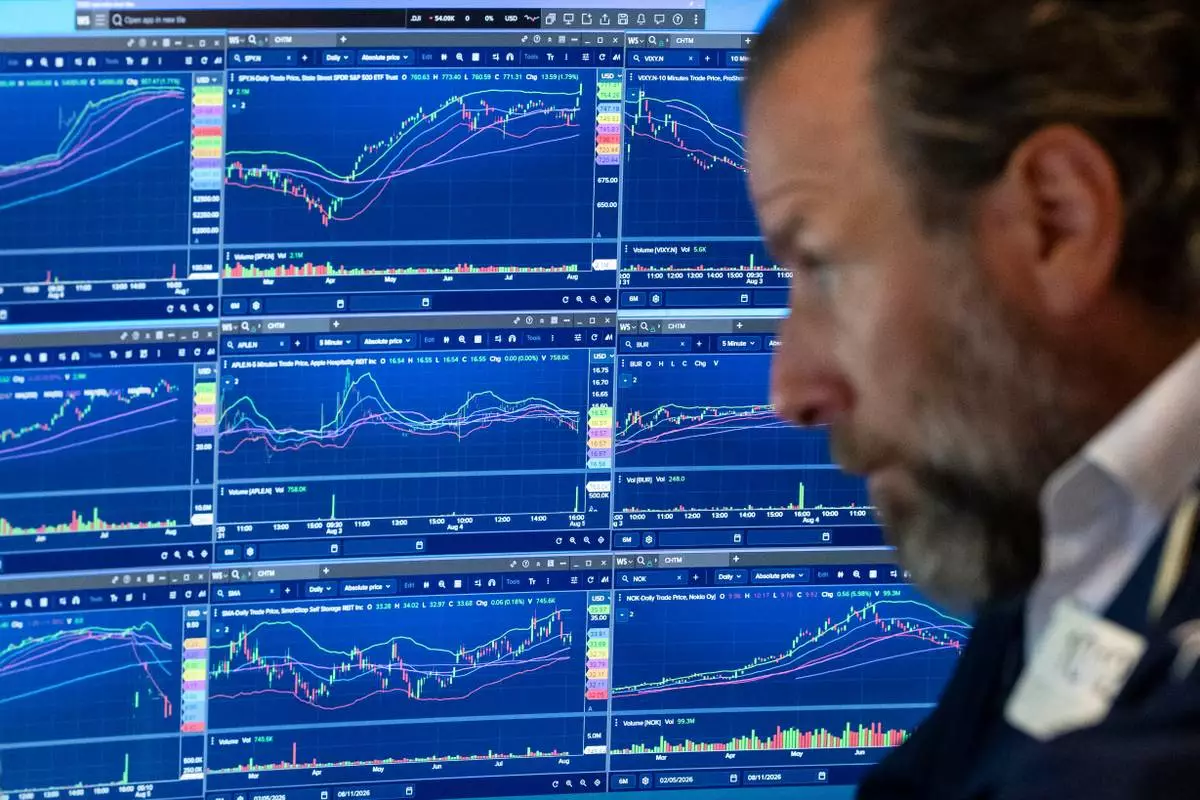
Specialist Michael Pistillo works on the floor of the New York Stock Exchange, Wednesday, Aug.. 5, 2026, in New York. (AP Photo/Yuki Iwamura)

Specialist Michael Pistillo works on the floor of the New York Stock Exchange, Wednesday, Aug.. 5, 2026, in New York. (AP Photo/Yuki Iwamura)

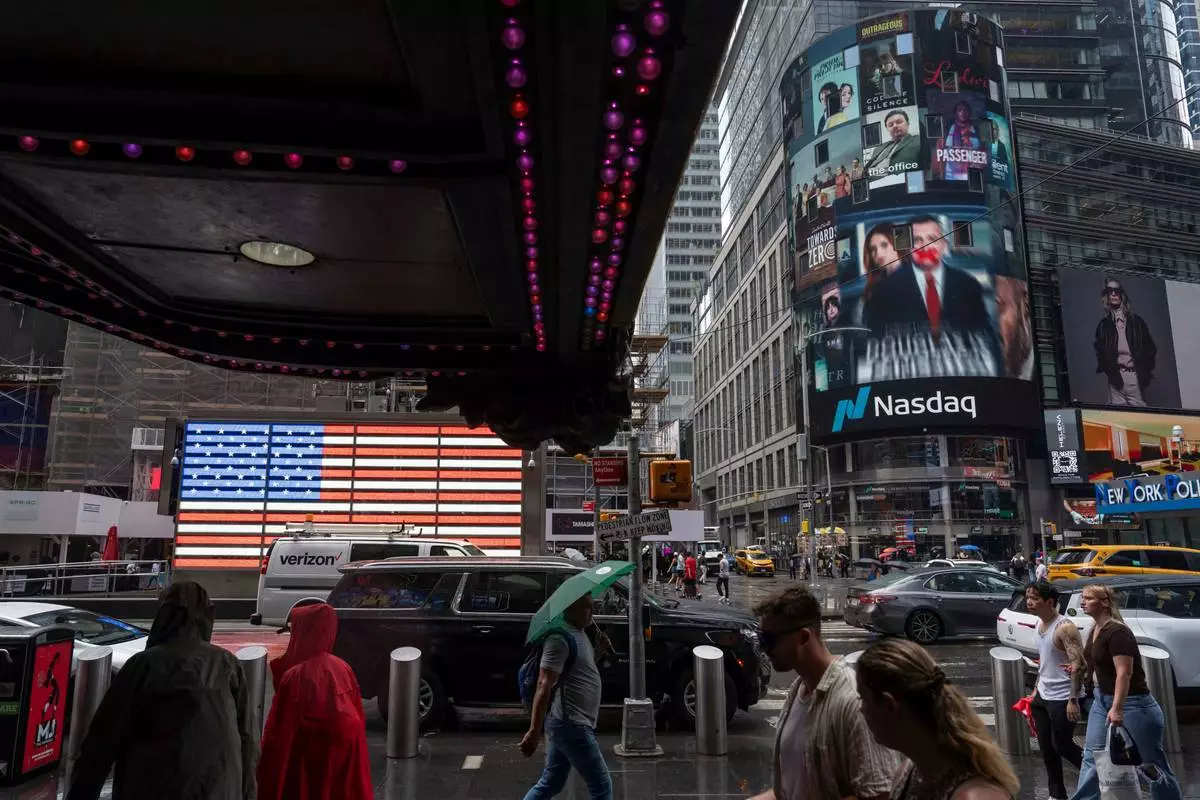
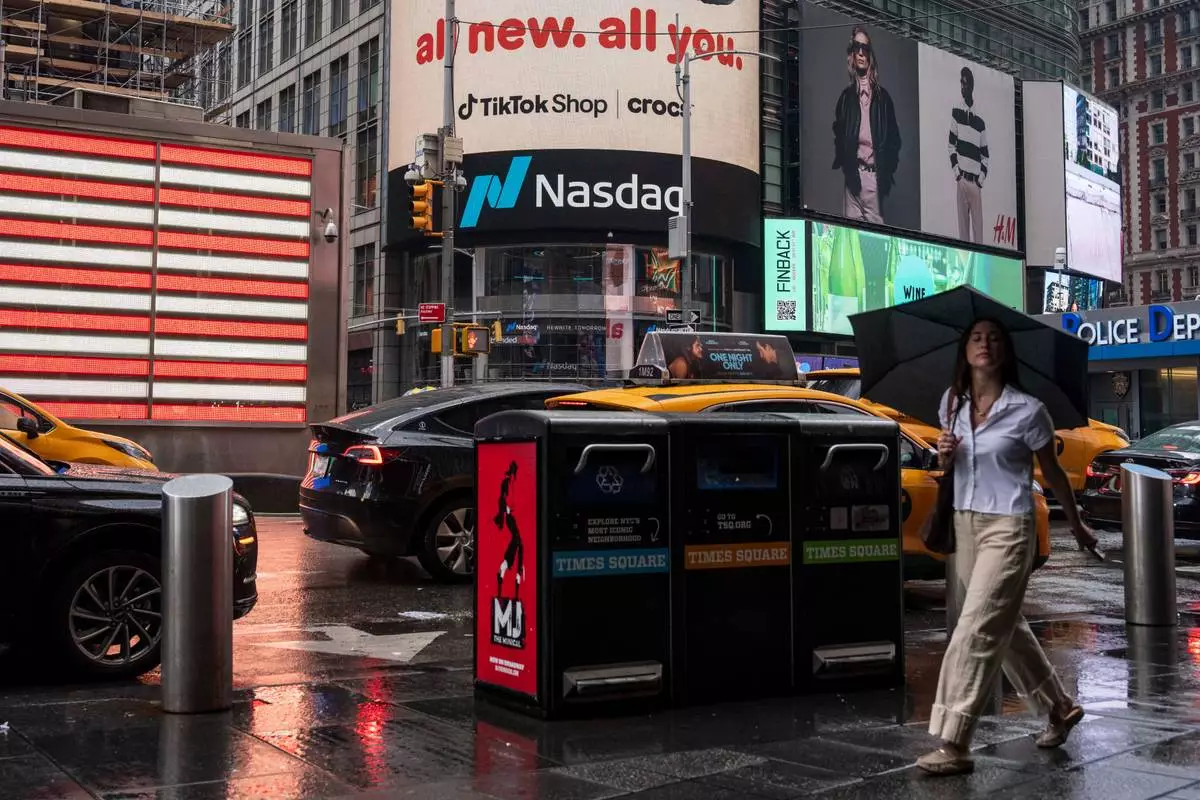
People walk past the Nasdaq MarketSite, Thursday, Aug. 6, 2026, in New York. (AP Photo/Yuki Iwamura)

People walk past the Nasdaq MarketSite, Thursday, Aug. 6, 2026, in New York. (AP Photo/Yuki Iwamura)

People walk past the Nasdaq MarketSite, Thursday, Aug. 6, 2026, in New York. (AP Photo/Yuki Iwamura)

People walk past the Nasdaq MarketSite, Thursday, Aug. 6, 2026, in New York. (AP Photo/Yuki Iwamura)

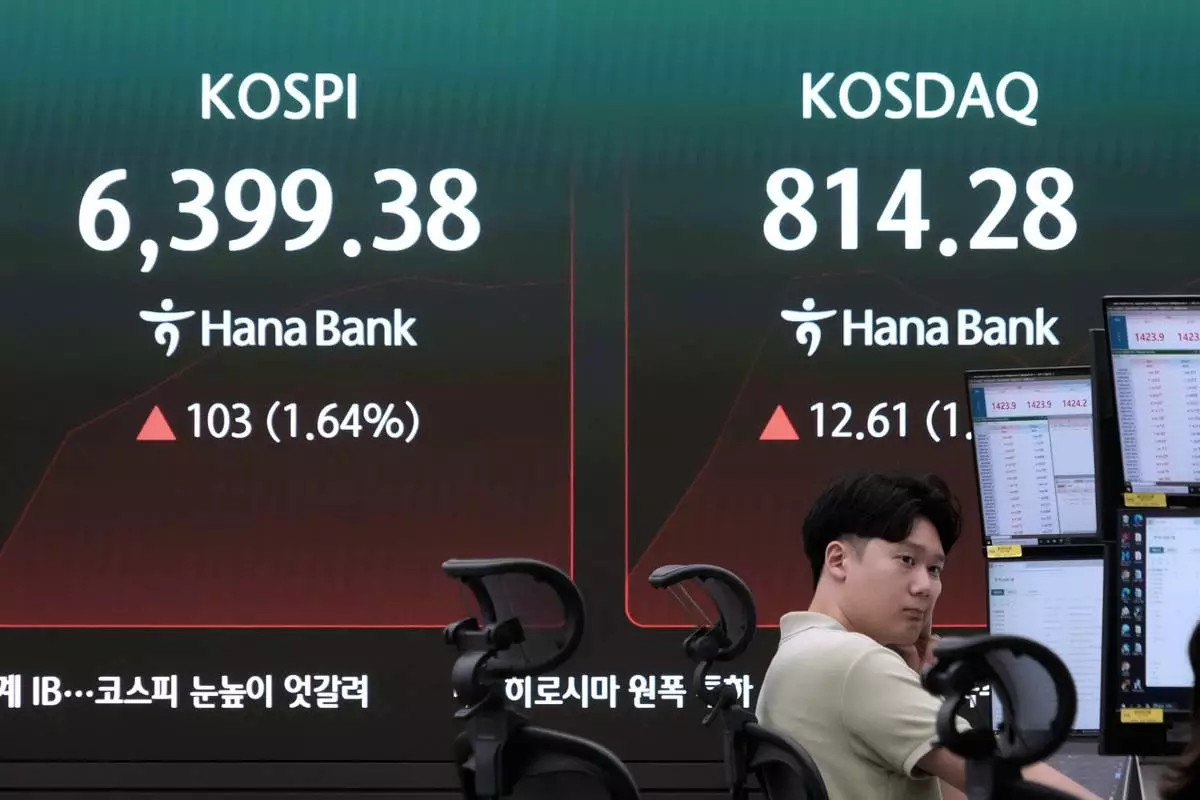
A currency trader watches monitors near a screen showing the Korea Composite Stock Price Index (KOSPI) at the foreign exchange dealing room of the Hana Bank headquarters in Seoul, South Korea, Friday, Aug. 7, 2026. (AP Photo/Ahn Young-joon)

A currency trader watches monitors near a screen showing the Korea Composite Stock Price Index (KOSPI) at the foreign exchange dealing room of the Hana Bank headquarters in Seoul, South Korea, Friday, Aug. 7, 2026. (AP Photo/Ahn Young-joon)

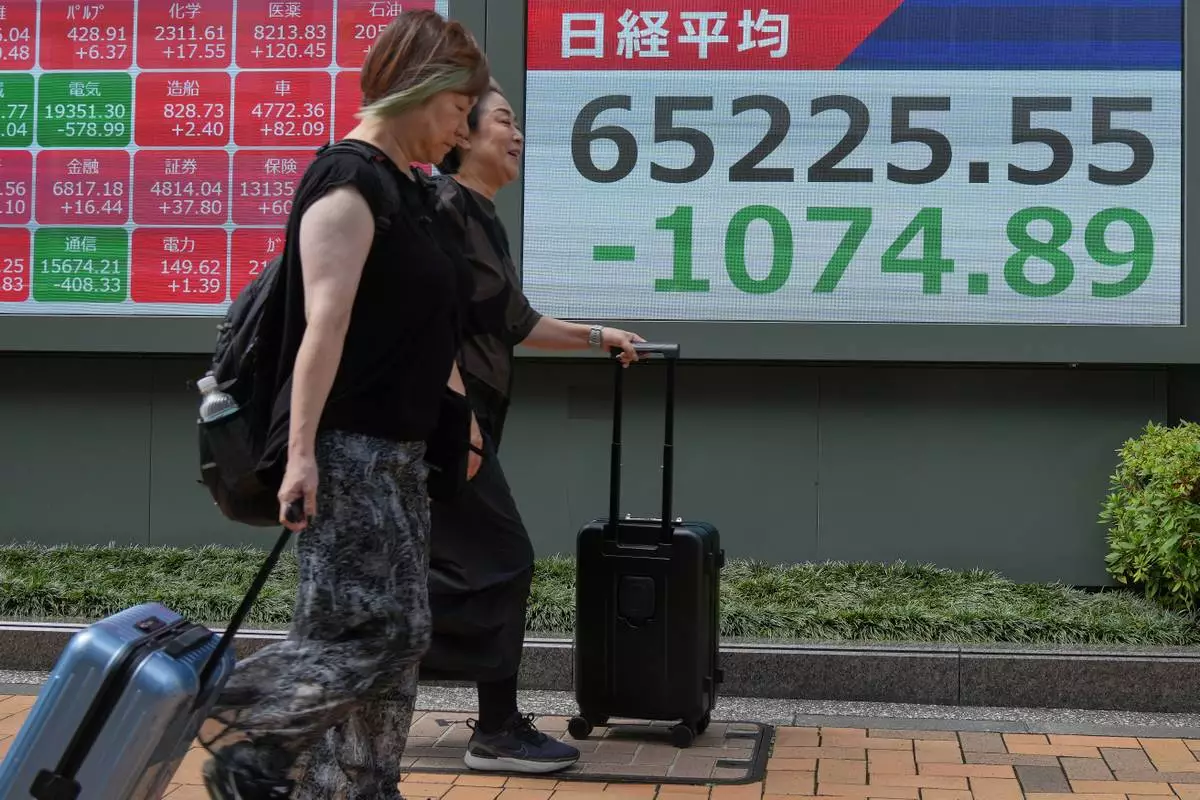
People walk past an electronic board showing Japan's Nikkei index at a securities firm Thursday, Aug. 6, 2026, in Tokyo. (AP Photo/Eugene Hoshiko)

People walk past an electronic board showing Japan's Nikkei index at a securities firm Thursday, Aug. 6, 2026, in Tokyo. (AP Photo/Eugene Hoshiko)

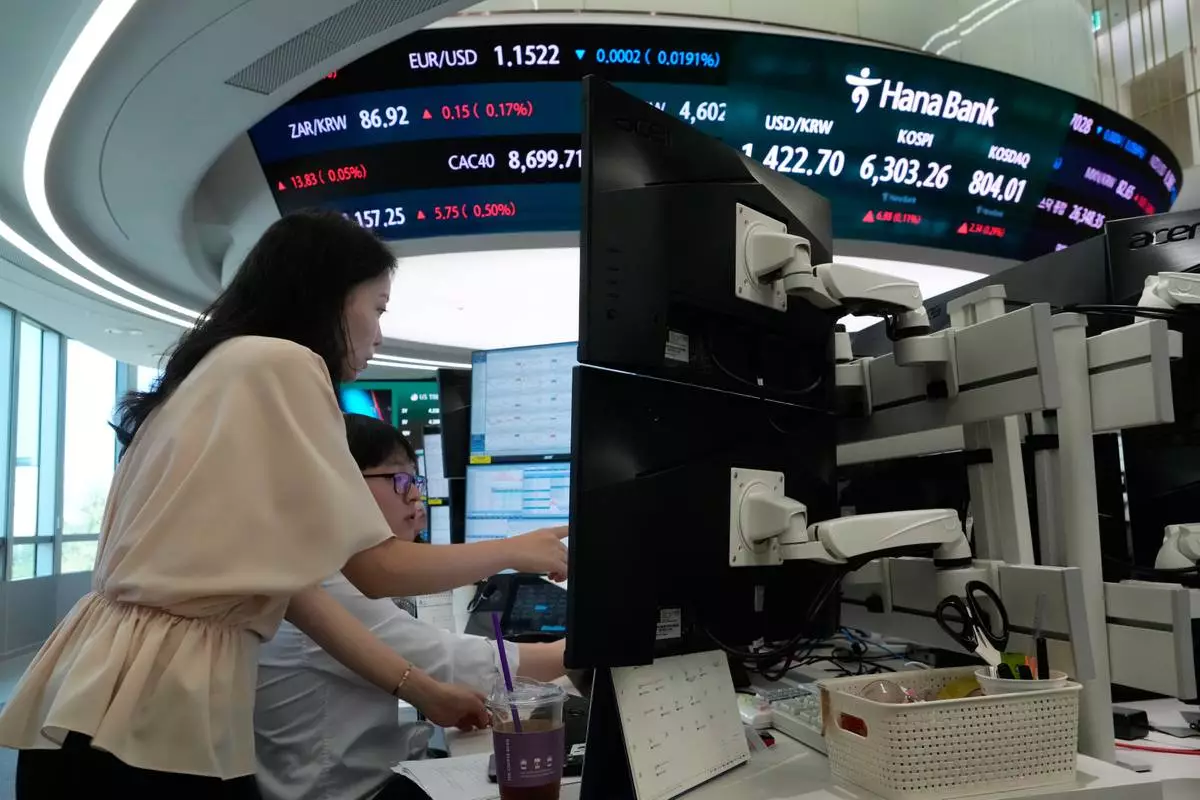
Currency traders watch monitors at the foreign exchange dealing room of the Hana Bank headquarters in Seoul, South Korea, Friday, Aug. 7, 2026. (AP Photo/Ahn Young-joon)

Currency traders watch monitors at the foreign exchange dealing room of the Hana Bank headquarters in Seoul, South Korea, Friday, Aug. 7, 2026. (AP Photo/Ahn Young-joon)

Recommended Articles