WASHINGTON (AP) — Senators headed for the exits in the predawn hours Saturday, ending for now a crushing standoff over President Donald Trump's demands that they stay in session to pass a strict proof-of-citizenship voting bill before the summer recess.
While they wrapped up many key priorities in the overnight votes, advancing Trump's SAVE America Act was not among them.
Click to Gallery
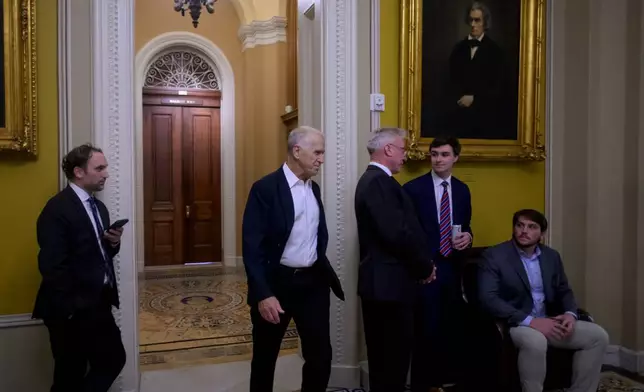
Sen. Thomas Tillis, R-N.C., walks through the U.S. Capitol during a recess, Friday, August 7, 2026 in Washington. (AP Photo/Rod Lamkey, Jr.)
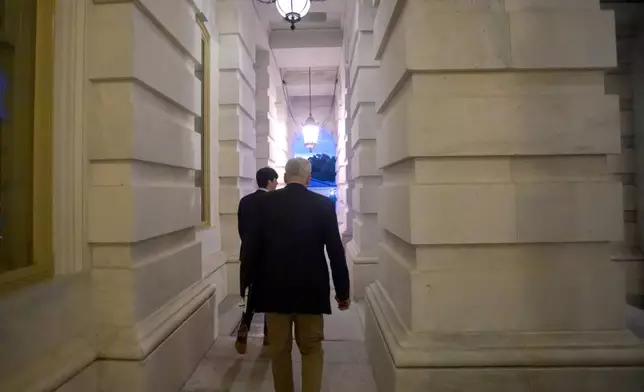
Sen. Bill Cassidy, R-La., departs the U.S. Capitol prior to a confirmation vote for acting Attorney General Todd Blanche, Friday, Aug. 7, 2026, in Washington. (AP Photo/Rod Lamkey, Jr.)
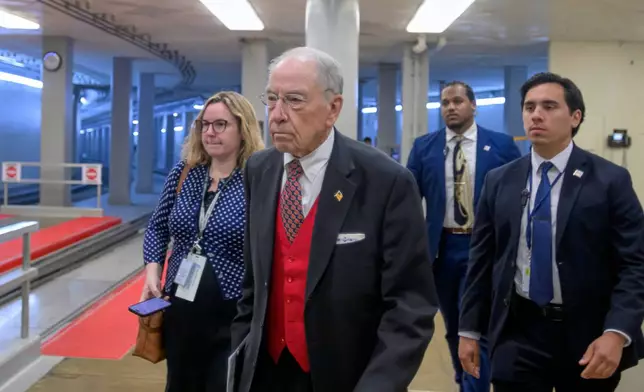
Sen. Chuck Grassley, R-Iowa, walks through the Senate subway at the U.S. Capitol during a vote, Friday, August 7, 2026, in Washington. (AP Photo/Rod Lamkey, Jr.)
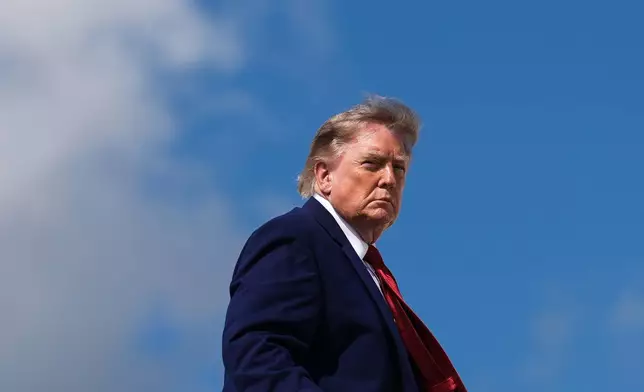
President Donald Trump boards Air Force One, Friday, Aug. 7, 2026, at Joint Base Andrews, Md. (AP Photo/Julia Demaree Nikhinson)
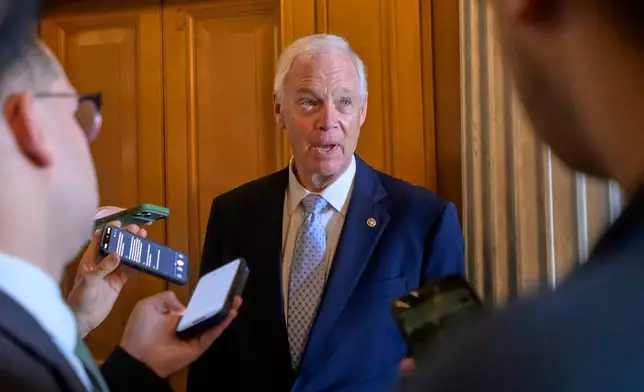
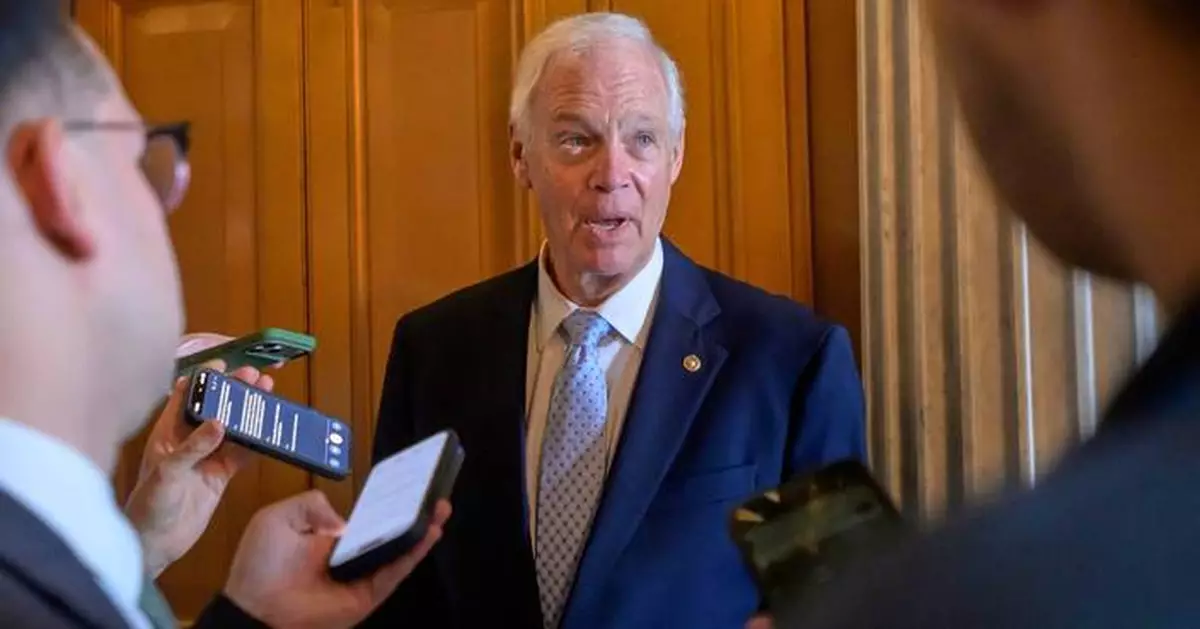
Sen. Ron Johnson, R-Wis., talks with reporters outside of the Senate chamber during a vote at the U.S. Capitol, Friday, August 7, 2026, in Washington. (AP Photo/Rod Lamkey, Jr.)
Instead, Republican senators who had brought the chamber to a standstill spoke to Trump late in the evening about an alternative plan: They would try again to approve elements of the voting bill as part of a broader GOP budget package to fund the Iran war and replenish the Pentagon when they return to work in September.
“Obviously, with the president at his direction, this is what he wants to do,” said Sen. Ron Johnson of Wisconsin, the GOP budget committee chairman, flanked by Sens. Mike Lee, R-Utah, and Rick Scott, R-Fla., after their phone call with the president.
The sudden wind-down after weeks of Trump ramping up his demands shows just how deeply the president is able to reach into the halls of Congress to set the agenda or disrupt it, the executive directing the affairs of the legislative branch. While Trump is often seen as a de facto speaker of the House, he is invariably trying his hand at mastering the Senate.
Trump had poked and prodded Senate Majority Leader John Thune for weeks to pass the SAVE America Act, a bill that does not have enough support from the Republicans who hold majority power, let alone the Democrats whose votes would be needed to advance it in the Senate.
The president has gone so far as to insist the Senate abandon its filibuster rules to jam the SAVE America Act past the 60-vote threshold that is typically needed to advance legislation in the chamber — something Thune and most senators have no interest in doing.
“John’s trying. He’s trying hard. I really believe that. But if he doesn’t get there, it would be unfortunate,” Trump said in an interview with Punchbowl News that posted Friday.
Thune himself has worked to carefully balance the often unusual demands of the president with the political reality of his slim GOP majority. Republicans are down one vote with the prolonged absence of Sen. Mitch McConnell of Kentucky, the former leader, who said this week he was released from a rehabilitation center and is recovering at home.
“I think everybody’s, for the most part, on the same page,” Thune, R-S.D., said about the trio's call with Trump, adding that eventually the Senate would have to tackle another budget bill.
During a daylong session that dragged for nearly 20 hours, Thune successfully powered through a lengthy list of other Trump priorities. Senators confirmed the president's pick of Todd Blanche as the attorney general, passed a sweeping Russian sanctions package to aid Ukraine, and approved a bipartisan package to fund the government into December in an early step toward avoiding a government shutdown.
The Republicans also tried to push forward a slimmer voting bill that would require people to show IDs before casting ballots for federal elections. It failed to advance, largely on a party-line vote with Democrats opposed.
But the failure to make progress on the SAVE America Act had erupted as an online crusade for Trump's allies in Congress, amplified by activists urging them on.
Led by Lee, a growing group of senators was refusing to adjourn for the summer break without passing Trump's priority voting bill.
At dinnertime, Thune gathered all the Republican senators for a meeting as the standoff deepened at the Capitol. There was no immediate way forward for the SAVE America Act or the broader budget bill. Thune encouraged the trio of senators to talk to the president, which they did, before regrouping back at Thune's office.
"We had about a two-hour conference meeting trying to figure out, you know, what we need to do to, to come to an agreement, to accomplish what the president wanted,” Johnson said. “Then we had discussion with the president, he agrees.”
Lee acknowledged he was disappointed by the outcome, but said he understood the political reality of the situation.
“We are not in a position right now where we have the wherewithal to pass it,” Lee told reporters at the Capitol, after the three senators emerged from Thune's office following their call with Trump.
Near daybreak, when the Senate did call for the vote to adjourn, Lee and others objected with hearty nos.
On the simple voice vote, the ayes had it, and the motion to adjourn was adopted.
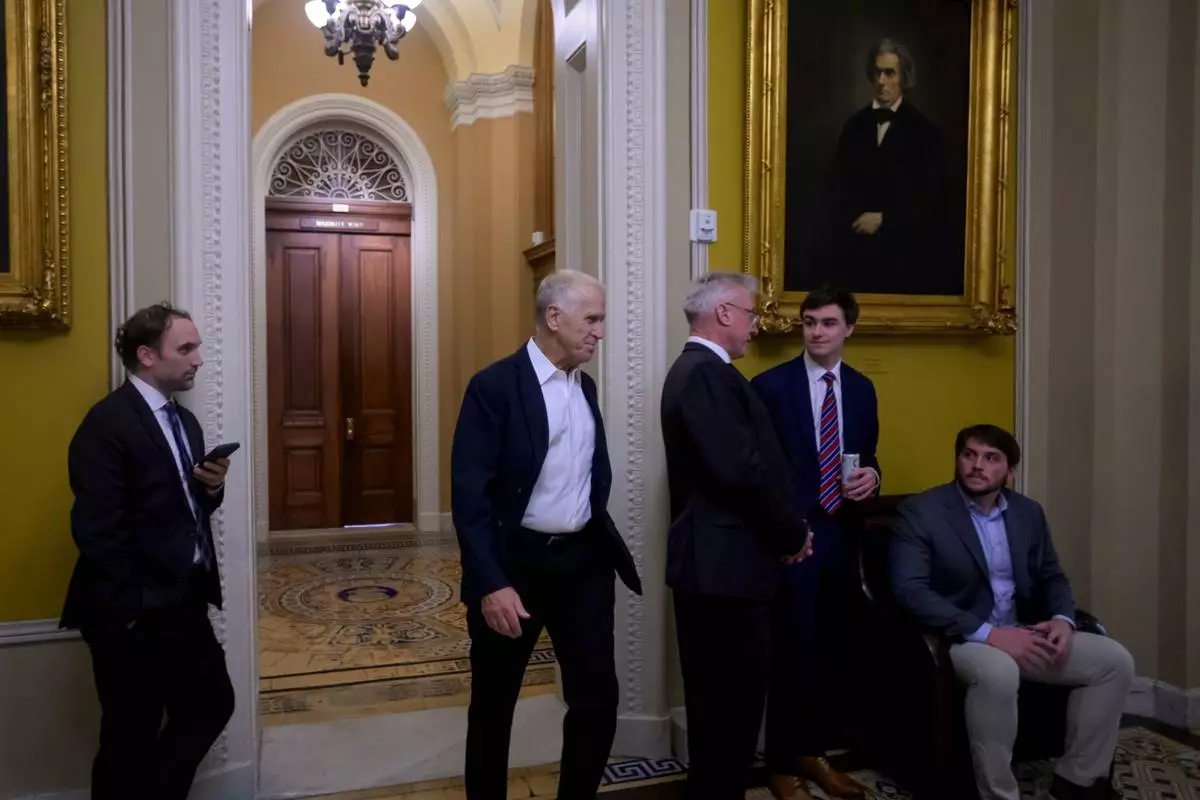
Sen. Thomas Tillis, R-N.C., walks through the U.S. Capitol during a recess, Friday, August 7, 2026 in Washington. (AP Photo/Rod Lamkey, Jr.)
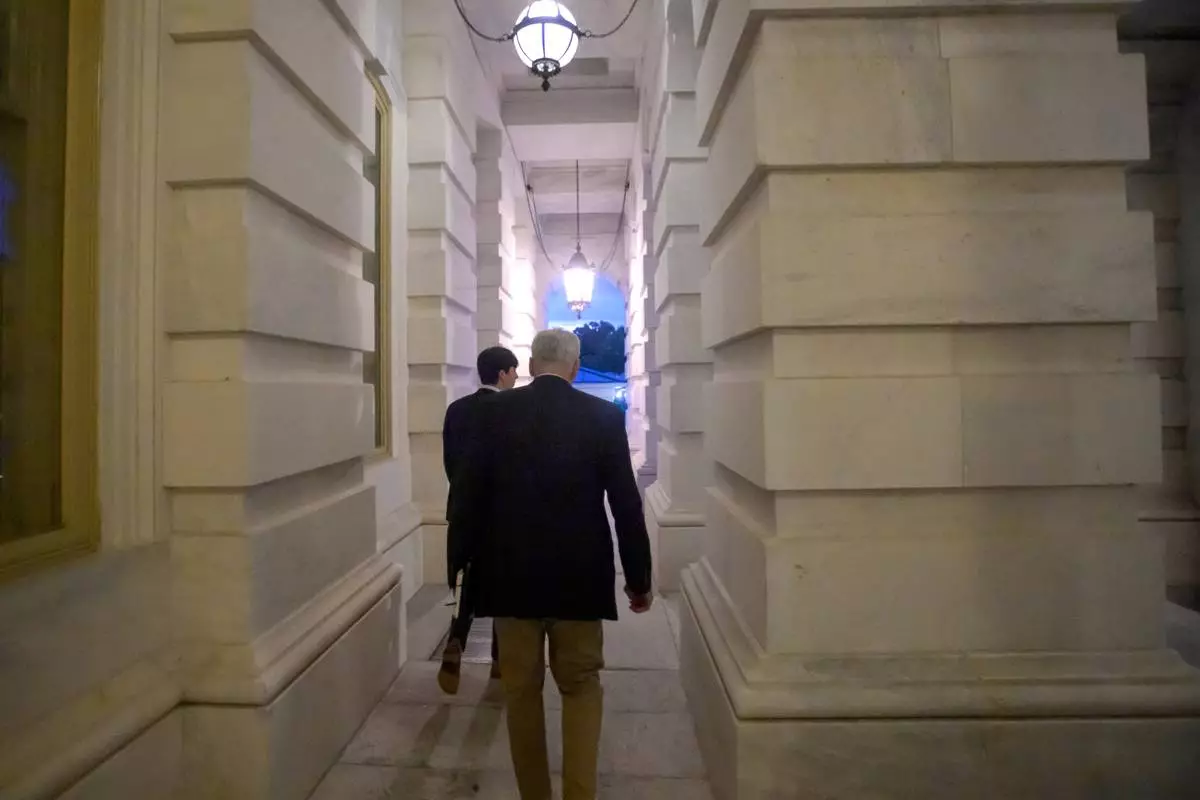
Sen. Bill Cassidy, R-La., departs the U.S. Capitol prior to a confirmation vote for acting Attorney General Todd Blanche, Friday, Aug. 7, 2026, in Washington. (AP Photo/Rod Lamkey, Jr.)
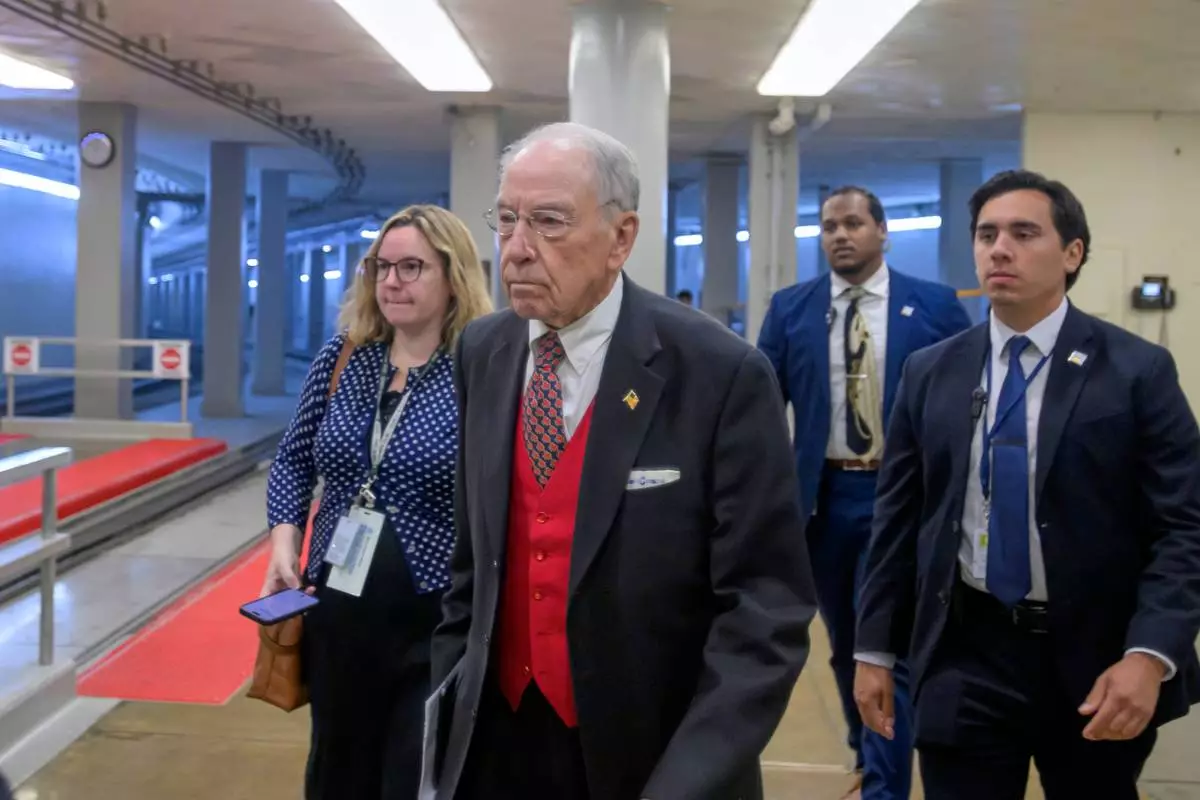
Sen. Chuck Grassley, R-Iowa, walks through the Senate subway at the U.S. Capitol during a vote, Friday, August 7, 2026, in Washington. (AP Photo/Rod Lamkey, Jr.)
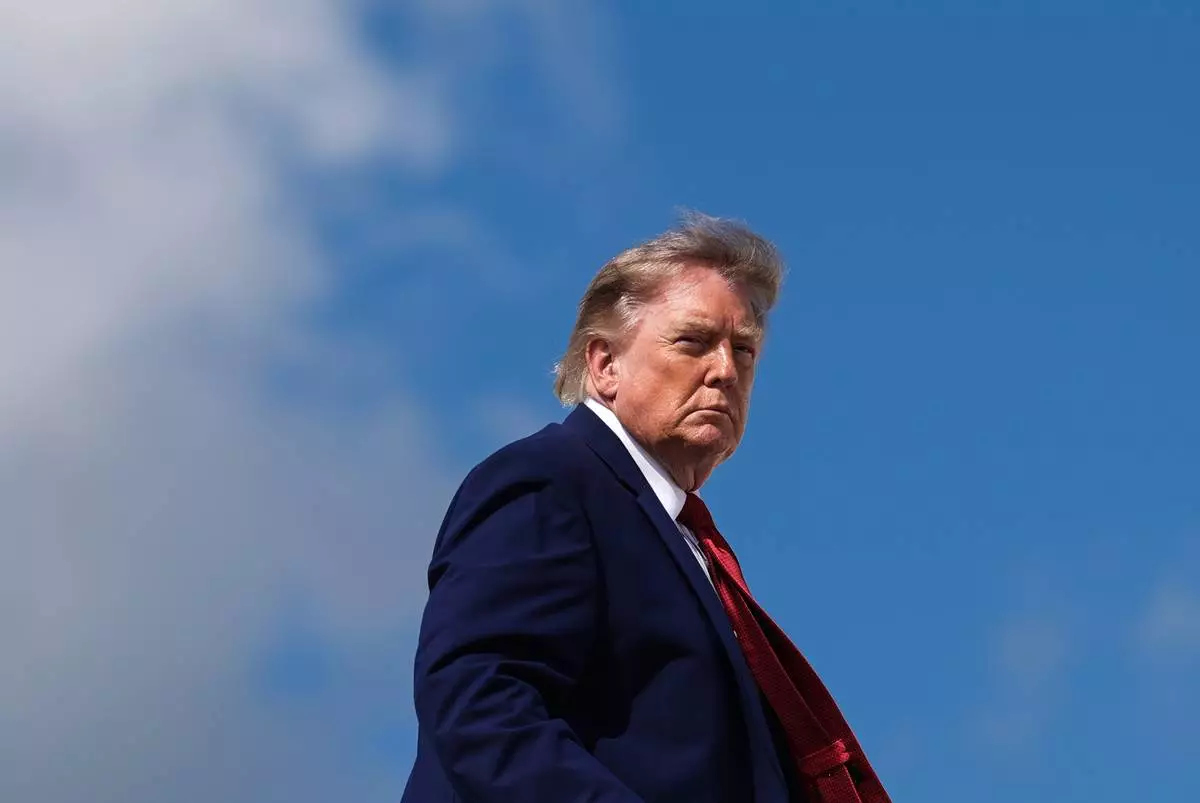
President Donald Trump boards Air Force One, Friday, Aug. 7, 2026, at Joint Base Andrews, Md. (AP Photo/Julia Demaree Nikhinson)
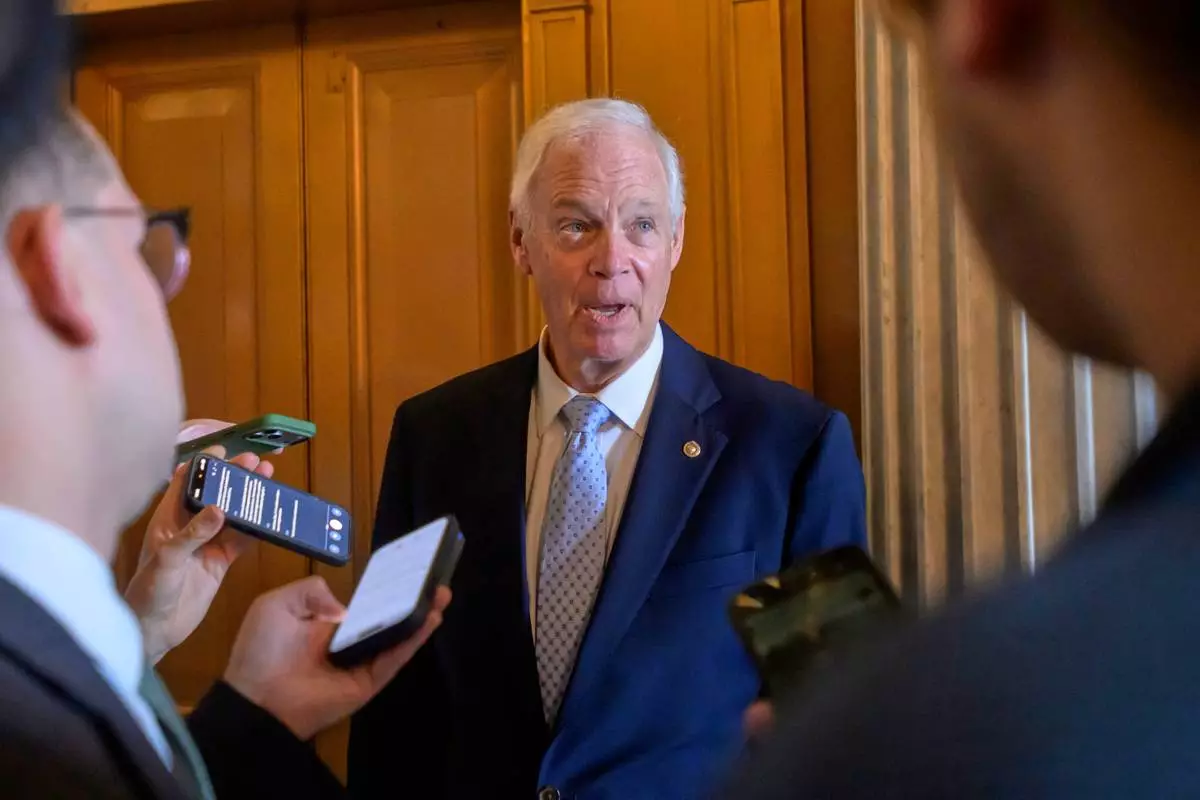
Sen. Ron Johnson, R-Wis., talks with reporters outside of the Senate chamber during a vote at the U.S. Capitol, Friday, August 7, 2026, in Washington. (AP Photo/Rod Lamkey, Jr.)

WASHINGTON (AP) — The Senate confirmed Todd Blanche as attorney general in a vote early Saturday morning, cementing President Donald Trump’s former personal attorney’s command of a Justice Department the Republican president has sought to bend to his will.
The Republican-led Senate voted 50-49 to make Blanche the second confirmed attorney general since Trump returned to the White House last year with a stated desire to use the law enforcement agency to investigate his political enemies. While Blanche has already been leading the department in an acting capacity, his confirmation could free him to pursue the Trump administration’s agenda even more aggressively.
Blanche said on social media that he was “deeply honored by the trust and confidence President Trump has placed in me,” adding that he was “grateful” to senators for working late to confirm him.
The vote followed a tumultuous confirmation fight that exposed deep concerns — from some Republicans as well as Democrats — about installing Trump’s close ally atop a Justice Department that historically prided itself on its independence from the White House.
In the end, Blanche was confirmed by the narrowest of margins, opposed by two Republicans — Sens. Susan Collins of Maine and Lisa Murkowski of Alaska — and by every Democrat.
The path to confirmation for Blanche was unusually rocky, due in large part to Republican concerns about a controversial settlement of Trump’s lawsuit against the Internal Revenue Service.
Under pressure, Blanche publicly promised in writing that the department would abandon Trump’s proposed $1.8 billion compensation fund for the president’s allies, including those who attacked the Capitol on Jan. 6, 2021, and rein in another piece of the settlement designed to shield Trump and his family from IRS tax audits.
His appeals were enough to win over Republican Sen. Bill Cassidy, the decisive vote who threw his support behind Blanche Friday morning. Cassidy said no other nominee may be able to run the department better under Trump and suggested Blanche’s role as Trump’s former criminal defense lawyer can make him more effective at pushing back on the president’s demands.
“This is not a referendum on President Trump. It is a decision regarding Mr. Blanche in very specific circumstances,” said Cassidy, who lost his primary this year to a Trump-backed challenger.
Sen. Dick Durbin of Illinois, the top Democrat on the Senate Judiciary Committee, said confirming Blanche would be a “serious mistake.” He begged his colleagues not to be on the “wrong side” of history.
“If there is ever a moment in history when we need an Attorney General above reproach, who is clearly dedicated to ending corruption, even at the highest level of our government, it’s right now,” Durbin said.
The vote capped off a bruising confirmation fight, with Blanche’s loyalty to Trump at the center of the stalemate.
Blanche was elevated to the top Justice Department post in an acting capacity after Trump fired Pam Bondi in April. Blanche moved swiftly to advance the president’s interests, accelerating investigations into Trump’s perceived foes and announcing the settlement that created the $1.8 billion “Anti-Weaponization Fund” to compensate people who feel mistreated by the criminal justice system and provided Trump and family members with immunity from tax audits.
The controversial settlement threatened to torpedo Blanche’s nomination until he formally rescinded the fund in writing under pressure from Republican Sens. John Cornyn of Texas and Sen. Thom Tillis of North Carolina. The deal reached between the senators and the department unlocked a vote in the Senate Judiciary Committee, which advanced Blanche’s nomination earlier this week
Even after the deal, Blanche faced opposition from some Republican senators concerned with the “Anti-Weaponization Fund” and the tax audit immunity deal.
Murkowski announced early Friday that she would join Collins in opposing Blanche’s nomination, saying the country needs an attorney general “who will check the worst impulses of this administration.”
A former federal prosecutor in New York, Blanche rose to public prominence as a lead attorney on Trump’s defense team, including during the Republican’s hush money trial in New York. He also defended Trump against criminal charges in the two federal cases brought by the Biden administration’s Department of Justice — an experience Blanche has said provided him a firsthand look at what he contends was the weaponization of the criminal justice system against Trump.
Blanche entered the Justice Department last year as deputy attorney general under Bondi, overseeing the agency’s day-to-day operations and serving as the public face for high-profile and controversial matters, like the release of millions of investigative files related to disgraced financier Jeffrey Epstein.
Democrats have accused Blanche of prioritizing his loyalty to Trump above all else through investigations against Trump foes such as former FBI Director James Comey and a radical reshaping of the department. Under Bondi and Blanche’s leadership, the department has lost thousands of employees through firings, resignations or voluntary departures.
Blanche’s supporters say his experience as a federal prosecutor and the trust he earned from Trump in the courtroom make him better equipped than Bondi to explain to the White House the legal constraints of its demands. Republicans have also touted his efforts to bring down violent crime, tackle illegal immigration and combat violent cartels and drug trafficking.
Sen. Chuck Grassley, the Republican chairman of the Judiciary Committee, gave a full-throated endorsement of Blanche ahead of voting, saying he’s led the Justice Department with distinction. “Mr. Blanche is the right choice,” he said.
But it remains unclear whether Blanche will fare any better in delivering on Trump’s desire for retribution than Bondi, whom Trump fired amid resistance from judges, grand jurors and the department’s own workforce as prosecutors sought to establish criminal conduct by one Trump foe after another.
Shortly after Blanche took the top post, the Justice Department moved to indict Comey on charges of threatening the 47th president by posting a social media photograph of seashells in the numerical arrangement of “86 47.” Comey’s lawyers are pressing to have the case dismissed, accusing the department of misleading judges, submitting documents containing false statements and withholding key facts.
Blanche has also appointed Joseph diGenova, a former Justice Department prosecutor from the Reagan administration, to oversee a Florida-based investigation into whether former law enforcement and intelligence officials conspired over the last decade to undermine Trump. But it remains uncertain whether that probe will result in any criminal charges.
__
Associated Press writers Bill Barrow, Kevin Freking and Mary Clare Jalonick contributed to this report.
Acting Attorney General Todd Blanche speaks during a news conference at the Department of Justice, Wednesday, August 5, 2026 in Washington. (AP Photo/Rod Lamkey, Jr.)

Sen. Lisa Murkowski, R-Alaska, talks with reporters as she walks through the Senate subway at the U.S. Capitol during a vote, Friday, August 7, 2026 in Washington. (AP Photo/Rod Lamkey, Jr.)

Sen. Bill Cassidy, R-La., departs the U.S. Capitol prior to a confirmation vote for acting Attorney General Todd Blanche, Friday, Aug 7, 2026, in Washington. (AP Photo/Rod Lamkey, Jr.)

Acting Attorney General Todd Blanche, right, is joined by Deputy Assistant Secretary of the Department of State's Bureau of International Narcotics and Law Enforcement Affairs, Ambassador Michael C. Gonzales, left, during a news conference at the Department of Justice, Wednesday, August 5, 2026 in Washington. (AP Photo/Rod Lamkey, Jr.)