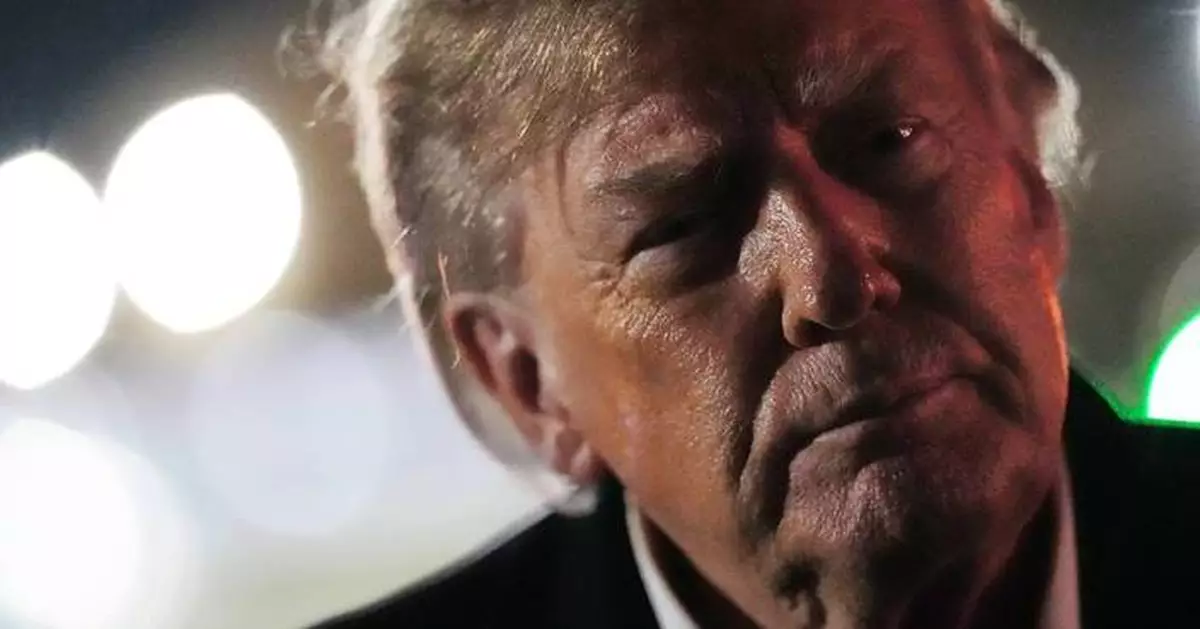
MIAMI (AP) — A federal judge on Thursday ordered President Donald Trump to sit for a deposition in his $10 billion defamation lawsuit against the BBC by Dec. 11.
The order from U.S. Magistrate Judge Enjoliqué Lett came as lawyers for the British broadcaster complained that Trump had delayed his appearance. Charles Tobin, the attorney for the BBC, said that with two months left in the discovery period, “we still haven’t been able to depose the plaintiff.”
He noted there was an agreed-upon date of Oct. 16, but that Trump had canceled it for a “matter of national importance.” Tobin said the Republican president was in fact campaigning in Georgia that day.
“He was participating in party politics and prioritized that over sitting for the deposition,” Tobin said.
Lett said Trump must sit for a deposition by Dec. 11, or face sanctions up to dismissal of his lawsuit -– unless the discovery period was extended past Dec. 18.
Discovery, where lawyers for both sides exchange documents and other evidence, is scheduled to end Dec. 18, and the BBC's attorneys want to make sure they have Trump’s deposition before that deadline. Lett said only the presiding judge assigned to the case can alter the trial schedule, and the defense said it would be open to scheduling the deposition at a later time if the trial schedule was also moved back.
Trump, who has often avoided depositions, filed his lawsuit against the BBC last December. He accused the publicly funded broadcaster of defamation as well as deceptive and unfair trade practices related to a documentary, “Trump: A Second Chance.”
The BBC acknowledged that filmmakers spliced together quotes from different sections of the speech Trump delivered to his supporters on Jan. 6, 2021, before the storming of the U.S. Capitol, to make it seem he was directly urging violence. The broadcaster apologized over the editing, and the head of the BBC and its top news executive both resigned. But the BBC has denied Trump’s claims that it defamed him.
To bolster its defense, the broadcaster subpoenaed former special counsel Jack Smith earlier this month. Trump’s lawyers argued, in a joint filing asking for a hearing on the matter, that there was no good reason for Smith, who is not a party to the case, to appear.
The parties were expected to address the issue later in Thursday's hearing.
“Smith lacks any personal knowledge regarding the issues in this matter,” they argued in the filing. “He was not present when President Trump’s January 6, 2021, speech … was made, nor did he participate in its preparation. Smith does not have any personal knowledge regarding President Trump’s state of mind at the time the Speech was given.”
Trump's side also argued that “Smith’s testimony would be duplicative,” because he published a lengthy report on the events of Jan. 6 and also testified for many hours. “The entirety of his testimony is publicly available,” it argued.
The BBC countered, in the same filing, that there were few more knowledgeable sources about the events of Jan. 6 than Smith, who studied and investigated them for years.
“It is difficult to imagine a more authoritative source on these issues than Mr. Smith, who spent years gathering evidence on those topics with the force of the Justice Department and the power of the grand jury behind him,” the BBC’s lawyers argued.
“No one forced Plaintiff to file this lawsuit and to dispute that his speech on January 6 incited the violence that followed at the Capitol. But as long as he chooses to maintain the case, he cannot commit the fundamental injustice of preventing the BBC from obtaining the evidence it needs to robustly defend itself on every element of his claim."
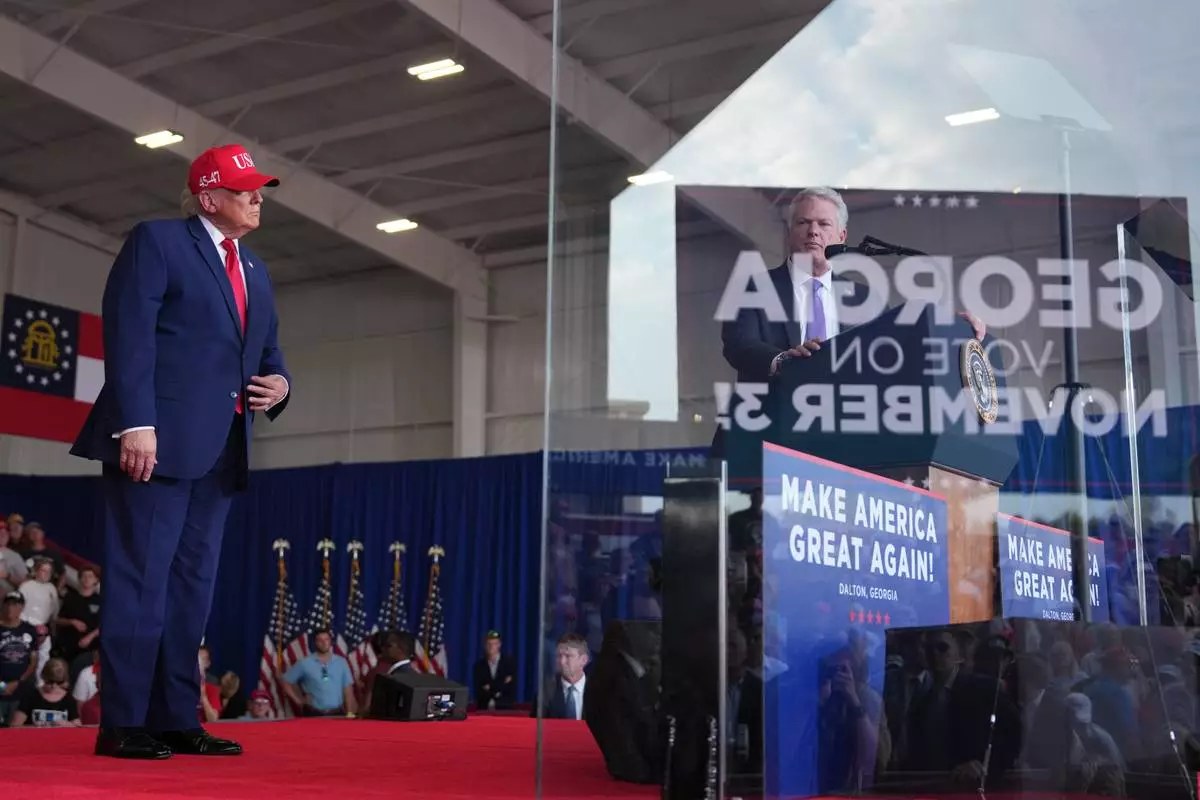
President Donald Trump listens as Georgia U.S. Senate candidate Rep. Mike Collins, R-Ga., speaks at a campaign rally at Dalton Municipal Airport, Friday, Oct. 16, 2026, in Dalton Ga. (AP Photo/Mark Schiefelbein)
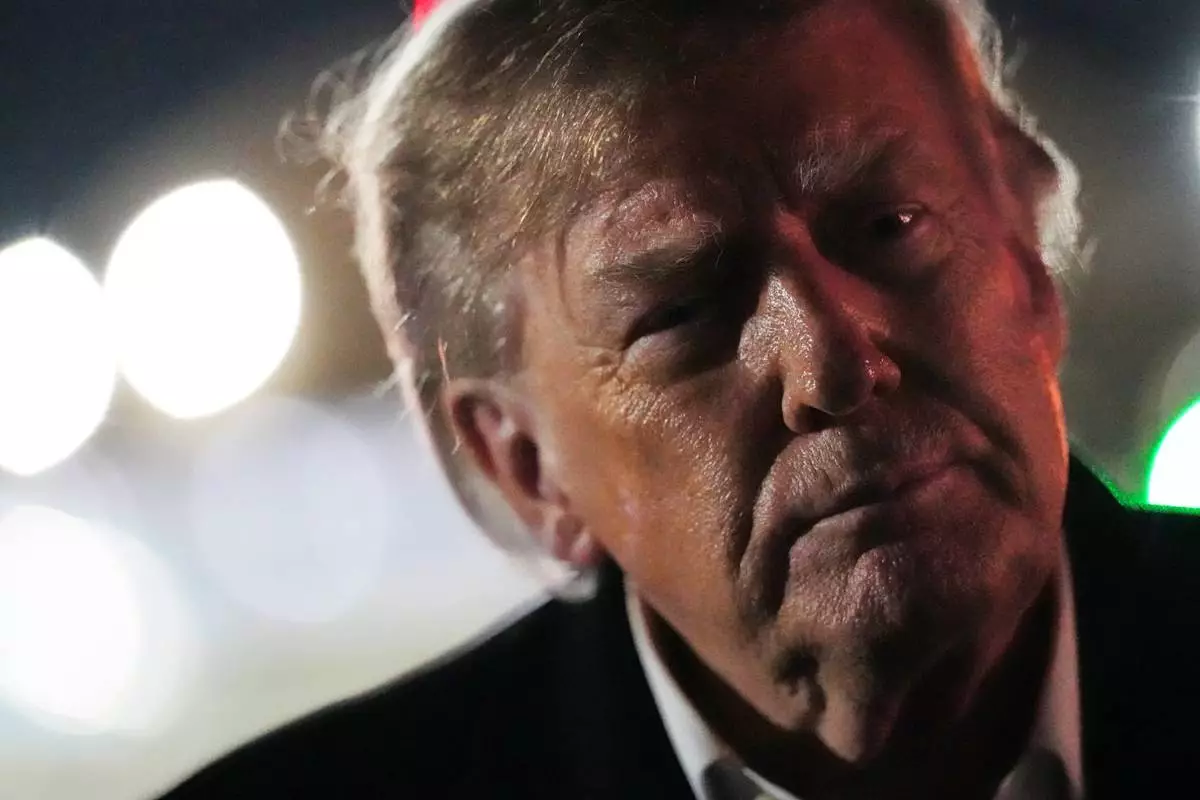
President Donald Trump speaks to reporters after arriving on Air Force One, Wednesday, Oct. 21, 2026, at Joint Base Andrews, Md. (AP Photo/Julia Demaree Nikhinson)
NEW YORK (AP) — Drops for stocks in the artificial-intelligence industry are dragging markets down worldwide on Thursday, while oil prices hit their highest levels since May on worries about the war with Iran.
The S&P 500 sank 1% following even sharper losses in Asia, whose markets are full of AI and other technology stocks. The Nasdaq composite was down 2%, as of noon Eastern time, but stocks outside of tech did better, and the Dow Jones Industrial Average was down a modest 14 points, or less than 0.1%.
AI-related stocks have been shaky on worries that their boom may be under threat because of how expensive it’s become to borrow money to build data centers and buy more AI chips. Concerns also remain that stock prices simply shot too high in their yearslong frenzy, even though companies in the industry continue to report growth.
Lam Research, whose equipment and services help make semiconductors, reported gains in profit and revenue for the summer that were slightly stronger than analysts expected, for example. Usually, that helps boost a stock’s price, but Lam Research’s tumbled 10%.
It gave a range for its forecast for profit this quarter whose midpoint was slightly below analysts’ expectations. Its stock also came into the day with a 52.4% surge for the year so far, nearly quadruple the already healthy gain for the overall S&P 500, leaving plenty of room for potential disappointment.
Other big tech stocks were unsettled following their own quarterly reports that included at least some encouraging nuggets.
Meta Platforms, which is pushing its Muse AI agent, lost 5.4% after reporting stronger revenue for the latest quarter than analysts expected, though its profit fell short. The company behind Facebook and Instagram also said it's creating a new class of stock to raise money to pay for AI investments and other expenses.
Tesla slipped 0.8% after flipping between gains and losses in the morning. It reported a stronger profit for the summer than analysts expected, though its revenue was weaker than forecast.
The global tide against AI stocks knocked Nvidia down 3.7%. Because it’s the largest stock on Wall Street by total value, the chip giant was the heaviest weight on the S&P 500.
CoreWeave, which has borrowed money to buy Nvidia’s AI chips that it rents out to customers over the cloud, has been particularly shaky in recent weeks because of worries about its debt. It dropped 7.8%, though it’s swung between wide gains and losses of roughly 4% within each of the last two days.
The weakness for AI and other tech stocks began in Asia, where South Korea’s Kospi tumbled 3.5%, Hong Kong’s Hang Seng dropped 3% and Japan’s Nikkei 225 sank 2.7%.
Also weighing on global stock markets was a jump in oil prices.
The price for a barrel of Brent crude oil rose 2.2% to $111.19 after touching its highest level in five months. It’s at the high end of the $97 to $112 range it’s been yo-yoing through in October on uncertainty about when the war with Iran will allow the global energy industry to return to normal.
In Europe, France’s CAC 40 stock index fell to one of the continent’s sharpest losses with a drop of 1.4% It has fewer tech stocks than Asian or U.S. indexes, but it was hurt by another jump in yields for French government bonds.
Yields have been generally climbing there because of worries about the government’s big debt load and strained budget. Violent protests across France have raised pressure on the government to increase spending, which could add further to its debt.
Worries about big government debt are weighing on almost every developed economy in the world, including the United States. Such concerns have pushed yields in the U.S. bond market to their highest levels in decades, along with high inflation, signals of a still-strong U.S. economy and other factors.
But U.S. yields nevertheless fell sharply Thursday in a signal that investors were buying U.S. government bonds in search of something safer to own as AI stocks tumbled.
The yield on the 10-year Treasury fell to 5.00% from 5.13% late Wednesday and from more than 5.30% earlier this month. That’s a major move for the bond market, though the 10-year yield remains well above its 3.97% level from before the war with Iran.
Thursday’s drop in yields came even as another report suggested the U.S. economy may be doing better than economists expected. It said fewer U.S. workers applied for unemployment benefits last week, which could signal that layoffs remain low across the country.
That solid economy has helped U.S. companies broadly to make bigger profits, which is what propelled the U.S. stock market to a record high earlier this month despite the many worries tugging at it. The majority of stocks within the S&P 500 rose on Thursday, only to get drowned out by the drops for more influential tech stocks.
Procter & Gamble, Lockheed Martin and CSX were among the latest companies to join the list of those topping profit expectations for the summer, and gains for their stocks helped limit the market’s losses on Thursday.
CEO Shailesh Jejurikar said Procter & Gamble expects “geopolitical and economic challenges” to continue, but it stood by its forecasts for growth in revenue, profit and other measures for the full year. The stock price for the company behind the Crest, Olay and Oral-B brands rose 6.2%.
AP Business Writer Elaine Kurtenbach contributed to this report.
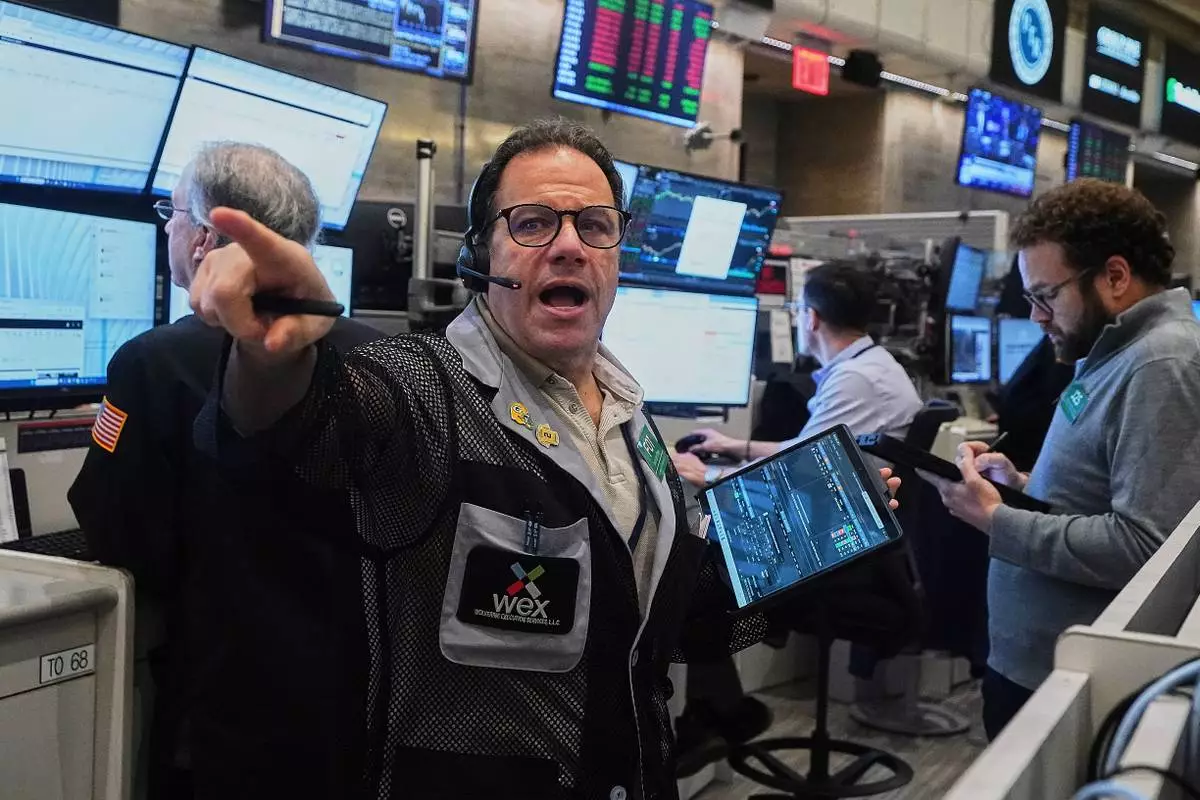
FILE - Options trader Anthony Spina works on the floor of the New York Stock Exchange, Wednesday, Jan. 7, 2026. (AP Photo/Richard Drew, File)
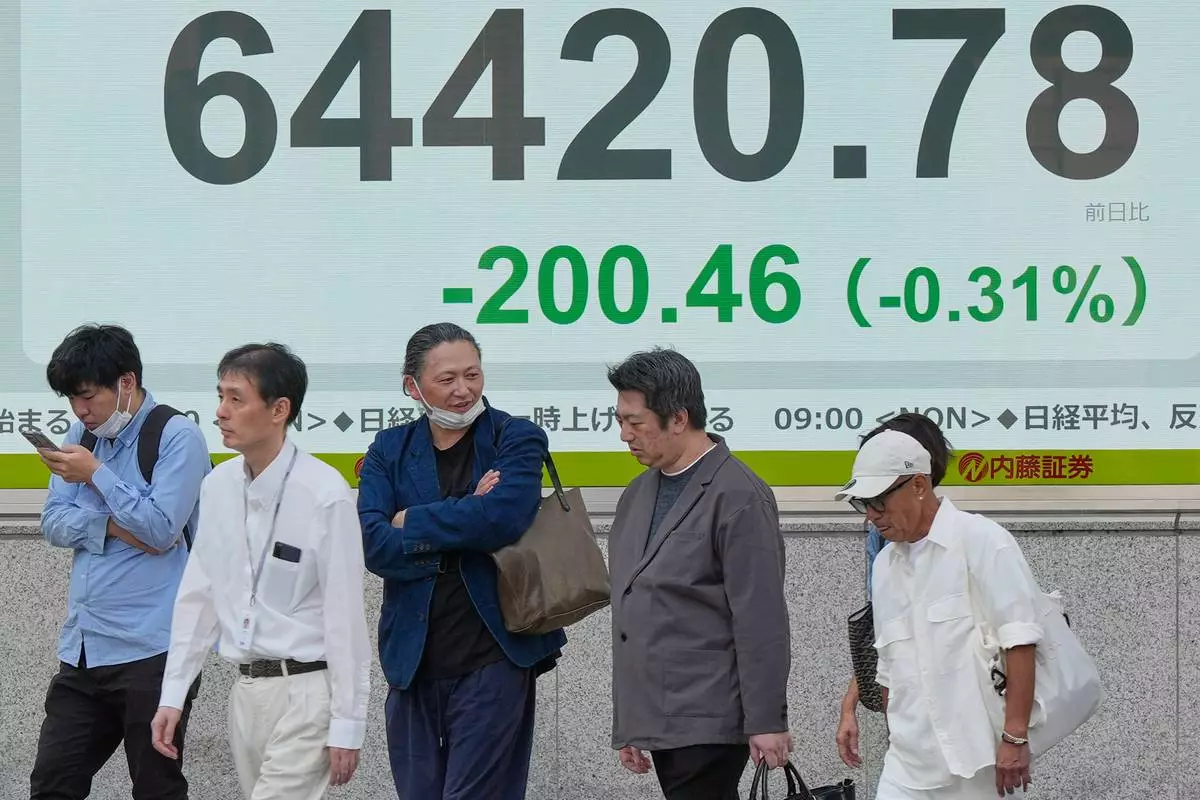
People walk in front of an electronic stock board showing Japan's Nikkei index at a securities firm Thursday, Oct. 22, 2026, in Tokyo. (AP Photo/Eugene Hoshiko)
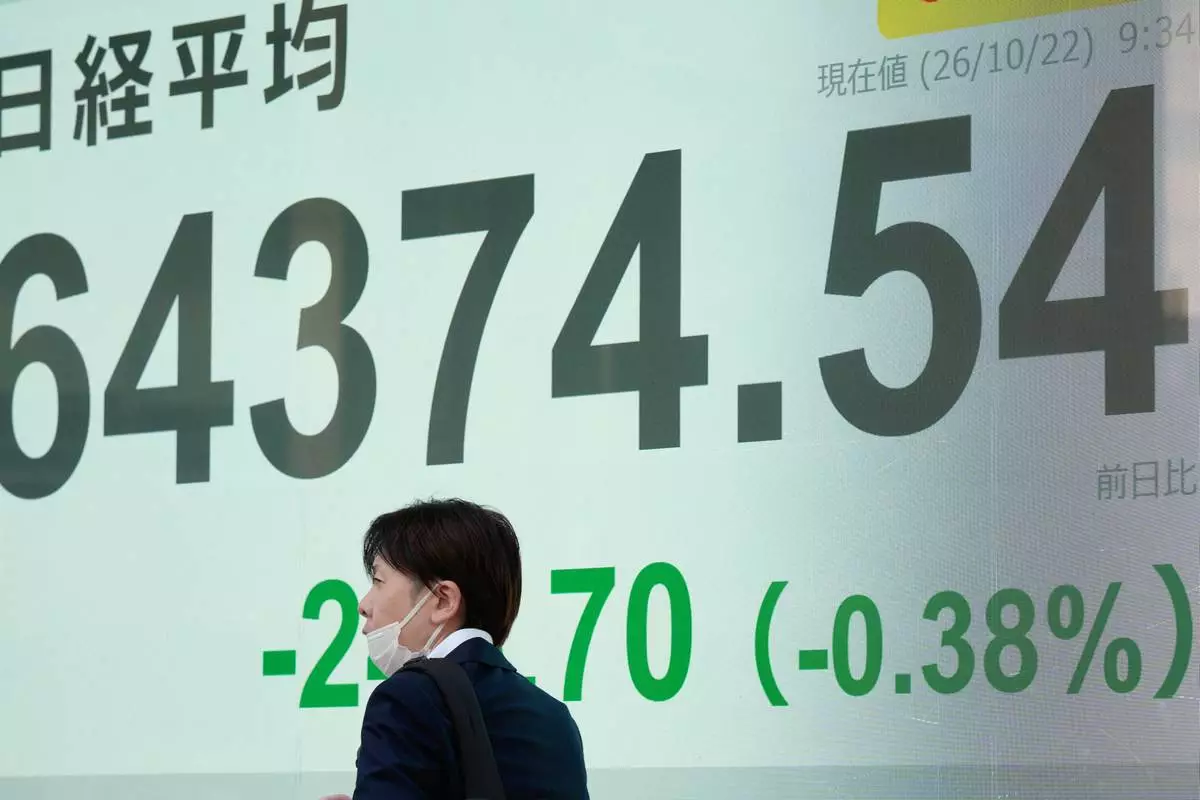
A person walks in front of an electronic stock board showing Japan's Nikkei index at a securities firm Thursday, Oct. 22, 2026, in Tokyo. (AP Photo/Eugene Hoshiko)
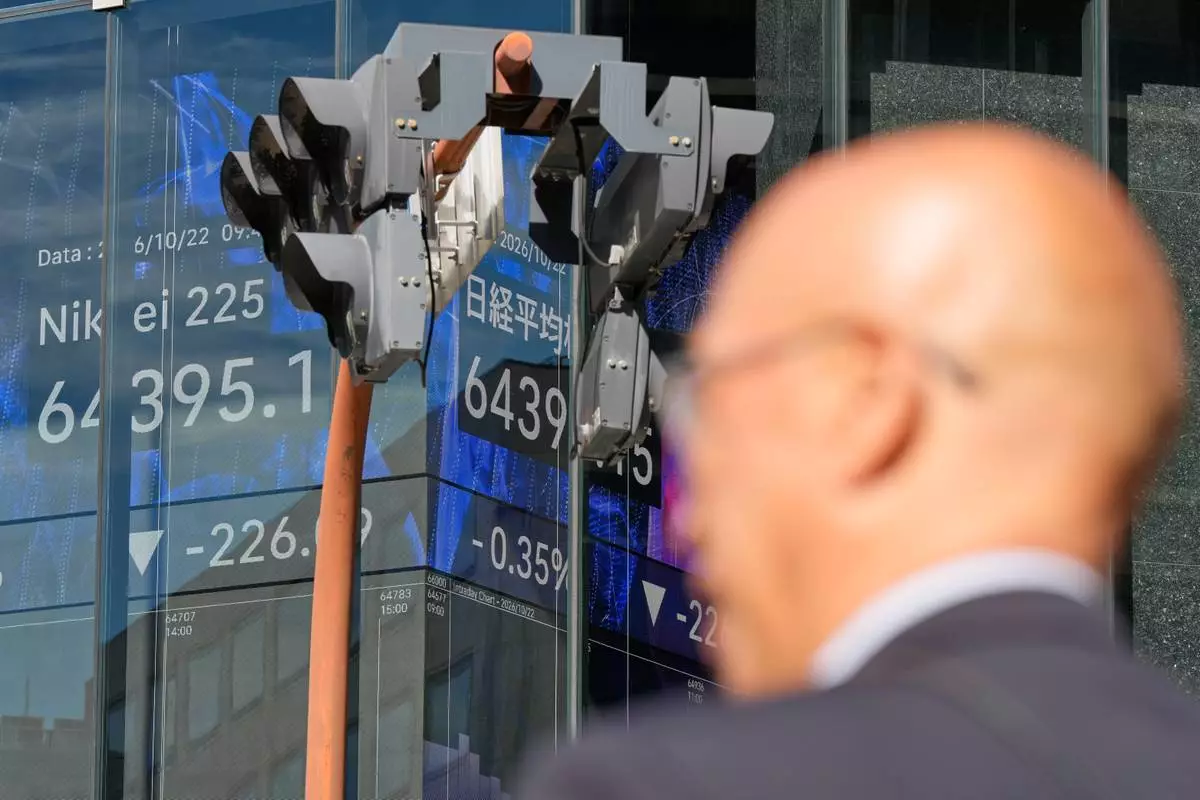
A person walks in front of an electronic stock board showing Japan's Nikkei index at a securities firm Thursday, Oct. 22, 2026, in Tokyo. (AP Photo/Eugene Hoshiko)
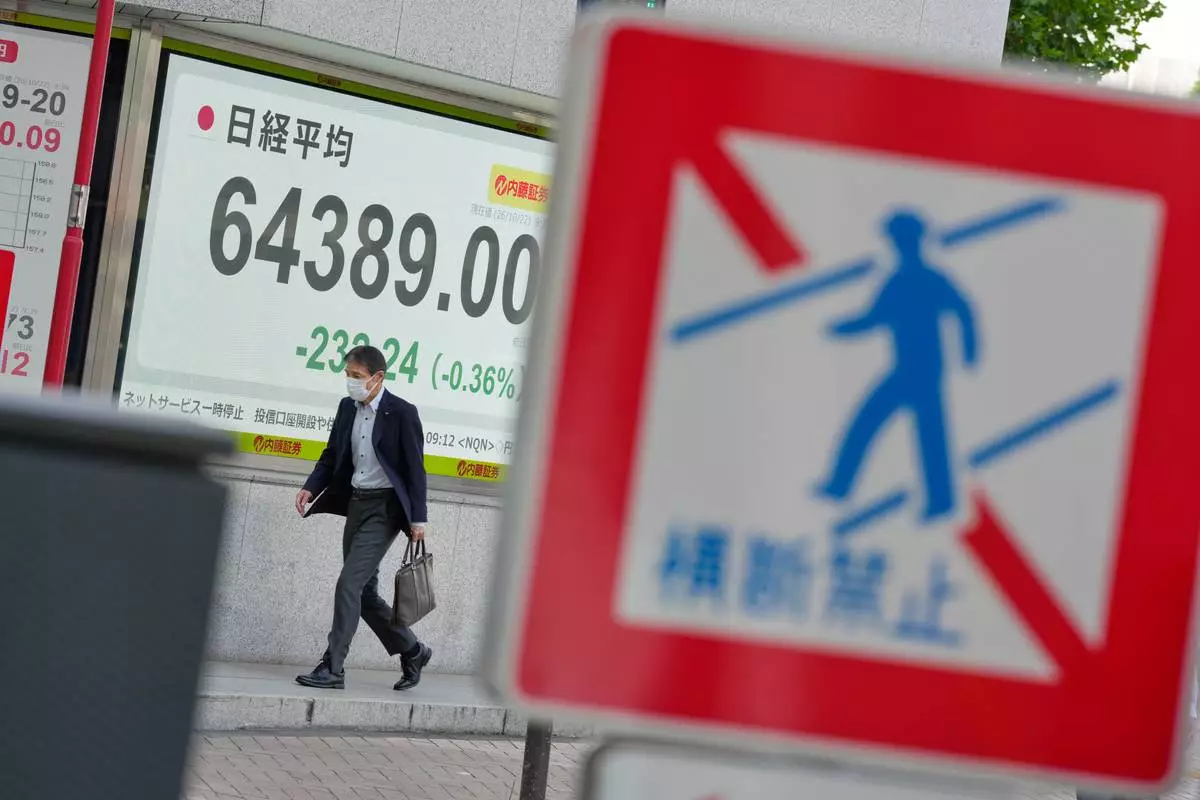
A person walks in front of an electronic stock board showing Japan's Nikkei index at a securities firm Thursday, Oct. 22, 2026, in Tokyo. (AP Photo/Eugene Hoshiko)
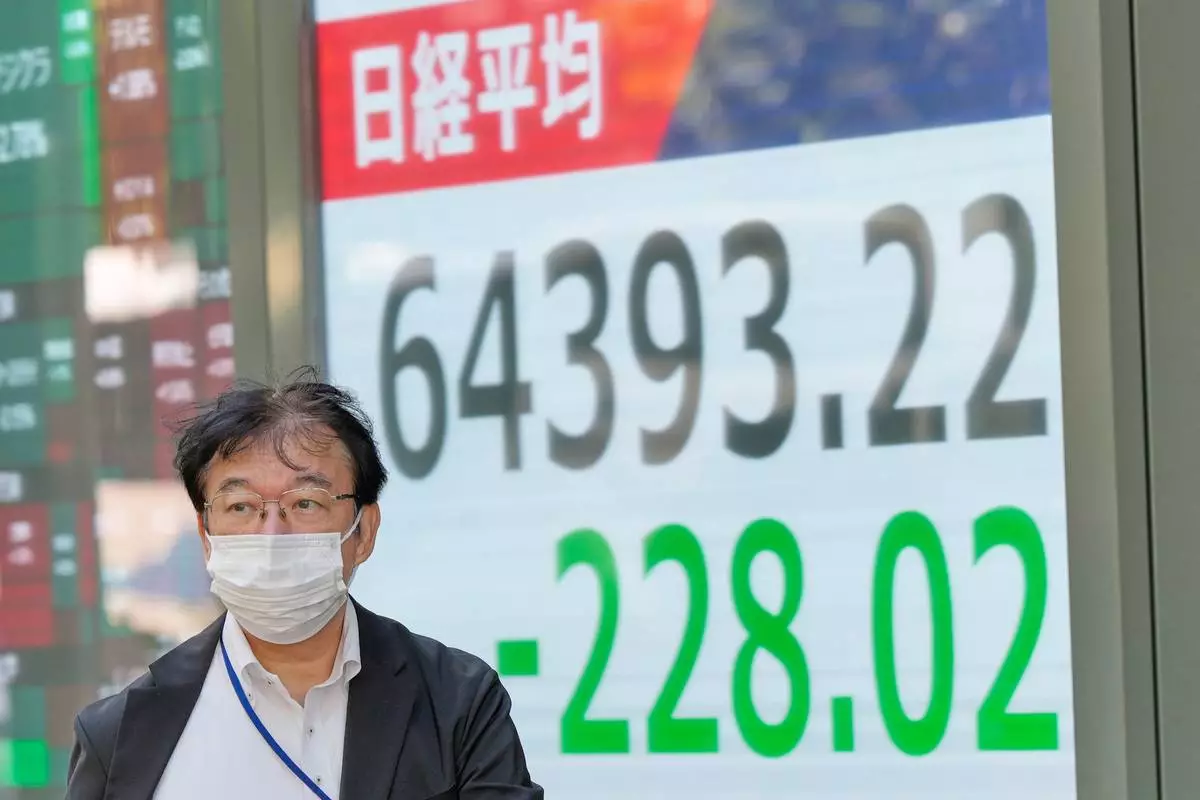
A person walks in front of an electronic stock board showing Japan's Nikkei index at a securities firm Thursday, Oct. 22, 2026, in Tokyo. (AP Photo/Eugene Hoshiko)