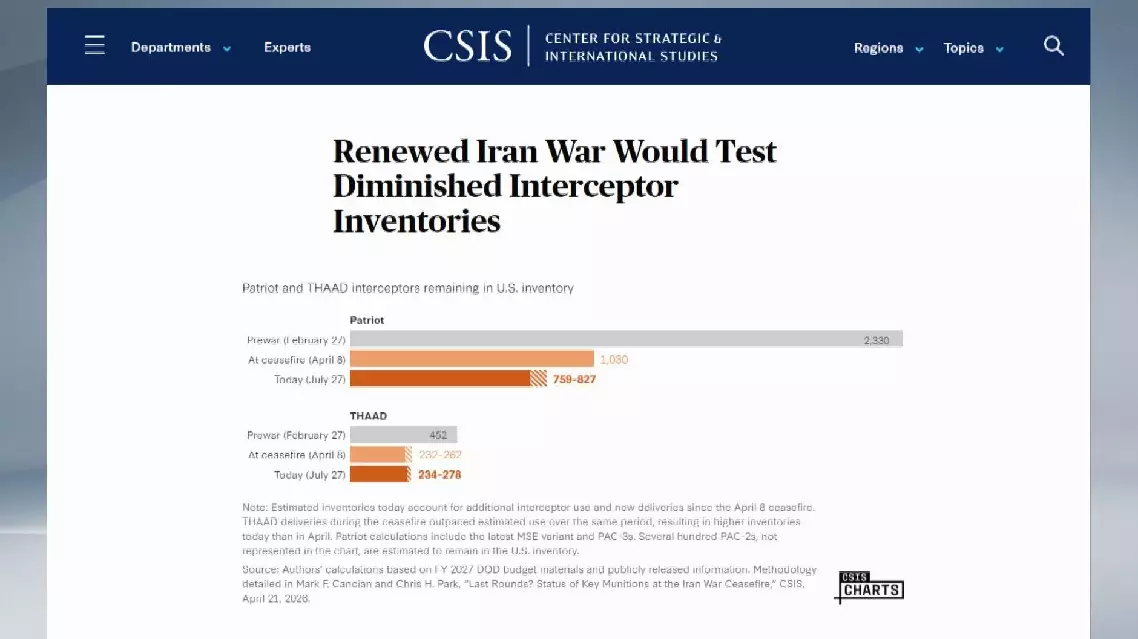
A new analysis by the Center for Strategic and International Studies (CSIS) warns U.S. missile defense inventories are dangerously low, with extensive combat operations depleting key interceptor stockpiles.
Drawing on Pentagon Fiscal Year 2027 budget documents and other defense data, the CSIS report concludes that the current inventory of Patriot interceptors has fallen below the 1,000-unit mark. Meanwhile, stockpiles of the Terminal High Altitude Area Defense (THAAD) interceptors have dropped to approximately 250.
The report, titled "Renewed Iran War Would Test Diminished Interceptor Inventories," highlights the heavy toll that recent air defense campaigns have taken on U.S. and coalition munitions. While defensive efforts have been largely successful in maintaining high interception rates against incoming ballistic threats, the extensive expenditure of these advanced systems has left military inventories dangerously low.
According to CSIS analysts, these diminished stockpiles could force the United States and its coalition partners to take greater strategic risks during future interception operations. The report notes that there are currently no viable alternatives to the Patriot and THAAD systems for effective ballistic missile defense, as Navy ships equipped with Standard Missiles are generally stationed too far away to provide immediate and reliable coverage.
To address this urgent shortfall, the FY 2027 defense budget proposal reflects a significant push to rebuild the arsenal. The administration's budget request includes a massive 95 billion U.S. dollars' allocation specifically for munitions, along with an additional 21 billion dollars in war supplemental request.
CSIS warns US missile defense stockpiles dangerously low
CSIS warns US missile defense stockpiles dangerously low
CSIS warns US missile defense stockpiles dangerously low
While floodwaters began to recede across parts of Bangkok on Wednesday, thousands of residents in the capital's low-lying suburbs remained marooned, grappling with severe disruptions to electricity, clean water, and essential services in neighborhoods accessible only by boat.
A severe nationwide flooding swept through 42 Thai provinces between Sept 16 and 28, impacting 1.8 million people and leaving at least 8 people dead, according to the Department of Disaster Prevention and Mitigation.
Officials reported that 28 provinces, primarily across Thailand's central, northern, eastern, and northeastern regions, remain affected by the disaster.
In the Lat Krabang district on Bangkok's eastern edge, just kilometers from the Suvarnabhumi Airport, streets remain submerged deep enough to swallow cars.
For the tens of thousands of people living there, the danger is not the rising water, but the grueling daily struggle to survive.
"It's devastating. Nobody can make a living. I have no money right now; all I have left is myself," said Mu Boonpitaksorn, a local resident.
With roads submerged and utility lines cut, small boats have become the communities' only connection to the outside world, delivering food, drinking water and medicine while serving as a crucial lifeline for evacuations.
"They are losing hope. That's what I think. This is one of the largest disaster area for the moment. People with disability, elderly people, family with younger children, it's much difficult for them to stay on into the community as they used to," said Weerasak Kowsurat, secretary general of the Friends in Need (of "PA") Volunteers Foundation.
Although temporary shelters have been established across the capital to offer safety, food, and dry ground to the displaced, evacuees face the reality of walking away from everything they could not carry.
"It's all gone. I have nothing left. Absolutely nothing. Fridge, washing machine, fan, air conditioner… nothing left at all. Inside my home is all mud. It's too much, it's beyond despair," said Sumontha Huanarvorn, an evacuee.
Even as Bangkok gradually dries out, the floodwaters continue to separate families from their homes, belongings, and routines, leaving residents waiting desperately for roads to reappear, and hoping they will eventually lead back to the life they knew before the deluge.
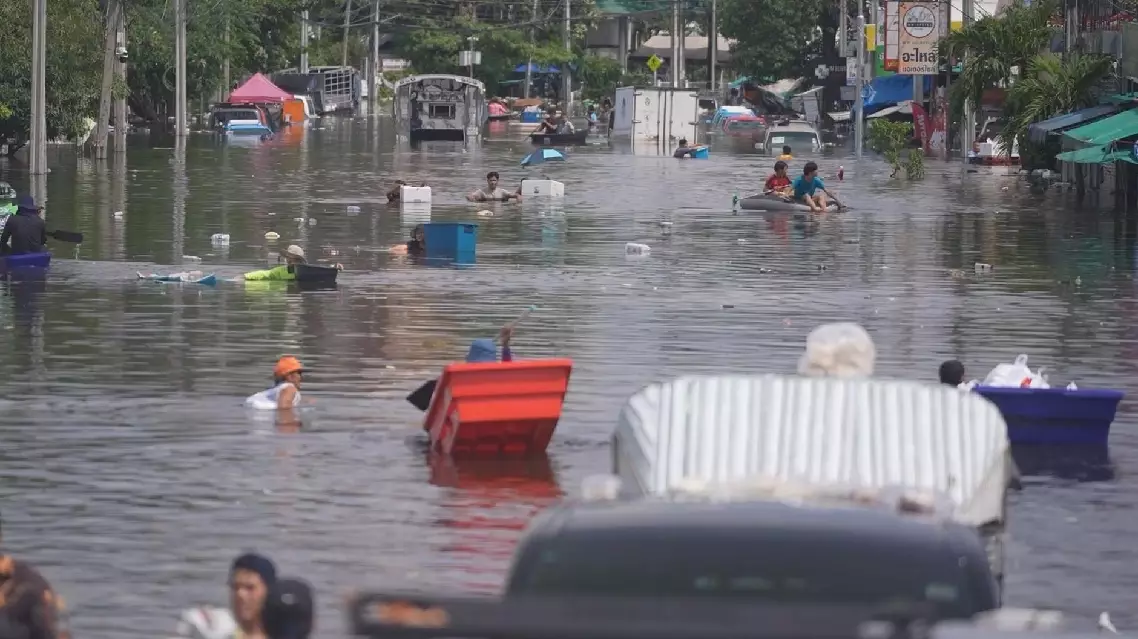
Bangkok suburbs endure daily struggle as floodwaters linger