Chinese teams at the 2026 Esports World Cup (EWC) in Paris are showcasing Honor of Kings, a homegrown title rooted in Chinese history that is now reaching global audiences.
The six week competition opened July 6, drawing global teams and fans to one of the world’s largest esports stages. Honor of Kings, one of China’s biggest esports titles, commands a massive following at home and a growing audience overseas.
"The atmosphere of this international competition is perhaps a bit more intense, and the mindset going into the match is different too, because we're representing China in an overseas tournament, so I'm really happy. And it's also very powerful," said Liu Yunyu, a Chinese player.
The game’s popularity is reflected in surging ticket demand, with past finals selling out in seconds.
"We can see from the ticket sales. Actually, right now all the tickets are going so fast. Like for last year, we had one Honor of Kings final in the Bird's Nest, [which] we call the National Stadium in Beijing, and it can hold 62,000 of people, but the tickets are gone in 12 seconds. So it's so fast," said Eddy Chen, Chief Operating Officer of AG Esports' overseas headquarters and President of the Esports Association of Hong Kong, China.
A big part of its appeal is its Chinese identity, with many of the heroes inspired by figures from the country's history.
"Honor of Kings is a game that with a lot of Chinese historical idols, with heroes inside. So it is very closely related to the Chinese history, and also because this is a mobile game. So right now the China mobile is developing very fast. So everyone have the mobile phone to play, and as well as I think because this is a mind game," Chen said.
China now has more than 495 million esports users, and the industry generated more than four billion U.S. dollars last year. The ambition now is to turn that enormous domestic audience into a truly global market.
"We believe that this kind of global tournament can definitely help a lot of Chinese gaming companies to do cultural exports. Just like, for example, the Honor of Kings game. They are developed with a lot of Chinese history. And when the global players play this game, actually they can learn the Chinese history as well," Chen said.
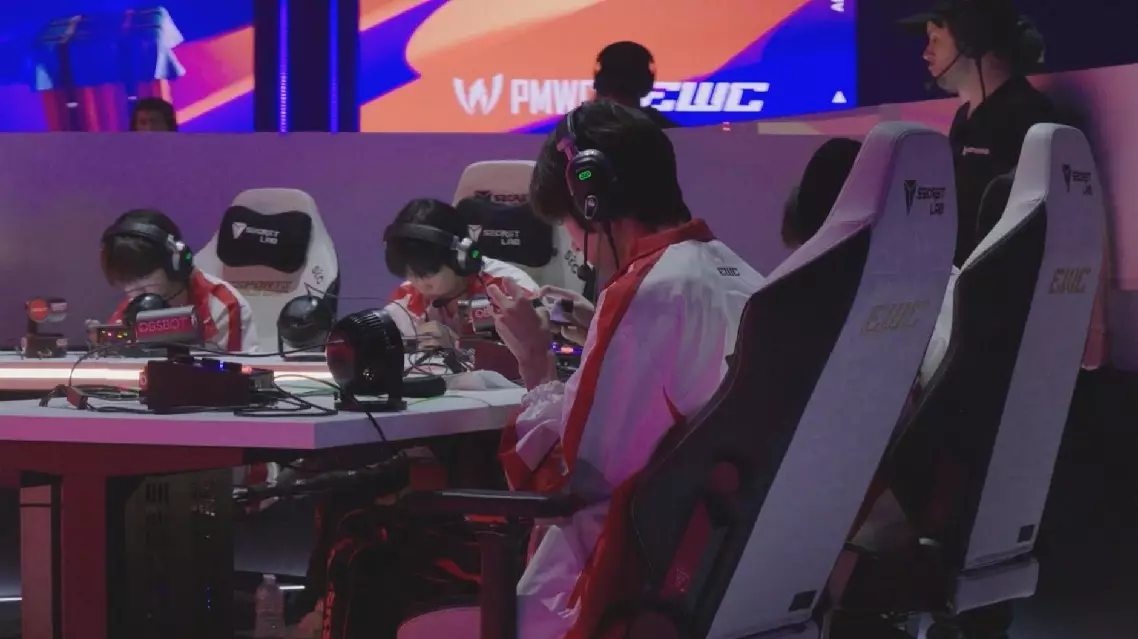
Chinese teams showcase "Honor of Kings" at Paris Esports World Cup
International tourists are more and more seeking to engage in Chinese culture in depth by traveling historic cities beyond traditional destinations with growing interest in staying longer.
In Zhengzhou, the provincial capital of Henan in central China, 19 Portuguese tourists enjoyed walking through an extensive rammed earth building complex.
Roaming in alleys of the scenic area, they learned more about the agrarian civilization in China and the famous Yellow River.
They had toured around multiple historic cities in Henan, including Kaifeng, Luoyang, and Anyang, in their 11-day stay in China, during which they watched various performance and experienced intangible cultural heritage.
"It's beautiful. It's completely beautiful. I want to make a lot of them. I will put it at my door. So, I have a lot of luck to come here again," said Ana Vilaca, a member of the Portuguese tour group, after experiencing Chinese woodblock printing in the Zhengzhou-based scenic area.
"[I am] very interested in this kind of tourism, not only tourism, but also to learn many things about culture and traditions and everything about China," said Paulo Mesquita Pinto, another of the group, as he experienced Chinese calligraphy in Zhengzhou.
The tour was organized by a Chinese school in Portugal, which offers a good opportunity for students and even their friends and relatives to experience Chinese culture in person.
"We didn't expect such enthusiasm. There were many applicants, who are not confined to our students, there are their friends and relatives," said Chen Qiaoqiao, a teacher in the school.
China has been witnessing booming inbound arrivals thanks to the country's visa-free policies.
It now offers unilateral visa-free entry to nationals of 50 countries. Nationals from 55 countries can now utilize the 240-hour visa-free transit program to enter China via 65 designated ports.
"Definitely. Yeah, we can very flexible to come and go as we need to do business. It's good," said Justin Wird, an international traveler, after landing in an airport in Zhengzhou.
Official data showed China's border inspection agencies handled a record 369 million inbound and outbound crossings in the first half of 2026, up 10.8 percent year on year. Among them, mainland residents accounted for 176 million trips, while foreign nationals made 45.9 million trips, with both figures registering double-digit growth.

Int'l tourists seek Chinese culture in depth