China is accelerating the building of a national computing-resource scheduling trunk, Shenzhen-Guizhou computing and data transmission line, to facilitate surging intelligent computing capacity and integration national computing network.
By the end of June, China’s intelligent computing capacity reached 2,185 EFLOPS, up 177 percent year on year.
With resources still unevenly distributed across regions, construction of the national integrated computing network is sped up for unified monitoring and dispatching of computing power.
At Peng Cheng Laboratory in Shenzhen, researchers are developing a new generation of optical fiber. Under a 60-power microscope, a strand no thicker than a human hair reveals four internal channels.
"This fiber is as thin as a single strand of hair. Put under a 60x microscope, you can see it actually contains four channels inside, like laying four high-speed rail lines simultaneously. That means the transmission capacity can jump more than fourfold, breaking through the volume bottleneck of conventional fiber," said Li Chao, an associate researcher of Peng Cheng Laboratory.
Using the new fiber and equipment, the research team will build the Shenzhen-Guizhou Line into a thousand-kilometer-long, ultra-broadband national computing dispatch corridor linking Shenzhen and Guizhou via low-latency, optical direct connection, enabling computing power to flow faster between computing hubs and AI application clusters.

China accelerates construction of computing power network
The World Health Organization has recommended a clinical trial in the Democratic Republic of the Congo (DRC) to evaluate a licensed vaccine called Ervebo.
The vaccine was developed for the previous Zaire strain, but may also give some protection against the rare Bundibugyo virus now tearing through the DRC, according to experts.
"WHO reports that its Technical Advisory Group on Vaccine Research is recommending a clinical trial in the DRC for the Ervebo vaccine, the only licensed vaccine against Ebola. WHO is working with partners to begin the trial as soon as possible," said Farhan Haq, deputy spokesperson for the United Nations Secretary-General, on Friday.
The rollout of the Ervebo vaccine will target Ebola hotspots such as Ituri and North Kivu provinces.
The virus continues to spread rapidly across eastern DRC with 4,053 cases and 1,850 deaths recorded, according to the Ministry of Health.
Women and children, especially in the epicenter Ituri, are the worst hit by the outbreak, said the spokesman.
"According to the UN Children's Fund, more than 300 children have died from Ebola since the outbreak began," Haq said, underlining that children make up nearly a quarter of confirmed cases, but almost a third of all deaths.
The outbreak is also disrupting essential healthcare services in the region as fear of infection keeps many away from hospitals.
"This fear, combined with overstretched health services, is preventing many pregnant women from seeking care. Maternal deaths in Ituri have nearly doubled since the outbreak began, with about six women dying each week from childbirth-related complications. Ebola infection during pregnancy remains associated with almost universal fetal loss," Haq said.
Health officials are calling for more awareness to not only curb virus transmissions but also minimize preventable health risks.
The epidemic has been described as the fastest-spreading on record, and the WHO believes that the actual number of cases may be much higher than the official tally.
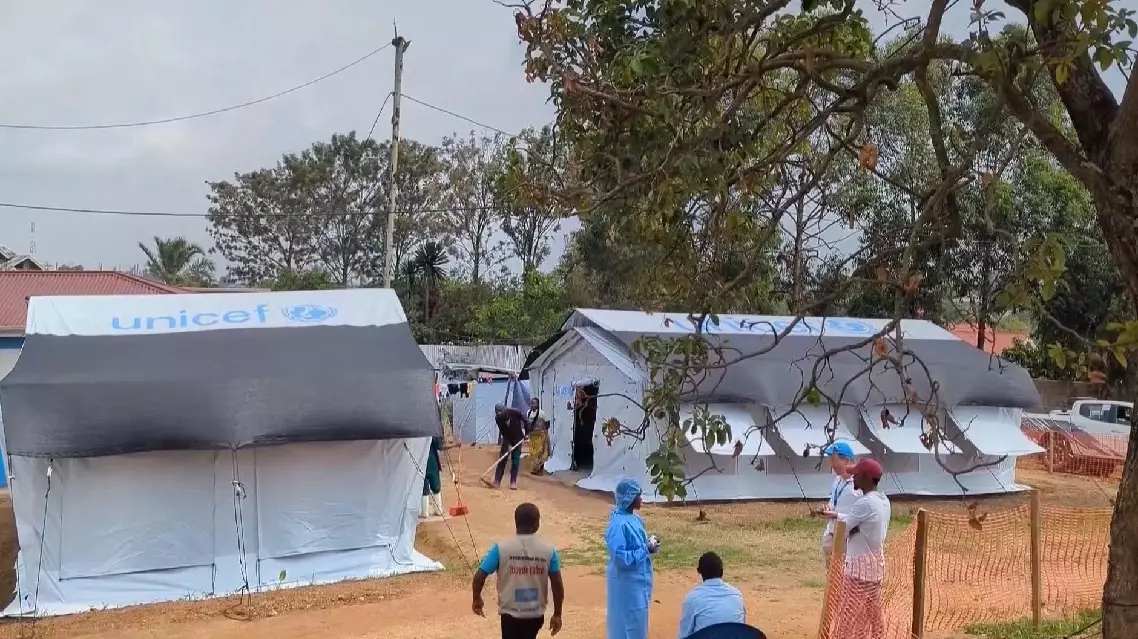
WHO recommends clinical trial of Ervebo vaccine in DR Congo