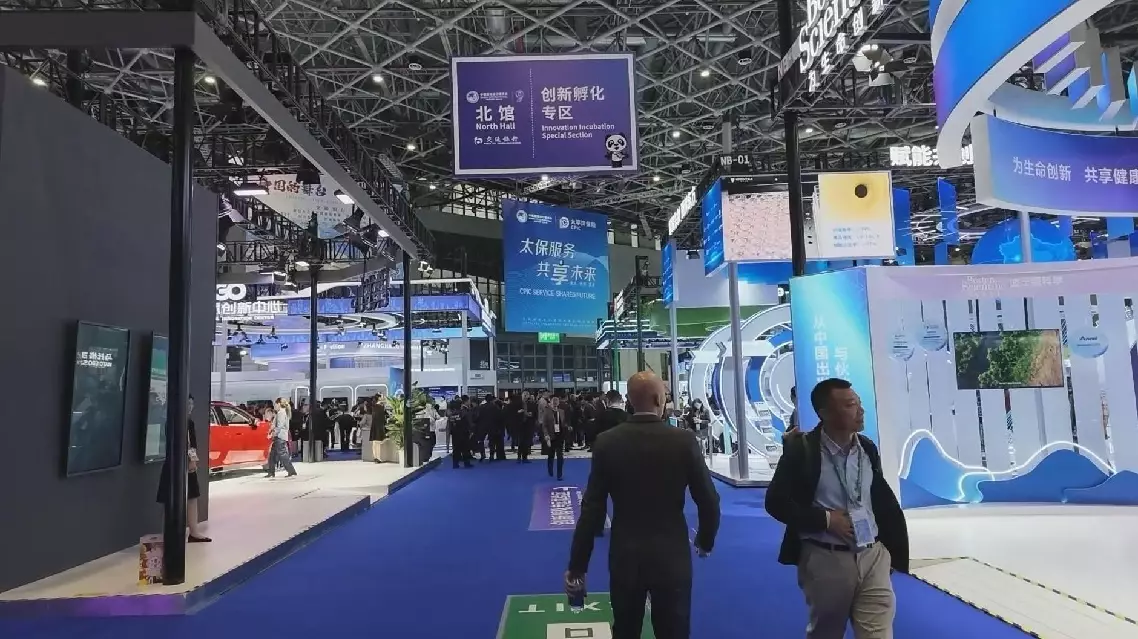
Overseas healthcare and medical firms, from first-time to longtime exhibitors, are using the ongoing 9th China International Import Expo (CIIE) in Shanghai as a platform to tap China's fast-growing market and reach Asian consumers.
The CIIE, running from November 5 to 10 in Shanghai, has attracted 4,142 overseas exhibitors across more than 440,000 square meters, with over 480 exhibits making their global, Asian or China debut, the highest number in the event's history.
In the medical equipment and healthcare zone, both first-time and returning exhibitors are showcasing products and seeking deeper access to the Chinese market.
For Biosan AS, a Norwegian nutrition and health supplement brand, this year marks its CIIE debut. The company is using the Shanghai showcase to roll out seven new products for the Asian market, betting that China's rapidly expanding health sector offers the right entry point.
"This is our first time to attend the CIIE. We are introducing seven new launches to the Asian markets at this exhibition. We think the Chinese market is a really fast-growing health market, it's a great place for us to start to show the products to the Asian consumers," said a representative of Biosan AS.
For returning exhibitors, the expo has delivered tangible market growth and reinforced their confidence in deepening their presence in China.
"So we have been to CIIE many times. It definitely helps a lot as a U.S. brand to enter the Chinese market and we really appreciate the opportunities that China opening-up policies has brought us," said a U.S. exhibitor.
Another exhibitor, back for a second year, described a three- to five-fold revenue increase after its first CIIE appearance.
"We first attended the CIIE last year, and our brand's revenue grew three- to five-fold. We hope the expo will help us further expand our brand influence, win more orders and partnerships. We are also working with universities on the Chinese mainland on joint research to advance industry-academia-research integration," said the exhibitor.
Several foreign companies said that their operations in China are moving beyond simply importing overseas products: they are ramping up production investment, co-building clinical research programs and assembling fuller industrial ecosystems on the ground.
"These technologies are being rolled out from our China factories, based in the Yangtze River Delta. We are very optimistic about the Chinese market and are continuing to invest across various aspects and pursue ongoing technological iteration," said an exhibitor.
Global firms eye China's fast-growing health market at 9th CIIE
Japanese Prime Minister Sanae Takaichi's administration is reviving brainwashing tactics once used to justify its World War II invasion of China, seeking to lessen public opposition and advance its military expansion agenda, according to a Japanese researcher.
Japan is pressing ahead with remilitarization and repeatedly breaching its "exclusively defense-oriented" policy. It is also considering including exceptions to the country's Three Non-Nuclear Principles in its revised National Security Strategy, which is scheduled to be finalized by the end of this year.
To build public support, the government has emphasized external threats, linking the protection of one's family to support for military expansion, an approach that echoes tactics used by the government before the invasion of China in the 1930s.
Recently, the Japanese government's official promotional website started to feature Manzai comedic performances. Through everyday conversational exchanges, the performers sought to persuade the public that Japan needs to revise its three security documents and that strengthening national security is closely tied to every family.
In the 1930s, as the Japanese government sought to justify its planned invasion of China, it developed stories to legitimize wars of aggression in the form of kamishibai -- a popular style of street-corner picture storytelling.
These story-telling performances served as a propaganda outlet for the government, glorifying its invasion and stirring hatred toward those portrayed as enemies. They reached widely.
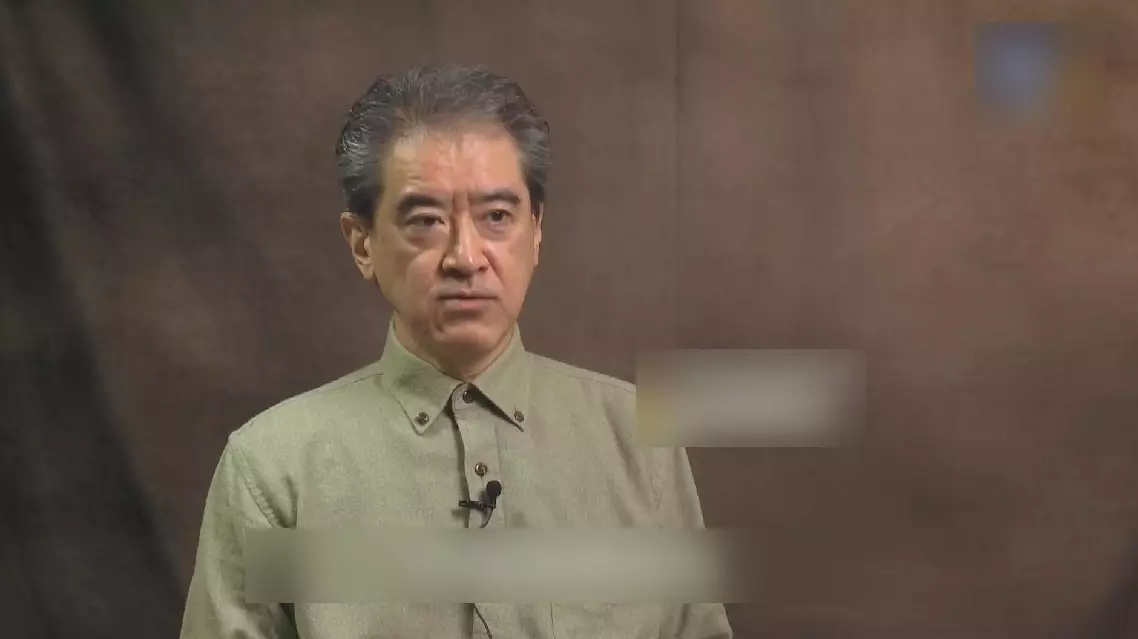
"At that time, the Japanese government loudly claimed that Japan was surrounded by hostile countries, suggesting that unless Japan properly built up its military, it would be invaded. They first instilled a sense of anxiety into the public, then argued that a military expansion was unavoidable. That was the method they used to gain the public's consent. It was against this backdrop that the Lugou Bridge (Marco Polo Bridge) Incident broke out in July 1937, and the government claimed that China had started the war," said Masahiro Yamazaki, a Japanese researcher of military history.
Yamazaki noted that the Japanese government is now using the same approach: stoking public anxiety through Manzai performances to advance its military buildup, while avoiding discussion of the risks of revising the three security documents.
"Sanae Takaichi's administration -- or those who vocally support it -- generally share a common perspective that the Japanese military was not in the wrong during World War II. The narrative that Japan bore no responsibility tends to be more easily accepted by the public. The government has therefore played up the threat posed by foreign militaries, and such ideas are currently being widely circulated through online platforms. People with little knowledge of history encounter such content and, believing it to be true, come to accept it as historical facts. Furthermore, those who hold these views are not concerned about Japan engaging in war; rather, they are worried about the prospect of Japan itself being attacked," said Yamazaki.
"The very first people to fall victim -- or to be brainwashed -- are elementary school students and young children. Japan is currently prepared to defend itself, but the Constitution prohibits it from waging war against other countries. Yet, this is something that Japan fails to teach its children," said Yukiko Kaikita, president of the Kumamoto Chapter of the Women's Association for Peace and Against Military Expansion.
Japan reviving pre-WWII brainwashing tactics to promote military expansion: researcher
Japan reviving pre-WWII brainwashing tactics to promote military expansion: researcher