Scattered violence broke out across France on Saturday during a fourth straight weekend of cost-of-living protests, with French media reporting that 70,000 police officers and gendarmes had been deployed nationwide to maintain order and curb vandalism.
In Paris, about 200 demonstrators charged at officers, throwing projectiles and setting off homemade fireworks. Police responded with tear gas to disperse the crowd, while officers reported that one man set a trash bin ablaze while attempting to evade arrest.
Meanwhile in Marseille, violence flared as demonstrators threw canisters back at officers deploying tear gas. Police responded with batons as the scene devolved into chaotic street clashes.
According to France's Interior Ministry, around 146,000 people protested nationwide on Saturday, with 46,000 in Paris. Organizers and trade unions claimed much higher turnout, estimating 250,000 participants across France and 75,000 in the capital.
French media noted that the scale of this round of demonstrations had somewhat decreased compared to the previous three weekends.
The French Prime Minister's office had previously announced that Prime Minister Sebastien Lecornu will meet with representatives of trade unions and employers' associations on Monday to discuss issues, including wages and household purchasing power.
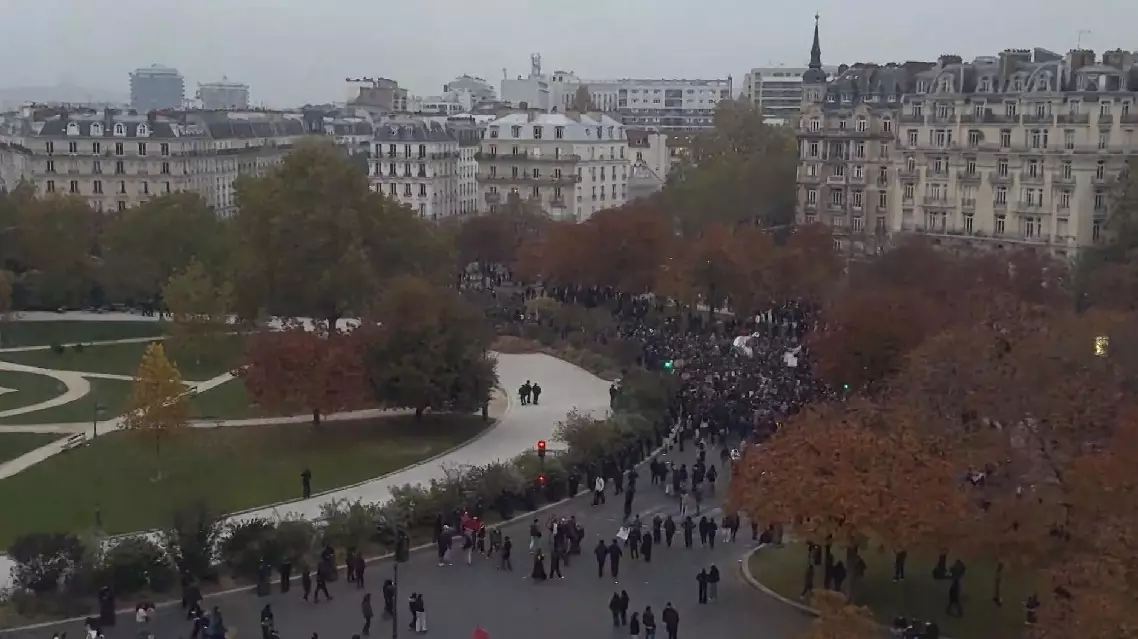
Scattered violence erupts in France as cost-of-living protests enter fourth week
Japanese Prime Minister Sanae Takaichi's administration is reviving brainwashing tactics once used to justify its World War II invasion of China, seeking to lessen public opposition and advance its military expansion agenda, according to a Japanese researcher.
Japan is pressing ahead with remilitarization and repeatedly breaching its "exclusively defense-oriented" policy. It is also considering including exceptions to the country's Three Non-Nuclear Principles in its revised National Security Strategy, which is scheduled to be finalized by the end of this year.
To build public support, the government has emphasized external threats, linking the protection of one's family to support for military expansion, an approach that echoes tactics used by the government before the invasion of China in the 1930s.
Recently, the Japanese government's official promotional website started to feature Manzai comedic performances. Through everyday conversational exchanges, the performers sought to persuade the public that Japan needs to revise its three security documents and that strengthening national security is closely tied to every family.
In the 1930s, as the Japanese government sought to justify its planned invasion of China, it developed stories to legitimize wars of aggression in the form of kamishibai -- a popular style of street-corner picture storytelling.
These story-telling performances served as a propaganda outlet for the government, glorifying its invasion and stirring hatred toward those portrayed as enemies. They reached widely.
"At that time, the Japanese government loudly claimed that Japan was surrounded by hostile countries, suggesting that unless Japan properly built up its military, it would be invaded. They first instilled a sense of anxiety into the public, then argued that a military expansion was unavoidable. That was the method they used to gain the public's consent. It was against this backdrop that the Lugou Bridge (Marco Polo Bridge) Incident broke out in July 1937, and the government claimed that China had started the war," said Masahiro Yamazaki, a Japanese researcher of military history.
Yamazaki noted that the Japanese government is now using the same approach: stoking public anxiety through Manzai performances to advance its military buildup, while avoiding discussion of the risks of revising the three security documents.
"Sanae Takaichi's administration -- or those who vocally support it -- generally share a common perspective that the Japanese military was not in the wrong during World War II. The narrative that Japan bore no responsibility tends to be more easily accepted by the public. The government has therefore played up the threat posed by foreign militaries, and such ideas are currently being widely circulated through online platforms. People with little knowledge of history encounter such content and, believing it to be true, come to accept it as historical facts. Furthermore, those who hold these views are not concerned about Japan engaging in war; rather, they are worried about the prospect of Japan itself being attacked," said Yamazaki.
"The very first people to fall victim -- or to be brainwashed -- are elementary school students and young children. Japan is currently prepared to defend itself, but the Constitution prohibits it from waging war against other countries. Yet, this is something that Japan fails to teach its children," said Yukiko Kaikita, president of the Kumamoto Chapter of the Women's Association for Peace and Against Military Expansion.
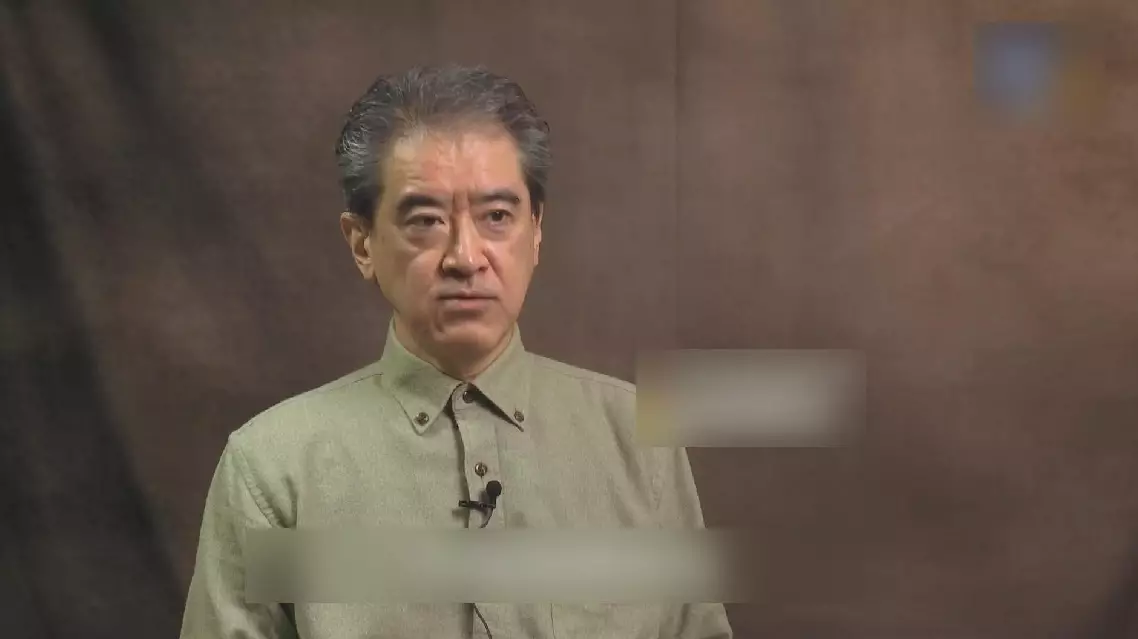
Japan reviving pre-WWII brainwashing tactics to promote military expansion: researcher