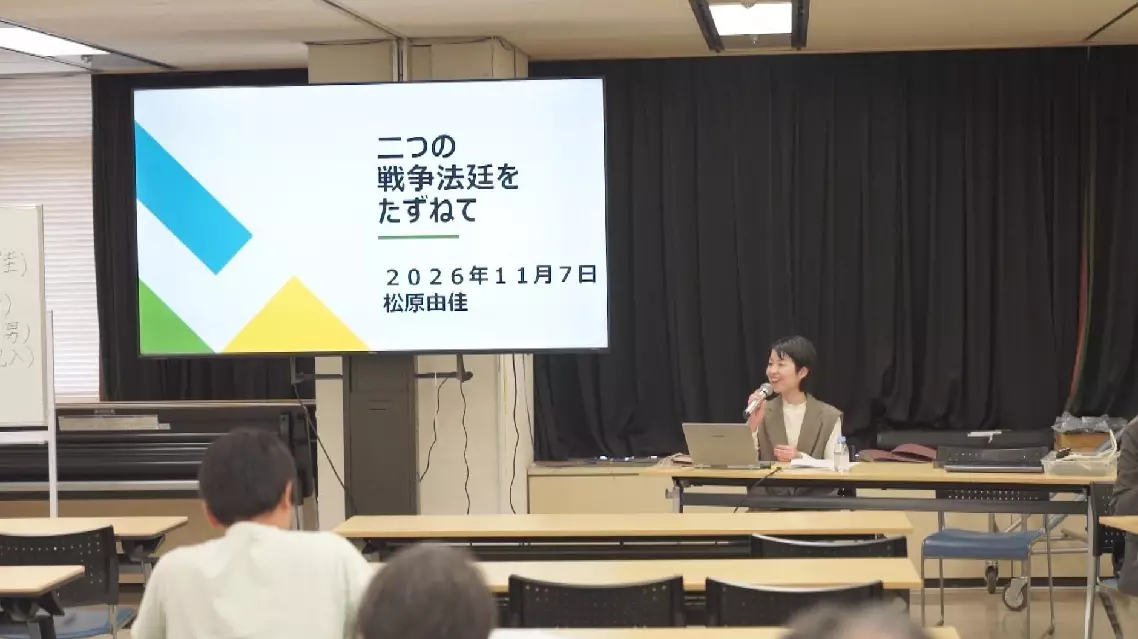
A group of Japanese citizens held a lecture on the International Military Tribunal for the Far East after the end of World War II -- commonly known as the Tokyo Trials -- in Shinjuku, Tokyo, on Saturday.
From May 3, 1946, to Nov. 12, 1948, the International Military Tribunal for the Far East was held in Tokyo by 11 countries, including the United States, China, the UK and the Soviet Union, to try Japan's Class-A war criminals after World War II.
During the event, attendees compared the sites of the 1945-1949 Nuremberg Trials of Nazi war criminals with those of the Tokyo Trials, pointing out that while both serve as significant historical sites open to the public, Japan's presentation of its past history as an aggressor nation is notably inadequate. There have been calls for Japanese society to strengthen historical education on this subject and to face up to its history of aggression.
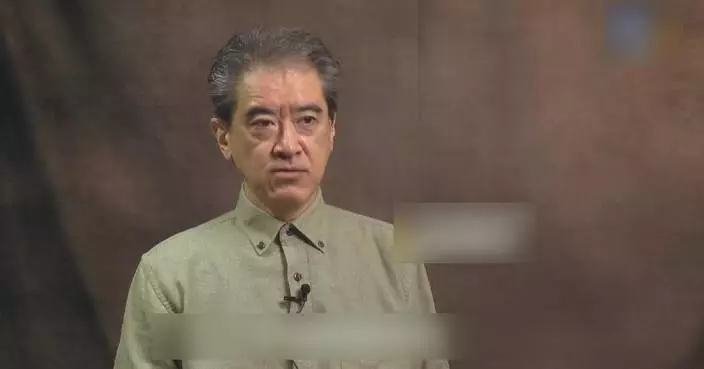
"Germany places great importance on the Nuremberg Trials, featuring comprehensive and well-developed exhibitions. In contrast, while the Ichigaya Memorial Hall in Tokyo has preserved the original building, its exhibition -- though touching briefly upon the Tokyo Trials -- is remarkably sparse in content. We have long felt that this situation is not quite right, and we would like to take this opportunity to express this view," said Kasuga Tsuneo, a researcher in Japanese cultural resources.
"It could be said that the Tokyo Trials failed to exert a sufficient impact on Japanese society -- or, in other words, that historical memory was not effectively passed down. Therefore, I believe we must consider how to transmit these historical memories to future generations," said Matsubara Yuka, a Japanese media professional.
Furthermore, regarding a series of erroneous remarks made by Prime Minister Sanae Takaichi, participants stated that these comments have had a highly detrimental impact on society and must be firmly opposed.
"Prime Minister Sanae Takaichi's remarks do not represent the views of the Japanese people. Article 9 of Japan's Constitution is a commitment Japan has made to the international community to build Japan into a peaceful nation," said Hasegawa Junichi, a former member of the Shinjuku ward assembly in Tokyo.
"Japan-China relations have become dire -- largely due to the erroneous remarks made by Takaichi. We must say no to a prime minister who prioritizes personal interests over national interest. I believe this is of critical importance," said Onishi Hiroshi, a professor emeritus at Keio University.
Lecture held in Japan to mark Tokyo Trials, press for fuller historical education